First published: Mar 13, 2023
Last updated: September 27, 2026
Written and source -checked by: Adel Galal, Founder and Lead Writer at NextFitLife
Clinical review status: This article has not been medically reviewed by a dermatologist or registered dietitian.
If your hair is thinning, food is worth checking, but food is not a cure for every kind of hair loss.
A diet that gives you enough protein, iron, zinc, vitamin D, vitamin C, vitamin B12, healthy fats, and calories supports normal hair growth. Correcting a real nutrition gap can also help when that gap is contributing to excess shedding.
But a plate of salmon and spinach cannot reverse every case of female pattern hair loss, alopecia areata, thyroid disease, traction alopecia, scalp infection, or scarring hair loss. Those problems need the right diagnosis first.
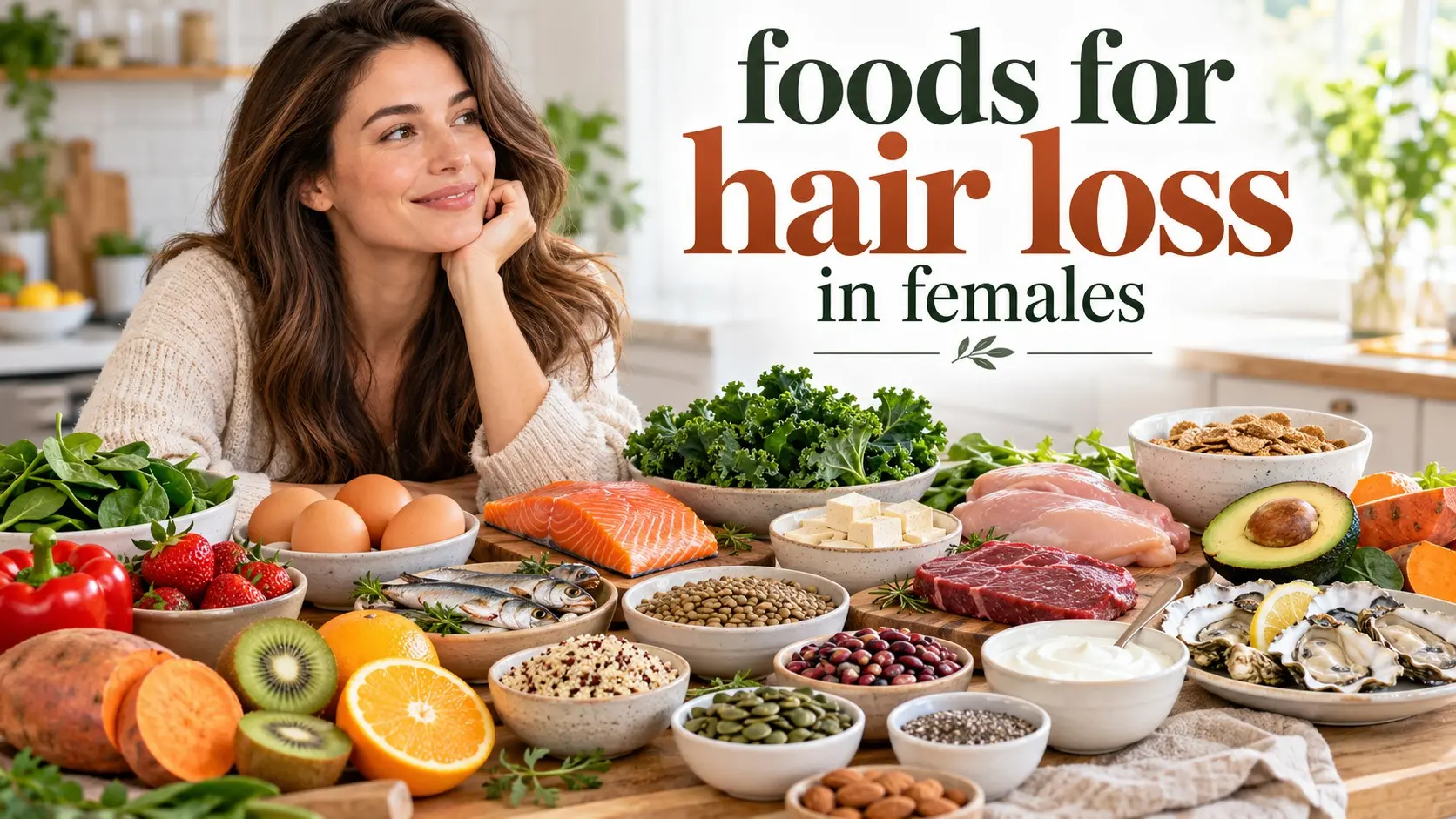
Quick answer: The best foods for hair loss in females are foods that help you meet normal needs for protein, iron, zinc, vitamin D, vitamin C, vitamin B12, and healthy fats. Useful choices include eggs, fish, lean meat, lentils, beans, tofu, leafy greens, peppers, berries, seeds, nuts, yogurt, quinoa, and fortified cereal. Food helps most when poor intake or a nutrient deficiency is part of the problem.
That last sentence matters.
Hair nutrition works best when we stop asking, “Which food grows hair?” and start asking, “Is my body getting what it needs to make healthy hair?”
Medical notice: I am not a dermatologist or a doctor, and this content does not replace professional medical advice. This article explains published guidance and does not provide a personal clinical assessment. Always consult qualified medical professionals for diagnosis and treatment of any health condition.
Table of Contents
- Can food really help female hair loss?
- Nutrition related hair loss versus female pattern loss
- The key nutrients hair needs
- 23 foods that support healthy hair
- Best foods for iron and vitamin C together
- Vegetarian and vegan hair nutrition
- Protein and rapid weight loss
- Biotin facts and supplement limits
- Foods and supplements that can backfire
- A simple one day hair supportive meal plan
- When food is not enough
- References and Sources
- Related NextFitLife guides
- About the author
- Frequently asked questions
Can Food Really Help Hair Loss in Women?
Yes, but only in the right situation.
Hair follicles are active tissues. They need enough energy, protein, vitamins, and minerals to keep producing hair. Very low- calorie diets, rapid weight loss, low protein intake, iron deficiency, and some other nutrient problems can disturb the normal hair growth cycle.
When nutrition is part of the cause, fixing the problem matters.
The mistake is turning that fact into a promise that one fruit, seed, vitamin, or “superfood” will regrow hair for everyone.
A recent systematic review of diet and hair health looked at 17 studies with more than 61,000 participants. Most participants were women. The review found useful links between nutrition and hair health, especially around iron and vitamin D, but it also found that the evidence is still limited for many specific foods and supplements.
So my approach is food first, deficiency aware, and realistic.
For the bigger picture, read the NextFitLife Hair Loss Causes and Treatment Guide.
Female Pattern Hair Loss Is Not a Food Deficiency
This point can save a lot of time and money.
Female pattern hair loss is the most common form of hair loss in women. It often shows up as a widening part, less hair density over the top of the scalp, or a ponytail that slowly feels thinner.
Genes play a major role. Hormones and age can also influence the process.
Food can support normal nutrition while you deal with female pattern hair loss, but eating more spinach or eggs does not switch off the genetic process.
The American Academy of Dermatology recommends getting the diagnosis right because other causes can look similar. For female pattern hair loss, medical options such as topical minoxidil and selected prescription treatments may be used when appropriate.
Nutrition and treatment are not rivals. Sometimes you need both.
When is nutrition more likely to Matter?
Diet deserves closer attention when hair loss follows or occurs alongside:
- Rapid weight loss
- Very low calorie dieting
- Low protein intake
- Heavy menstrual bleeding
- Pregnancy or recent childbirth
- A vegan or highly restricted diet without good planning
- Digestive disease or poor nutrient absorption
- Bariatric or gastrointestinal surgery
- Known iron deficiency
- Known vitamin D deficiency
- Long term illness
- Eating disorders or severe food restriction
This does not prove a deficiency. It tells you that food history and, sometimes, blood testing deserve more attention.
The NextFitLife Nutrition & Vitamins Guide explains how to separate normal food needs from a real deficiency that may need testing or treatment.
Which nutrients matter most for healthy hair?
| Nutrient | Why It Matters? | Food Sources | Key Caution |
|---|---|---|---|
| Protein | Provides amino acids used to build keratin and other tissues | Eggs, fish, chicken, yogurt, beans, lentils, tofu | Very low intake can contribute to shedding |
| Iron | Supports hemoglobin and oxygen transport | Meat, oysters, lentils, beans, tofu, spinach, fortified cereal | Do not start high -dose iron without a reason |
| Zinc | Supports cell division, protein synthesis, and tissue function | Oysters, beef, pumpkin seeds, beans, dairy | Excess supplements can cause harm and copper deficiency |
| Vitamin D | Vitamin D signaling is involved in normal hair follicle biology | Fatty fish, egg yolk, fortified foods | Food alone may not correct a true deficiency |
| Vitamin C | Supports collagen formation and helps absorb nonheme iron | Peppers, kiwi, berries, citrus, broccoli | Best used as part of normal food intake |
| Vitamin B12 | Supports blood cells, nerves, and DNA production | Fish, meat, eggs, dairy, fortified foods | Vegans need a reliable fortified source or supplement plan |
| Biotin | Required for normal metabolism | Eggs, salmon, nuts, seeds, sweet potato | Deficiency is uncommon, and high dose supplements can interfere with laboratory tests |
| Healthy fats | Support normal cell membranes and overall nutrition | Fish, avocado, nuts, seeds | Omega 3 foods are nutritious, but they are not a proven cure for hair loss |
23 Smart Foods for Hair Loss in Females
These foods are here because they help build a strong overall nutrition pattern. I am not labeling any of them a treatment for alopecia.
1. Eggs
Eggs give you high quality protein, vitamin B12, selenium, and biotin.
That makes them useful in a hair supportive diet with no need to exaggerate what biotin does. Biotin deficiency can cause hair loss, but deficiency is uncommon and extra biotin has not been proven to regrow hair in people who already get enough.
Use eggs in breakfast, salads, grain bowls, or sandwiches.
2. Salmon
Salmon supplies protein, vitamin B12, vitamin D, selenium, and long chain Omega 3 fats.
Those are useful nutrients for general health and normal tissue function. The evidence that omega 3 itself regrows female hair is much weaker than many hair supplement ads suggest.
Use baked or grilled salmon with vegetables, rice, potatoes, or lentils.
3. Sardines
Sardines are a compact source of protein, vitamin B12, vitamin D, selenium, and omega 3 fats.
They are also convenient because canned sardines need almost no preparation.
Add them to whole grain toast, salads, pasta, or rice.
4. Lean Beef
Lean beef gives you protein, heme iron, zinc, and vitamin B12.
Heme iron is more readily absorbed than the nonheme iron found in plant foods. This can make lean meat useful for women who eat it and need more iron from food.
That does not mean more red meat is always better. Portion, overall diet quality, and personal health needs still matter.
5. Chicken or Turkey
Chicken and turkey are simple sources of protein and vitamin B12.
They are useful when the bigger issue is getting enough total protein without building every meal around supplements or shakes.
Add them to salads, wraps, soups, grain bowls, or vegetable dishes.
6. Oysters
Oysters are especially rich in zinc and also provide protein, vitamin B12, iron, and other minerals.
Zinc deficiency can cause alopecia, but taking large zinc doses without a deficiency is not a good shortcut. NIH warns that excessive supplemental zinc can cause nausea and, over time, interfere with copper absorption.
Food makes more sense as the starting point for most people.
7. Greek Yogurt
Greek yogurt provides protein, vitamin B12, calcium, and other nutrients, depending on the product.
It is easy to pair with fruit, nuts, and seeds, which makes it a practical breakfast or snack rather than a special “hair food.”
Choose plain or lower sugar versions when that fits your diet.
8. Lentils
Lentils combine plant protein, nonheme iron, folate, fiber, and minerals.
The iron is less readily absorbed than heme iron, so meal pairing matters.
Add tomatoes, red peppers, kiwi, citrus, or another vitamin C rich food to the same meal to improve nonheme iron absorption.
9. Beans
White beans, kidney beans, black beans, and similar legumes provide plant protein, iron, zinc, folate, and fiber.
Beans are especially useful for women who eat little meat or follow a vegetarian diet.
Try beans with tomato salsa, peppers, or another vitamin C source.
10. Tofu
Tofu gives plant based eaters protein and iron. Some products also contain useful calcium, depending on how they are made.
Pair tofu with broccoli, red pepper, cabbage, or another vitamin C rich vegetable to help your body absorb the plant iron.
11. Spinach
Spinach contains nonheme iron, folate, carotenoids, and vitamin C.
It is nutritious, but it is not an anemia cure. Compounds in spinach reduce some of its iron absorption, so relying on spinach alone for low iron does not make sense.
Use it with peppers, tomatoes, citrus, meat, beans, eggs, or other foods as part of a mixed meal.
12. Kale and Other Leafy Greens
Kale and similar dark leafy greens give you folate, carotenoids, vitamin C, and several minerals.
They help build food variety, which matters more than searching for one perfect vegetable.
Add greens to soups, omelets, pasta, lentils, or salads.
13. Red Bell Peppers
Red peppers are valuable here for one simple reason: vitamin C.
Vitamin C helps your body absorb nonheme iron from lentils, beans, tofu, cereal, and vegetables.
That makes peppers a smart partner for plant based iron foods.
For more ideas, see the NextFitLife Vitamin C Foods Guide.
14. Strawberries
Strawberries provide vitamin C and other plant compounds.
Add them to fortified cereal, yogurt, oats, or a meal that contains plant iron.
The benefit is not that strawberries directly stimulate follicles. They help create a better nutrient mix.
15. Kiwi
Kiwi is another easy vitamin C source.
Eat it beside fortified cereal, oatmeal with seeds, or a plant based breakfast that contains iron.
This is a much more useful way to think about fruit than calling one fruit “best for hair growth.”
16. Oranges and Other Citrus Fruit
Oranges, mandarins, grapefruit, lemons, and other citrus fruits provide vitamin C.
Whole fruit works well as a snack, while lemon or lime can be squeezed over lentils, beans, tofu, fish, or salads.
Remember that grapefruit can interact with some medicines, so check your medication guidance if grapefruit is part of your routine.
17. Sweet Potatoes
Sweet potatoes are rich in beta carotene, which the body can convert to vitamin A.
Normal vitamin A intake is needed for health. More is not automatically better.
Excess vitamin A from supplements can actually contribute to hair loss, which is a good example of why a food first approach is safer than taking large doses “for hair.”
18. Avocado
Avocado provides monounsaturated fats, vitamin E, folate, fiber, and other nutrients.
I include it because it improves overall meal quality, not because avocado has been proven to regrow lost follicles.
Add it to eggs, beans, salads, sandwiches, or grain bowls.
19. Pumpkin Seeds
Pumpkin seeds provide zinc, iron, magnesium, protein, and unsaturated fats.
They are easy to sprinkle over yogurt, oats, salads, soups, or grain bowls.
For vegetarians, seeds add useful minerals without relying on a high dose supplement.
20. Almonds
Almonds provide protein, vitamin E, magnesium, and unsaturated fat.
They work well as a snack or as an addition to yogurt and oatmeal.
Vitamin E is part of normal nutrition, but large vitamin E supplement doses are not a proven hair treatment.
21. Chia Seeds
Chia seeds provide plant omega 3 fat, fiber, protein, iron, and minerals.
The omega 3 in chia is mainly alpha linolenic acid, or ALA, which is different from the EPA and DHA found in fatty fish.
Add chia to yogurt, oatmeal, or puddings instead of expecting a spoonful of seeds to stop genetic thinning.
22. Quinoa
Quinoa gives you protein, iron, magnesium, folate, and carbohydrate for energy.
It is useful when you want a grain style base that also contributes more protein than many refined grains.
Pair it with beans, tofu, vegetables, chicken, fish, or eggs.
23. Iron Fortified Cereal
Fortified cereal can be a practical iron source, especially for people who eat little meat.
Check the nutrition label because fortification varies greatly between products.
Pair the cereal with strawberries or kiwi to add vitamin C and improve absorption of the nonheme iron.
Quick Reference: What Each Food Adds
| Food | Main Hair Supportive Nutrients | Easy Use |
|---|---|---|
| Eggs | Protein, B12, biotin, selenium | Breakfast or salad |
| Salmon | Protein, vitamin D, B12, omega 3 | Dinner with vegetables |
| Sardines | Protein, vitamin D, B12, omega 3 | Toast or salad |
| Lean beef | Protein, heme iron, zinc, B12 | Stir fry or bowl |
| Chicken | Protein, B vitamins | Soup, wrap, salad |
| Oysters | Zinc, B12, iron, protein | Cooked seafood meal |
| Greek yogurt | Protein, B12 | Breakfast or snack |
| Lentils | Protein, iron, folate | Soup or curry |
| Beans | Protein, iron, zinc, folate | Chili or salad |
| Tofu | Protein, iron | Stir fry |
| Spinach | Iron, folate, carotenoids | Eggs or salad |
| Red pepper | Vitamin C | With beans or tofu |
| Pumpkin seeds | Zinc, iron, protein | Yogurt or oats |
| Fortified cereal | Iron and added vitamins depending on brand | With berries or kiwi |
The Most Useful Food Pairing for Women With Low Iron
If plant foods provide much of your iron, remember one pairing:
Plant iron food + vitamin C food
Examples include:
- Lentils with tomatoes or red peppers
- Beans with salsa
- Tofu with broccoli or peppers
- Spinach with lemon
- Fortified cereal with strawberries or kiwi
- Pumpkin seeds with fruit
Vitamin C improves absorption of nonheme iron from plant foods.
This does not mean every woman with hair loss needs more iron. Iron deficiency needs proper assessment, especially when shedding occurs with heavy periods, fatigue, pregnancy, restrictive diets, digestive disease, or another risk factor.
Should Women With Hair Loss Eat More Protein?
If protein intake is too low, yes, correcting that matters.
Hair is built mainly from keratin, which is a protein. Severe protein and calorie restriction can disturb hair growth, and sudden weight loss can trigger telogen effluvium, a form of diffuse shedding.
You do not need a special hair protein powder.
Use normal foods such as eggs, fish, poultry, yogurt, beans, lentils, tofu, nuts, seeds, and other protein foods across the day.
If you are dieting for weight loss, avoid extreme calorie cuts that make it hard to meet normal protein and micronutrient needs.
What Should Vegetarians and Vegans Focus On?
A plant based diet can support healthy hair, but it needs planning.
The biggest areas to watch are often protein, iron, zinc, vitamin B12, vitamin D, iodine, and overall calorie intake.
A practical plant based plate might contain lentils or tofu, quinoa or another grain, vegetables, a vitamin C rich food, seeds, and a reliable vitamin B12 source.
Vitamin B12 deserves special attention because unfortified plant foods are not dependable natural sources.
Use the NextFitLife B12 Rich Foods Guide for animal and fortified options.
Does Biotin Really Grow Hair?
Biotin is probably the most overmarketed hair nutrient.
A real biotin deficiency can cause hair loss. The problem is that deficiency is uncommon, and there is little evidence that giving large amounts of biotin to someone who already has enough will make normal hair grow faster or thicker.
There is another reason not to take high dose biotin casually.
The U.S. Food and Drug Administration warns that biotin in supplements can interfere with some laboratory tests and produce incorrect results. This has included tests used in serious medical situations.
If you take a hair, skin, or nail supplement that contains biotin, tell your healthcare team and laboratory staff.
Can Too Many Hair Vitamins Make Hair Loss Worse?
Yes.
This is the part supplement marketing rarely puts on the front label.
Excessive intake of some nutrients has been linked to hair loss or other health problems. Examples include too much vitamin A, selenium, and zinc.
High zinc intake over time can also reduce copper absorption.
More nutrition is not always better nutrition.
The American Academy of Dermatology warns that taking too much of certain nutrients can worsen hair loss. That is one reason I prefer food first unless a blood test, diet history, medical condition, pregnancy need, or clinician recommendation shows that a supplement is actually needed.
What About Vitamin D?
Vitamin D and hair loss is an active research area.
Several studies have found associations between low vitamin D levels and some forms of hair loss. A newer systematic review also found vitamin D among the most studied nutrients in hair research.
That does not mean everyone with thinning hair should take a large vitamin D dose.
If deficiency is suspected, testing and an appropriate treatment plan make more sense than guessing.
Food sources include fatty fish, egg yolks, and fortified foods, but food alone may not provide enough to correct a diagnosed deficiency.
A Simple One Day Hair Supportive Food Plan
This is an example, not a prescription.
| Meal | Example | Main Nutrients |
|---|---|---|
| Breakfast | Eggs, fortified whole grain cereal, strawberries | Protein, B12, iron, vitamin C |
| Lunch | Lentil and quinoa bowl with spinach and red pepper | Protein, iron, folate, vitamin C |
| Snack | Greek yogurt with pumpkin seeds and kiwi | Protein, B12, zinc, vitamin C |
| Dinner | Salmon with sweet potato, kale, and broccoli | Protein, vitamin D, B12, carotenoids, healthy fats |
A vegetarian version could replace salmon with tofu, beans, or lentils and use a reliable fortified B12 source.
What I Would Remove From the Old “Hair Growth Food” Approach
I would remove any claim that one food directly “boosts circulation to the scalp,” “balances hormones,” or “grows thicker hair” unless strong human evidence supports that exact statement.
I would also avoid universal food targets such as eating eggs every day or telling every woman to take iron, zinc, biotin, or vitamin D.
Hair loss has too many causes for blanket advice.
The useful role of food is simpler:
- Meet your normal nutrition needs
- Avoid severe calorie and protein restriction
- Correct a confirmed deficiency
- Support medical treatment when a medical cause is present
When Food Is Not Enough
See a dermatologist or qualified healthcare professional when hair loss is sudden, patchy, painful, rapidly worsening, or associated with scalp inflammation.
Professional evaluation is also sensible when you notice:
- A widening part that keeps progressing
- A thinner ponytail over time
- Round bald patches
- Scalp pain or burning
- Heavy scaling or pus
- Broken hairs in patches
- Loss of eyebrows or eyelashes
- Smooth shiny areas of scalp
- Heavy menstrual bleeding with hair shedding
- Major fatigue or unexplained weight change
- Hair loss that started after a new medicine
- Shedding that continues for months
The American Academy of Dermatology notes that diagnosis may include scalp examination, medical history, hair testing, blood tests, or a scalp biopsy depending on what the dermatologist suspects.
Do not let a food list delay diagnosis of scarring hair loss, thyroid disease, anemia, alopecia areata, scalp infection, or female pattern hair loss.
Conclusion
The best foods for hair loss in females are not miracle foods. They are normal, nutrient rich foods that help women get enough protein, iron, zinc, vitamin D, vitamin C, vitamin B12, and healthy fats without relying on high dose hair supplements.
Start with one practical step this week: add a solid protein source to each main meal and pair plant iron foods with vitamin C rich fruit or vegetables. If your hair loss is persistent, sudden, patchy, painful, or clearly progressing, book a professional assessment rather than trying to eat your way around an undiagnosed condition.
References and Sources
The nutrition and hair loss claims in this article were checked against dermatologist guidance, U.S. government nutrient references, FDA safety information, and open peer reviewed research.
- American Academy of Dermatology Association.
Hair Loss: Diagnosis and Treatment.
Used for diagnosis, blood testing, different causes of hair loss, and the importance of matching treatment to the cause.
URL:
https://www.aad.org/public/diseases/hair-loss/treatment/diagnosis-treat
- National Institutes of Health, Office of Dietary Supplements.
Iron: Fact Sheet for Health Professionals.
Used for heme and nonheme iron, dietary iron sources, absorption, iron requirements, and supplement safety.
URL:
https://ods.od.nih.gov/factsheets/Iron-HealthProfessional/
- National Institutes of Health, Office of Dietary Supplements.
Zinc: Fact Sheet for Health Professionals.
Used for zinc food sources, the effects of zinc deficiency, adult intake guidance, and the risks of excessive zinc supplementation.
URL:
https://ods.od.nih.gov/factsheets/Zinc-HealthProfessional/
- U.S. Food and Drug Administration.
Biotin Interference With Laboratory Tests.
Used for the warning that high biotin intake from supplements can interfere with some laboratory tests and produce inaccurate results.
URL:
https://www.fda.gov/medical-devices/in-vitro-diagnostics/biotin-interference-troponin-lab-tests-assays-subject-biotin-interference
- Assessing the Relationship Between Dietary Factors and Hair Health: A Systematic Review.
PubMed Central.
The review analyzed 17 studies with 61,332 participants and examined dietary factors including vitamin D, iron, protein, soy, vegetables, and beverage intake in relation to hair health and hair loss.
URL:
https://pmc.ncbi.nlm.nih.gov/articles/PMC13338483/
Continue With NextFitLife Hair and Nutrition Guides
Use these related guides to understand hair loss causes, nutrient deficiencies, food sources, and supplement safety in more depth.
Hair Loss and Hair Health
Nutrition and Vitamins
About the Author
Adel Galal is the founder and lead writer of NextFitLife. He has maintained a personal interest in health, fitness, nutrition, sleep, wellness, and healthy aging for more than 30 years, and his health and wellness writing experience spans more than 15 years.
His role at NextFitLife is to research health and wellness topics, compare reputable sources, identify important limits in the evidence, and explain complicated information in practical language for everyday readers.
For hair and nutrition content, his approach is to separate established nutrient needs from supplement marketing and to avoid presenting food as a cure for medical forms of hair loss.
I am not a dermatologist or a doctor, and this content does not replace professional medical advice. This article explains published guidance and does not provide a personal clinical assessment. Always consult qualified medical professionals for diagnosis and treatment of any health condition.
Learn more about Adel Galal, NextFitLife, and the site's editorial approach on the NextFitLife About Us page.
Frequently Asked Questions About Foods for Hair Loss in Females
What are the best foods for hair loss in females?
Useful foods include eggs, fish, lean meat, lentils, beans, tofu, spinach, peppers, berries, citrus fruit, nuts, seeds, yogurt, quinoa, and fortified cereal. They support normal nutrition but do not treat every cause of female hair loss.
Can food really stop female hair loss?
Food can help when low intake or a nutrient deficiency contributes to shedding. It cannot by itself treat every cause, including female pattern hair loss, alopecia areata, scarring alopecia, thyroid disease, scalp infection, or traction alopecia.
What should I eat if my iron is low and my hair is shedding?
Iron rich foods include meat, seafood, lentils, beans, tofu, spinach, pumpkin seeds, and fortified cereals. Plant iron is absorbed better when you eat it with a vitamin C rich food such as peppers, kiwi, strawberries, citrus, or broccoli.
Are eggs good for hair loss?
Eggs provide protein, vitamin B12, selenium, and biotin. They can be part of a balanced diet for healthy hair, but eating eggs does not directly treat genetic, autoimmune, or scarring hair loss.
Is salmon good for hair growth?
Salmon provides protein, vitamin D, vitamin B12, selenium, and omega 3 fats. These nutrients support general health and normal tissue function, but salmon should not be described as a proven treatment for hair loss.
Does biotin stop hair loss?
Biotin deficiency can cause hair loss, but true deficiency is uncommon. Evidence does not show that high dose biotin routinely improves hair growth in people who already have enough biotin.
Can too many hair vitamins cause hair loss?
Yes. Excessive intake of some nutrients, including vitamin A and selenium, has been associated with hair loss. Too much zinc can also cause health problems and interfere with copper absorption.
Is iron deficiency common in women with hair loss?
Iron deficiency is an important possible cause of diffuse shedding, especially when risk factors such as heavy menstrual bleeding, pregnancy, restricted eating, or poor absorption are present. Hair loss alone cannot diagnose low iron.
Should I take iron if my hair is falling out?
Do not start high dose iron simply because your hair is shedding. Iron can be harmful in excess. A healthcare professional can decide whether your symptoms and health history justify blood testing or treatment.
What is the best fruit for female hair loss?
There is no single best fruit. Kiwi, strawberries, oranges, and other vitamin C rich fruits are useful because vitamin C supports collagen formation and improves absorption of nonheme iron from plant foods.
Can rapid weight loss cause hair shedding?
Yes. Major calorie restriction, rapid weight loss, illness, stress, and low protein intake can disturb the hair growth cycle and trigger telogen effluvium in some people.
When should a woman see a dermatologist for hair loss?
See a dermatologist when hair loss is sudden, patchy, painful, rapidly progressing, associated with scalp inflammation, causing a steadily widening part, or continuing without a clear reason. Early diagnosis matters for conditions that can permanently damage follicles.

Health & wellness writer with 30+ years of experience in nutrition, fitness, and healthy aging. Founder of NextFitLife.com — evidence-based health guidance.