
Published on: May 4, 2023
Last updated: September 29, 2026
Written and edited by: Adel Galal, Founder and Editor of NextFitLife
Emphysema NHS information is easiest to understand when you start with one key point: emphysema is damage to the tiny air sacs in the lungs, and NHS care usually manages it within the wider condition called chronic obstructive pulmonary disease, or COPD.
The damaged air sacs do not simply grow back. That sounds worrying, but treatment still matters. Stopping smoking, using the right inhalers, learning good inhaler technique, joining pulmonary rehabilitation, treating flare ups early, and using oxygen or specialist procedures when appropriate can all make a real difference.
Quick Answer
Emphysema damages the alveoli, the small air sacs that help move oxygen and carbon dioxide between the lungs and blood. It is commonly part of COPD. NHS care may include spirometry, smoking cessation, inhalers, pulmonary rehabilitation, vaccinations, a self management plan, oxygen for selected patients, and specialist procedures for severe disease.
Get Urgent Help for Severe Breathing Trouble
Call 999 or go to A&E if breathing becomes severely difficult, you are gasping or cannot get words out, your chest feels tight or heavy, your lips or skin turn very pale, blue, or grey, or you become suddenly confused.
Do not rely on a home oxygen meter alone when symptoms are severe. A device cannot tell you why breathing has suddenly become difficult.
Medical notice: This content is for general educational purposes and does not replace professional medical advice, diagnosis, or treatment. Consult an appropriately qualified healthcare professional for personal medical concerns. This article explains published guidance and does not provide a personal clinical assessment. Always consult qualified medical professionals for diagnosis and treatment of any health condition.
Table of Contents
- What Emphysema Actually Means
- How Emphysema and COPD Are Related
- What Causes Emphysema
- Symptoms to Watch For
- How the NHS Tests for COPD and Emphysema
- Who Should Be Checked for Alpha 1 Antitrypsin Deficiency
- How Emphysema Is Treated
- Pulmonary Rehabilitation and Daily Care
- Oxygen and Advanced Treatment
- How to Recognise a Flare Up
- When Breathing Needs Urgent Care
- Living With Emphysema
- References and Sources
- Related NextFitLife Guides
- About the Author
- Frequently Asked Questions
1. What Does Emphysema Actually Mean?
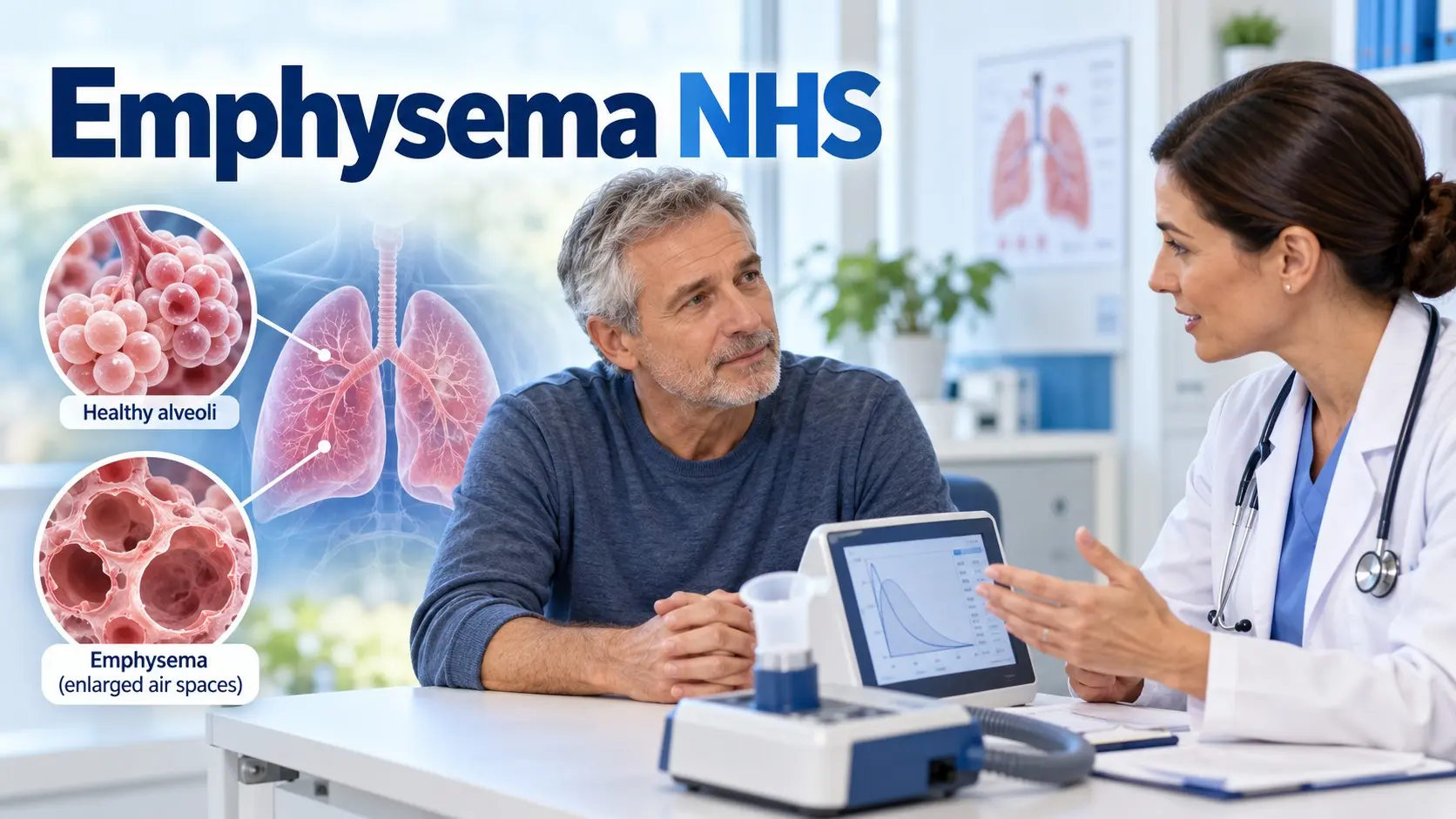
Your lungs contain millions of tiny air sacs called alveoli.
Healthy alveoli are small and elastic. They fill as you breathe in and help push air out when you breathe out. Their thin walls also provide a large surface where oxygen can enter the blood and carbon dioxide can leave it.
In emphysema, some of those walls become damaged and break down. Small air spaces can join into larger spaces, and the lungs lose some of their natural elastic recoil.
This makes it harder to move old air out.
As air becomes trapped, there is less room for the next fresh breath. The damaged lung also has less useful surface for gas exchange.
That is why breathlessness is such an important symptom.
The NHS describes emphysema as damage to the air sacs of the lungs and includes it within COPD.
For a broader overview of lung conditions and breathing symptoms, visit the NextFitLife Lung and Respiratory Health Hub.
2. Is Emphysema the Same as COPD?
They are closely related, but the words do not mean exactly the same thing.
COPD is the broader clinical condition. It involves persistent problems moving air through the lungs.
Emphysema describes structural damage to the lung air sacs.
A person with COPD can have emphysema, chronic airway inflammation, mucus problems, or a mixture of these features.
This is why a doctor may discuss your diagnosis as COPD even when a CT scan also shows emphysema.
| Term | What It Describes | How It Is Usually Assessed |
|---|---|---|
| Emphysema | Damage and enlargement of lung air spaces | Clinical history plus imaging when needed |
| COPD | Persistent airflow obstruction with respiratory symptoms | Symptoms, risk factors, examination, and spirometry |
Our guide Emphysema vs COPD explains this relationship in more detail.
3. What Causes Emphysema?
Smoking is the best known cause, but it is not the only one.
Smoking
Long term cigarette smoke exposure damages the lungs and is a major cause of COPD and emphysema.
Stopping smoking remains one of the most useful actions a person with COPD can take because it helps prevent further smoking related damage.
The lung damage already present does not disappear, but quitting can slow further loss of lung function.
Read Smoking and Lung Health for more information about tobacco and respiratory damage.
Workplace Dust, Fumes, and Air Pollution
Long exposure to harmful dust, fumes, vapours, or other airborne irritants can also increase COPD risk.
Your work history matters. Tell your healthcare professional if you have worked around mining dust, construction dust, industrial chemicals, welding fumes, grain dust, or similar lung irritants.
Secondhand Smoke
Repeated exposure to tobacco smoke from other people also harms the respiratory system and can add to COPD risk.
Alpha 1 Antitrypsin Deficiency
A small group of people develop emphysema because of an inherited condition called alpha 1 antitrypsin deficiency.
Alpha 1 antitrypsin is a protein that helps protect lung tissue from damage. When levels are very low, emphysema can appear younger than expected, including in someone who has smoked very little or never smoked.
4. What Symptoms Can Emphysema Cause?
Emphysema usually develops slowly.
At first, you may simply notice that climbing stairs, walking uphill, or keeping pace with other people takes more effort.
Common COPD symptoms include:
- Shortness of breath, especially during activity
- A long lasting chesty cough
- Phlegm or mucus
- Wheezing
- Frequent chest infections
- Reduced exercise tolerance
- Tiredness
Symptoms often become more noticeable over time.
Severe disease can also be linked with weight loss, weakness, swollen ankles, or breathlessness during simple daily tasks.
Do not assume that every cough or episode of breathlessness is emphysema. Asthma, bronchiectasis, heart failure, anaemia, infection, and other conditions can produce similar symptoms.
5. How Does the NHS Test for COPD and Emphysema?
Diagnosis is more than looking at one chest image.
Medical History
Your GP or respiratory team will usually ask about breathing symptoms, cough, phlegm, smoking, past smoking, workplace exposure, family history, and how symptoms affect daily life.
Spirometry
Spirometry is the main breathing test used to confirm COPD.
You take a deep breath and blow forcefully into a machine. The test measures how much air you can breathe out and how quickly you can breathe it out.
NICE recommends post bronchodilator spirometry to confirm COPD.
A home breath holding test, balloon test, or phone application cannot replace clinical spirometry.
Our How to Check Lung Health guide explains the role and limits of common respiratory tests.
Chest X Ray
A chest X ray can help look for other causes of symptoms. It is not enough by itself to confirm or exclude emphysema.
CT Scan
A CT scan gives much more detail and can show emphysema directly.
NICE recommends respiratory review and spirometry when emphysema or chronic airway disease is found incidentally on a chest X ray or CT scan.
That point is easy to miss. A scan showing emphysema and a breathing test showing airflow obstruction are related pieces of information, but they are not identical findings.
Other Tests
Depending on the situation, assessment may include a full blood count, oxygen testing, an ECG, additional lung function tests, or tests that measure how gases move from the lungs into the blood.
6. Who Should Be Checked for Alpha 1 Antitrypsin Deficiency?
NICE recommends considering a blood test for alpha 1 antitrypsin deficiency when COPD begins unusually early, there has been little smoking exposure, or there is a relevant family history.
This matters because inherited emphysema can otherwise be mistaken for ordinary smoking related COPD.
Family history of liver disease can also be relevant because alpha 1 antitrypsin deficiency can affect both the lungs and liver.
If the deficiency is confirmed, NICE recommends referral to a specialist centre to discuss management.
A Useful Question to Ask
If you have emphysema at a young age, very little smoking history, or close relatives with early COPD or unexplained liver disease, ask whether alpha 1 antitrypsin testing is appropriate.
7. How Does the NHS Treat Emphysema?
There is no treatment that simply restores destroyed alveoli.
The goal is to reduce symptoms, prevent avoidable damage, lower the risk of flare ups, preserve activity, and improve quality of life.
Stopping Smoking
If you smoke, stopping is one of the most important parts of treatment.
NHS services can provide behavioural support and medicines to help people quit. It is never too late to benefit.
Be cautious with claims about “cleaning” damaged lungs. Detox drinks, supplements, steam, and similar products cannot rebuild destroyed air sacs.
Our Lung Detox for Smokers guide explains which recovery claims are realistic and which are not.
Bronchodilator Inhalers
A bronchodilator relaxes muscles around the airways so that breathing can feel easier.
Some bronchodilators act for a short time and are used when symptoms occur. Others last longer and are taken regularly.
Your exact inhaler depends on your symptoms, flare up history, other medical features, and how you respond to treatment.
Steroid Inhalers
Inhaled steroids are not automatically needed just because a person has emphysema.
They are usually considered as part of combination treatment for selected people with COPD, especially when the clinical pattern suggests that adding a steroid is likely to help.
The choice belongs in an individual treatment plan because inhaled steroids also have possible side effects.
Inhaler Technique Matters
An inhaler cannot work well if most of the medicine never reaches the lungs.
The 2026 NICE COPD checklist specifically tells healthcare teams to assess inhaler technique and provide help when technique needs improvement.
If your treatment does not seem to work, ask a pharmacist, nurse, or doctor to watch you use your device before assuming the medicine itself has failed.
8. Why Is Pulmonary Rehabilitation So Important?
Pulmonary rehabilitation is much more than being told to exercise.
It is a structured programme that can include supervised activity, education, breathing strategies, energy conservation, symptom management, and support.
It does not regrow damaged alveoli.
What it can do is help you use the lung function and physical capacity you still have more effectively.
People can become trapped in a difficult cycle:
Breathlessness makes activity uncomfortable, so they move less. Moving less causes the muscles to become weaker. Weaker muscles make the same activity feel harder, which can increase breathlessness further.
Rehabilitation aims to break that cycle safely.
The 2026 NICE COPD Care Checklist
NICE highlights six basic areas after a confirmed COPD diagnosis:
- Support and treatment to stop smoking when relevant
- Pneumococcal vaccination and annual influenza vaccination
- Pulmonary rehabilitation when indicated
- A personalised self management plan
- Good treatment of other medical conditions
- Checking and improving inhaler technique
These steps may sound less dramatic than surgery, but they form the foundation of long term COPD care.
9. When Are Oxygen or Advanced Procedures Used?
More treatment is not always better. It must match the problem.
Oxygen Therapy
Oxygen therapy is used for selected people whose blood oxygen level remains too low.
It is not a general treatment for every person who feels breathless.
NHS guidance states that people considered for long term oxygen need proper assessment. If oxygen is prescribed, use it exactly as directed.
Never smoke while using oxygen because oxygen greatly increases fire risk.
Non Invasive Ventilation
During a severe COPD flare up, some people in hospital may need non invasive ventilation. A mask and machine support breathing without placing a breathing tube into the windpipe.
Lung Volume Reduction
Some people with severe emphysema and persistent breathlessness despite good medical treatment may be assessed for lung volume reduction.
This may involve surgery or, for selected people, a bronchoscopic procedure that reduces the volume of a badly damaged part of the lung.
The aim is not to make damaged tissue healthy again. Reducing the effect of severely damaged areas can allow healthier lung areas and the breathing muscles to work more effectively in carefully selected patients.
Bullectomy
Emphysema can sometimes produce very large air spaces called bullae.
If a large bulla compresses healthier lung, specialists may consider removing it.
Lung Transplant
Lung transplantation may be considered for a small number of people with very severe disease who meet specialist criteria.
These advanced treatments require detailed respiratory assessment. They are not routine treatment for everyone with emphysema.
How Do You Recognise a COPD Flare Up?
A COPD exacerbation, often called a flare up, means your usual respiratory symptoms become clearly worse.
Possible signs include:
- More breathlessness than usual
- More coughing
- More wheezing or chest tightness
- Producing more phlegm
- A change in phlegm colour or thickness
- Fever or symptoms of a respiratory infection
- A clear drop in your usual activity level
If you have a written COPD action plan, follow it.
Some people who have repeated flare ups are given a rescue pack containing prescribed medicines and clear instructions about when to start them. Do not use someone else's antibiotics or steroid tablets, and do not start a rescue pack outside the plan given to you.
When Does Emphysema Need Urgent Medical Help?
Get urgent medical advice when breathing becomes suddenly worse, your usual treatment is not helping, or you develop signs of a serious infection or another new problem.
Call 999 or go to A&E when:
- You are severely short of breath
- You are gasping or cannot speak normally because of breathlessness
- Your lips or skin become very pale, blue, or grey
- You become confused or unusually drowsy
- You collapse or faint
- You develop severe chest pain
Coughing up blood also needs medical assessment because it may have causes other than COPD.
Can Emphysema Be Reversed?
Established emphysema damage is not currently reversible.
That does not mean treatment is pointless.
Think of treatment as protecting what remains, reducing symptoms, preventing avoidable decline, and helping you stay active.
Stopping smoking is especially important because continuing to smoke adds further injury to already damaged lungs.
Pulmonary rehabilitation can improve exercise ability and quality of life even though it does not rebuild the destroyed air sacs.
Does Exercise Improve Emphysema?
Exercise cannot repair emphysema itself, but appropriate activity is still useful.
Stronger muscles need less energy for everyday work, which can make walking and daily activities easier.
The safest starting point depends on how severe your symptoms are, whether you use oxygen, your heart health, and other medical conditions.
For someone limited by COPD breathlessness, pulmonary rehabilitation is usually more useful than trying to invent a hard exercise programme alone.
What About Breathing Exercises?
Breathing techniques can help some people control breathlessness or recover after activity.
Pursed lip breathing is one technique commonly taught in respiratory care. You breathe in gently through the nose, then breathe out more slowly through partly closed lips.
Breathing exercises are supportive tools.
They do not replace prescribed inhalers, pulmonary rehabilitation, vaccination, oxygen when indicated, or medical treatment of a flare up.
What Should You Ask at an NHS COPD Review?
A review is more useful when you arrive with clear questions.
Useful Questions
- Has my diagnosis been confirmed with spirometry?
- Does my CT scan show emphysema, and what does that mean for me?
- Should I be tested for alpha 1 antitrypsin deficiency?
- Am I using my inhaler correctly?
- Would pulmonary rehabilitation help me?
- Are my flu and pneumococcal vaccines up to date?
- Do I need a written COPD self management plan?
- What changes should make me call the GP or COPD team?
- Do I need a rescue pack, and exactly when should I use it?
- Is my oxygen level low enough to need formal oxygen assessment?
- Would a specialist procedure ever be relevant in my case?
Emphysema Treatment at a Glance
| Treatment | Main Purpose | Who It May Suit |
|---|---|---|
| Stop smoking support | Prevent further smoke related damage | Anyone with COPD who currently smokes |
| Bronchodilator inhalers | Open airways and reduce symptoms | Selected people with symptomatic COPD |
| Combination inhalers | Provide longer airway treatment and, when appropriate, inhaled steroid therapy | Based on symptoms, flare ups, and clinical features |
| Pulmonary rehabilitation | Improve activity, confidence, symptom control, and quality of life | People whose COPD limits daily activity when clinically indicated |
| Vaccination | Reduce risk from respiratory infections | Part of routine COPD care according to NHS and NICE guidance |
| Oxygen therapy | Correct persistently low blood oxygen | People who meet oxygen assessment criteria |
| Lung volume reduction | Reduce the impact of severely damaged lung areas | Carefully selected people after specialist assessment |
| Lung transplant | Replace severely diseased lung tissue | A small number of people with very severe disease |
Conclusion
Emphysema NHS care is not built around one medicine or one scan result. Good care combines an accurate COPD diagnosis, smoking cessation when needed, the right inhalers, correct inhaler technique, pulmonary rehabilitation, vaccination, a clear flare up plan, and specialist treatment when disease is severe.
Your next step is practical. If you have persistent breathlessness, cough, wheezing, or a scan that mentions emphysema, book a review and ask whether you need spirometry or a respiratory assessment.
If breathing becomes suddenly or severely difficult, seek urgent medical help instead of waiting for a routine appointment.
References and Sources
The following NHS, NICE, and United States National Institutes of Health sources support the diagnosis, treatment, rehabilitation, oxygen, and COPD care information in this guide.
- NHS.
Chronic obstructive pulmonary disease, COPD.
Explains how emphysema fits within COPD, common symptoms, causes, and diagnosis.
https://www.nhs.uk/conditions/chronic-obstructive-pulmonary-disease-copd/ - NHS.
Chronic obstructive pulmonary disease, Treatment.
Covers smoking cessation, inhalers, pulmonary rehabilitation, oxygen, non invasive ventilation, medicines, and advanced treatment.
https://www.nhs.uk/conditions/chronic-obstructive-pulmonary-disease-copd/treatment/ - National Institute for Health and Care Excellence, NICE.
Chronic obstructive pulmonary disease in over 16s: diagnosis and management, NG115.
Includes spirometry, CT findings, alpha 1 antitrypsin testing, pulmonary rehabilitation, oxygen, specialist referral, and lung volume reduction guidance.
https://www.nice.org.uk/guidance/ng115/chapter/recommendations - National Institute for Health and Care Excellence, NICE.
COPD Checklist, 2026.
Highlights smoking cessation, influenza and pneumococcal vaccination, pulmonary rehabilitation, personalised self management, management of other conditions, and inhaler technique.
https://www.nice.org.uk/guidance/ng115/resources/copd-checklist-pdf-15664192093 - National Heart, Lung, and Blood Institute, National Institutes of Health.
COPD Diagnosis.
Explains clinical assessment, spirometry, imaging, blood tests, and alpha 1 antitrypsin deficiency screening.
https://www.nhlbi.nih.gov/health/copd/diagnosis
Related NextFitLife Guides and Lung Health Hub
Use these NextFitLife guides to explore COPD, smoking, testing, and respiratory health without repeating the same information in this article.
- Lung and Respiratory Health Hub
- Emphysema vs COPD: How the Terms Relate
- How to Check Lung Health: Tests, Symptoms, and Red Flags
- Smoking and Lung Health
- Lung Detox for Smokers: Safe Ways to Support Lung Health
About the Author
Adel Galal is the founder and editor of NextFitLife and a health and wellness writer with more than 30 years of experience in nutrition, fitness, and healthy aging. His work focuses on turning medical and public health guidance into clear information that readers can understand and discuss with qualified healthcare professionals.
This content is for general educational purposes and does not replace professional medical advice, diagnosis, or treatment. Consult an appropriately qualified healthcare professional for personal medical concerns. This article explains published guidance and does not provide a personal clinical assessment. Always consult qualified medical professionals for diagnosis and treatment of any health condition.
Learn more about Adel, NextFitLife, and the site's editorial approach on the About Us page.
Frequently Asked Questions
Is emphysema the same as COPD?
Emphysema is a type of lung damage commonly found within COPD. COPD is the wider condition used to describe persistent airflow obstruction and related symptoms. A person can have emphysema on a CT scan while spirometry is used to assess whether COPD airflow obstruction is present.
Can emphysema be cured?
There is currently no cure that restores destroyed lung air sacs. Treatment can reduce symptoms, protect remaining lung function, lower flare up risk, and help people stay active.
What is the main cause of emphysema?
Smoking is the most common cause, but long term exposure to harmful dust, fumes, secondhand smoke, and air pollution can also contribute. A rare inherited condition called alpha 1 antitrypsin deficiency can cause emphysema as well.
How does the NHS diagnose emphysema?
The NHS usually assesses symptoms and risk factors and uses spirometry to confirm COPD. Chest imaging may show emphysema, with CT providing more detail than a standard chest X ray. Other tests are added when clinically needed.
Can emphysema show on a CT scan before spirometry becomes abnormal?
Yes. NICE specifically addresses people who have emphysema found on CT or chest imaging. The finding should be considered alongside symptoms, smoking history, and spirometry rather than treated as identical to a COPD diagnosis.
Does everyone with emphysema need a steroid inhaler?
No. Inhaled steroids are not automatically prescribed to everyone with emphysema. COPD inhaler treatment is chosen according to symptoms, flare up history, other clinical features, and response to treatment.
Does everyone with emphysema need oxygen?
No. Oxygen is prescribed for selected people whose blood oxygen remains too low and who meet assessment criteria. Feeling breathless by itself does not mean home oxygen is appropriate.
What is pulmonary rehabilitation?
Pulmonary rehabilitation is a structured programme that combines exercise, education, symptom management, and practical support. It can help people with COPD improve daily function, confidence, exercise ability, and quality of life.
When should someone with emphysema seek emergency care?
Seek emergency help for severe breathing difficulty, gasping, inability to speak normally because of breathlessness, blue or grey lips or skin, sudden confusion, collapse, or severe chest pain.
Should I be tested for alpha 1 antitrypsin deficiency?
NICE recommends considering testing when COPD begins early, smoking exposure has been minimal, or there is a relevant family history. A healthcare professional can decide whether testing is appropriate for you.
Can surgery treat emphysema?
Selected people with severe emphysema may be assessed for surgical or bronchoscopic lung volume reduction, bullectomy, or lung transplantation. These treatments are used only after specialist assessment and are not suitable for everyone.
FAQ Schema

Health & wellness writer with 30+ years of experience in nutrition, fitness, and healthy aging. Founder of NextFitLife.com — evidence-based health guidance.