
First published: May 31, 2023
Last updated: September 30, 2026
Written and source checked by: Adel Galal, Founder and Lead Writer at NextFitLife
Medical review status: This article has not been medically reviewed by an ophthalmologist, optometrist, doctor, pharmacist, or other licensed healthcare professional.
Eye Infection NHS advice depends on much more than whether an eye looks red.
A mild case of conjunctivitis can settle without prescription treatment. A painful red eye with light sensitivity or blurred vision is different because it can point to infection or inflammation of the cornea or another deeper eye problem.
Contact lens wearers need even more caution.
Quick Answer
Common eye infection symptoms include redness, watering, grittiness, sticky discharge, swollen eyelids, and crusting around the lashes. Mild conjunctivitis often clears on its own. Eye pain, sensitivity to light, blurred or reduced vision, a very red eye, or a painful red eye in a contact lens wearer needs urgent assessment.
Get Urgent Eye Care for These Symptoms
Ask for urgent medical or eye care advice if you have eye pain, strong sensitivity to light, blurred or changing vision, or an eye that is becoming very red.
If you wear contact lenses and develop a painful red eye or worsening vision, remove the lens and seek urgent eye care.
Call emergency services or go to emergency care for sudden loss of vision, a serious eye injury, severe eye pain with sudden symptoms, or another medical emergency.
Medical notice: This content is for general educational purposes and does not replace professional medical advice, diagnosis, or treatment. Consult an appropriately qualified healthcare professional for personal medical concerns. This article explains published guidance and does not provide a personal clinical assessment. Always consult qualified medical professionals for diagnosis and treatment of any health condition. I am also not an ophthalmologist or optometrist, so eye pain, vision changes, or severe redness should be assessed by a qualified eye care professional.
Table of Contents
- What an Eye Infection Is
- Common Symptoms
- 9 Critical Facts
- Viral vs Bacterial Conjunctivitis
- Contact Lens Infections
- Keratitis
- Herpes Eye Infection
- Styes and Eyelid Infection
- When Antibiotics Help
- Safe Home Care
- How to Stop Infection Spreading
- Babies and Children
- After Eye Surgery
- When to Seek Urgent Help
- References and Sources
- Related NextFitLife Eye Guides
- About the Author
- Frequently Asked Questions
What Is an Eye Infection?
An eye infection happens when a virus, bacterium, fungus, parasite, or another microorganism affects part of the eye or eyelid.
The infection might involve:
- The conjunctiva, which covers the white part of the eye
- The eyelid or eyelash roots
- The cornea, the clear front window of the eye
- Deeper structures inside the eye
That difference matters.
An infection on the surface of the eye can be uncomfortable but mild. A corneal infection can damage vision if treatment is delayed.
What Are the Common Symptoms of an Eye Infection?
Symptoms vary with the cause.
Common signs include:
- Redness
- Watering
- Burning
- Grittiness
- Sticky discharge
- Pus around the lashes
- Crust on the eyelids after sleep
- Swollen eyelids
- Itching
- Feeling that something is in the eye
More concerning symptoms include:
- Significant eye pain
- Photophobia, or pain and discomfort in bright light
- Blurred vision that does not clear after blinking away discharge
- Loss of vision
- A very red eye
- A white spot on the clear part of the eye
The last group needs faster assessment.
9 Critical Facts About Eye Infection NHS Care
1. Not Every Red Eye Is an Infection
Red eyes have many causes.
An allergy can cause redness and watering.
Dry eye can cause burning, grittiness, and redness.
A scratch on the cornea can make the eye red and painful.
Inflammation inside the eye, glaucoma, or other eye disease can also produce redness.
This is why the phrase “red eye” is not a diagnosis.
2. Conjunctivitis Is Common and Often Clears Without Antibiotics
Conjunctivitis is inflammation of the thin membrane covering the white part of the eye and the inside of the eyelids.
Infective conjunctivitis is commonly caused by viruses or bacteria.
The NHS says it often gets better within a couple of weeks without treatment.
Common symptoms include:
- Red eyes
- Gritty or burning feeling
- Watering
- Sticky discharge
- Crust around the lashes
A pharmacist can advise on symptom relief and whether further care is needed.
3. Antibiotic Eye Drops Do Not Treat Viral Conjunctivitis
This is an important point.
Antibiotic eye drops work against certain bacterial infections.
They do not kill viruses.
Viral conjunctivitis can take two or three weeks to settle even with good care.
Using antibiotics when they are not needed does not make viral conjunctivitis disappear faster.
Treatment should match the cause.
4. Pain, Light Sensitivity, and Vision Change Are Red Flags
Simple conjunctivitis can feel gritty or uncomfortable.
Strong pain is different.
NHS advice recommends urgent assessment if a red eye comes with:
- Eye pain
- Sensitivity to light
- Changes in vision
- Very marked redness
These symptoms can occur with conditions that need more urgent treatment than ordinary conjunctivitis.
5. A Painful Red Eye in a Contact Lens Wearer Needs Extra Care
Contact lenses change the risk calculation.
A red, painful eye in a contact lens wearer can signal microbial keratitis, which is an infection of the cornea.
Remove the contact lens immediately.
Do not put it back in just because the eye feels slightly better later.
Seek urgent eye care if you have:
- Pain
- Increasing redness
- Light sensitivity
- Blurred vision
- Heavy watering or discharge
- A feeling that something remains in the eye
- A visible white spot on the cornea
See our Contact Lens Safety Guide for a full prevention routine.
6. Keratitis Can Threaten Vision
Keratitis means inflammation of the cornea.
When microorganisms cause it, the condition is called microbial keratitis.
Moorfields Eye Hospital lists common symptoms such as:
- A painful red eye
- Blurred vision
- A feeling of something in the eye
- Increasing pain
- Sometimes a white corneal ulcer
Incorrect lens cleaning, lens storage problems, and wearing lenses overnight can increase risk.
Keratitis is not something to watch for several days at home while hoping it disappears.
7. Water and Contact Lenses Are a Bad Combination
One rare but serious corneal infection is Acanthamoeba keratitis.
It is strongly linked with contact lens wear and water exposure.
Risky habits include:
- Swimming in contact lenses
- Showering in contact lenses
- Using hot tubs with lenses in
- Rinsing lenses in tap water
- Storing lenses in water
- Handling lenses with wet or unwashed hands
Acanthamoeba keratitis can cause severe pain, light sensitivity, watering, and reduced vision.
The safest rule is simple: use the lens cleaning system recommended for your lenses and keep tap water away from them.
8. Herpes Simplex Can Infect the Eye
The same herpes simplex virus that causes cold sores can also affect the eye.
Herpes simplex eye infection usually affects one eye.
Symptoms can include:
- Redness
- Pain
- Watering
- Light sensitivity
- Blurred vision
- Swollen eyelid
- Blisters around the eyelid
NHS guidance says treatment may need to begin quickly, and people with suspected herpes eye infection may be referred to an ophthalmologist the same day.
Antiviral treatment can be given as ointment, drops, or tablets depending on the situation.
Do not use leftover steroid eye drops for a painful red eye.
Steroid eye medicines should be used only when prescribed and monitored by an eye professional.
9. Infection After Eye Surgery or an Injection Can Be an Emergency
Endophthalmitis is a rare infection or severe inflammation inside the eye.
It can occur after eye surgery, an eye injection, or an eye injury.
Warning symptoms include:
- Pain
- Redness
- Light sensitivity
- Reduced vision
Moorfields treats suspected endophthalmitis as an eye emergency because delay can lead to permanent vision loss.
If these symptoms develop after recent eye surgery, an injection into the eye, or an injury, contact emergency eye services promptly.
Viral vs Bacterial vs Allergic Conjunctivitis
| Type | Common Clues | Typical Approach |
|---|---|---|
| Viral conjunctivitis | Watery red eye, grittiness, sometimes cold or flu symptoms | Supportive care because antibiotics do not treat viruses |
| Bacterial conjunctivitis | Sticky or pus like discharge, lashes stuck together, redness | Some cases settle alone, while antibiotics may be advised when appropriate |
| Allergic conjunctivitis | Usually itchy, watery eyes, often both eyes | Avoid trigger when possible and consider anti allergy treatment after pharmacist or clinician advice |
Allergic conjunctivitis is inflammation caused by allergy, not an infection.
That difference matters because antibiotics do not treat allergy either.
Can You Tell Viral and Bacterial Conjunctivitis From Discharge Alone?
Not with complete certainty.
Thick sticky discharge can make bacterial infection more likely, while watery discharge is common in viral infection.
But symptoms overlap.
A clinician may use the whole pattern rather than one symptom.
Do not assume that every yellow discharge needs antibiotics or that every watery eye is harmless.
How Is an Eye Infection Diagnosed?
A GP, optometrist, or ophthalmologist may ask:
- When symptoms started
- Whether one or both eyes are affected
- Whether there is pain
- Whether vision has changed
- Whether light hurts
- Whether you wear contact lenses
- Whether you recently swam or showered in lenses
- Whether you had recent eye surgery or injections
- Whether you have cold sores or shingles
- Whether there was an eye injury
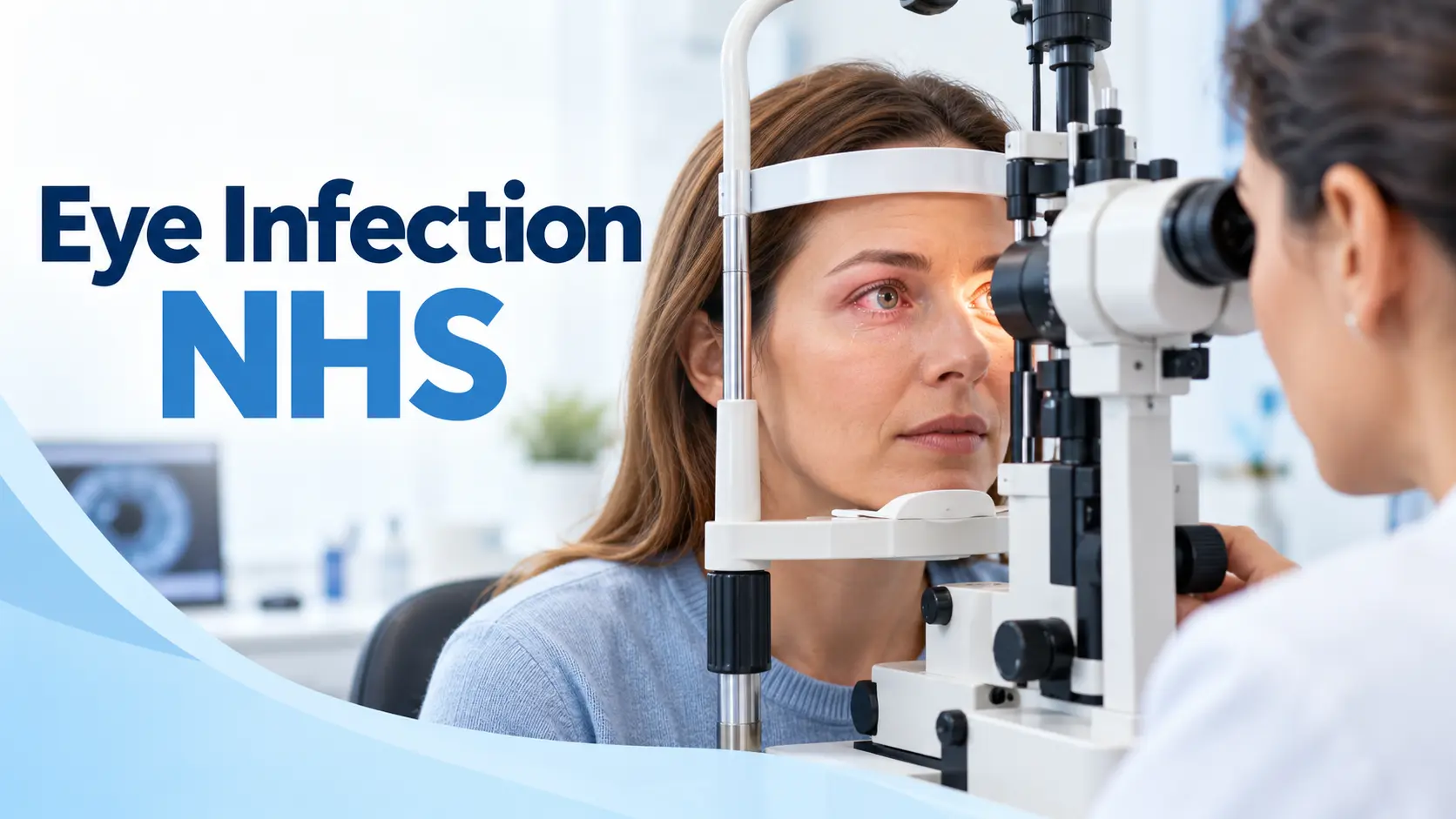
The eye may be examined using magnification and a bright light.
An ophthalmologist can use a slit lamp to inspect the cornea and deeper eye structures.
In some infections, a sample or swab may be taken.
When Do Antibiotic Eye Drops Help?
Antibiotics are useful when the problem is caused by susceptible bacteria and treatment is clinically appropriate.
They do not treat:
- Viral conjunctivitis
- Allergic conjunctivitis
- Dry eye
- Simple irritation
Some bacterial conjunctivitis improves without antibiotics.
More serious bacterial infections, especially those involving the cornea, may need intensive treatment from an eye specialist.
Do not use old eye drops left from a previous infection.
Do not share eye drops with another person.
Are Steroid Eye Drops Safe for an Eye Infection?
Steroid eye drops have an important place in ophthalmology, but they are not a safe general home treatment for an unexplained red eye.
They can make some infections worse and can affect eye pressure.
Herpes infections are one example where specialist decisions about steroid use matter.
Use steroid eye drops only when they have been prescribed for the current eye problem.
What Is Safe Home Care for Mild Conjunctivitis?
If symptoms are mild and there are no warning signs, simple care can help.
Clean Sticky Eyelids
The NHS suggests boiling water, allowing it to cool, and using it to gently clean crust from the eyelashes.
Use a clean piece of cotton wool or clean material for each eye.
Try a Cool Compress
A clean cool flannel placed over closed eyes for a few minutes can soothe irritation.
Stop Wearing Contact Lenses
Do not wear lenses while conjunctivitis is active.
Wait until the eye has recovered and follow your eye care professional's advice about restarting lenses.
Ask a Pharmacist
A pharmacist can advise on conjunctivitis symptoms and suitable over the counter products when appropriate.
Young children or people with concerning symptoms may need medical assessment instead.
How Long Does an Eye Infection Last?
The answer depends on the cause.
Mild conjunctivitis can settle in days, but viral conjunctivitis can last two or three weeks.
A stye can take longer to drain and settle.
Corneal infections, herpes infections, and deeper eye infections do not follow the same simple timeline and need professional management.
If your symptoms are worsening rather than improving, do not wait for an average recovery time to pass.
What Is a Stye?
A stye is usually a bacterial infection affecting an eyelash follicle or eyelid gland.
It normally appears as a painful red lump near the edge of the eyelid.
A yellow point can form in the centre.
Warm compresses can help many styes settle.
Do not squeeze or burst one yourself because that can spread infection.
For a full comparison with a painless eyelid cyst, see our Stye vs Chalazion Guide.
What About Blepharitis?
Blepharitis is long term inflammation around the eyelid edges.
It can cause:
- Red eyelids
- Crusting around lashes
- Grittiness
- Burning
- Dryness
- Recurring styes
Blepharitis is not always a simple acute infection.
Regular eyelid hygiene is often part of long term management.
Why Contact Lens Wearers Need Different Advice
Contact lenses sit directly over the cornea.
This can create a pathway for infection when hygiene or wear rules break down.
Risk rises with habits such as:
- Sleeping in lenses when not prescribed for overnight use
- Wearing lenses longer than directed
- Using old solution
- Adding new solution on top of old solution
- Rinsing lenses with water
- Swimming in lenses
- Showering in lenses
- Using a dirty lens case
- Handling lenses with dirty hands
Remove your contact lens when the eye becomes painful or unusually red.
Do not use a new lens to test whether the pain has gone.
Can You Get an Eye Infection From Swimming?
Yes.
Water can carry organisms that should not be trapped against the cornea by a contact lens.
This risk applies to:
- Swimming pools
- Lakes
- Hot tubs
- Showers
- Tap water used to clean lenses
One organism of concern is Acanthamoeba.
The infection is uncommon, but treatment can be difficult and vision can be affected.
Can Eye Makeup Spread Infection?
Eye makeup can transfer organisms between the cosmetic product, fingers, and eyes.
During an active infection:
- Avoid eye makeup
- Do not share mascara or eyeliner
- Wash hands before touching your face
- Follow professional advice about replacing contaminated products
Old eye cosmetics should not be shared between people.
How Do You Stop Conjunctivitis Spreading?
Infective conjunctivitis can spread through contaminated hands, tissues, towels, pillowcases, and close contact.
Helpful steps include:
- Wash your hands with soap regularly
- Avoid rubbing your eyes
- Do not share towels
- Do not share pillows
- Wash used face cloths and pillowcases
- Dispose of used tissues
- Clean discharge carefully
The NHS says children and adults usually do not need to stay away from school or work simply because of conjunctivitis unless they feel very unwell.
Local school or childcare policies may still have their own rules.
Eye Infection in Babies and Young Children
Babies need extra caution.
The NHS advises urgent assessment for a baby under 30 days old who has red, sticky eyes.
Older babies and children can develop ordinary conjunctivitis, but vision changes, pain, strong light sensitivity, severe swelling, or a child who looks very unwell needs medical assessment.
Do not use another person's eye medicine on a child.
Can a Sexually Transmitted Infection Cause Conjunctivitis?
Yes.
Some sexually transmitted infections can affect the eye.
Gonococcal eye infection is especially important because it can cause a very heavy pus discharge and can damage the cornea quickly.
Urgent specialist treatment is needed when this infection is suspected.
Tell the clinician honestly about possible exposure because the correct treatment matters.
What About Shingles Around the Eye?
Shingles can affect the nerves and tissues around one eye.
Eye involvement can cause:
- Redness
- Pain
- Light sensitivity
- Blurred vision
Blisters or a painful rash may appear around the forehead, eyelid, or nose.
Eye symptoms with shingles need prompt medical care.
What If You Recently Had LASIK or Another Eye Procedure?
New pain, increasing redness, or worsening vision after an eye procedure should be reported promptly to the treating clinic or an eye emergency service.
This includes symptoms after:
- LASIK
- Cataract surgery
- Eye injections
- Other eye operations
Do not assume it is ordinary conjunctivitis because it started after surgery.
For routine recovery information after laser vision correction, see our Eye Health After LASIK Surgery Guide.
When Should You Contact a GP, Optometrist, or NHS 111?
Get urgent advice if you have:
- Eye pain
- Light sensitivity
- Blurred or changing vision
- A very red eye
- Symptoms that are getting worse
- A painful red eye while wearing contact lenses
- A white spot on the cornea
- Recent eye surgery with new pain or reduced vision
You should also seek medical advice if conjunctivitis is not clearing as expected.
When Is an Eye Problem an Emergency?
Emergency care is appropriate for symptoms such as:
- Sudden loss of vision
- Severe eye injury
- An object stuck deeply in the eye
- A pierced eye
- Severe eye pain with sudden symptoms
- Pain and vision loss in a contact lens wearer
- Severe pain or vision loss soon after eye surgery
Do not drive yourself if your vision is seriously affected.
How Can You Prevent Eye Infections?
Wash Your Hands
Clean hands before touching your eyes, applying drops, or handling contact lenses.
Do Not Rub Your Eyes
Rubbing can move organisms from your fingers onto the eye and can make inflammation worse.
Use Contact Lenses Safely
Use only the solution recommended for your lenses.
Follow the replacement schedule.
Replace and clean the case as directed.
Keep lenses away from water.
Do Not Share Towels or Eye Makeup
Items that touch the face can spread infectious material.
Remove Makeup Before Bed
This can reduce blockage and irritation around the eyelids.
Do Not Share Eye Drops
The bottle tip can become contaminated.
Follow Care Instructions After Eye Surgery
Use prescribed drops exactly as directed and report new pain, redness, or vision loss promptly.
What Should You Avoid Putting in an Infected Eye?
Do not place random home remedies directly into the eye.
Avoid:
- Tea
- Honey
- Herbal mixtures
- Saliva
- Tap water as contact lens solution
- Someone else's eye drops
- Old prescription drops
- Unprescribed steroid drops
The eye surface is delicate.
Something that sounds natural is not automatically sterile or safe.
A Simple Eye Symptom Guide
| Pattern | Possible Explanation | What to Do |
|---|---|---|
| Red, gritty, sticky eyes | Conjunctivitis | Self care may be reasonable if mild and no red flags are present |
| Very itchy, watery eyes | Allergy is more likely | Pharmacist or clinician advice if persistent |
| Painful red eye with light sensitivity | Corneal or deeper eye disease is possible | Urgent assessment |
| Painful red eye in contact lens wearer | Microbial keratitis must be considered | Remove lens and seek urgent eye care |
| Painful eyelid lump | Stye | Warm compress and review if severe or persistent |
| Red eye after eye surgery with reduced vision | Serious postoperative infection is possible | Emergency eye assessment |
Conclusion
Eye Infection NHS advice starts with recognising that not every red eye is the same.
Mild conjunctivitis can often settle with simple care, good hygiene, and time. Antibiotics are useful only for certain bacterial infections and do nothing for viral or allergic conjunctivitis.
The symptoms that matter most are pain, light sensitivity, vision change, severe redness, and worsening symptoms. A painful red eye in a contact lens wearer needs particular caution because infection can involve the cornea and threaten vision.
Your next step is simple: if the eye is mildly gritty and sticky without pain or vision change, speak with a pharmacist or appropriate healthcare professional. If there is real pain, light sensitivity, reduced vision, or contact lens related redness, seek urgent eye care.
References and Sources
- NHS.
Conjunctivitis.
Official NHS information covering symptoms, home care, pharmacist advice, contagious conjunctivitis, antibiotics, and urgent warning signs.
https://www.nhs.uk/conditions/conjunctivitis/ - NHS.
Eye Pain.
Official NHS guidance on eye pain, vision change, contact lens symptoms, urgent eye assessment, and emergency warning signs.
https://www.nhs.uk/symptoms/eye-pain/ - Moorfields Eye Hospital NHS Foundation Trust.
Microbial Keratitis.
Specialist information on corneal infection, painful red eyes, contact lens risks, ulcers, blurred vision, and when urgent treatment is needed.
https://www.moorfields.nhs.uk/eye-conditions/microbial-keratitis - Moorfields Eye Hospital NHS Foundation Trust.
Acanthamoeba Keratitis.
Specialist information on Acanthamoeba infection, contact lens use, water exposure, pain, light sensitivity, and vision change.
https://www.moorfields.nhs.uk/eye-conditions/acanthamoeba-keratitis - NHS.
Herpes Simplex Eye Infections.
Official guidance on eye herpes symptoms, urgent referral, antiviral treatment, contact lens advice, and risk to vision.
https://www.nhs.uk/conditions/herpes-simplex-eye-infections/ - Moorfields Eye Hospital NHS Foundation Trust.
Endophthalmitis.
Specialist information on serious infection inside the eye after surgery, injection, or injury and why rapid treatment matters.
https://www.moorfields.nhs.uk/eye-conditions/endophthalmitis - Moorfields Eye Hospital NHS Foundation Trust.
Stye.
Specialist guidance on eyelid infection, symptoms, warm compresses, recurrence, and prevention.
https://www.moorfields.nhs.uk/eye-conditions/stye
Related NextFitLife Eye Health Guides
- Contact Lens Safety Guide
- Stye vs Chalazion: How to Tell the Difference
- Eye Health After LASIK Surgery
- Eye Exercises for Screen Time
- 10 Best Foods for Eye Health and Better Vision
- Senior Eye Care Guide
- Eye Cancer: Symptoms and When to Get Help
About the Author
Adel Galal is the founder and lead writer of NextFitLife. He researches and writes practical health, fitness, nutrition, eye care, and healthy aging content using recognised medical, public health, and specialist eye care sources.
For eye health topics, his role is to compare reliable clinical guidance and explain it in clear language. He does not diagnose eye disease, prescribe eye drops, examine the cornea, or replace care from an ophthalmologist or optometrist.
This content is for general educational purposes and does not replace professional medical advice, diagnosis, or treatment. Consult an appropriately qualified healthcare professional for personal medical concerns. This article explains published guidance and does not provide a personal clinical assessment. Always consult qualified medical professionals for diagnosis and treatment of any health condition.
Learn more about Adel Galal, NextFitLife, and its editorial approach on the About Us page.
Frequently Asked Questions
What are the main symptoms of an eye infection?
Common symptoms include redness, watering, burning, grittiness, sticky discharge, swollen eyelids, crusting around the lashes, and itching. Eye pain, light sensitivity, or vision changes are more concerning.
Can an eye infection go away by itself?
Some mild eye infections, especially uncomplicated viral conjunctivitis, can clear without prescription treatment. More serious infections, including corneal infections, need professional care.
Does conjunctivitis need antibiotics?
Not always. Viral conjunctivitis does not respond to antibiotics. Some bacterial cases may benefit from antibiotic drops or ointment depending on the symptoms and clinical assessment.
How can I tell if conjunctivitis is viral or bacterial?
Viral conjunctivitis often causes watery redness, while bacterial conjunctivitis may produce thicker sticky discharge. The symptoms overlap, so the cause cannot always be identified reliably at home.
Can allergy look like an eye infection?
Yes. Allergic conjunctivitis can make both eyes red, itchy, and watery, but it is caused by allergy rather than infection.
When is a red eye urgent?
Get urgent medical advice for a red eye with significant pain, light sensitivity, blurred or changing vision, severe redness, or symptoms that are getting worse.
Why are contact lens eye infections more serious?
Contact lenses sit directly on the cornea. Infection can therefore involve the cornea and cause microbial keratitis, which can scar the eye and affect vision if treatment is delayed.
Should I remove my contact lenses if my eye becomes red?
Yes. Remove contact lenses if the eye becomes painful, unusually red, or vision changes. Do not put the lens back in until the problem has been assessed and it is safe to restart lens wear.
Can swimming in contact lenses cause an eye infection?
Yes. Water exposure while wearing lenses can increase the risk of serious corneal infection, including Acanthamoeba keratitis.
Can cold sores cause an eye infection?
Yes. Herpes simplex virus, which causes many cold sores, can infect the cornea and cause a painful red eye, watering, light sensitivity, and blurred vision.
Is a stye an eye infection?
A stye is usually a small bacterial infection affecting an eyelash follicle or eyelid gland. It usually causes a painful red lump near the eyelid edge.
Should I squeeze a stye?
No. Do not burst or squeeze a stye because this can spread infection. Warm compresses can help it drain naturally.
Can I use steroid eye drops for an infection?
Do not use steroid eye drops for an unexplained red eye unless they were prescribed for the current condition. Steroids can worsen some infections and need professional supervision.
Can babies get eye infections?
Yes. A baby under 30 days old with red, sticky eyes needs urgent medical assessment according to NHS guidance.
Can eye infection cause blurred vision?
Yes. Discharge can temporarily blur vision, but persistent or worsening blurred vision can signal corneal or deeper eye disease and needs urgent assessment.
What infection can happen after eye surgery?
Endophthalmitis is a rare but serious infection inside the eye that can occur after eye surgery, an eye injection, or injury. Pain, redness, light sensitivity, or reduced vision after a procedure needs urgent eye care.

Health & wellness writer with 30+ years of experience in nutrition, fitness, and healthy aging. Founder of NextFitLife.com — evidence-based health guidance.