
First published: Jun 9, 2023
Last updated: September 30, 2026
Written and source-checked by: Adel Galal, Founder and Lead Writer at NextFitLife
Medical review status: This article has not been medically reviewed by an oncologist, colorectal surgeon, gastroenterologist, sexual health specialist, pharmacist, or other licensed healthcare professional.
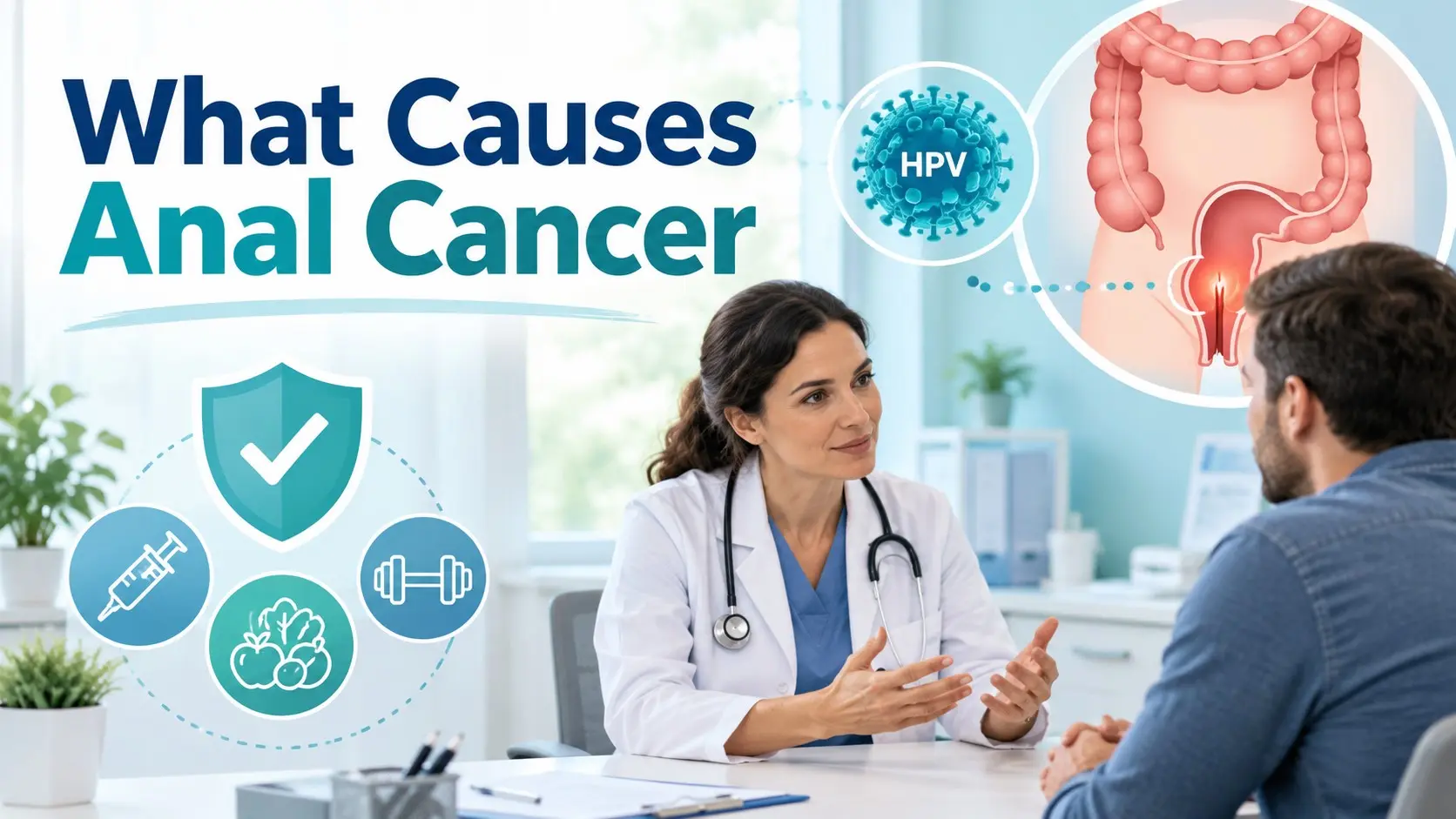
What Causes Anal Cancer has a clearer answer than many people expect. Persistent infection with certain high risk types of human papillomavirus, or HPV, is the main cause of most anal cancers.
But there is an equally important second part.
HPV is very common, and most people who get HPV do not develop anal cancer.
Risk rises when a high risk HPV infection remains in the body for years and causes abnormal cell changes. Smoking, reduced immunity, HIV, previous HPV related disease, and increasing age can also affect risk.
Quick Answer
Most anal cancers are linked to persistent infection with high risk human papillomavirus. HPV 16 is especially important. Smoking, HIV, medicines or conditions that weaken immunity, older age, previous HPV related cancers or precancer, and greater exposure to HPV can raise risk. Having HPV does not mean that you will get anal cancer.
Symptoms Should Be Checked, Not Self Diagnosed
See a healthcare professional if you notice bleeding from your bottom, a new anal lump, persistent pain or itching, mucus discharge, a lasting change in bowel habits, or a change around the anus that is not normal for you.
These symptoms are common and often have causes other than cancer, including piles and anal fissures.
The reason to get checked is not that every symptom means cancer. It is that an examination may be needed to find the real cause.
Medical notice: This content is for general educational purposes and does not replace professional medical advice, diagnosis, or treatment. Consult an appropriately qualified healthcare professional for personal medical concerns. This article explains published guidance and does not provide a personal clinical assessment. Always consult qualified medical professionals for diagnosis and treatment of any health condition.
Table of Contents
- What Anal Cancer Is
- 7 Critical Cause and Risk Facts
- How HPV Can Lead to Cancer
- HPV 16 and High Risk HPV
- Smoking and Anal Cancer
- HIV and Reduced Immunity
- Sexual Activity and HPV Risk
- Anal Warts and Cancer Risk
- Symptoms to Check
- Anal Cancer vs Haemorrhoids
- How Anal Cancer Is Diagnosed
- Anal Cancer Screening
- Prevention
- Common Myths
- Questions to Ask Your Doctor
- References and Sources
- Related NextFitLife Guides
- About the Author
- Frequently Asked Questions
What Is Anal Cancer?
Anal cancer starts when abnormal cells in or around the anus begin growing out of control.
The anus is the opening at the end of the bowel.
It is different from the rectum and colon.
Most anal cancers are anal squamous cell carcinomas. These begin in flat squamous cells lining much of the anal canal or anal margin.
Other types exist, but they are much less common.
This difference matters because anal cancer and colorectal cancer do not have exactly the same causes, screening methods, or treatments.
7 Critical Facts About What Causes Anal Cancer
1. Persistent High Risk HPV Is the Main Cause
Human papillomavirus, usually called HPV, is the strongest known cause of anal squamous cell cancer.
HPV is a large group of viruses.
Some types mainly cause harmless skin or genital warts.
Other types are called high risk HPV because persistent infection can cause abnormal cell changes that may later develop into cancer.
Around 9 in 10 anal cancers in the UK are linked with HPV.
That makes HPV prevention one of the most useful ways to reduce anal cancer risk.
2. Having HPV Does Not Mean You Will Develop Cancer
This is one of the most important facts in the whole article.
HPV is common.
Most infections clear without causing cancer.
The concern is mainly when a high risk infection persists for a long time and begins changing cells.
A positive HPV result is therefore not a cancer diagnosis.
It is also not proof that cancer will develop later.
3. HPV 16 Is Especially Important
Not every HPV type carries the same risk.
HPV 16 is the high risk type most strongly linked with anal cancer.
HPV 18 is also a high risk type, although it appears less frequently in anal cancer.
Persistent high risk HPV can cause precancerous changes before invasive cancer develops.
These abnormal changes may be described as anal intraepithelial neoplasia, or AIN, or as anal squamous intraepithelial lesions.
Having an abnormal cell change does not automatically mean invasive cancer is present.
4. Reduced Immunity Makes Persistent HPV More Likely
A healthy immune system clears many HPV infections.
If immunity is weakened, persistent HPV infection becomes more likely.
Anal cancer risk is higher in some people with:
- HIV
- Previous organ transplantation
- Medicines that suppress the immune system
- Other forms of significant long term immunosuppression
This does not mean everyone with reduced immunity will develop anal cancer.
It means individual risk can be much higher than average and may justify a more specialised prevention or follow up plan.
5. Smoking Raises Anal Cancer Risk
Smoking does much more than damage the lungs.
It is an established risk factor for anal cancer.
Tobacco chemicals reach tissues throughout the body, and smoking can also affect immune function.
People who currently smoke have a higher anal cancer risk than people who do not smoke.
Stopping smoking reduces many cancer risks and provides wider benefits for the heart, lungs, circulation, and overall health.
6. Previous HPV Related Disease Can Raise Risk
People with a history of certain HPV related cancers or precancerous changes can have a higher risk of anal cancer.
This includes a history of:
- Cervical cancer or precancer
- Vulval cancer or precancer
- Vaginal cancer or precancer
- Other important HPV related disease
Previous anal or genital warts can also signal HPV exposure.
This does not mean that a wart itself has become cancer.
The HPV types that usually cause visible genital warts are considered low risk for cancer, but a person can be exposed to more than one HPV type.
7. Age and HPV Exposure Change Risk, but Risk Is Not a Moral Judgement
Anal cancer becomes more common with age.
NHS guidance notes a higher likelihood in older adults, particularly people over 75.
Behaviours that increase exposure to HPV can also increase risk.
These include having more sexual partners and receptive anal sex.
But anal sex itself does not directly create cancer.
The link is mainly that sexual skin contact can spread HPV.
HPV can also spread through other intimate genital skin contact, vaginal sex, oral sex, and shared sex toys.
You do not have to have had receptive anal sex to get anal cancer.
Risk information should help people make health decisions.
It should not be used to shame anyone.
How Does HPV Turn Into Anal Cancer?
Most HPV infections never reach this point.
But when a cancer causing HPV type remains in cells, viral proteins can interfere with normal systems that control cell growth.
Abnormal cells may then appear.
Some abnormal cells disappear.
Others persist.
Over time, high grade precancerous changes can sometimes progress into invasive cancer.
This process usually takes years, not days.
Can HPV Stay Hidden for Years?
Yes.
HPV often causes no obvious symptoms.
A person can have HPV without knowing it.
That means a later HPV related problem does not tell you exactly when the infection occurred or from whom it came.
This point matters because HPV can create unnecessary blame in relationships.
A cancer diagnosis cannot be used to work out when a person first acquired HPV.
Does Anal Sex Cause Anal Cancer?
No.
Receptive anal sex is associated with increased anal cancer risk because it can increase exposure to HPV.
That is not the same as saying the sexual act directly causes cancer.
HPV is spread through close skin contact and sexual contact.
A person can get HPV without having anal sex.
This distinction is important because the myth can create stigma and may stop people from discussing symptoms honestly with a clinician.
Do Anal Warts Turn Into Cancer?
Usually, no.
Most visible genital and anal warts are caused by HPV types considered low risk for cancer.
The high risk HPV types linked with cancer often cause no visible wart at all.
People who have had anal or genital warts can still have a higher overall risk because they have been exposed to HPV and may have been exposed to more than one type.
A new, changing, bleeding, or unusual anal growth should still be examined.
Does HIV Cause Anal Cancer?
HIV does not directly create anal cancer in the same way high risk HPV does.
HIV can weaken immune control of HPV.
This makes persistent infection and abnormal cell changes more likely.
People living with HIV therefore have a substantially higher anal cancer risk than the general population.
Effective HIV treatment remains important for overall immune health.
Does Smoking Cause Anal Cancer?
Smoking is a recognised risk factor.
It does not mean every smoker will develop the disease.
It also does not mean anal cancer in a smoker was caused only by tobacco.
Cancer risk is usually the result of several biological and exposure factors acting over time.
Does Genetics Cause Anal Cancer?
Inherited genetics is not considered one of the main established causes of most anal cancers.
This is an important correction to broad claims that place “genetics” beside HPV as if both were equally important.
The strongest established factor for squamous cell anal cancer is persistent high risk HPV.
Other recognised factors include smoking and impaired immunity.
Your individual medical and family history can still matter, so discuss unusual family cancer patterns with your doctor.
What Are the Symptoms of Anal Cancer?
Possible symptoms include:
- Bleeding from the anus
- Blood when you poo
- Anal pain
- Persistent itching
- A lump around or inside the anus
- Mucus discharge
- A change in bowel habits
- Looser stools
- Needing to poo more often
- Difficulty controlling bowel movements
Some anal cancers cause few or no symptoms at first.
Many of these symptoms are much more commonly caused by noncancerous conditions.
Still, a new or persistent change should be checked.
Anal Cancer vs Haemorrhoids
| Feature | Can Occur With Haemorrhoids | Can Occur With Anal Cancer |
|---|---|---|
| Bleeding | Yes | Yes |
| Anal lump | Yes | Yes |
| Itching | Yes | Yes |
| Pain | Possible | Possible |
| Mucus or bowel changes | Less typical but possible with other bowel problems | Possible |
| Can symptoms alone tell the difference? | No. Examination may be needed. | |
Do not assume repeated bleeding is piles simply because you have had haemorrhoids before.
A clinician can examine the area and decide whether tests are needed.
Do Haemorrhoids Cause Anal Cancer?
No evidence shows that ordinary haemorrhoids turn into anal cancer.
The problem is symptom overlap.
Both can cause bleeding or a lump.
The same principle applies to anal fissures.
A fissure is not the same disease as anal cancer, but ongoing symptoms deserve assessment.
How Is Anal Cancer Diagnosed?
There is no home test that can confirm anal cancer.
A GP may begin by asking about symptoms and medical history.
They may examine your abdomen and the skin around the anus.
Digital Rectal Examination
A digital rectal examination involves a healthcare professional gently placing a gloved, lubricated finger into the anus and rectum.
This allows them to feel for lumps or abnormal areas.
Anoscopy
Anoscopy uses a short tube to look directly inside the anal canal.
A specialist can inspect an abnormal area closely.
Biopsy
A biopsy removes a small tissue sample.
A pathologist then examines the tissue under a microscope.
This is how suspected anal cancer is confirmed.
Scans
If cancer is found, tests such as MRI, CT, or PET CT may be used to learn more about its size and whether it has spread.
Does a Colonoscopy Detect Anal Cancer?
A colonoscopy is designed mainly to examine the colon and rectum.
The anus is still visible during insertion and withdrawal, so an abnormal area can sometimes be noticed.
But colonoscopy does not replace a proper anal examination when anal cancer is suspected.
Diagnosis can require anoscopy and biopsy.
Bowel cancer screening is also not the same thing as anal cancer screening.
Is There an Anal Cancer Screening Test?
There is currently no national population screening programme for anal cancer in the UK.
This is different from bowel, breast, and cervical cancer screening.
People with a higher individual risk should discuss that risk with their GP or specialist team.
In some specialist settings, evaluation can include:
- Physical examination
- Digital anorectal examination
- Anal cytology
- HPV related tests
- High resolution anoscopy
These tests are not routine population screening for everyone.
The right approach depends on your country, medical history, HIV status, immune health, previous HPV related disease, and local specialist guidelines.
How Can You Lower Anal Cancer Risk?
1. Get the HPV Vaccine When Eligible
HPV vaccination is one of the strongest prevention tools for HPV related cancers.
The vaccine prevents infection with important cancer causing HPV types.
It does not treat an HPV infection you already have.
In England, the NHS routinely offers HPV vaccination to children aged 12 to 13.
Catch up vaccination is also available for eligible younger adults who missed it at school.
Men aged 45 and under who have sex with men can also qualify through sexual health or HIV services, and vaccination is recommended for some other people at increased HPV risk.
If you are unsure whether you qualify, ask your GP or sexual health clinic.
2. Do Not Smoke
If you smoke, stopping is one of the most useful cancer prevention steps you can take.
It reduces risk far beyond anal cancer.
Use professional stop smoking support if quitting alone has been difficult.
3. Reduce HPV Exposure
Condoms can reduce exposure to HPV and other sexually transmitted infections.
They cannot provide complete HPV protection because HPV can spread through skin that a condom does not cover.
Clean sex toys between users and avoid sharing them without appropriate cleaning or a new condom covering them.
4. Look After HIV Treatment
If you live with HIV, take antiretroviral treatment as prescribed and stay engaged with your HIV care team.
Good HIV care supports immune health.
Your team can also advise whether your anal cancer risk needs specific monitoring.
5. Attend Recommended HPV Related Follow Up
If you have had cervical, vulval, vaginal, penile, or other significant HPV related precancer or cancer, keep follow up appointments.
Ask whether your history changes your anal cancer risk.
6. Report Persistent Anal Changes
Prevention and early diagnosis are not the same thing.
You cannot prevent every anal cancer.
But you can avoid ignoring symptoms for months because they feel embarrassing.
A clinician has heard these symptoms before.
Common Myths About Anal Cancer
Myth 1: Only People Who Have Anal Sex Get Anal Cancer
Fact: No.
Receptive anal sex can increase HPV exposure and anal cancer risk, but people who have never had anal sex can also develop anal cancer.
Myth 2: HPV Means I Will Get Cancer
Fact: No.
HPV is common and most infections do not progress to cancer.
Persistent infection with certain high risk types is the main concern.
Myth 3: Anal Warts Become Anal Cancer
Fact: Usually not.
The HPV types that commonly cause genital warts are usually considered low risk for cancer.
But a history of warts can indicate HPV exposure.
Myth 4: Anal Cancer Is the Same as Bowel Cancer
Fact: No.
Anal cancer begins in the anus.
Colorectal cancer begins in the colon or rectum.
The cancers have different biology, risk factors, screening approaches, and treatments.
Myth 5: Bleeding From the Bottom Is Probably Just Piles
Fact: Haemorrhoids are common, but symptoms alone cannot always tell the cause.
Repeated, unexplained, or changing bleeding should be assessed.
Myth 6: There Is a Routine Anal Cancer Screening Programme
Fact: There is no national anal cancer screening programme in the UK.
Higher risk people can discuss individual assessment with their healthcare team.
Myth 7: An Anal Cancer Diagnosis Automatically Means a Permanent Colostomy
Fact: No.
The most common type of anal cancer is often treated primarily with radiotherapy and chemotherapy together.
Surgery and a permanent stoma are needed in some situations, but not for every person.
Can Anal Cancer Be Prevented Completely?
No prevention strategy offers a guarantee.
HPV vaccination can prevent infection with important cancer causing HPV types.
Not smoking lowers risk.
Safer sexual practices can reduce HPV exposure, although they cannot remove it completely.
Good HIV care and appropriate follow up can also matter for higher risk people.
But someone can do everything “right” and still develop cancer.
Prevention is about lowering risk, not assigning blame.
Who Should Talk to a Doctor About Higher Risk?
Consider discussing your personal risk if you:
- Live with HIV
- Have had an organ transplant
- Take long term immune suppressing treatment
- Have had cervical, vulval, vaginal, penile, or other HPV related precancer or cancer
- Have had anal precancer
- Have repeated anal symptoms
- Have another reason your specialist considers you at increased risk
Higher risk does not mean cancer is present.
It means personalised advice may be useful.
Questions to Ask Your Doctor
- Could my symptoms be caused by haemorrhoids, a fissure, infection, or another condition?
- Do I need a digital rectal examination?
- Do I need anoscopy or a specialist referral?
- Would a biopsy be needed if you find an abnormal area?
- Does my HIV or immune history change my risk?
- Does my previous HPV related disease change my risk?
- Am I eligible for HPV vaccination?
- Do I need any specialist surveillance because of my risk?
- Which symptoms should make me return sooner?
Conclusion
What Causes Anal Cancer is best answered with one central fact: persistent high risk HPV infection causes most cases, but HPV infection itself is common and usually does not become cancer.
Smoking, reduced immunity, HIV, previous HPV related disease, age, and greater HPV exposure can raise risk.
The most useful prevention steps are HPV vaccination when eligible, avoiding smoking, reducing HPV exposure, following HIV and specialist care, and getting persistent anal symptoms checked rather than assuming they are piles.
If you have bleeding, a new lump, lasting pain, mucus discharge, severe itching, or a persistent change in bowel habits, book a medical assessment. The symptom may have a harmless explanation, but an examination is the safest way to know what is going on.
References and Sources
Cancer Research UK: Anal cancer overview, risks and diagnosis
Cancer Research UK: Screening for anal cancer
NHS: HPV vaccine and current eligibility
National Cancer Institute: Anal Cancer Prevention
American Cancer Society: Anal Cancer Causes, Risk Factors, and Prevention
Related NextFitLife Guides and Hubs
- Cancer Awareness and Prevention Hub
- Cancer Prevention: Evidence Based Ways to Lower Risk
- Medical Tests and Screenings Hub
- Hot Flashes and Cancer: Possible Links and When to Check
- NextFitLife Health Hub
About the Author
Adel Galal is the founder and lead writer of NextFitLife. He writes practical health, cancer awareness, nutrition, fitness, screening, and healthy aging content for readers who want clear explanations without exaggerated health claims.
His research approach focuses on comparing current information from recognised cancer organisations, public health bodies, medical guidelines, and specialist resources before turning it into plain language.
For cancer topics, his role is educational. He does not diagnose anal cancer, interpret biopsy results, recommend individual cancer treatment, or replace care from an oncologist, colorectal surgeon, sexual health specialist, or other qualified clinician.
This content is for general educational purposes and does not replace professional medical advice, diagnosis, or treatment. Consult an appropriately qualified healthcare professional for personal medical concerns. This article explains published guidance and does not provide a personal clinical assessment. Always consult qualified medical professionals for diagnosis and treatment of any health condition.
Learn more about Adel Galal and NextFitLife on the About Us page.
Frequently Asked Questions
What is the main cause of anal cancer?
Persistent infection with high risk human papillomavirus is the main cause of most anal cancers. HPV 16 is the type most strongly associated with anal squamous cell cancer.
Does everyone with HPV get anal cancer?
No. HPV is very common, and most people with HPV never develop anal cancer. Persistent infection with a high risk HPV type is the main concern.
How common is HPV in anal cancer?
Around 90% of anal cancers in the UK are linked with HPV, according to Cancer Research UK.
Does HPV 16 cause anal cancer?
HPV 16 is the high risk HPV type most strongly linked with anal cancer. Persistent HPV 16 infection can lead to abnormal cell changes that may progress to cancer in some people.
Can you get anal cancer without having anal sex?
Yes. You do not need to have had anal sex to develop anal cancer. HPV can spread through several forms of intimate skin and sexual contact.
Does anal sex directly cause anal cancer?
No. Receptive anal sex can increase exposure to HPV, which can increase risk, but the sexual act itself is not a direct cancer causing agent.
Can anal warts become cancer?
Most anal and genital warts are caused by low risk HPV types that rarely cause cancer. A history of warts can still indicate HPV exposure, and a person can have more than one HPV type.
Can haemorrhoids turn into anal cancer?
No evidence shows that ordinary haemorrhoids turn into anal cancer. The concern is that symptoms such as bleeding and lumps can overlap, so persistent symptoms should be examined.
Does smoking increase anal cancer risk?
Yes. Cigarette smoking is an established anal cancer risk factor. Stopping smoking also lowers the risk of many other cancers and cardiovascular and lung diseases.
Does HIV cause anal cancer?
HIV does not directly cause most anal cancer. HIV weakens immune control of infections such as HPV, which can make persistent high risk HPV and abnormal cell changes more likely.
Can an organ transplant increase anal cancer risk?
Yes. People who have had an organ transplant may have higher risk because immune suppressing medicines can reduce the body's ability to control persistent HPV infection.
Can the HPV vaccine prevent anal cancer?
The HPV vaccine protects against important HPV types that cause anal and several other cancers. It works best before exposure and does not treat an HPV infection that is already present.
Is there routine NHS screening for anal cancer?
No. There is currently no national anal cancer screening programme in the UK. People at higher risk should discuss individual assessment with their GP or specialist team.
Can a colonoscopy detect anal cancer?
An abnormal anal area can sometimes be seen during colonoscopy, but colonoscopy is mainly designed to examine the colon and rectum. Suspected anal cancer often requires a direct anal examination, anoscopy, and biopsy.
What are the first symptoms of anal cancer?
Possible symptoms include anal bleeding, pain, persistent itching, a lump, mucus discharge, bowel changes, or difficulty controlling bowel movements. Some people have few symptoms early on.
Is anal cancer the same as colorectal cancer?
No. Anal cancer starts in the anus, while colorectal cancer starts in the colon or rectum. They differ in biology, major risk factors, screening, and treatment.
Is anal cancer treatable?
Yes. Anal cancer can often be treated successfully, especially when found before it has spread widely. Treatment depends on cancer type, size, location, spread, and overall health.
Does anal cancer always require a colostomy?
No. Many anal squamous cell cancers are treated with chemotherapy and radiotherapy rather than immediate major surgery. A permanent colostomy is needed only in some situations.

Health & wellness writer with 30+ years of experience in nutrition, fitness, and healthy aging. Founder of NextFitLife.com — evidence-based health guidance.