
Published on: Aug 30, 2023
Last updated: October 5, 2026
Next review: October 2027, or sooner if major hematology or blood clot guidance changes.
Written and source checked by: Adel Galal, Founder and Lead Writer at NextFitLife
Medical review status: This article has not been medically reviewed by a hematologist, doctor, vascular specialist, cardiologist, pharmacist, or other licensed healthcare professional.
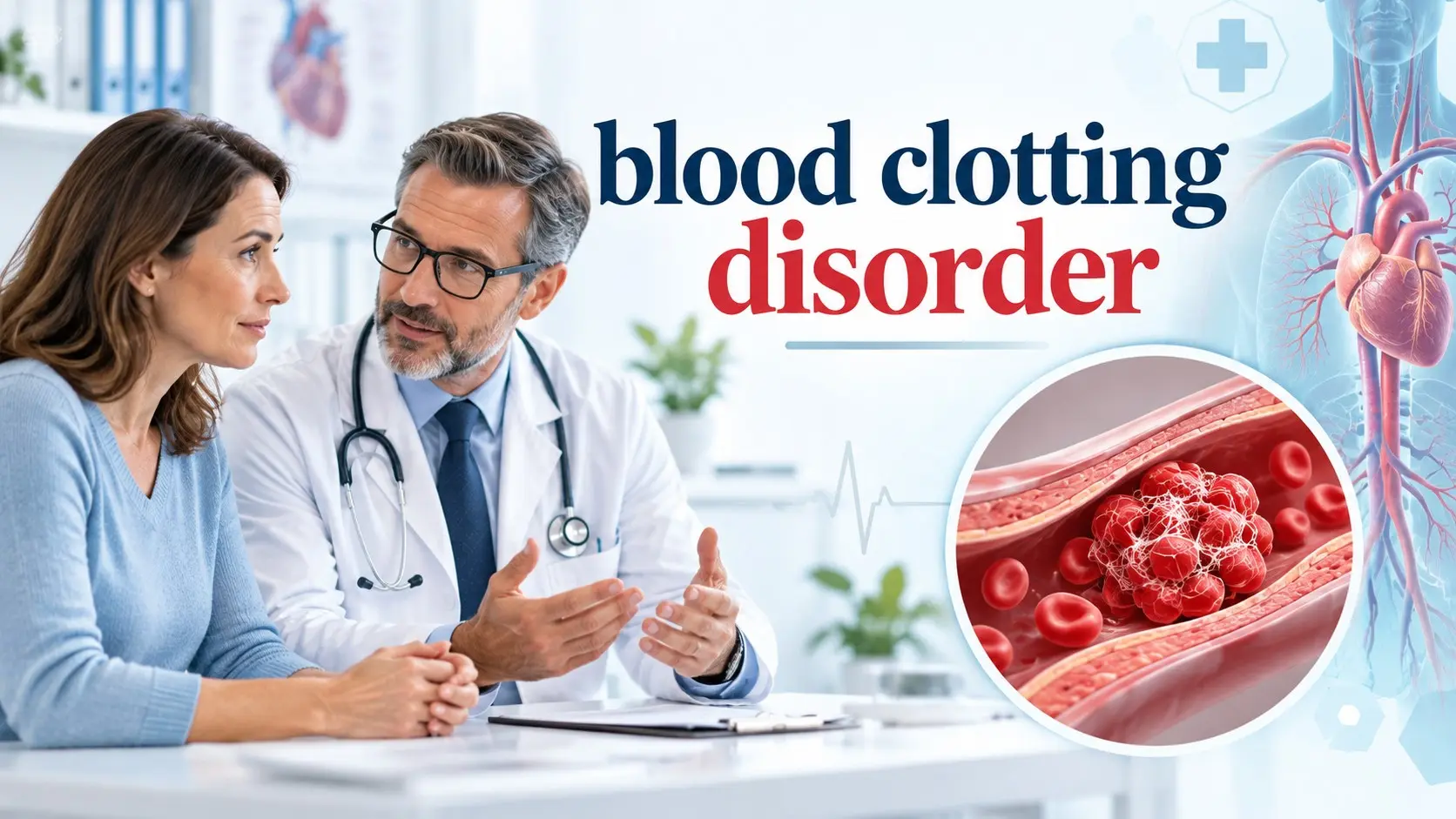
A blood clotting disorder can make blood form clots more easily than it should. These conditions are also called thrombophilias. Warning signs depend on where a clot forms. One swollen painful leg can suggest DVT, while sudden shortness of breath, chest pain, coughing blood, fainting, or severe dizziness can signal a pulmonary embolism and need emergency care.
There is one important detail to get right from the start.
A clotting disorder is not the same thing as every disorder involving blood clotting.
Some conditions make blood clot too easily.
Others make it difficult to stop bleeding.
This guide focuses mainly on the first group.
Medical Notice: This content is for general educational purposes and does not replace professional medical advice, diagnosis, or treatment. Consult an appropriately qualified healthcare professional for personal medical concerns.
Call emergency services for sudden severe shortness of breath, chest pain with breathing difficulty, coughing up blood, fainting, new facial drooping, new one sided weakness, or sudden trouble speaking. Do not try to diagnose a pulmonary embolism or stroke at home.
Table of Contents
- What a Blood Clotting Disorder Means
- Normal clotting
- Excess clotting versus bleeding disorders
- 11 Critical Red Flags
- One sided leg swelling
- Leg pain or tenderness
- Warm or discolored skin
- Sudden shortness of breath
- Chest pain
- Fast or irregular heartbeat
- Coughing blood
- Fainting or severe dizziness
- Stroke symptoms
- Unusual site clots
- Repeated or unexplained clots
- Inherited Disorders
- Acquired Disorders
- Risk Factors
- Testing and Diagnosis
- Treatment
- Prevention
- Frequently Asked Questions
What is a blood clotting disorder?
Clotting is a normal and necessary process.
When a blood vessel is injured, platelets and clotting proteins work together to form a plug and a fibrin clot. This helps stop bleeding while the damaged tissue heals.
A blood clotting disorder means this system is not controlled normally.
In a thrombophilia, the balance shifts toward unwanted clot formation inside blood vessels.
These abnormal clots can block normal blood flow.
Clotting disorders may be:
- Inherited: caused by gene changes you were born with
- Acquired: developed because of another condition or health event
Having a thrombophilia does not mean you will definitely develop a clot.
It means your risk can be higher.
Is a blood clotting disorder the same as a bleeding disorder?
No.
The distinction between unwanted clotting and excessive bleeding matters for diagnosis and treatment.
Conditions such as hemophilia and von Willebrand disease mainly cause excessive or prolonged bleeding because normal clot formation does not work well enough.
Conditions such as Factor V Leiden and some other thrombophilias push the balance in the opposite direction and increase the tendency to form unwanted clots.
| Problem | What Happens | Examples |
|---|---|---|
| Thrombophilia | Blood has an increased tendency to form unwanted clots | Factor V Leiden, prothrombin mutation, protein C deficiency, protein S deficiency, antithrombin deficiency, APS |
| Bleeding disorder | Blood does not clot well enough to stop bleeding normally | Hemophilia, von Willebrand disease, some clotting factor deficiencies |
A person can also have a complex condition in which clotting and bleeding happen together.
Disseminated intravascular coagulation is one example and is very different from a stable inherited thrombophilia.
What is venous thromboembolism?
Venous thromboembolism, or VTE, includes two closely related conditions.
Deep vein thrombosis, or DVT, is a clot in a deep vein. It most often occurs in the lower leg, thigh, or pelvis, but it can also occur in an arm.
Pulmonary embolism, or PE, occurs when part of a clot travels to the lungs and blocks blood flow.
PE can be life threatening.
A person can also develop PE without noticing clear DVT symptoms first.
1. One sided leg or arm swelling is a major warning sign
DVT commonly affects one side.
The leg may look or feel larger than the other leg.
The swelling can involve the calf, ankle, thigh, or much of the limb.
A blood clot is not the only cause of one sided swelling.
Injury, infection, vein disease, and other conditions can do this too.
But unexplained new swelling deserves prompt assessment, especially after surgery, long immobility, pregnancy, cancer treatment, or a previous clot.
2. Leg pain or tenderness can signal DVT
DVT discomfort may feel like soreness, cramping, tenderness, or aching.
It often affects one leg.
The mistake is assuming every calf ache is a clot or, at the other extreme, assuming a clot must be extremely painful.
Neither is true.
CDC notes that about half of people with DVT have no symptoms at all.
That makes risk factors important too.
3. Warmth, redness, or discoloration can occur over a clot
The affected area can feel warmer than the surrounding skin.
The skin may also look red or discolored.
This pattern becomes more concerning when warmth, swelling, and tenderness appear together in one limb.
Do not massage a leg because you think there might be a DVT.
Get medical assessment.
4. Sudden shortness of breath can mean pulmonary embolism
This is an emergency warning sign.
A clot that travels to the lungs can reduce normal blood flow through the lungs and make breathing suddenly difficult.
The breathlessness may appear without warning.
You can have a pulmonary embolism without seeing any swelling in your legs first.
Call emergency services for sudden unexplained breathing difficulty, especially when combined with chest pain, fainting, coughing blood, or a fast heartbeat.
5. Chest pain that worsens with breathing can be a PE symptom
Pulmonary embolism can cause chest pain or discomfort.
It can become worse when you take a deep breath or cough.
Heart attacks, pneumonia, collapsed lung, inflammation around the lungs, and other conditions can also cause chest pain.
You cannot safely tell these apart from symptoms alone.
Emergency assessment is the right next step.
6. A fast or irregular heartbeat can occur with PE
CDC includes a faster than normal or irregular heartbeat among possible pulmonary embolism symptoms.
This symptom alone does not prove a clot.
It becomes more concerning when it starts suddenly with breathing difficulty, chest discomfort, faintness, or other PE symptoms.
7. Coughing up blood is an emergency red flag
A PE can cause coughing and sometimes coughing up blood.
Blood in sputum has other possible causes, including lung infection and airway disease.
Do not assume it is harmless.
Coughing blood together with sudden chest pain or breathing trouble needs emergency assessment.
8. Fainting, severe dizziness, or very low blood pressure can mean a serious PE
A large pulmonary embolism can put major strain on the heart and reduce blood flow to the body.
Possible signs include:
- Lightheadedness
- Fainting
- Severe weakness
- Confusion
- Very low blood pressure
These symptoms are emergencies.
Do not drive yourself if you are faint, severely breathless, or unstable.
9. Sudden stroke symptoms need emergency care
Clotting disorders can sometimes be linked with clots in arteries or unusual blood vessels.
Sudden stroke symptoms include:
- Face drooping
- New weakness or numbness on one side
- Trouble speaking
- Trouble understanding speech
- Sudden severe balance problems
- Sudden major vision change
Call emergency services immediately.
Do not wait to see whether the symptoms improve.
10. Clots can occur in unusual locations
Not every dangerous clot forms in the leg or lung.
Clots can develop in less common sites, including veins in the abdomen or brain.
Symptoms depend on the affected vessel and organ.
An unusual clot location is one reason a hematologist may think more carefully about an underlying thrombophilia.
The American Society of Hematology includes selected unusual site thrombosis among situations where thrombophilia testing may change management.
11. Recurrent or unexplained clots deserve a deeper evaluation
A clot after major surgery has an obvious temporary trigger.
A second clot without a clear trigger is a different story.
A doctor may consider a broader evaluation when someone:
- Has repeated VTE
- Develops a clot at a young age
- Has a strong family history
- Develops thrombosis in an unusual location
- Has pregnancy related thrombosis
- Has clotting associated with certain hormone exposures
This does not mean everyone needs a genetic clotting panel.
That distinction matters.
Which blood clotting disorders are inherited?
Several inherited conditions can raise clot risk.
Factor V Leiden
Factor V Leiden is an inherited change in the F5 gene.
It makes factor V harder for activated protein C to switch off, so the clotting process can stay active longer than usual.
It raises the risk of venous clots, especially DVT.
Having Factor V Leiden does not mean a blood clot is inevitable.
Many people with the mutation never develop an abnormal clot.
Prothrombin gene mutation
The prothrombin G20210A mutation is another inherited thrombophilia.
It can increase the tendency to develop venous blood clots.
Protein C deficiency
Protein C helps control clotting.
Too little functional protein C can leave the clotting system less controlled and raise thrombosis risk.
Protein S deficiency
Protein S works with protein C.
Inherited deficiency can also increase VTE risk.
Antithrombin deficiency
Antithrombin helps limit clotting activity.
Inherited deficiency is less common but can carry a substantial clotting risk in affected families.
Which blood clotting disorders are acquired?
You do not have to be born with a thrombophilia.
Antiphospholipid syndrome
Antiphospholipid syndrome, or APS, is an autoimmune disorder associated with abnormal blood clots.
It can affect veins or arteries.
It is also associated with some pregnancy complications.
Diagnosis is more than finding one abnormal antibody result.
Clinical history and properly timed laboratory testing matter.
Disseminated intravascular coagulation
DIC is very different from common inherited thrombophilia.
Severe illness such as sepsis or major injury can trigger widespread abnormal clotting activity.
Clotting factors and platelets can then become consumed, so serious bleeding can occur too.
This is a medical emergency, not a chronic lifestyle condition.
What raises the chance of DVT or pulmonary embolism?
A thrombophilia is only one part of clot risk.
CDC lists several major risk factors.
| Risk Factor | Why It Matters | Practical Point |
|---|---|---|
| Previous DVT or PE | A previous clot raises future risk | Follow the prevention plan from your clinician |
| Major surgery or injury | Vein injury and reduced movement can increase risk | Use prescribed clot prevention after surgery |
| Limited mobility | Slower blood flow can favor clot formation | Move when medically safe |
| Pregnancy and postpartum | Pregnancy shifts clotting balance and can slow venous flow | Risk continues into the months after birth |
| Estrogen containing medicine | Some contraceptives and hormone therapies raise VTE risk | Discuss personal and family clot history before use |
| Cancer | Cancer and some treatments increase clot risk | Prevention depends on individual cancer and bleeding risk |
| Inherited thrombophilia | Some gene changes increase lifetime clot tendency | Risk varies greatly by the specific disorder |
| Family history | Can suggest inherited or shared clotting risk | Tell your clinician about close relatives with VTE |
Risk factors can stack.
A person with an inherited thrombophilia who then has surgery, prolonged immobility, or estrogen exposure can have a very different risk profile from someone with the same gene change and no additional risk factors.
How does pregnancy affect blood clot risk?
Pregnancy increases the risk of venous blood clots.
CDC notes that increased risk continues after delivery, including during the first three months postpartum.
Risk can be higher when other factors are present, such as:
- Previous VTE
- Known thrombophilia
- Strong family history
- Reduced mobility
- Some pregnancy complications
A known clotting disorder should be discussed with the obstetric team early.
Do not start aspirin or anticoagulants during pregnancy because of an internet risk score.
Prevention is individualized.
Does birth control cause blood clots?
Some estrogen containing contraceptives increase VTE risk.
That does not mean everyone taking them will develop a clot.
Your personal history matters.
Tell your clinician before using estrogen containing contraception if you have:
- A previous blood clot
- A known thrombophilia
- A strong family history of early or repeated VTE
- Other major clot risk factors
Do not order a full genetic clotting panel simply because you are considering birth control.
Current ASH guidance recommends against routine thrombophilia screening of the general population before starting combined oral contraceptives.
Should everyone with a blood clot get thrombophilia testing?
No.
This is one of the most useful updates to understand.
More testing is not always better.
The American Society of Hematology recommends limiting thrombophilia testing to selected situations where the result is likely to change treatment or prevention decisions.
Testing can be considered in selected patients with:
- Some VTE events linked with nonsurgical temporary risk factors
- Pregnancy related VTE
- VTE associated with oral contraceptive exposure
- Some unusual site thromboses
- A family history of high risk thrombophilia
ASH suggests not testing in many other common situations.
A positive result can create anxiety and affect treatment decisions for years, so there should be a reason for ordering it.
What tests diagnose a current blood clot?
This is different from thrombophilia testing.
If the concern is an active DVT or PE, doctors need to determine whether a clot is present now.
D dimer
A D dimer blood test measures material released when fibrin in a clot breaks down.
It can help rule out VTE in selected people when combined with clinical risk assessment.
A positive D dimer does not prove you have a clot because many conditions can raise it.
Ultrasound
Ultrasound is commonly used to look for DVT in deep veins.
CT pulmonary angiography
CT pulmonary angiography is a major imaging test used to diagnose pulmonary embolism.
The right test depends on symptoms, medical history, pregnancy status, kidney function, and clinical risk.
What tests look for thrombophilia?
A thrombophilia panel can include tests for:
- Factor V Leiden
- Prothrombin G20210A mutation
- Antithrombin deficiency
- Protein C deficiency
- Protein S deficiency
- Lupus anticoagulant
- Anticardiolipin antibodies
- Anti beta 2 glycoprotein I antibodies
The last three relate to antiphospholipid syndrome.
Testing is not as simple as drawing blood at any random time.
Acute illness and some medicines can affect certain clotting test results.
Your doctor or hematologist should decide which tests matter and when to perform them.
Does a positive Factor V Leiden test mean you need blood thinners forever?
No.
Treatment is based on the whole clinical picture.
Doctors consider:
- Whether you have ever had a clot
- Why the clot happened
- Whether clots have repeated
- Your specific thrombophilia
- Your bleeding risk
- Pregnancy plans
- Other health conditions
Some people with Factor V Leiden never develop VTE and never need long term anticoagulation.
How is a DVT or pulmonary embolism treated?
Anticoagulants, often called blood thinners, are the main treatment for many cases of VTE.
These medicines reduce the blood's ability to form additional harmful clots.
They help stop the existing clot from growing and reduce the chance of new clots.
They do not usually make an established clot disappear instantly.
Your body gradually breaks down the clot over time.
Anticoagulant options can include:
- Heparin medicines
- Warfarin
- Direct oral anticoagulants
The right drug depends on the type of clotting disorder, kidney function, pregnancy, cancer, other medicines, bleeding risk, and other health factors.
Are clot dissolving medicines the same as blood thinners?
No.
This distinction matters.
Anticoagulants help prevent clot growth and new clot formation.
Thrombolytic medicines actively break down clots and are reserved for selected serious situations because they can cause major bleeding.
Some high risk pulmonary embolisms can also require catheter based or surgical treatment.
These are hospital decisions.
Can blood thinners cause bleeding?
Yes.
Reducing harmful clotting also increases bleeding risk.
Seek medical advice for unusual or significant bleeding while taking an anticoagulant.
Emergency assessment is needed for severe bleeding, vomiting blood, large amounts of blood in stool, serious head injury, sudden severe headache, fainting, or other major symptoms.
Do not stop a prescribed anticoagulant without speaking with the clinician managing it unless emergency professionals instruct you differently.
Does vitamin K affect blood thinners?
Vitamin K matters especially with warfarin.
The goal is usually consistent vitamin K intake, not removing every green vegetable from your diet.
Sudden large changes in vitamin K intake can affect warfarin control.
Do not start vitamin K supplements without discussing them with your clinician if you take warfarin.
For a fuller explanation, read Vitamin K2 Benefits and Blood Thinner Safety.
Can you prevent a blood clotting disorder?
You cannot prevent an inherited thrombophilia because you are born with the genetic change.
You may also be unable to prevent some acquired clotting disorders.
What you can often reduce is the chance that a dangerous clot forms during a high risk period.
Know your personal history
Tell your healthcare team if you previously had DVT or PE.
A previous clot changes future risk.
Know your family history
A close relative with repeated or unusually early blood clots can matter.
Move when medically safe
Long periods of immobility slow blood flow through the legs.
After surgery or illness, follow the medical team's advice about walking and movement.
Use prescribed prevention after surgery
Some patients need anticoagulant medicine after surgery or hospitalization.
Use it exactly as prescribed.
Plan long travel around your real risk
Long travel usually carries a small absolute clot risk for healthy people.
The risk rises when other factors are present.
Movement during long travel is sensible.
Compression stockings or preventive medicine should be based on your risk and professional advice rather than used automatically.
Discuss estrogen exposure
If you have previous VTE or a known high risk thrombophilia, discuss estrogen containing contraception or hormone therapy before starting it.
Have a pregnancy plan when risk is high
Previous clots and some thrombophilias can change pregnancy and postpartum prevention.
Planning before pregnancy allows the obstetric and hematology teams to choose appropriate care.
Does drinking more water prevent blood clots?
Normal hydration supports general health.
It is not a treatment for thrombophilia and cannot guarantee that a DVT or PE will not form.
Do not replace prescribed clot prevention with water, supplements, juice, or herbal products.
Does exercise prevent every blood clot?
No.
Regular movement supports cardiovascular health and avoids long periods of immobility.
It cannot erase genetic, cancer related, pregnancy related, or surgery related clot risk.
If one leg is suddenly swollen, warm, and painful, do not try to “walk off” a possible DVT.
Get it assessed.
For safer circulation habits, read How to Improve Blood Circulation Safely.
Can food or supplements cure thrombophilia?
No food or supplement cures Factor V Leiden, prothrombin mutation, protein C deficiency, protein S deficiency, antithrombin deficiency, or antiphospholipid syndrome.
A balanced diet can support overall cardiovascular health.
It does not replace anticoagulation when anticoagulation is medically indicated.
Be especially careful with supplements marketed as natural blood thinners.
They can interact with anticoagulant or antiplatelet medicines and may increase bleeding risk.
What about blood clots seen in urine?
Blood clots passed in urine are different from DVT or PE.
They usually mean bleeding somewhere in the urinary tract has coagulated.
They are not proof that you have thrombophilia.
For that separate problem, read Blood Clots in Bladder Male: Causes and Red Flags.
When should you see a hematologist?
A hematologist specializes in blood disorders.
Referral may be useful when you have:
- Repeated blood clots
- A clot at an unusually young age
- Thrombosis in an unusual location
- A strong family history of VTE
- A known inherited thrombophilia
- Suspected antiphospholipid syndrome
- Questions about anticoagulant duration
- Pregnancy planning with major clot risk
Not every first DVT needs a lifelong relationship with a hematologist.
The decision depends on the situation.
When should you seek emergency care?
Call emergency services for:
- Sudden severe shortness of breath
- Chest pain with breathing difficulty
- Coughing up blood with chest or breathing symptoms
- Fainting or severe lightheadedness
- Very rapid or irregular heartbeat with breathing difficulty
- Sudden face drooping
- Sudden one sided arm or leg weakness
- Sudden trouble speaking or understanding speech
- Sudden severe confusion
- Severe unexplained symptoms that are rapidly worsening
A suspected pulmonary embolism or stroke is not something to watch overnight.
When should one sided leg symptoms be checked?
Seek prompt medical assessment for new unexplained swelling, tenderness, warmth, or discoloration in one leg or arm.
The threshold should be even lower if you recently had:
- Surgery
- A fracture
- Hospitalization
- Long immobility
- Pregnancy or recent childbirth
- Cancer treatment
- A previous clot
Nine myths about blood clotting disorders
Myth 1: Every clotting disorder causes too much clotting
False.
The broad clotting system can fail in either direction.
Some disorders cause thrombosis, while others cause excessive bleeding.
Myth 2: Factor V Leiden means a blood clot is inevitable
False.
Many people with Factor V Leiden never develop an abnormal clot.
Myth 3: A normal leg means pulmonary embolism is impossible
False.
A PE can occur without obvious DVT symptoms.
Myth 4: You can rule out DVT because the leg does not hurt
False.
Some DVTs produce few or no obvious symptoms.
Myth 5: Everyone with DVT needs a genetic panel
False.
Current ASH guidance recommends selective thrombophilia testing.
Myth 6: Blood thinners dissolve the clot immediately
False.
Anticoagulants mainly stop clot growth and reduce new clot formation while the body gradually deals with the existing clot.
Myth 7: Natural blood thinners are safer than medicine
False.
Supplements can cause bleeding and medicine interactions.
Myth 8: Drinking water can prevent every blood clot
False.
Hydration does not cancel major VTE risk factors or a thrombophilia.
Myth 9: If the first clot went away, future risk is zero
False.
A previous DVT or PE is itself an important risk factor for future VTE.
Conclusion
A blood clotting disorder can raise the chance of dangerous clots, but a genetic or laboratory result does not tell the whole story. The greatest danger comes when an actual clot blocks blood flow, especially a DVT that travels to the lungs and becomes a pulmonary embolism.
Your next step is simple. Learn the DVT and PE warning signs, tell your healthcare team about previous clots and family history, and ask before ordering thrombophilia testing on your own. If sudden breathing difficulty, chest pain, coughing blood, fainting, or stroke symptoms appear, seek emergency care immediately.
Internal Links and NextFitLife Hubs
How to Improve Blood Circulation Safely
for movement, smoking, vascular health, leg symptoms, diabetes, blood pressure, and circulation warning signs.
General Wellness and Healthy Lifestyle Hub
for physical activity, smoking prevention, healthy eating, preventive care, sleep, and long term health habits.
Vitamin K2 Benefits
for vitamin K, normal clotting, food sources, warfarin interactions, and supplement precautions.
Blood Clots in Bladder Male
to understand why urinary blood clots are different from DVT, pulmonary embolism, and thrombophilia.
Diabetes and Heart Diseases
for cardiovascular risk, blood pressure, cholesterol, circulation, physical activity, and preventive care.
References and Sources
- National Heart, Lung, and Blood Institute. Blood Clotting Disorders.
https://www.nhlbi.nih.gov/health/clotting-disorders
- Centers for Disease Control and Prevention. About Venous Thromboembolism.
https://www.cdc.gov/blood-clots/about/
- American Society of Hematology. VTE Guidelines: Thrombophilia Testing.
https://www.hematology.org/education/clinicians/guidelines-and-quality-care/clinical-practice-guidelines/venous-thromboembolism-guidelines/thrombophilia
- National Heart, Lung, and Blood Institute. Blood Clotting Disorders: Symptoms and Diagnosis.
https://www.nhlbi.nih.gov/health/clotting-disorders/symptoms-diagnosis
- National Heart, Lung, and Blood Institute. Venous Thromboembolism Treatment.
https://www.nhlbi.nih.gov/health/venous-thromboembolism/treatment
About the Author
Adel Galal is the Founder and Lead Writer at NextFitLife. He researches practical health, fitness, nutrition, heart health, circulation, blood clot risks, symptom awareness, and healthy aging topics using recognized medical, government, and professional sources.
His approach to blood clot information is to separate inherited risk from an active clot, distinguish thrombophilia from bleeding disorders, and explain when testing changes treatment rather than treating every laboratory panel as useful.
For this guide, Adel reviewed current CDC, NHLBI, and American Society of Hematology information on thrombophilia, DVT, pulmonary embolism, risk factors, testing, anticoagulants, and emergency symptoms.
Adel is not a doctor, hematologist, vascular specialist, cardiologist, pharmacist, nurse, genetic counselor, or other licensed healthcare professional.
Learn more about Adel Galal, NextFitLife, and the site's editorial standards on the About Us page.
Medical Disclaimer: This content is for general educational purposes and does not replace professional medical advice, diagnosis, or treatment. Consult an appropriately qualified healthcare professional for personal medical concerns.
Frequently Asked Questions
What is a blood clotting disorder?
A blood clotting disorder is a problem with the body's control of clot formation. Thrombophilias increase the tendency to form unwanted clots, while other coagulation disorders can cause excessive bleeding.
What is thrombophilia?
Thrombophilia means an increased tendency to form abnormal blood clots. It can be inherited or acquired.
What are the warning signs of a blood clotting disorder?
The disorder itself may cause no symptoms until a clot forms. DVT signs can include one sided swelling, pain, warmth, and discoloration. PE signs include sudden breathlessness, chest pain, fast heartbeat, coughing blood, lightheadedness, or fainting.
Can you have DVT without symptoms?
Yes. CDC states that about half of people with DVT have no symptoms, which is why personal risk factors and medical assessment matter.
What is Factor V Leiden?
Factor V Leiden is an inherited gene variant that increases the tendency to form abnormal venous blood clots. Many people who carry the variant never develop a clot.
Is Factor V Leiden the same as Factor V deficiency?
No. Factor V Leiden raises thrombosis risk, while Factor V deficiency is a rare bleeding disorder in which the blood does not clot normally.
What is the prothrombin gene mutation?
Prothrombin G20210A is an inherited thrombophilia associated with an increased risk of venous blood clots.
What are protein C and protein S deficiencies?
Protein C and protein S help control clotting. Deficiencies can reduce the body's natural control over clot formation and raise VTE risk.
What is antithrombin deficiency?
Antithrombin is a protein that helps limit clotting. Inherited deficiency can significantly increase blood clot risk in affected people.
What is antiphospholipid syndrome?
Antiphospholipid syndrome is an acquired autoimmune thrombophilia associated with abnormal blood clots and some pregnancy complications.
Is hemophilia a blood clotting disorder?
Hemophilia affects the clotting system, but it is mainly classified as a bleeding disorder because missing or low clotting factors make it harder to stop bleeding.
What is the difference between DVT and PE?
DVT is a clot in a deep vein, usually in the leg. PE occurs when clot material reaches the lungs and blocks blood flow there.
Is pulmonary embolism an emergency?
Yes. Sudden shortness of breath, chest pain, coughing blood, fainting, or severe lightheadedness can signal PE and require immediate medical attention.
Who should get thrombophilia testing?
Testing is selective. It may be useful in certain patients with unusual or recurrent thrombosis, some nonsurgical provoked clots, pregnancy or hormone related VTE, or a family history of high risk thrombophilia when results would change management.
Should everyone be tested for Factor V Leiden before taking birth control?
No. Current American Society of Hematology guidance recommends against routine thrombophilia screening of the general population before combined oral contraceptive use.
How is DVT diagnosed?
Diagnosis uses medical history, risk assessment, and appropriate testing. Ultrasound is a common imaging test for DVT, while D dimer can help in selected patients.
How is pulmonary embolism diagnosed?
CT pulmonary angiography is a major imaging test for PE. The testing plan depends on clinical risk, medical history, pregnancy, kidney function, and other factors.
Do blood thinners dissolve blood clots?
Anticoagulants mainly stop an existing clot from getting larger and reduce new clot formation. The body gradually breaks down the clot. Thrombolytic medicines actively dissolve clots and are reserved for selected serious situations.
Can you prevent inherited thrombophilia?
No. You cannot prevent a gene variant you were born with. You can sometimes reduce the chance of an actual clot by managing temporary risks and using prescribed prevention during high risk periods.
Can exercise prevent blood clots?
Regular movement helps avoid long periods of immobility and supports cardiovascular health, but exercise cannot eliminate genetic, pregnancy related, cancer related, or surgery related clot risk.
Can drinking water prevent DVT?
Normal hydration supports health but cannot guarantee DVT prevention or treat thrombophilia. High risk patients may need medical prevention.
Are blood clots in urine caused by thrombophilia?
Usually urinary clots mean bleeding somewhere in the urinary tract has coagulated. They are different from DVT and PE and do not by themselves prove thrombophilia.
When should I see a hematologist?
A hematology assessment may be useful for recurrent VTE, unusual site thrombosis, a strong family history, known high risk thrombophilia, suspected APS, complicated anticoagulant decisions, or pregnancy planning with major clot risk.

Health & wellness writer with 30+ years of experience in nutrition, fitness, and healthy aging. Founder of NextFitLife.com — evidence-based health guidance.