
Last updated: October 7, 2026
Written and edited by: Adel Galal, Founder and Editor of NextFitLife
Medical review status: This article has not been medically reviewed by a dentist, doctor, dietitian, pharmacist, or other licensed healthcare professional.
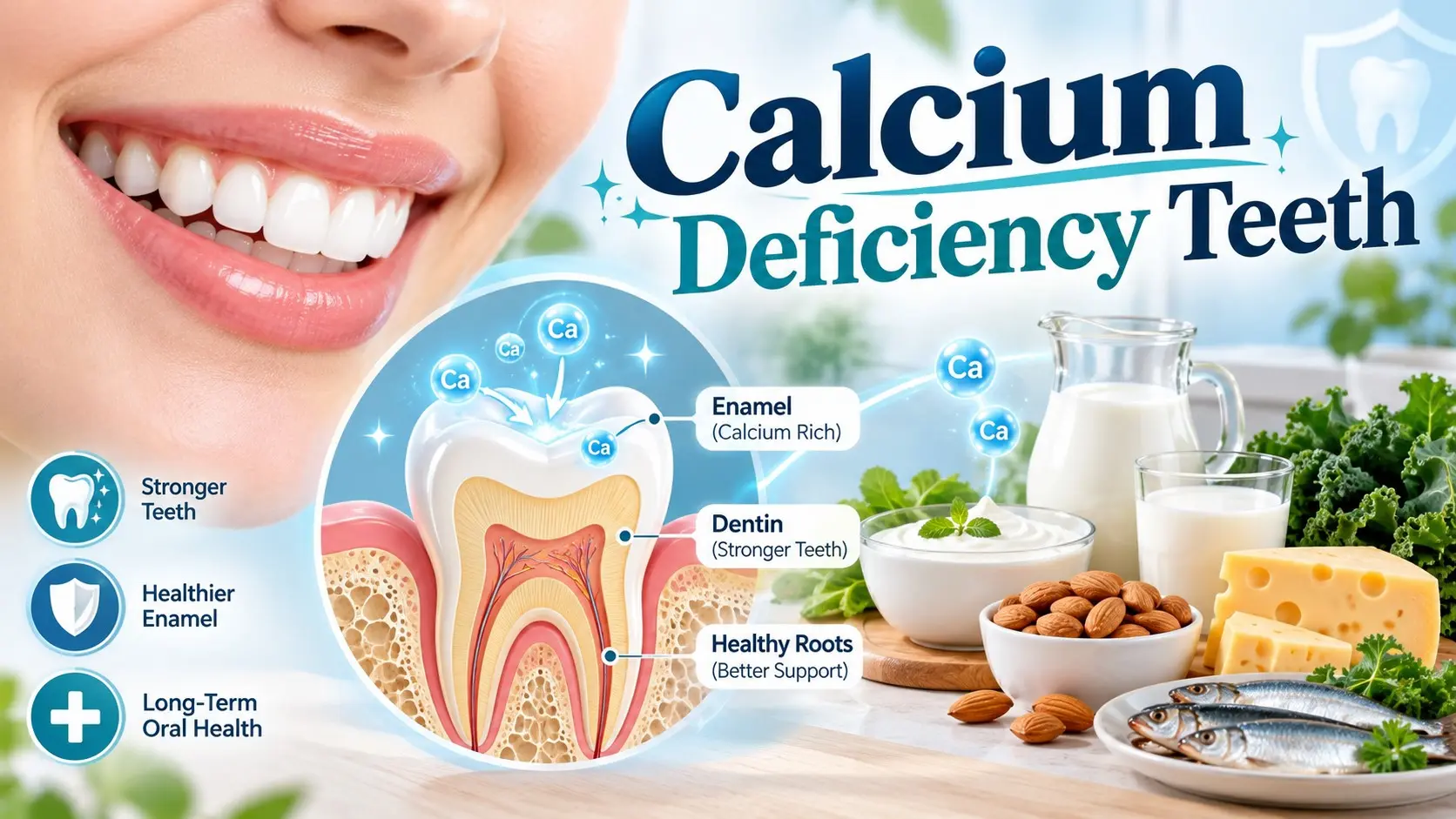
Calcium deficiency teeth is a popular search phrase, but the relationship between calcium and dental health is more complex than simply saying low calcium makes adult teeth weak.
Calcium is vital for developing strong teeth and bones. Yet mature teeth do not behave like bone. Bones constantly remodel and can release calcium into the blood, while adult tooth enamel does not undergo the same whole body calcium turnover.
That means a cavity does not automatically prove you are calcium deficient.
Most tooth decay starts when plaque bacteria use sugars and starches to make acids. These acids pull minerals from enamel. Saliva then brings minerals such as calcium and phosphate back to the tooth surface, while fluoride helps the enamel repair early damage.
This article is for general information and education. It does not replace medical advice, diagnosis, or treatment.
Seek medical advice if symptoms suggest significant low blood calcium.
These can include tingling around the mouth, tingling in the hands or feet, muscle spasms, severe cramps, or other neurological symptoms.
Seek urgent care for seizures, severe muscle spasms, breathing problems, confusion, or significant heart rhythm symptoms.
Table of Contents
- Quick Answer
- 9 Critical Facts
- Calcium builds teeth
- Adult teeth do not remodel like bone
- Cavities are not proof of deficiency
- Saliva helps return minerals
- Fluoride matters greatly
- Vitamin D supports calcium absorption
- Childhood intake matters
- Jawbone health matters
- Supplements are not always needed
- Symptoms and Testing
- Best Food Sources
- Cavity Prevention
- Supplements
- Frequently Asked Questions
Calcium Deficiency Teeth: Quick Answer
Calcium deficiency teeth does not mean that every cavity, sensitive tooth, crack, or white mark comes from too little calcium.
Calcium is essential for:
- Building teeth during development
- Forming hydroxyapatite crystals
- Maintaining strong bones and jawbone
- Supporting calcium and phosphate in saliva
However, mature enamel does not rebuild itself through whole body calcium metabolism in the same way bone does.
For adult cavity prevention, these factors are usually more important:
- Fluoride toothpaste
- Removing dental plaque
- Limiting frequent sugar exposure
- Healthy saliva production
- Regular dental care
9 Critical Facts About Calcium Deficiency Teeth
1. Calcium Is a Major Building Block of Teeth
Calcium is the most abundant mineral in the human body.
More than 99 percent of the body's calcium is present as calcium hydroxyapatite in bones and teeth.
Hydroxyapatite helps make enamel and other mineralised tissues hard.
This is why adequate calcium is particularly important while teeth and bones are developing.
2. Adult Teeth Do Not Remodel Like Bone
This distinction is one of the most important facts in this article.
Bone is living tissue that constantly undergoes resorption and rebuilding.
The skeleton also acts as a calcium reservoir to help keep blood calcium within a narrow range.
Mature enamel is different.
Your body does not normally remove calcium from adult enamel to maintain blood calcium in the same way it can remove calcium from bone.
This means low calcium intake does not simply make calcium drain out of your teeth from the inside.
3. Cavities Do Not Automatically Mean Calcium Deficiency
Tooth decay mainly develops through acid attacks on enamel.
The process begins when oral bacteria use sugars and starches from food and drinks.
The bacteria produce acids.
Those acids remove minerals from enamel.
If acid attacks happen repeatedly, mineral loss can exceed repair and a cavity may form.
The biggest practical risk factors therefore include:
- Frequent sugary foods
- Sugary drinks
- Poor plaque removal
- Low fluoride exposure
- Dry mouth
4. Saliva Brings Calcium and Phosphate Back to Enamel
Your saliva does much more than keep your mouth wet.
It contains minerals including calcium and phosphate.
These minerals help replace some of the minerals enamel loses during acid attacks.
This process is called remineralisation.
Saliva also helps:
- Wash food away
- Neutralise acids
- Control microorganisms
- Protect oral tissues
This is why persistent dry mouth raises the risk of tooth decay.
5. Fluoride Matters Greatly for Enamel Repair
Calcium alone does not explain cavity prevention.
Fluoride is one of the most effective tools for protecting enamel.
It can:
- Reduce mineral loss
- Promote remineralisation
- Make repaired enamel more resistant to acid
- Reduce acid production by decay causing bacteria
Brush twice daily with fluoride toothpaste unless your dental professional gives different advice.
6. Vitamin D Helps the Body Absorb Calcium
Calcium and vitamin D work closely together.
Vitamin D helps the intestine absorb calcium and helps maintain normal calcium levels in the blood.
Very low vitamin D can contribute to problems with bone mineralisation.
This is why doctors may consider vitamin D when investigating abnormal calcium levels or bone problems.
7. Calcium Matters Most While Teeth Are Developing
Nutrition during childhood matters because teeth are still forming and mineralising.
Severe disturbances in mineral metabolism during tooth development can contribute to defects in enamel formation.
This is different from developing a new calcium deficiency after the permanent tooth is already fully formed.
Once mature enamel is lost through a cavity, the body cannot simply grow the missing enamel back.
8. Calcium Is Also Important for the Jawbone
Your teeth are supported by bone.
Long term inadequate calcium intake can contribute to poor bone health and osteoporosis.
However, tooth loss is complex.
Periodontal disease involves bacterial plaque, inflammation, gum damage, and destruction of supporting tissues.
It should not be reduced to a simple calcium deficiency problem.
9. Calcium Supplements Are Not Automatically the Answer
If your diet already provides enough calcium, taking extra calcium will not make a cavity disappear.
A cavity is permanent structural damage once a hole forms.
It requires dental care.
Calcium supplements are useful when there is a genuine dietary or medical reason for taking them.
More is not always better because excessive supplemental calcium can cause problems in some people.
Calcium Deficiency Versus Tooth Decay
| Feature | Low Calcium Intake | Tooth Decay |
|---|---|---|
| Main issue | Nutrition and bone mineral balance | Plaque acids remove minerals from enamel |
| Typical adult effect | Long term bone health concern | White spots, cavities, sensitivity, tooth damage |
| Key prevention | Adequate calcium and vitamin D | Fluoride, plaque control, lower sugar frequency |
| Can a supplement repair a cavity? | No | A formed cavity needs dental treatment |
What Does Calcium Actually Do in Teeth?
Tooth enamel is mostly mineral.
Its main mineral is hydroxyapatite, which contains calcium and phosphate.
This creates a hard surface that can withstand chewing.
Calcium also exists in saliva, where it can help replace surface minerals lost during ordinary acid exposure.
Can Low Calcium Make Teeth Weak?
During tooth development, inadequate mineral availability or diseases affecting mineral metabolism can interfere with proper mineralisation.
In adults, the answer is more complicated.
A mature tooth does not become hollow because your diet was low in calcium for a few weeks.
Long term poor nutrition can still affect oral and general health, but tooth weakness should be assessed for more direct causes.
These include:
- Tooth decay
- Dental erosion
- Grinding
- Cracks
- Large fillings
- Trauma
- Developmental enamel defects
Can Calcium Deficiency Cause Cavities?
Not in the simple way this is often described online.
NIDCR explains that dental cavities develop when bacteria interact with sugars and starches and produce acids that attack enamel.
Frequent acid attacks cause mineral loss.
Saliva and fluoride help restore minerals before permanent damage develops.
A diet that meets nutritional needs supports oral health, but swallowing more calcium does not replace brushing with fluoride toothpaste or controlling sugar frequency.
Can Calcium Deficiency Cause Tooth Sensitivity?
Tooth sensitivity has many more common causes.
These include:
- Gum recession
- Enamel erosion
- Tooth decay
- Cracks
- Grinding
- Recent dental treatment
Do not assume sensitive teeth mean low calcium.
Can Low Calcium Cause Teeth to Crumble?
Adult teeth that chip or break easily need dental assessment.
Possible explanations include:
- Large cavities
- Old fillings
- Cracked teeth
- Grinding
- Acid erosion
- Developmental enamel problems
A calcium supplement cannot repair a fractured tooth.
Can Calcium Deficiency Cause White Spots on Teeth?
White spots have several possible causes.
One very common reason is early tooth decay, where minerals have been lost from enamel.
Other causes include:
- Developmental enamel defects
- Fluorosis
- Changes around orthodontic brackets
- Other mineralisation problems
White spots should be examined rather than assumed to represent calcium deficiency.
Can Your Body Take Calcium From Your Teeth?
This is one of the biggest myths surrounding calcium deficiency teeth.
Your skeleton acts as a calcium reservoir.
Bone constantly remodels and can release calcium when needed to keep blood calcium stable.
Mature teeth do not remodel in the same way.
Dietary calcium deficiency therefore affects bones much more directly than mature tooth enamel.
Does Pregnancy Pull Calcium From Your Teeth?
The old saying that a baby “takes calcium from the mother's teeth” is misleading.
Pregnancy changes oral health in other ways.
Hormonal changes can affect gums, nausea and vomiting can expose teeth to acid, and dietary habits may change.
These factors can affect dental health without the fetus extracting calcium from adult tooth enamel.
What Is Hypocalcaemia?
Hypocalcaemia means the calcium level in the blood is too low.
This is not exactly the same as eating too little calcium.
Low blood calcium can occur because of:
- Vitamin D deficiency
- Magnesium deficiency
- Parathyroid problems
- Kidney disease
- Critical illness
- Certain medicines
Symptoms of Low Blood Calcium
Mild or chronic hypocalcaemia may cause no symptoms.
When symptoms occur, they can include:
- Tingling around the mouth
- Tingling in the hands or feet
- Muscle cramps
- Muscle spasms
- Increased nerve irritability
Severe hypocalcaemia can cause much more serious neurological and heart related complications.
Tooth pain is not the classic way hypocalcaemia presents.
Does a Blood Calcium Test Show Dietary Calcium Intake?
Not very well.
Blood calcium is tightly controlled.
The body can use calcium stored in bone to keep blood calcium within a narrow range.
This means a normal serum calcium result does not prove that your long term calcium intake is ideal.
How Much Calcium Do Adults Need?
Calcium needs vary by age and sex.
| Age Group | Daily Calcium Recommendation |
|---|---|
| Adults 19 to 50 | 1,000 mg |
| Men 51 to 70 | 1,000 mg |
| Women 51 to 70 | 1,200 mg |
| Adults over 70 | 1,200 mg |
These are US Recommended Dietary Allowances from the National Institutes of Health.
Other countries may use slightly different recommended intake values.
Best Calcium Rich Foods
You do not need dairy products to be your only calcium source.
Useful options include:
- Milk
- Yogurt
- Cheese
- Calcium fortified soy milk
- Calcium fortified plant drinks
- Tofu made with calcium salts
- Sardines with edible bones
- Canned salmon with bones
- Kale
- Bok choy
- Broccoli
Calcium Rich Food Examples
| Food | Approximate Calcium | Helpful Note |
|---|---|---|
| Plain low fat yogurt, 8 oz | About 415 mg | High calcium food |
| Fortified orange juice, 1 cup | About 349 mg | Check the label |
| Part skim mozzarella, 1.5 oz | About 333 mg | Concentrated dairy source |
| Sardines with bones, 3 oz | About 325 mg | Also provides protein |
| Fortified soy milk, 1 cup | About 299 mg | Shake fortified products before pouring |
| Firm tofu made with calcium sulfate, half cup | About 253 mg | Calcium varies by brand |
What If You Do Not Eat Dairy?
People who avoid dairy can still meet calcium needs.
Useful options include:
- Fortified plant drinks
- Calcium set tofu
- Sardines or canned salmon with bones
- Some leafy green vegetables
- Other calcium fortified foods
Read labels because calcium levels in plant based products vary greatly.
Why Vitamin D Matters
Vitamin D helps the intestine absorb calcium.
A person can consume calcium but still have mineral problems when vitamin D status is very low.
This is why calcium and vitamin D are often discussed together in bone health.
Does Cheese Protect Teeth?
Cheese can contribute calcium and protein to the diet.
Dairy foods may also be less cariogenic than sugary snacks.
However, cheese should not be treated as a substitute for brushing or fluoride.
What Really Strengthens Adult Tooth Enamel?
Once enamel has formed, protecting it depends mainly on the environment around the tooth.
The most useful measures include:
- Brush twice a day with fluoride toothpaste.
- Clean between your teeth regularly.
- Limit how often you eat sugary foods.
- Limit frequent sugary drinks.
- Protect against dry mouth.
- Attend dental examinations.
Why Sugar Frequency Matters
Each time plaque bacteria receive fermentable sugars or starches, they can produce acids.
The saliva then needs time to neutralise those acids and restore minerals.
Constant snacking gives the enamel fewer recovery periods.
That is why frequency matters, not only the total amount of sugar.
Why Dry Mouth Raises Cavity Risk
Saliva is one of your mouth's major defence systems.
It contains calcium and phosphate and helps neutralise acids.
Persistent dry mouth therefore increases the risk of:
- Dental cavities
- Root decay
- Oral infections
- Difficulty chewing and swallowing
Dry mouth can occur because of many medicines, radiation treatment, autoimmune disease, dehydration, and other conditions.
Can Early Enamel Damage Heal?
Very early mineral loss can sometimes be reversed before a physical cavity forms.
A white spot may represent early demineralisation.
Fluoride and minerals in saliva can support remineralisation.
Once the enamel surface breaks and a true cavity forms, it needs dental treatment.
Should You Take Calcium Supplements for Your Teeth?
Not automatically.
Food is often the easiest first source of calcium.
A supplement may make sense when:
- Your diet consistently provides too little calcium
- You avoid major calcium rich food groups
- A clinician identifies a specific need
- You have a condition affecting absorption
Taking more calcium than you need will not make adult enamel thicker.
Calcium Carbonate Versus Calcium Citrate
Two common supplement forms are:
- Calcium carbonate
- Calcium citrate
Calcium carbonate contains more elemental calcium and is usually taken with food.
Calcium citrate is absorbed well with or without food and may suit some people who have lower stomach acid.
Ask a pharmacist or doctor if you take regular medicines.
Can Too Much Calcium Be Harmful?
Yes.
More calcium is not automatically healthier.
High supplemental calcium intake may increase the risk of kidney stones in some people and can interact with medicines.
Adult upper intake limits are generally between 2,000 and 2,500 mg a day depending on age.
Calcium Supplement Interactions
Calcium supplements can interfere with the absorption of some medicines.
Examples include:
- Levothyroxine
- Some antibiotics
- Dolutegravir
Spacing doses may be needed.
Follow professional advice for your specific medicine.
When Should You See a Dentist?
Arrange a dental appointment if you have:
- Persistent tooth sensitivity
- A toothache
- A visible cavity
- White, brown, or black tooth changes
- Broken or crumbling teeth
- Swollen gums
- Loose teeth
These findings need a dental diagnosis rather than nutritional guesswork.
When Should You Ask a Doctor About Calcium?
Medical assessment may be useful if you have:
- Repeated muscle spasms
- Tingling around the mouth
- Persistent tingling in the hands or feet
- Known parathyroid disease
- Kidney disease
- Severe vitamin D deficiency
- Osteoporosis
- Conditions affecting nutrient absorption
Common Calcium Deficiency Teeth Myths
Myth 1: Every Cavity Means Low Calcium
False.
Dental plaque, frequent sugar exposure, acid production, saliva, and fluoride are central to cavity development.
Myth 2: Your Body Pulls Calcium From Adult Teeth
False.
Bone acts as the major calcium reservoir. Mature teeth do not remodel like bone.
Myth 3: Calcium Tablets Repair Cavities
False.
Early enamel mineral loss may remineralise, but a physical cavity requires dental treatment.
Myth 4: White Spots Always Mean Calcium Deficiency
False.
White spots can result from early decay, fluorosis, or developmental enamel changes.
Myth 5: Sensitive Teeth Mean You Need Calcium
False.
Gum recession, erosion, decay, grinding, and cracks are much more common explanations.
Myth 6: More Calcium Always Means Stronger Teeth
False.
Your body has calcium requirements, but taking excessive amounts does not keep strengthening mature enamel.
A Simple Tooth and Calcium Checklist
For Nutrition
- Include reliable calcium rich foods.
- Get adequate vitamin D.
- Ask for professional advice before using high dose supplements.
For Teeth
- Brush twice daily with fluoride toothpaste.
- Clean between teeth.
- Limit frequent sugar exposure.
- Address dry mouth.
- Have dental problems treated early.
For Bone Health
- Meet calcium needs.
- Stay physically active.
- Do weight bearing activity when appropriate.
- Avoid smoking.
- Discuss osteoporosis risk when relevant.
Conclusion
Calcium deficiency teeth is a useful topic, but the most important lesson is that calcium affects developing teeth, saliva, and bone health in different ways.
Calcium is essential for building mineralised teeth, and saliva uses calcium and phosphate during enamel remineralisation. Yet mature teeth do not serve as the body's calcium bank in the way bones do.
Cavities are mainly driven by plaque bacteria, frequent sugar exposure, acid attacks, and failure to replace lost enamel minerals. Fluoride, saliva, oral hygiene, and dietary habits therefore remain central to prevention.
Your next step is simple: meet your calcium needs through a balanced diet, use fluoride toothpaste twice daily, limit frequent sugar exposure, and have unexplained sensitivity, white spots, cavities, or broken teeth examined by a dentist instead of assuming they are caused by calcium deficiency.
References and Sources
- National Institutes of Health Office of Dietary Supplements. Calcium: Fact Sheet for Health Professionals.
https://ods.od.nih.gov/factsheets/Calcium-HealthProfessional/ - National Institutes of Health Office of Dietary Supplements. Calcium: Fact Sheet for Consumers.
https://ods.od.nih.gov/factsheets/Calcium-Consumer/ - National Institute of Dental and Craniofacial Research. Tooth Decay.
https://www.nidcr.nih.gov/health-info/tooth-decay - National Institute of Dental and Craniofacial Research. The Tooth Decay Process: How to Reverse It and Avoid a Cavity.
https://www.nidcr.nih.gov/health-info/tooth-decay/more-info/tooth-decay-process - American Dental Association. Nutrition and Oral Health.
https://www.ada.org/resources/ada-library/oral-health-topics/nutrition-and-oral-health - National Institute of Dental and Craniofacial Research. Dry Mouth.
https://www.nidcr.nih.gov/health-info/dry-mouth - National Institute of Dental and Craniofacial Research. Fluoride and Dental Health.
https://www.nidcr.nih.gov/health-info/fluoride
Internal Links + Hub
- NextFitLife Health Articles Hub
- Normal Calcium Levels UK
- Calcium Deficiency Nails
- How to Cure Gum Disease Without a Dentist
- How to Get Rid of Smelly Gums
- Benefits of Magnesium and Zinc
- Eating Lifestyle Guide
About the Author
Adel Galal is the founder and editor of NextFitLife. He writes practical consumer health, oral health, nutrition, fitness, and healthy ageing content using information from recognized medical, dental, public health, and academic sources.
I am not a dermatologist, dentist, doctor, dietitian, pharmacist, or other licensed healthcare professional. This content does not replace professional medical or dental advice. What I share comes from real life experience, extensive research, and consultation with healthcare providers. Always consult qualified medical and dental professionals for diagnosis and treatment of any health condition.
Learn more about NextFitLife, the author, and the site's editorial approach on the About Us page.
Frequently Asked Questions
Can calcium deficiency affect teeth?
Calcium is essential while teeth are developing and also supports bone and saliva mineral balance. However, adult teeth do not remodel like bone, so ordinary tooth decay should not automatically be blamed on low calcium.
Does calcium deficiency cause cavities?
Not directly in most adults. Cavities mainly develop when plaque bacteria use sugars and starches to create acids that remove minerals from enamel.
Can the body take calcium from adult teeth?
No, not in the same way it takes calcium from bone. Bone acts as a calcium reservoir and continuously remodels, while mature tooth enamel does not undergo the same process.
Can taking calcium repair damaged enamel?
Calcium in saliva supports remineralisation of very early enamel damage, but swallowing extra calcium cannot rebuild a physical cavity or replace enamel that has already been lost.
Do white spots on teeth mean calcium deficiency?
Not necessarily. White spots can represent early tooth decay, fluorosis, developmental enamel defects, or other mineral changes.
Can low calcium cause tooth sensitivity?
Low calcium is not the usual cause of sensitive teeth. Gum recession, enamel erosion, cavities, cracks, and tooth grinding are more common causes.
Does pregnancy remove calcium from a mother's teeth?
No. Pregnancy does not normally cause the body to extract calcium from mature tooth enamel. Pregnancy can affect oral health through gum changes, diet, vomiting, and other factors.
What foods are high in calcium?
Good sources include milk, yogurt, cheese, fortified plant drinks, calcium set tofu, canned sardines or salmon with bones, and some leafy green vegetables.
How much calcium do adults need?
Most adults aged 19 to 50 need about 1,000 mg daily under US recommendations. Women aged 51 to 70 and adults over 70 generally need about 1,200 mg daily.
Do calcium supplements make teeth stronger?
Supplements can help meet calcium requirements when intake is inadequate, but extra calcium does not continually make mature enamel stronger and cannot repair cavities.
What protects adult teeth from cavities?
Brush twice daily with fluoride toothpaste, clean between teeth, limit frequent sugar exposure, maintain healthy saliva flow, and have regular dental care.
When should I see a dentist?
See a dentist for persistent sensitivity, toothache, white or dark tooth changes, cavities, cracks, broken teeth, swollen gums, or loose teeth.

Health & wellness writer with 30+ years of experience in nutrition, fitness, and healthy aging. Founder of NextFitLife.com — evidence-based health guidance.