
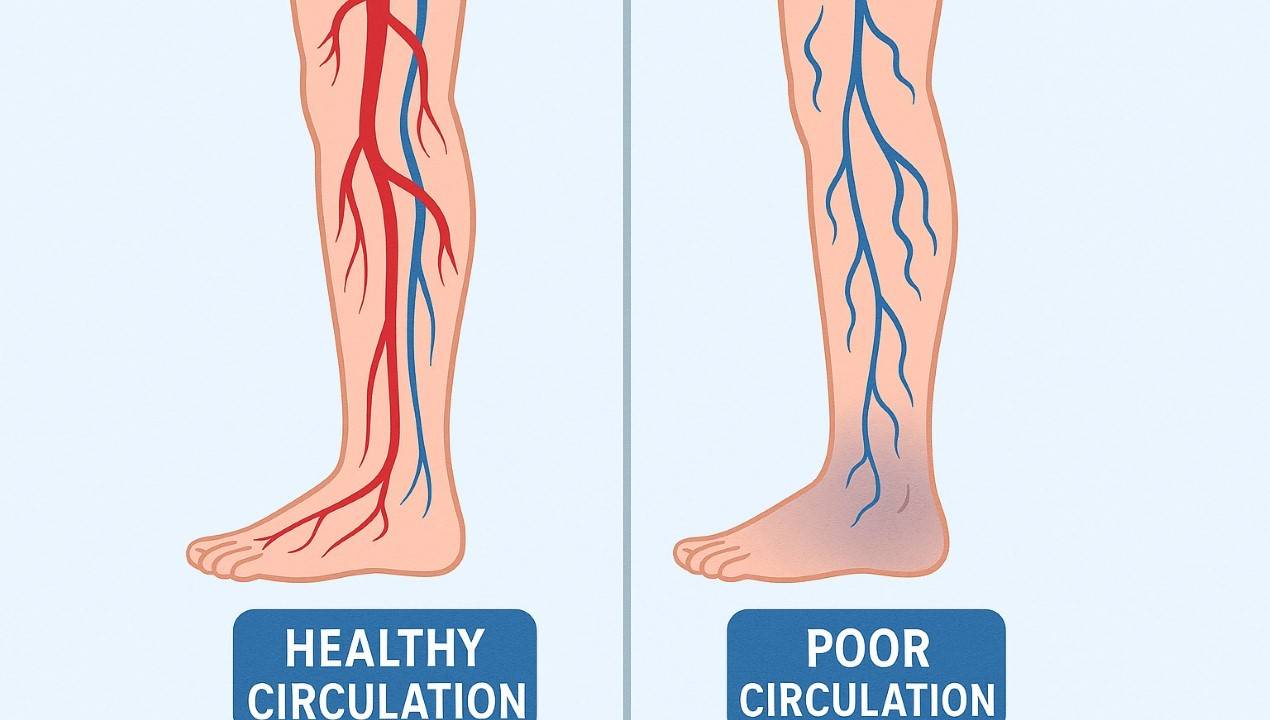
How to improve blood circulation in legs depends on why the symptoms occur. Suitable movement and long-term vascular care can help, but home habits cannot treat every cause of leg pain, swelling, or numbness. Persistent symptoms need assessment rather than a promise of fast natural relief.
When Leg Symptoms Need Urgent Care
Seek urgent medical assessment for new pain, swelling, warmth, or redness in one leg. These can be signs of a deep vein thrombosis (DVT). If leg symptoms occur with chest pain, shortness of breath, coughing blood, or fainting, call your local emergency number. Do not drive yourself.
A suddenly painful, cold, pale, numb, or weak foot or leg is also an emergency. Do not wait for vitamins, massage, or exercise to help. Arrange prompt medical care for wounds that do not heal, pain at rest, or recurring pain when walking.
Understanding Leg Circulation
Arteries carry blood to the legs, and veins return it toward the heart. Artery narrowing, vein disease, a clot, nerve problems, and other conditions may cause overlapping symptoms. The same remedy will not suit them all.
Signs to Discuss With a Clinician
Recurring pain with walking, cold or discolored feet, swelling, numbness, or wounds that heal slowly should be checked. These symptoms do not diagnose poor circulation by themselves. You do not need two or more symptoms before asking for help.
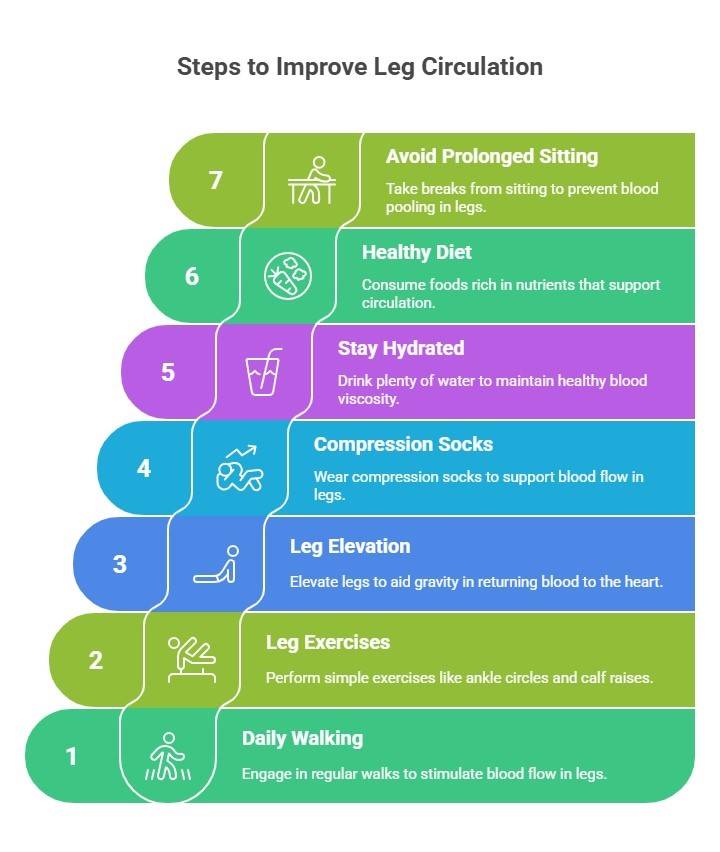
Seven Habits to Discuss as Part of Your Care Plan
1. Use a Suitable Walking Plan
Walking and structured exercise can improve walking ability in PAD when a clinician recommends them. Start with a level that suits your health and mobility. Sudden severe pain or a cold, numb limb needs urgent care, not a walk to test it.
2. Try Gentle Movement When Appropriate
Ankle movements and position changes can be practical during long periods of sitting. Use support if your balance is limited and stop if a movement causes new pain. These exercises are not treatment for an unexplained swollen leg or a suspected clot.
3. Ask Whether Leg Elevation Suits Your Condition
Elevation may ease swelling in some vein conditions, but it is not a general treatment for poor arterial blood supply. Get advice if it worsens pain or if you have PAD, new swelling, or unexplained symptoms.
4. Check Before Choosing Compression Socks
Compression can help selected vein problems. The correct type, pressure, and wearing schedule depend on assessment. Do not choose a pressure level from this page, especially if you may have arterial disease, wounds, or reduced sensation. New one-sided swelling needs diagnosis first.
5. Meet Your Individual Fluid Needs
Drink according to your needs and medical advice. There is no universal eight-glass rule for improving leg circulation. Follow prescribed fluid limits for heart or kidney disease.
6. Choose a Balanced Eating Pattern
Vegetables, fruit, whole grains, and suitable protein foods can support long-term health. Adapt food choices when you have kidney disease, diabetes, or another condition. Garlic, chocolate, tea, and fish do not dissolve clots or open blocked arteries.
7. Break Up Long Periods of Stillness
Change position and take suitable movement breaks when you can. If you cannot move easily, ask your care team for a practical plan. These habits do not replace prescribed clot-prevention or vascular treatment.
Other Home Measures Need Care
Do not massage a newly painful or swollen leg until it has been assessed for a clot or another urgent cause. A warm bath may feel pleasant but is not treatment for vascular disease. Avoid hot water when sensation is reduced, and follow foot-care advice.
Stopping smoking and managing blood pressure, cholesterol, and diabetes are important parts of vascular care. If weight management is appropriate, choose a sustainable plan rather than a guaranteed weight target for circulation improvement.
What About Vitamins?
Treating a confirmed vitamin deficiency can help related symptoms. Extra vitamins are not a proven replacement for treatment of PAD, vein disease, or blood clots. Some supplements interact with medicines. See our vitamins and leg circulation guide for the limits and risks.
Conclusion
How to improve blood circulation in legs starts with identifying the cause. Discuss persistent symptoms with a clinician, use suitable habits, and follow the treatment plan. Do not rely on fast fixes or wait for home remedies when urgent warning signs occur.
Continue Reading
Frequently Asked Questions
How do you treat poor circulation in your legs?
Treatment depends on the cause. A clinician may recommend structured activity, smoking cessation, medicines, or a procedure. Home habits cannot replace care for a clot or blocked artery.
What signs need urgent help?
New one-sided pain or swelling needs urgent assessment. Call emergency services for chest pain or breathlessness with leg symptoms, or for a suddenly cold, pale, numb, or weak limb.
Can poor leg circulation be reversed?
Symptoms and walking ability may improve with suitable treatment, but complete reversal is not guaranteed. The cause and severity determine the care needed.
Are compression socks safe for everyone?
No. The right type and pressure depend on assessment. Seek advice if arterial disease, wounds, reduced sensation, or unexplained swelling is possible.
References and Sources
Medical Disclaimer
This article is for education and information. It does not replace diagnosis, treatment, or advice from a qualified healthcare professional. Do not stop prescribed treatment or delay urgent care because of this page.

Health & wellness writer with 30+ years of experience in nutrition, fitness, and healthy aging. Founder of NextFitLife.com — evidence-based health guidance.