
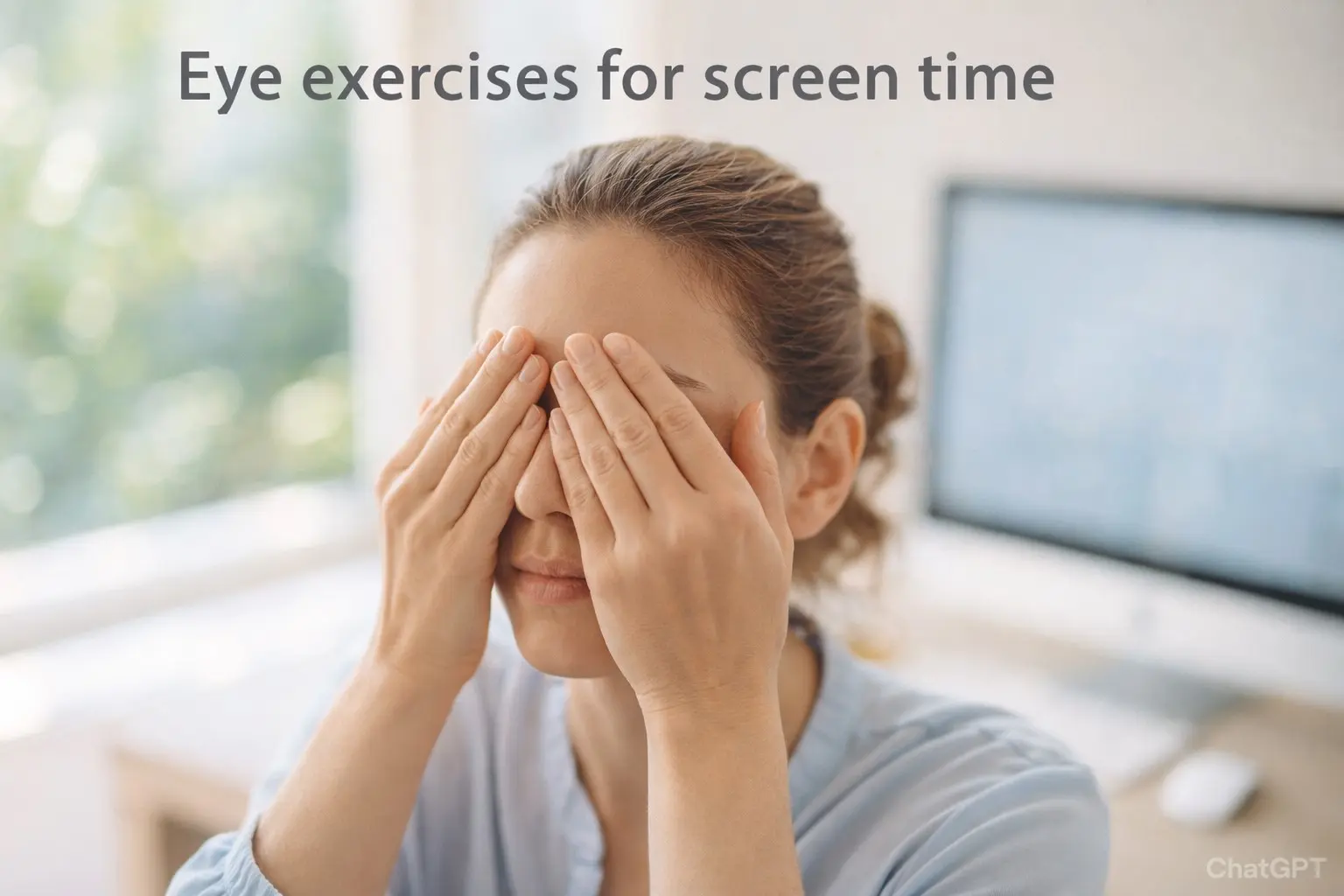
Long periods of screen work can cause temporary dryness, blurred vision and headaches. Reduced blinking, glare, an unsuitable prescription and prolonged near work can contribute. These symptoms should not automatically be diagnosed as weak eye muscles.
This guide focuses on screen-comfort habits. It does not promise sharper vision, a fixed percentage improvement or relief within a set number of days. General eye exercises do not replace glasses, an eye examination or prescribed treatment.
Screen breaks and comfortable viewing
The American Academy of Ophthalmology recommends regular breaks, a comfortable screen distance and glare reduction. A useful reminder is the 20-20-20 rule: every 20 minutes, look about 20 feet away for 20 seconds.
- Blink naturally and completely rather than squeezing your eyelids.
- Keep the monitor around arm's length away, with your gaze slightly downward. Increase text size instead of leaning forward.
- Adjust brightness and room lighting to reduce glare.
- If contacts worsen dryness, consider using your prescribed glasses during longer screen sessions.
- Ask an eye care professional about persistent dryness or appropriate lubricating drops.
Ten common techniques: what to use and what to avoid
- 20-20-20 breaks: Use this as a reminder to interrupt prolonged close work. Results vary.
- Palming: Closing your eyes briefly can be restful. Palming has not been established as a treatment for vision problems; do not press on the eyes.
- Focus shifting: Looking away from the screen is a break. Repeated near-far drills are not needed to strengthen everyone's eyes.
- Conscious blinking: Notice when you stop blinking during concentrated work. Comfortable complete blinks can help spread tears; avoid forceful squeezing.
- Near-far focus training: Do not force very close focus or continue through blur, pain or double vision. Use prescribed drills only as directed.
- Eye rolling: There is no established universal benefit for digital eye strain. Avoid extreme or uncomfortable eye movements.
- Figure-eight tracking: Screen use does not establish that eye coordination has deteriorated. Tracking drills are not a routine treatment for all screen users.
- Pencil push-ups: These belong to selected treatment plans for diagnosed convergence problems, not a general screen routine. Do not diagnose yourself from where an object doubles.
- Eye massage: Do not press, rub or massage the eyeballs. Persistent discomfort needs assessment rather than pressure around the eyes.
- Distance gazing: A comfortable view away from close work can be part of a break. Never gaze at the sun.
When vision therapy is appropriate
The National Eye Institute describes convergence insufficiency as a condition diagnosed with eye-teaming and focusing tests. Treatment may include specialist-directed convergence exercises. This does not establish that every screen user needs pencil push-ups or that home drills cure all blurred or double vision.
A practical screen-day routine
Set a reminder to take brief viewing breaks, adjust glare and text size, and alternate close work with other tasks when possible. Stop any activity that causes pain or double vision. There is no required exercise circuit or guaranteed recovery timetable.
Symptoms that need medical assessment
Seek urgent eye care for sudden vision loss, new flashes or a sudden increase in floaters, a curtain or shadow over vision, severe eye pain, or sudden double vision. Do not delay care to try exercises. The National Eye Institute identifies retinal-detachment symptoms as an emergency.
Arrange an eye examination for recurring blurred vision, headaches, increasing light sensitivity, ongoing dryness or a prescription that no longer seems adequate. Symptoms that do not settle with screen breaks should not be dismissed as ordinary fatigue.
Frequently asked questions
Do eye exercises help with screen time strain?
Screen breaks, natural blinking and a comfortable workstation may ease temporary screen discomfort. Eye rolling, palming and tracking drills are not established treatments for every cause of eye strain. Persistent symptoms need an eye examination.
What is the 20-20-20 rule for eyes?
Every 20 minutes, pause screen work and look about 20 feet away for 20 seconds. It is a practical reminder to take breaks, not a guarantee of symptom relief or a replacement for eye care.
Can eye exercises improve vision?
General eye exercises do not correct nearsightedness, farsightedness or astigmatism. Clinician-directed exercises can be used for diagnosed convergence insufficiency; diagnosis and a tailored treatment plan are needed.
When should I seek urgent eye care?
Seek urgent eye care for sudden vision loss, new flashes or a sudden increase in floaters, a curtain or shadow over vision, severe eye pain, or sudden double vision. Do not delay care to try exercises.
Sources
- American Academy of Ophthalmology: Digital Devices and Your Eyes
- American Academy of Ophthalmology: screen breaks and workstation tips
- National Eye Institute: Convergence Insufficiency
- National Eye Institute: Retinal Detachment
For related educational guides, visit the Health Hub, eye health guide and digital eye strain guide.
This article is educational and does not replace advice from a qualified eye care professional. Professional medical review has not been completed.
Adel Galal
Health and Wellness Writer | 30+ Years Personal Practice | Founder, NextFitLife.com
Adel Galal has studied health, vision care, and natural aging for over 30 years. At 58, he writes from genuine lived experience. He is not a doctor or ophthalmologist. Always consult a qualified eye care professional for any vision concerns.

Health & wellness writer with 30+ years of experience in nutrition, fitness, and healthy aging. Founder of NextFitLife.com — evidence-based health guidance.