Published: Aug 31, 2023
Last updated: October 6, 2026
Written by: Adel Galal, Founder and Health & Wellness Writer at NextFitLife
Deep breathing meditation is a simple practice that joins slow, comfortable breathing with gentle attention. You notice each breath, let your body settle, and bring your mind back when it wanders.
You do not need special clothes, a quiet retreat, or an hour of free time. A few calm minutes can be enough to practice the skill.
Research suggests that slow breathing and relaxation practices may help some people feel less stressed. They may also cause small changes in heart rate or blood pressure. The effects vary from person to person, though, and deep breathing is not a cure for anxiety, high blood pressure, insomnia, heart disease, or another health condition.
This article is for general information and education. It does not replace medical advice, diagnosis, or treatment.
Table of Contents
- Quick Answer
- What deep breathing meditation is
- What it may help with
- The 7 Steps
- Get comfortable
- Notice your natural breath
- Let your belly move
- Slow the breath gently
- Use a comfortable count
- Bring attention back
- Finish slowly
- Possible Benefits
- Stress and relaxation
- Anxiety and focus
- Heart rate and blood pressure
- Sleep and exercise
- Safety
- When to stop
- When to seek medical care
- Daily Practice
- Common Mistakes
- Frequently Asked Questions
Quick Answer: What Is Deep Breathing Meditation?
Deep breathing meditation is a form of focused breathing. You breathe slowly and comfortably while keeping your attention on the feeling of each breath.
The goal is not to pull in as much air as possible. In fact, forcing very large breaths can make some people feel lightheaded. A better goal is a soft, steady breath that feels easy.
Many people use mindful breathing as a relaxation tool. You may notice your belly and lower ribs move as you breathe. This pattern is often called diaphragmatic breathing or belly breathing.
It can be practiced on its own or as part of mindfulness meditation.
If stress is your main concern, you can also explore our stress busting techniques and the broader Mental Health & Wellness Guide.
What Happens When You Slow Your Breathing?
Stress can change the way you breathe. Your breathing may become faster, shallower, or less regular when you feel tense or frightened.
A calm breathing practice does the opposite. It gives you a simple task to focus on while you allow your breathing to become slower and more comfortable.
Relaxation methods that include breathing may support what researchers call the relaxation response. During relaxation, breathing and heart rate may slow, and the body can shift away from the heightened state that often comes with stress.
This does not mean that one breathing session resets every part of your nervous system. It also does not mean that you need to control every breath during the day. Breathing normally happens without conscious effort.
The practice simply gives you a way to work with your breathing for a few minutes when you want to settle your attention.
7 Smart Deep Breathing Meditation Steps
1. Get Comfortable
Sit in a supportive chair, lie down, or choose another position that lets you breathe without strain.
If you sit, place both feet on the floor if that feels comfortable. Relax your shoulders and jaw. You do not need perfect posture.
Your position should make breathing easier, not harder.
2. Notice Your Natural Breath
Before changing anything, notice how you are breathing.
Feel the air move through your nose or mouth. Notice whether your chest, ribs, or belly moves. There is no need to judge what you find.
This simple breath awareness is part of meditation. Your job is to notice what is happening right now.
3. Let Your Belly and Lower Ribs Move
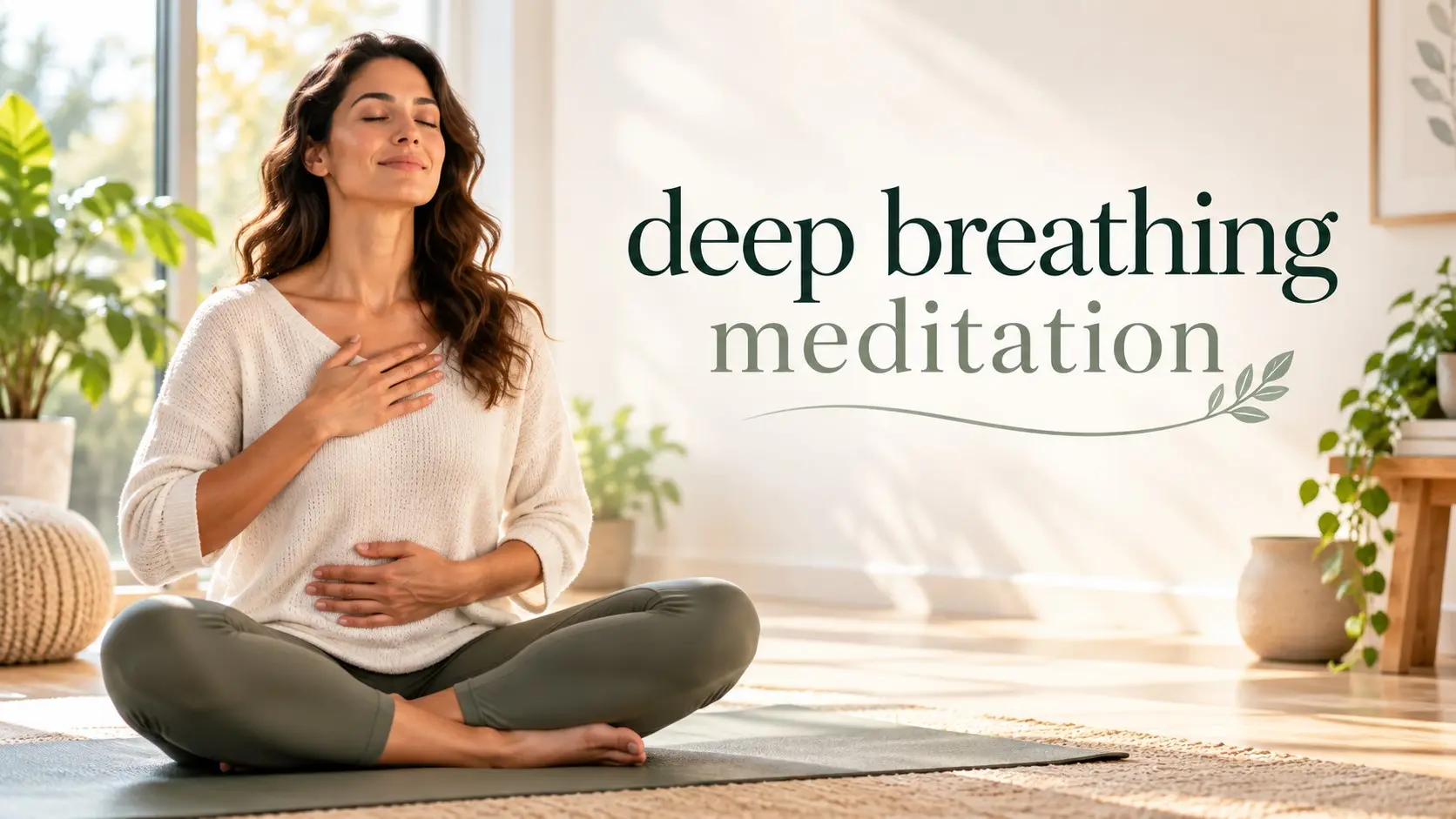
Place one hand on your upper chest and the other on your belly or lower ribs if that helps.
Take a soft breath in through your nose. Let the lower ribs and belly move outward naturally. Then breathe out slowly.
You do not have to push your stomach out. You are simply giving your diaphragm room to move.
This style of diaphragmatic breathing may feel strange at first. With practice, it often feels easier.
4. Slow the Breath Gently
Allow your breathing to slow, but do not force it.
Think gentle rather than deep.
You should still feel able to breathe comfortably. If you feel air hungry, dizzy, numb, or uncomfortable, return to your normal breathing.
5. Use a Comfortable Count
A count can help you keep an easy rhythm.
For example, breathe in gently while counting from one to four. Then breathe out while counting from one to four or one to five.
The exact number is not important.
You do not need to hold your breath. Long breath holds are especially unnecessary if they make you uncomfortable.
NHS breathing guidance also emphasizes letting the breath travel as comfortably into the belly as possible rather than forcing it.
6. Bring Your Attention Back
Your mind will wander. That is normal.
You may think about work, food, family, tomorrow, or something that happened years ago. When you notice this, gently return your attention to your next breath.
You did not fail.
Noticing that your attention wandered and bringing it back is part of the meditation itself.
7. Finish Slowly
After a few minutes, stop controlling the breath and let it return to its natural rhythm.
Notice how your body feels. Move your fingers and shoulders. If your eyes were closed, open them slowly.
Then continue with your day.
A Simple 5 Minute Deep Breathing Meditation
If you are new to breathing meditation for beginners, try this short routine.
- Sit or lie somewhere comfortable.
- Relax your jaw and shoulders.
- Notice three normal breaths.
- Breathe in gently through your nose.
- Allow your belly and lower ribs to expand.
- Breathe out slowly without pushing.
- Repeat at a comfortable pace.
- When your mind wanders, return to the feeling of breathing.
- Continue for up to five minutes.
- Finish with several normal breaths.
You can start with one or two minutes if five minutes feels too long.
Consistency matters more than forcing yourself through a long session.
What Are the Possible Benefits?
Deep Breathing May Help You Relax
One of the clearest reasons people practice slow breathing is relaxation.
Breathing exercises are included among established relaxation techniques. They can be used alongside other habits such as movement, healthy sleep routines, social support, and professional care when needed.
This is why breathing exercises for stress may be useful during a busy day, before a difficult conversation, or when you want a quiet transition between activities.
It May Help With Feelings of Stress
Studies of diaphragmatic and slow breathing suggest that these practices may reduce perceived stress in some people.
The evidence is encouraging, but it is not strong enough to promise the same result for everyone.
A breathing exercise can be one part of a stress management plan. It should not be presented as a cure for chronic stress, panic disorder, depression, trauma, or another mental health condition.
For more support, read our guide to mental and physical health.
It May Help Some People Feel Less Anxious
Anxiety often changes breathing. A person may breathe quickly or feel that they cannot get a satisfying breath.
Slow, gentle breathing may help some people feel calmer in the moment. Meditation and other mindfulness practices may also help some people manage stress and anxiety symptoms.
However, breathing exercises do not replace therapy, medication, or other care when those treatments are needed.
If focusing on your breath makes anxiety worse, stop. You might prefer grounding through touch, sound, walking, or another safe activity.
Slow Breathing May Affect Heart Rate and Blood Pressure
Research suggests that slow breathing can cause modest changes in blood pressure in some people. Relaxation can also be linked with a slower heart rate.
These effects should be kept in perspective.
Deep breathing meditation is not a replacement for blood pressure medicine, heart treatment, medical tests, or lifestyle changes recommended by your healthcare professional.
Never change a prescribed medicine because a breathing exercise made you feel better.
It Can Train Attention
Meditation asks you to choose one point of focus and return to it again and again.
The breath is useful because it is always with you.
During mindfulness meditation, the aim is often not to erase thoughts. Instead, you notice thoughts without getting pulled into each one.
That simple practice may help you become more aware of how your mind responds to stress.
Does Deep Breathing Increase Oxygen?
This point is often explained poorly online.
A healthy person's blood normally carries a high level of oxygen during ordinary breathing. Taking very large breaths does not mean that you are suddenly filling your blood with huge amounts of extra oxygen.
The value of slow breathing is not that it magically supercharges oxygen throughout the body.
For many people, its practical value is relaxation, breathing awareness, and learning to breathe comfortably using the diaphragm.
If you have a lung condition, heart condition, low oxygen level, unexplained breathlessness, or another breathing problem, ask a healthcare professional for guidance that fits your condition.
Deep Breathing Meditation and Exercise
Your breathing naturally changes when you exercise because working muscles need more oxygen and produce more carbon dioxide.
You normally do not need to maintain a meditation breathing pattern while doing hard exercise.
During walking, stretching, easy yoga, or a cool down, calm breathing may help you pay attention to your movement and settle after activity.
During harder exercise, let your breathing respond naturally to the effort.
Do not hold your breath for long periods unless a qualified professional has specifically taught you to do so for an appropriate reason.
If you enjoy mind and body exercise, see our Yoga and Flexibility Guide.
Can Deep Breathing Meditation Help Sleep?
A short relaxation practice before bed may help some people settle down. That can be useful when stress is making it hard to switch off.
However, breathing exercises alone have not been shown to cure insomnia.
Sleep problems can have many causes, including stress, sleep schedules, medicines, pain, sleep apnea, restless legs, mood conditions, caffeine, alcohol, and other health problems.
If poor sleep keeps happening or affects your daytime life, talk with a healthcare professional instead of relying only on breathing exercises.
When Should You Practice?
There is no perfect time.
You can practice when you wake up, during a work break, after exercise, before a stressful event, or as part of your evening routine.
For many people, attaching the practice to an existing habit makes it easier to remember.
You might breathe calmly for three minutes after brushing your teeth or before opening your laptop in the morning.
Keep it simple.
How Often Should You Practice?
There is no universal dose that everyone needs.
You can begin with one to five minutes once a day. If it feels comfortable and useful, slowly add more time.
Some clinical breathing instructions use longer sessions, but that does not mean every healthy person needs the same schedule.
Your routine should fit your comfort, goals, and health needs.
Common Deep Breathing Mistakes
Breathing Too Hard
Deep breathing should not mean pulling in the biggest possible breath again and again.
Overbreathing can lower carbon dioxide levels and may cause tingling, dizziness, or lightheadedness.
Use a smaller, softer breath instead.
Forcing a Long Breath Hold
You do not need long breath holds to meditate.
If a breathing pattern includes a pause and the pause feels uncomfortable, skip it.
Trying to Stop Every Thought
A busy mind does not mean you are bad at meditation.
Thoughts happen. Notice them and return to the breath.
Expecting an Instant Cure
Stress relief breathing may help you feel calmer, but it cannot remove the cause of every stress problem.
Work pressure, grief, financial trouble, relationship problems, illness, anxiety disorders, depression, and trauma may need other forms of support.
Using Breathing Instead of Medical Care
Relaxation practices can sit beside medical treatment. They should not delay it.
This distinction matters when symptoms are new, severe, or unexplained.
Deep Breathing Safety
For most people, gentle breathing exercises are low risk. Still, not every technique feels good for every person.
Stop the exercise and return to normal breathing if you develop dizziness, tingling, unusual distress, worsening shortness of breath, or other uncomfortable symptoms.
You may want professional guidance before starting structured breathing exercises if you have a serious heart or lung condition, frequent fainting, significant breathing problems, or a condition that affects respiration.
Some people with anxiety, panic, or a history of trauma find intense focus on breathing uncomfortable. A mental health professional can help you find another grounding method if needed.
Get Urgent Help for Serious Symptoms
Do not try to manage a medical emergency with meditation.
Seek urgent medical help for severe or sudden trouble breathing, chest pain or pressure, fainting, blue or gray lips, severe confusion, coughing up blood, or another serious new symptom.
If you think you may be having a medical emergency, contact your local emergency service.
A Gentle 7 Day Beginner Plan
Day 1: Notice
Spend one minute noticing your normal breathing.
Day 2: Feel the Belly
Place a hand on your belly and notice its natural movement for two minutes.
Day 3: Slow Down
Practice two or three minutes of slow, comfortable breathing.
Day 4: Add Attention
Each time your mind wanders, gently return to the next breath.
Day 5: Try Five Minutes
If you feel comfortable, build your practice to five minutes.
Day 6: Use It During Stress
Try one minute of calm breathing during an ordinary stressful moment.
Day 7: Choose Your Routine
Decide when the practice fits naturally into your day.
You do not need to increase the time every week. A short habit that you enjoy is often easier to maintain than an ambitious plan you dislike.
How to Make the Practice Easier
- Choose a comfortable place.
- Turn off unnecessary notifications.
- Start with a short session.
- Do not force the breath.
- Use a timer if watching the clock distracts you.
- Keep your expectations realistic.
- Practice at roughly the same time when possible.
- Stop if the exercise makes you feel worse.
You can combine breathing with walking, stretching, journaling, or another calming habit if that feels more natural.
What Makes Deep Breathing Meditation Different From Normal Breathing?
Normal breathing is automatic. You do it all day and night without thinking about it.
Deep breathing meditation adds attention.
For a short time, you notice how the breath feels and gently guide it toward a slower, more relaxed rhythm.
The meditation part comes from the focus and awareness, not from making each breath extremely large.
What the Evidence Does and Does Not Show
Research on breathing and meditation is growing. Some studies suggest benefits for stress, anxiety, relaxation, and certain physical measures.
At the same time, studies use different breathing methods, different practice times, and different groups of people. Some studies are small or short.
This makes bold promises hard to justify.
A fair summary is that slow breathing can be a useful relaxation skill for many people. Meditation may support well being for some people. Neither should be sold as a cure for disease.
That balance is important when reading claims about the mental and physical health benefits of breathing.
Frequently Asked Questions
What is deep breathing meditation?
Deep breathing meditation is a practice in which you pay attention to slow, comfortable breathing. Many people let the belly and lower ribs move as they breathe and gently return their attention to the breath whenever their mind wanders.
How do I do deep breathing meditation?
Sit or lie comfortably. Notice your normal breath first. Then breathe gently through your nose, allow your belly or lower ribs to move, and exhale slowly. Keep the rhythm comfortable and bring your attention back whenever your mind wanders.
How long should I practice?
You can begin with one to five minutes. There is no rule that everyone must meditate for the same amount of time. A short routine that feels comfortable can be a good place to start.
Can deep breathing meditation reduce stress?
Slow breathing and other relaxation techniques may help some people feel less stressed. Results vary, and breathing exercises should be one part of a wider approach when stress is persistent or severe.
Can deep breathing meditation help anxiety?
It may help some people feel calmer, especially when anxiety is mild or linked with temporary stress. It does not replace professional treatment for an anxiety disorder. Stop if focusing on your breathing makes your anxiety worse.
Does deep breathing meditation lower blood pressure?
Studies suggest that slow breathing may lead to modest reductions in blood pressure in some people. It should not replace blood pressure medicine or medical care.
Can deep breathing meditation help me sleep?
A calming breathing routine may help some people relax before bed, but breathing exercises alone are not a proven cure for chronic insomnia. Persistent sleep problems deserve proper assessment.
Can I practice deep breathing during exercise?
You can use calm breathing during light movement, stretching, yoga, walking, or recovery. During harder exercise, your body naturally changes its breathing rate to match the effort, so you do not need to force a meditation pattern.
Why do I get dizzy when taking deep breaths?
Breathing too fast or too deeply can lead to overbreathing and may make you feel dizzy or tingly. Stop the exercise and return to normal breathing. Seek medical advice if dizziness is severe, keeps happening, or comes with other concerning symptoms.
Internal Links + Hub
- Mental Health & Wellness Guide
- Stress Busting Techniques
- Mental Health vs Physical Health
- Yoga and Flexibility Guide
- NextFitLife Health Guides
References and Sources
- National Center for Complementary and Integrative Health. Relaxation Techniques: What You Need To Know.
https://www.nccih.nih.gov/health/relaxation-techniques-what-you-need-to-know - National Center for Complementary and Integrative Health. Meditation and Mindfulness: Effectiveness and Safety.
https://www.nccih.nih.gov/health/meditation-and-mindfulness-effectiveness-and-safety - NHS. Breathing Exercises for Stress.
https://www.nhs.uk/mental-health/self-help/guides-tools-and-activities/breathing-exercises-for-stress/ - Cleveland Clinic. Diaphragmatic Breathing.
https://my.clevelandclinic.org/health/treatments/9445-diaphragmatic-breathing - MedlinePlus. Relaxation Techniques for Stress.
https://medlineplus.gov/ency/patientinstructions/000874.htm
Conclusion
Deep breathing meditation does not need to be complicated. Sit comfortably, let your breath stay gentle, notice how your belly and ribs move, and bring your attention back each time your mind wanders.
The practice may support relaxation and help some people manage everyday stress, but it works best as one part of a healthy routine rather than a cure for medical or mental health problems.
Start with just a few minutes today. Keep the breathing easy, notice how you feel, and choose a routine you can return to without pressure.

Health & wellness writer with 30+ years of experience in nutrition, fitness, and healthy aging. Founder of NextFitLife.com — evidence-based health guidance.