
Published: Jul 12, 2023
Last updated: October 4, 2026
Written by: Adel Galal, Founder and Lead Writer at NextFitLife
Dental review status: This article has not been reviewed by a dentist, endodontist, oral surgeon, pharmacist, emergency physician, or other licensed healthcare professional.
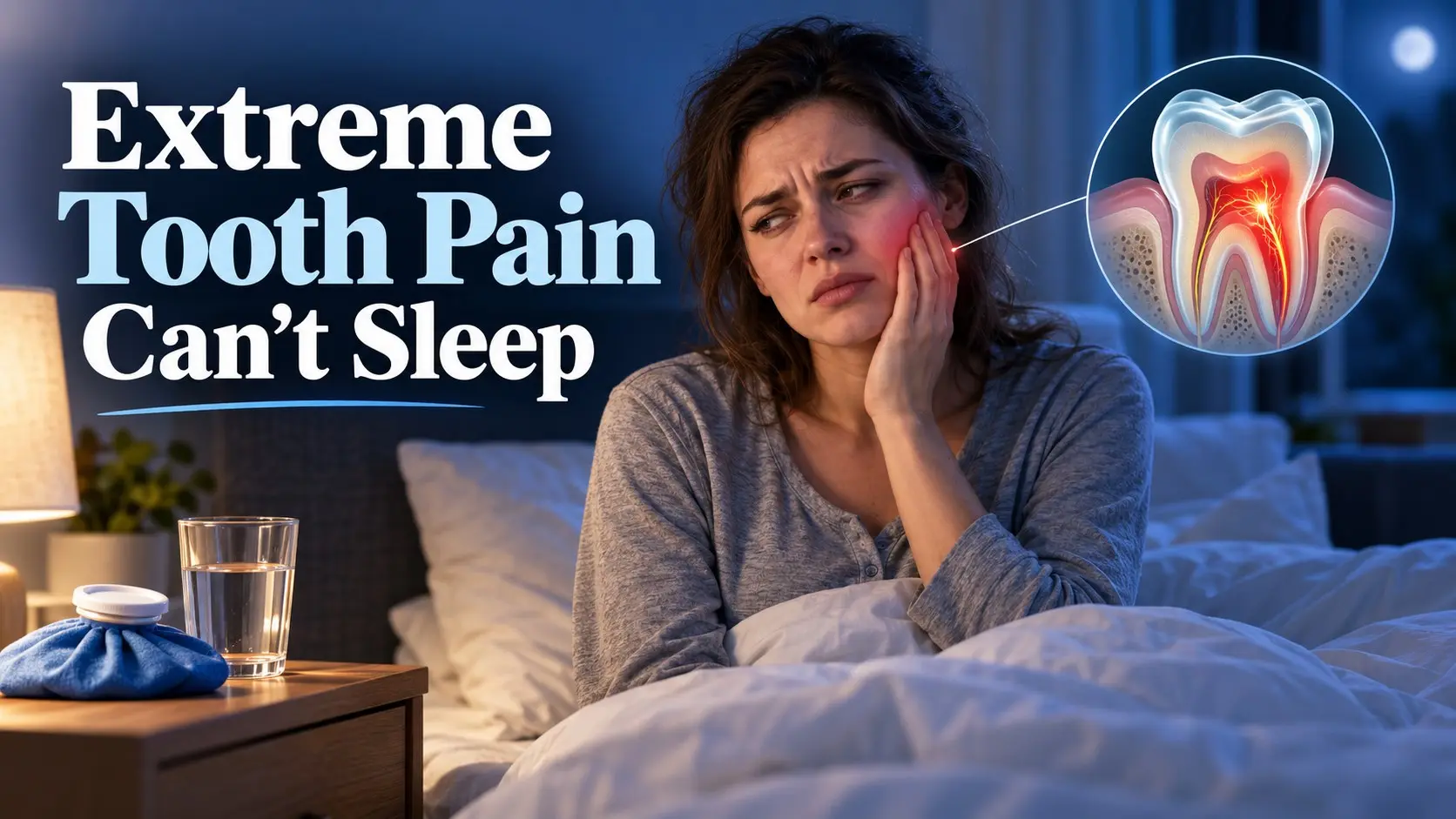
Extreme tooth pain can't sleep because every throb wakes you up? Start by checking for facial swelling, fever, trouble swallowing, or trouble breathing, then use safe temporary pain relief while you arrange dental care.
A toothache strong enough to stop sleep can come from deep decay, an inflamed tooth nerve, a cracked tooth, a dental abscess, or another problem that needs a dentist to treat the cause.
Quick answer: If extreme tooth pain can't sleep describes your night, use an appropriate pain medicine if it is safe for you, place a cold compress outside the cheek, rinse gently with warm salt water, keep your head raised, and avoid chewing on the sore side. Call a dentist as soon as possible. Pain medicine can help tonight, but it cannot repair decay, an inflamed pulp, a crack, or an abscess.
For prevention and everyday care, read the NextFitLife Oral Hygiene Guide.
Medical and dental note: This content is for general educational purposes and does not replace professional medical advice, diagnosis, or treatment. Consult an appropriately qualified healthcare professional for personal medical concerns. This article explains published guidance and does not provide a personal clinical assessment. Always consult qualified medical professionals for diagnosis and treatment of any health condition.
I am also not a dentist. Severe dental pain needs professional assessment because pain medicine cannot remove decay, repair a crack, clean infected pulp, or drain an abscess.
Table of Contents
- Extreme tooth pain can't sleep: what it may mean
- Why tooth pain feels worse at night
- 9 common causes of severe tooth pain
- 11 smart relief steps for tonight
- Best pain medicine options
- What not to put on a painful tooth
- How to spot a dental abscess
- When antibiotics are needed
- What a dentist may do
- When severe tooth pain becomes an emergency
- How to prevent another painful night
- References and Sources
- Related NextFitLife guides
- About the author
- Frequently asked questions
Extreme Tooth Pain Can't Sleep: What Could Be Causing It?
If extreme tooth pain can't sleep is what brought you here, do not judge the problem only by how much it hurts.
The pain pattern gives useful clues.
Ask yourself whether the pain starts on its own, whether hot or cold triggers it, how long it lasts after that trigger stops, whether biting hurts, and whether the gum or face is swollen.
Those details help a dentist separate simple sensitivity from decay, pulpitis, a cracked tooth, or infection.
Why Does Extreme Tooth Pain Feel Worse at Night?
Night removes distractions.
During the day, work, conversation, movement, and other tasks compete for your attention. In bed, the tooth may feel much harder to ignore.
Some people also notice more throbbing while lying flat.
Still, nighttime pain alone does not identify the cause.
A more useful warning pattern is pain that starts without a trigger, continues for minutes after heat or cold, repeatedly wakes you, or occurs with swelling.
9 Common Causes When Extreme Tooth Pain Can't Sleep
1. Deep Tooth Decay
A dental cavity may cause no pain at first.
As decay moves deeper into the tooth, cold drinks, sweet food, heat, or chewing may begin to hurt.
Once decay reaches the pulp, where the tooth's nerves and blood vessels sit, the pain can become severe.
Pain medicine may make the night easier, but it cannot remove the decay.
2. Pulpitis
Pulpitis means inflammation inside the tooth.
There are two broad patterns.
Reversible Pulpitis
Cold or sweet food may trigger a short pain that fades soon after the trigger is removed.
If the damage is still limited, the dentist may remove the decay and restore the tooth with a filling.
Irreversible Pulpitis
Irreversible pulpitis is more serious.
The tooth can hurt without any trigger. Heat or cold may start pain that keeps going for minutes after the stimulus is gone.
The pain can throb and become hard to locate.
Merck Manual notes that irreversible pulpitis requires root canal treatment or extraction when the pulp cannot recover.
3. Dental Abscess
A dental abscess is a pocket of pus caused by bacterial infection.
It can cause severe constant pain, pain when biting, gum swelling, bad taste, fever, swollen glands, or swelling of the cheek or jaw.
An abscess can spread beyond the tooth, so new swelling matters just as much as pain.
4. Cracked Tooth
A small crack can cause sharp pain when you bite or when you release the bite.
Cold drinks may also hurt.
If the crack reaches the pulp, the pain may become deep and constant.
5. Lost Filling or Crown
A lost filling or loose crown can expose sensitive tooth tissue.
Food, cold air, sugar, or temperature changes may then trigger strong pain.
Do not use household glue to reattach a crown.
6. Wisdom Tooth Inflammation
A partly erupted wisdom tooth can trap food and bacteria beneath the gum.
This can cause pain, swelling, bad taste, and trouble opening the mouth fully.
Severe swelling or increasing difficulty opening your mouth needs prompt dental care.
7. Gum Disease
Advanced gum disease can expose tooth roots, loosen teeth, and cause pain.
Pus, repeated bleeding, deep gum swelling, or loose permanent teeth need dental assessment.
8. Grinding or Clenching
Night grinding can make several teeth, the jaw muscles, and the jaw joints sore.
You may wake with jaw tightness, temple pain, headache, or sensitive teeth.
Grinding should not be used to explain away one severely throbbing tooth.
9. Sinus or Referred Pain
Sinus inflammation can sometimes make the upper back teeth ache.
Jaw, ear, and nerve problems can also refer pain toward a tooth.
Rarely, jaw or tooth discomfort can occur during a heart problem. Chest pressure, sweating, shortness of breath, nausea, or pain spreading to the arm, shoulder, jaw, or back needs urgent medical assessment.
What Does Your Tooth Pain Pattern Suggest?
| Pain Pattern | Possible Cause | Next Step |
|---|---|---|
| Brief pain with cold or sweets | Sensitivity, decay, or reversible pulpitis | Book a dental exam |
| Pain lingers after hot or cold | Possible irreversible pulpitis | Urgent dental assessment |
| Spontaneous throbbing pain | Pulp inflammation or infection | Urgent dental assessment |
| Pain when biting | Crack, root inflammation, or abscess | Avoid chewing there and see a dentist |
| Pain with gum swelling or gum boil | Possible dental abscess | Prompt dental care |
| Pain with facial swelling or fever | Possible spreading infection | Urgent dental or medical care |
Extreme Tooth Pain Can't Sleep? 11 Smart Relief Steps Tonight
If extreme tooth pain can't sleep is keeping you awake right now, these steps may help until you can reach a dentist.
They are temporary measures.
1. Check for Emergency Warning Signs
Before doing anything else, check for facial swelling, neck swelling, fever, difficulty swallowing, difficulty speaking, difficulty breathing, or swelling near an eye.
These signs can mean an infection is spreading.
2. Arrange Urgent Dental Care
Severe pain that prevents sleep deserves prompt dental assessment.
Call your dentist or an emergency dentist as soon as services open.
Do not turn temporary relief tonight into several days of delay.
3. Use a Suitable Pain Medicine if It Is Safe for You
The American Dental Association recommends nonopioid medicines as first line temporary treatment for acute toothache when definitive dental treatment is not immediately available.
NSAIDs such as ibuprofen or naproxen may be used alone or, in suitable people, together with acetaminophen.
NSAIDs are not suitable for everyone.
Ask a pharmacist, dentist, or doctor before using them if you have a history of stomach ulcers or bleeding, kidney disease, some heart conditions, an NSAID allergy, blood thinner treatment, or pregnancy.
Acetaminophen also has dose limits. Check all other medicines so you do not accidentally take acetaminophen from more than one product.
4. Apply a Cold Compress Outside Your Cheek
Wrap a cold pack in a thin cloth and place it against the outside of the cheek.
Do not place ice directly on the skin or against the painful tooth.
A cold compress may help with pain and swelling while you wait for treatment.
5. Rinse Gently With Warm Salt Water
A gentle salt water rinse can clean the mouth and soothe irritated gum tissue.
Swish gently, then spit it out.
Do not swallow large amounts.
Salt water cannot cure irreversible pulpitis or drain a deep abscess.
6. Clean Around the Tooth Gently
If food is caught between two teeth, careful flossing may remove pressure.
Brush gently with a soft toothbrush.
Do not push toothpicks, needles, or other sharp objects into the gum.
7. Keep Your Head Raised
If lying completely flat makes the throbbing feel stronger, raise your head and shoulders with pillows.
Keep your neck comfortable.
This may make sleep easier, but it does not repair the tooth.
8. Avoid Temperature and Food Triggers
Very cold drinks, hot drinks, sweets, hard foods, and chewing on the painful side can make some toothaches worse.
Choose soft food at a comfortable temperature until you are examined.
9. Never Put Aspirin on the Tooth or Gum
Do not hold an aspirin tablet against the painful area.
Aspirin can irritate and chemically burn oral tissue.
10. Skip Harsh Home Remedies
Do not rely on garlic paste, concentrated essential oils or homemade peroxide mixtures for severe dental pain. Arrange dental assessment rather than delaying care with home remedies.
Garlic and concentrated essential oils can irritate oral tissue. Incorrect peroxide use can also irritate the mouth.
None of them repairs decay, treats damaged pulp, closes a crack, or drains an abscess.
11. Do Not Start Leftover Antibiotics
Antibiotics are not general toothache medicine.
Many painful pulp and root conditions need a dental procedure rather than antibiotics alone.
Antibiotics become more important when infection has spread or produces systemic symptoms such as fever or feeling very unwell.
Extreme Tooth Pain Can't Sleep After Pain Medicine?
If extreme tooth pain can't sleep continues even after you have taken an appropriate medicine exactly as directed, do not keep taking extra doses.
More tablets do not treat the cause.
Uncontrolled severe pain is a reason to seek urgent dental advice.
Extreme Tooth Pain Can't Sleep: Which Pain Medicine Helps?
The ADA's current guidance supports nonopioid medicine as the first choice for most acute dental pain in adolescents and adults.
NSAIDs such as ibuprofen and naproxen, alone or combined with acetaminophen, can provide effective temporary relief when they are medically appropriate.
| Option | Main Role | Important Caution |
|---|---|---|
| NSAID | Pain plus inflammation | Not appropriate for everyone |
| Acetaminophen | Pain relief | Stay within product dose limits |
| NSAID plus acetaminophen | Strong temporary relief in suitable people | Both medicines must be medically suitable |
| Opioid medicine | Selected limited situations | Sedation, overdose, misuse, and dependence risks |
The ADA living guideline reports that NSAIDs alone or with acetaminophen can effectively manage toothache when dental care is not immediately available.
Opioids are not routine first line treatment.
Can Benzocaine Gel Help Extreme Tooth Pain Can't Sleep?
If extreme tooth pain can't sleep is severe, a numbing gel may sound attractive.
Some oral products contain benzocaine and can numb surface gum tissue for a short time.
That effect is temporary and does not reach the cause of deep pulp pain.
Benzocaine has also been linked to a rare but serious blood condition called methemoglobinemia.
Follow the product directions and do not use benzocaine products in children younger than two years.
Why Can Extreme Tooth Pain Suddenly Stop?
Sudden relief does not always mean the tooth healed.
With severe irreversible pulpitis, the damaged pulp may eventually die.
Merck explains that pain can stop for a period when pulpal necrosis occurs, even though disease remains and infection can develop around the root.
Keep your dental appointment if severe pain suddenly disappears.
Extreme Tooth Pain Can't Sleep With Swelling: Could It Be an Abscess?
If extreme tooth pain can't sleep occurs with gum swelling, pus, fever, a bad taste, tender glands, cheek swelling, or jaw swelling, a dental abscess becomes more concerning.
Mayo Clinic describes a tooth abscess as a pocket of pus caused by bacterial infection.
A ruptured abscess can release foul tasting fluid and suddenly reduce pressure.
That does not mean it is cured.
The source still needs dental treatment.
Do Antibiotics Fix Extreme Tooth Pain Can't Sleep?
Not usually by themselves.
When extreme tooth pain can't sleep comes from pulp inflammation, deep decay, or a localized root problem, the tooth often needs a procedure.
That procedure may be a filling, root canal, drainage, or tooth extraction.
The ADA recommends dental treatment rather than routine antibiotics for most pulpal and localized periapical pain when treatment of the source is available.
Antibiotics are more likely to be used when infection is spreading or there are systemic signs such as fever or malaise.
What Will the Dentist Do?
A dentist will ask when the pain began and what triggers it.
They may check:
- Hot and cold sensitivity
- Pain when biting
- Swelling
- The condition of fillings and crowns
- The gums
- The tooth's response to tapping
A dental X ray may be needed.
Filling
If decay has not permanently damaged the pulp, removing the decay and restoring the tooth may solve the problem.
Root Canal Treatment
If irreversible pulpitis or infection is inside a tooth that can be saved, root canal treatment can remove the damaged pulp and clean the inside of the tooth.
Abscess Drainage
A collection of pus may need professional drainage.
Never cut, squeeze, or puncture a gum abscess yourself.
Extraction
A tooth that cannot be restored may need extraction.
Extreme Tooth Pain Can't Sleep: Can You Wait Until Morning?
If extreme tooth pain can't sleep but you have no major facial swelling, neck swelling, fever with worsening illness, breathing trouble, swallowing trouble, or other emergency signs, temporary pain management until a dental service opens may be reasonable.
Still, pain severe enough to stop sleep should be treated as urgent.
Book dental care as soon as possible.
Extreme Tooth Pain Can't Sleep: When Is It an Emergency?
If extreme tooth pain can't sleep is accompanied by any of these signs, seek urgent or emergency care:
- Trouble breathing
- Trouble swallowing
- Trouble speaking
- Large or rapidly increasing facial swelling
- Swelling spreading into the neck
- Swelling around an eye
- Vision changes
- Severe difficulty opening the mouth
- Fever with rapidly worsening illness
- Confusion or fainting
NHS guidance advises emergency assessment when swelling around the eye or neck is present or swelling in the mouth or neck makes breathing, swallowing, or speaking difficult.
Mayo Clinic gives the same warning for a dental abscess with breathing or swallowing difficulty.
What Should You Do Tonight?
| Situation | Do This | Avoid |
|---|---|---|
| Pain | Use suitable medicine exactly as directed | Extra doses because pain is severe |
| Swelling | Use a wrapped cold compress outside the cheek | Ice directly against skin or tooth |
| Mouth care | Brush gently and use warm salt water | Aggressive cleaning and sharp tools |
| Sleep | Raise your head if lying flat increases throbbing | Ignoring new swelling during the night |
| Next morning | Contact a dentist | Assuming temporary relief means the tooth healed |
What if You Are Pregnant?
Do not ignore possible dental infection because you are pregnant.
Dental disease can still require treatment.
Ask your dentist, obstetric clinician, or pharmacist which pain medicine is suitable for your stage of pregnancy.
Do not take leftover antibiotics or assume an over the counter medicine is safe because you used it before pregnancy.
What if a Child Has Severe Tooth Pain?
Children need age appropriate medicine and dental assessment.
Do not give aspirin to a child unless a qualified clinician has specifically prescribed it for another condition.
Seek urgent care for facial swelling, fever with worsening dental pain, trouble swallowing, trouble breathing, swelling near an eye, or severe uncontrolled pain.
How Do You Prevent Extreme Tooth Pain Can't Sleep From Happening Again?
The best way to avoid another extreme tooth pain can't sleep night is to treat small dental problems before they reach the pulp.
Brush twice each day with fluoride toothpaste.
Clean between the teeth every day.
Limit frequent sugary snacks and drinks.
Have cracks, cavities, loose fillings, repeated sensitivity, or gum swelling checked early.
If you grind your teeth, ask your dentist whether a properly fitted guard is appropriate.
For a complete routine, use the NextFitLife Oral Hygiene Guide.
Conclusion
If extreme tooth pain can't sleep describes your night, use temporary relief to get through the next few hours, but use dental care to fix the problem.
A suitable pain reliever, cold compress, gentle salt water rinse, soft food, and an elevated sleeping position may help. None of these can repair deep decay, irreversible pulpitis, a cracked tooth, or an abscess.
Call a dentist promptly. If extreme tooth pain can't sleep occurs with rapidly increasing facial or neck swelling, eye swelling, fever with severe illness, trouble breathing, trouble speaking, or trouble swallowing, seek urgent medical care.
References and Sources
- American Dental Association. Acute Pain Management: Toothache.
Current living guideline. Evidence search updated through July 2026.
https://www.ada.org/resources/research/science/evidence-based-dental-research/living-guideline-program/adult-adolescent-pain-management-toothache - American Dental Association. Oral Analgesics for Acute Dental Pain.
https://www.ada.org/resources/ada-library/oral-health-topics/oral-analgesics-for-acute-dental-pain - NHS. Toothache.
https://www.nhs.uk/symptoms/toothache/ - Mayo Clinic. Tooth Abscess: Symptoms and Causes.
https://www.mayoclinic.org/diseases-conditions/tooth-abscess/symptoms-causes/syc-20350901 - Merck Manual Professional Edition. Pulpitis.
Full review August 2026.
https://www.merckmanuals.com/professional/dental-disorders/common-dental-disorders/pulpitis
Continue Reading on NextFitLife
- Oral Hygiene Guide: Daily Habits for Healthy Teeth and Gums
- Mouth Ulcers: Causes, Relief and Warning Signs
- How to Remove Yellow Stains on Teeth Safely
- Best Teeth Whitening Tips for Safe Results
About the Author
Adel Galal is the founder and lead writer at NextFitLife. His personal study and practical interest in health, fitness, nutrition, wellness, oral care, and healthy aging spans more than 30 years.
His work focuses on checking health claims against recognized medical and dental guidance, removing unsafe home remedies, and turning complex information into practical language readers can understand.
This content is for general educational purposes and does not replace professional medical advice, diagnosis, or treatment. Consult an appropriately qualified healthcare professional for personal medical concerns. This article explains published guidance and does not provide a personal clinical assessment. Always consult qualified medical professionals for diagnosis and treatment of any health condition.
I am also not a dentist. A qualified dental professional should diagnose and treat tooth decay, pulpitis, dental abscesses, cracked teeth, gum disease, and other causes of severe dental pain.
Learn more about Adel Galal and NextFitLife on the About Us page.
Frequently Asked Questions About Extreme Tooth Pain Can't Sleep
Extreme Tooth Pain Can't Sleep: What Should I Do First?
If extreme tooth pain can't sleep is keeping you awake, first check for facial or neck swelling, fever, trouble breathing, trouble swallowing, trouble speaking, or swelling around an eye. If none are present, use safe temporary pain relief and arrange urgent dental care.
Why Is My Tooth Pain So Bad at Night?
Deep decay, pulpitis, a cracked tooth, an abscess, wisdom tooth inflammation, and grinding can cause severe nighttime pain. Pain may also feel stronger when there are fewer distractions.
What Is the Best Pain Medicine for Severe Toothache?
Current ADA guidance supports NSAIDs such as ibuprofen or naproxen, alone or combined with acetaminophen, as first line temporary pain treatment in suitable people when immediate dental care is unavailable.
Can I Take Ibuprofen and Acetaminophen Together?
They can be combined for dental pain in some people, but both medicines must be medically suitable for you. Follow product directions and ask a pharmacist or clinician if you have other medical conditions or medicines.
Does Throbbing Tooth Pain Mean Infection?
Not always. Severe inflammation inside the tooth can cause throbbing before an abscess develops. Infection becomes more concerning with swelling, pus, bad taste, fever, swollen glands, or facial swelling.
Can Extreme Tooth Pain Stop Without Treatment?
The pain can decrease even while the dental problem remains. A badly damaged pulp can die, which can temporarily reduce pain while infection develops around the root.
Can I Put Aspirin on My Tooth?
No. Aspirin placed directly against the tooth or gum can irritate or burn oral tissue.
Does Clove Oil Cure a Toothache?
No. Clove oil cannot repair decay, remove damaged pulp, drain an abscess, or fix a cracked tooth. Concentrated oil may also irritate oral tissue.
Do I Need Antibiotics for Extreme Tooth Pain?
Not automatically. Most pulp related and localized dental pain needs treatment of the tooth itself. Antibiotics are more likely to be used when infection is spreading or causes fever or other systemic symptoms.
How Do I Know if I Have a Dental Abscess?
Possible signs include severe constant pain, pain when biting, gum swelling, a gum boil, pus, bad taste, fever, swollen glands, or cheek and jaw swelling.
When Should I Go to an Emergency Department for Tooth Pain?
Seek emergency care if swelling makes it difficult to breathe, swallow, or speak, spreads toward the eye or neck, causes vision problems, or becomes rapidly severe.
Will a Root Canal Stop Severe Tooth Pain?
If irreversible pulpitis or infection inside a tooth that can still be restored is causing the pain, root canal treatment can remove the damaged pulp and treat the inside of the tooth.
Can a Cracked Tooth Cause Extreme Tooth Pain at Night?
Yes. A crack can irritate or expose the dental pulp and cause sharp pain with biting, cold sensitivity, or severe ongoing pain.
Should I Sleep With My Head Raised?
If lying flat makes the throbbing feel worse, raising your head and shoulders may make you more comfortable until you receive dental treatment.

Health & wellness writer with 30+ years of experience in nutrition, fitness, and healthy aging. Founder of NextFitLife.com — evidence-based health guidance.