
Published on: Aug 7, 2023
Last updated: October 5, 2026
Next review: October 2027, or sooner if major bariatric surgery guidance changes.
Written and source checked by: Adel Galal, Founder and Lead Writer at NextFitLife
Medical review status: This article has not been medically reviewed by a bariatric surgeon, obesity medicine doctor, endocrinologist, registered dietitian, pharmacist, psychologist, or other licensed healthcare professional.
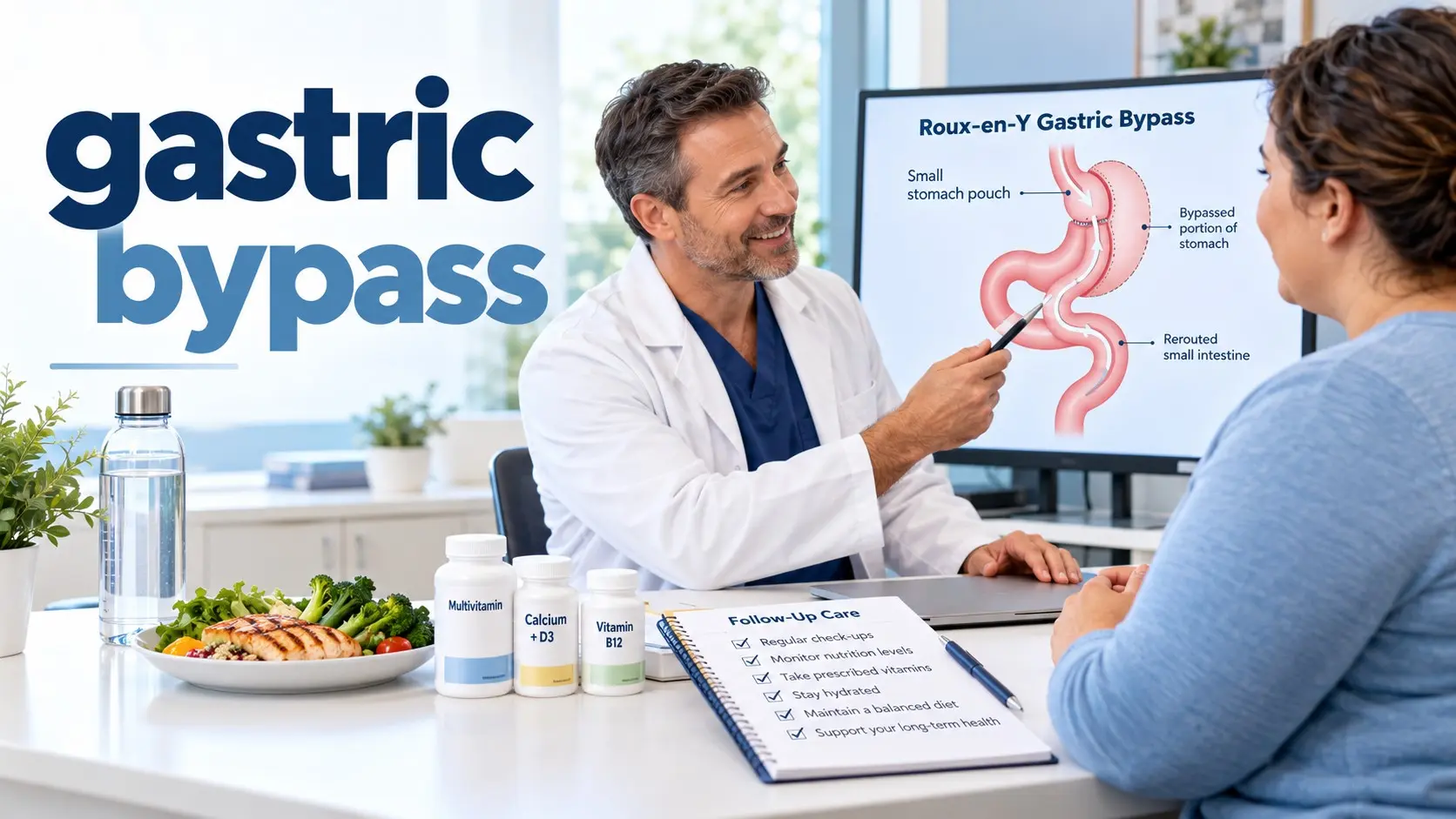
Gastric bypass is a major operation used to treat obesity and related health problems. It creates a small stomach pouch and reroutes part of the small intestine. It can produce large and lasting weight loss, improve type 2 diabetes, and reduce other obesity related risks. It also changes eating, nutrient absorption, and medical care for life.
This is not a cosmetic shortcut.
It is a medical treatment for a chronic disease.
It is also not a guarantee that every pound will stay off forever.
The best results come from surgery plus long term nutrition care, movement, supplements, laboratory testing, and follow up with a bariatric team.
Medical Notice: This content is for general educational purposes and does not replace professional medical advice, diagnosis, or treatment. Consult an appropriately qualified healthcare professional for personal medical concerns. This article explains published guidance and does not provide a personal clinical assessment. Always consult qualified medical professionals for diagnosis and treatment of any health condition.
This article cannot tell you whether you should have surgery or which operation is right for you. A bariatric team should review your weight history, medical conditions, medicines, nutrition, mental health, surgical risk, and ability to attend long term follow up.
Table of Contents
- Quick Answer
- What gastric bypass is
- How it causes weight loss
- 13 Critical Facts
- It changes the stomach and intestine
- Eligibility rules have changed
- Weight loss can remain substantial for years
- Some weight regain is normal
- Diabetes can improve or enter remission
- Gastric bypass is not always better than sleeve
- Recovery happens in stages
- Dumping syndrome can occur
- Vitamins are lifelong
- Ulcers and bowel problems can occur
- Alcohol can affect you differently
- Pregnancy and medicines need planning
- Follow up never truly ends
- Before Surgery
- Food After Surgery
- Weight Loss Results
- Risks and Red Flags
- Frequently Asked Questions
What is gastric bypass?
The most common form is called Roux en Y gastric bypass.
The surgeon creates a small pouch from the upper part of the stomach.
Food then travels from this pouch into a section of the small intestine.
Much of the original stomach and the first part of the small intestine are bypassed by food.
They are not normally removed.
Digestive juices still meet food farther down the intestine.
The operation changes more than the amount of food you can fit in your stomach.
It can also change:
- Fullness
- Hunger
- Gut hormones
- Blood glucose control
- How food moves through the gut
- How some vitamins and minerals are absorbed
This is why gastric bypass is also called metabolic surgery.
For an overview of all procedures, read the NextFitLife Bariatric Surgery Guide.
Fact 1: Gastric bypass does more than make the stomach smaller
The old explanation was simple.
Small stomach equals small meals equals weight loss.
That is only part of the story.
After gastric bypass, food follows a new route through the digestive system.
The operation also changes gut signals linked with hunger, fullness, and glucose control.
Some nutrient absorption changes too.
These metabolic effects help explain why blood glucose can improve quickly after surgery in some people.
Fact 2: Who qualifies for gastric bypass has changed
You may still see old websites saying bariatric surgery is only for people with a BMI of 40 or more.
That is no longer the full picture.
The 2022 ASMBS and IFSO guidance recommends metabolic and bariatric surgery for people with BMI of at least 35 kg/m², even when major obesity related conditions are not present.
The same guidance recommends surgery for people with type 2 diabetes and BMI of at least 30 kg/m².
It also says surgery should be considered for some people with BMI from 30 to 34.9 kg/m² when nonsurgical treatment has not produced enough lasting weight loss or health improvement.
Health systems do not all use identical rules.
For example, NICE guidance in the United Kingdom still uses different referral thresholds in routine care.
Your country, health system, insurer, ethnicity, medical conditions, and local program can all affect eligibility.
BMI is not the whole decision
BMI is a screening tool.
A bariatric team may also review:
- Type 2 diabetes
- Sleep apnea
- High blood pressure
- Heart disease
- Fatty liver disease
- Joint disease
- Reflux
- Past weight treatment
- Current medicines
- Smoking or nicotine use
- Nutrition
- Alcohol use
- Mental health
- Previous abdominal surgery
- Ability to attend long term follow up
The operation should fit the person.
Not just a BMI number.
Fact 3: Long term weight loss can be substantial
People often want one number.
There is no honest way to promise one result for everyone.
Still, long term research gives useful ranges.
In the NIDDK funded LABS study, people who had gastric bypass had lost an average of about 28.4 percent of their starting body weight at seven years.
Another large study found that people who had Roux en Y gastric bypass were still about 20 percent below their starting weight at ten years on average.
These are group averages.
Your result may be higher or lower.
| Time After Surgery | What Long Term Research Found | What It Means |
|---|---|---|
| 1 year | About 28% average total body weight loss in one large study | Weight loss is usually fastest early |
| 7 years | About 28.4% average loss in the LABS study | Large losses can remain durable |
| 10 years | About 20% average loss in another large real world study | Some regain can occur while a large net loss remains |
Do not turn these figures into a personal forecast.
Age, starting weight, procedure details, diabetes, eating pattern, activity, medicines, follow up, and biology all matter.
Fact 4: Some weight regain does not mean surgery failed
The body adapts after weight loss.
Hunger can change.
Daily habits can change.
The stomach pouch and connections can also change over time.
Some weight regain is common after the lowest weight is reached.
That is not the same as returning to the starting weight.
NIDDK data show that many people maintain a large net loss years after surgery.
If regain becomes larger than expected, the answer is not shame.
The bariatric team can look at:
- Eating pattern
- Liquid calories
- Alcohol
- Protein intake
- Activity
- Sleep
- Mental health
- Weight promoting medicines
- Anatomy
- Obesity medicine options
Modern care may include prescription obesity medicine after surgery when it is appropriate.
Fact 5: Type 2 diabetes can improve greatly
Gastric bypass is not only a weight loss operation.
It can have strong effects on type 2 diabetes.
NIH reported in 2024 that people who had metabolic surgery had better blood glucose control than people treated with medicine and lifestyle care alone in long term follow up.
People who had surgery were also more likely to stop diabetes medicine and reach diabetes remission for periods of time.
Remission is not the same as permanent cure.
Diabetes can return.
This is more likely as time passes in some patients.
Blood glucose follow up should continue even when medicine is no longer needed.
For more on this link, read Diabetes, Obesity and Metabolism.
What other health problems may improve?
Weight loss surgery can improve several conditions linked with obesity.
NIDDK lists benefits for problems such as:
- Type 2 diabetes
- High blood pressure
- Unhealthy cholesterol levels
- Sleep apnea
- Mobility problems
- Joint pain
Some people may need fewer medicines after surgery.
Do not stop blood pressure, diabetes, cholesterol, or other medicine yourself.
Doses sometimes need to change quickly after surgery, so follow your treatment team.
Fact 6: Gastric bypass is not always better than sleeve surgery
The two operations are different tools.
Neither one wins for every person.
| Feature | Gastric Bypass | Sleeve Gastrectomy |
|---|---|---|
| Stomach | Small pouch is created | Most of stomach is removed to form a sleeve |
| Small intestine | Part is bypassed | No intestinal bypass |
| Weight loss | Often greater on average | Also substantial |
| Diabetes effect | Strong metabolic effect | Strong metabolic effect |
| Reflux | Can improve reflux in some patients | Reflux can worsen in some patients |
| Nutrient risk | Higher risk for several deficiencies | Deficiencies can still occur |
| Dumping syndrome | More common | Can occur but is generally less common |
Your surgeon may consider diabetes, reflux, medicines, BMI, past operations, eating pattern, nutritional risk, and other health issues.
Fact 7: Recovery happens in stages
You do not leave hospital and return to normal meals.
The digestive system needs time to heal.
A common food progression is:
- Clear or thin liquids
- Fuller liquids
- Pureed foods
- Soft foods
- Small portions of regular solid food
Programs use different schedules.
Follow your own surgical team's plan.
Mayo Clinic notes that many people move toward regular foods at around six to eight weeks, but healing speed varies.
Do not advance food early because you feel well.
How should eating change after gastric bypass?
Eating becomes slower and more deliberate.
Common long term habits include:
- Small meals
- Small bites
- Chewing food very well
- Eating protein rich foods first
- Stopping when comfortably full
- Drinking fluids mainly between meals
- Avoiding frequent high sugar foods
- Limiting foods that trigger symptoms
Protein becomes important because rapid weight loss can include some muscle loss.
Your bariatric dietitian should set your personal target.
For normal food ideas, see High Protein Foods for Weight Loss, but follow your surgical diet before using general food advice.
Fact 8: Dumping syndrome is real
Dumping syndrome happens when food moves into the small intestine too quickly.
It is more common after gastric bypass than after many other bariatric procedures.
Early dumping
Early symptoms can begin within about 30 minutes after food.
They may include:
- Nausea
- Stomach cramps
- Diarrhea
- Feeling very full
- Flushing
- Sweating
- Fast heartbeat
- Dizziness
Late dumping
Late symptoms usually appear one to three hours after eating.
A rapid rise in blood glucose can trigger a large insulin response.
Blood glucose may then fall too low.
Symptoms can include:
- Shaking
- Sweating
- Weakness
- Dizziness
- Fast heartbeat
- Trouble concentrating
Meal changes often help.
Persistent symptoms need review by the bariatric team.
Fact 9: Vitamins and blood tests are lifelong
This is one of the biggest differences between surgery and a temporary diet.
After gastric bypass, you can eat less food and absorb some nutrients less well.
Deficiencies can develop years after surgery.
Important nutrients can include:
- Iron
- Vitamin B12
- Folate
- Calcium
- Vitamin D
- Thiamine
- Other vitamins and trace minerals
Your bariatric program should tell you which supplements to take.
Do not replace bariatric vitamins with a random standard multivitamin unless your team says it meets your needs.
Regular blood testing is important because a deficiency can start before you feel ill.
What can happen if deficiencies are missed?
Possible problems include:
- Anemia
- Severe tiredness
- Numbness or tingling
- Weakness
- Bone loss
- Memory or nerve problems
Thiamine deficiency can become serious quickly, especially with repeated vomiting.
Persistent vomiting after surgery needs medical assessment.
Fact 10: Gastric bypass has early and late risks
Modern surgery has become much safer.
It is still major abdominal surgery.
Early risks
Possible early complications include:
- Bleeding
- Infection
- Blood clots
- Breathing problems
- Reaction to anesthesia
- Leak from a surgical connection
Later risks
Later problems can include:
- Bowel obstruction
- Internal hernia
- Dumping syndrome
- Gallstones
- Kidney stones
- Low blood glucose
- Ulcers
- Narrowing of a surgical connection
- Vomiting
- Vitamin and mineral deficiency
- Need for another procedure
NIDDK reports that follow up procedures, operations, or hospital stays are not rare in the five years after bariatric surgery, and they occur more often after gastric bypass than after sleeve surgery.
This does not mean gastric bypass is unsafe.
It means the risks belong in the decision.
What is a marginal ulcer?
An ulcer can form near the connection between the small stomach pouch and small intestine.
Risk can rise with smoking and some medicines.
Many bariatric programs advise avoiding NSAID pain medicines such as ibuprofen or naproxen unless the surgical team says they are safe.
Ask before using them after gastric bypass.
Do not assume an over the counter medicine is harmless after surgery.
Fact 11: Alcohol can affect you differently
Gastric bypass can change how alcohol enters the bloodstream.
Alcohol may act faster and blood alcohol levels may rise differently after surgery.
NIDDK research also found an increase in alcohol use disorders after gastric bypass in long term follow up.
That does not mean every person develops an alcohol problem.
It does mean alcohol deserves a real discussion before and after surgery.
Do not drive based on how much alcohol you could tolerate before surgery.
Fact 12: Pregnancy and medicine use need planning
Pregnancy after gastric bypass can be healthy, but it needs planning.
Rapid weight loss and changing nutrition make the period after surgery different from normal weight management.
If you could become pregnant, discuss contraception and pregnancy timing with your bariatric and obstetric teams.
Pregnancy after bypass needs careful attention to:
- Iron
- Vitamin B12
- Folate
- Calcium
- Vitamin D
- Weight change
- Fetal growth
Medicines may also need review after surgery.
Changes in the stomach and intestine can affect how some oral medicines are absorbed.
Never crush, open, or change a tablet just because you had gastric bypass.
Ask a pharmacist or prescriber first.
Fact 13: Long term follow up is part of the operation
Surgery day is not the finish line.
It is the start of a new phase of medical care.
Follow up can include:
- Weight trend
- Nutrition assessment
- Vitamin and mineral testing
- Blood count
- Iron studies
- Vitamin B12
- Vitamin D
- Calcium related tests
- Blood glucose
- Kidney and liver health
- Mental health
- Alcohol use
- Medicine review
NICE specifically includes lifelong annual review as part of bariatric surgery care.
If your operation was years ago and you have stopped all follow up, it is worth reconnecting with a bariatric or primary care team.
What happens before gastric bypass?
A good program does more than schedule an operation.
The team may include:
- Bariatric surgeon
- Obesity medicine clinician
- Registered dietitian
- Nurse
- Psychologist or mental health professional
- Pharmacist
- Other specialists when needed
The evaluation may include blood tests, nutrition review, sleep apnea screening, heart or lung testing when needed, medicine review, and mental health assessment.
Why is mental health assessed?
It is not because obesity is a mental illness.
The purpose is to make surgery safer and prepare you for the changes that follow.
The team may ask about:
- Depression
- Anxiety
- Binge eating
- Other eating disorders
- Alcohol use
- Substance use
- Expectations about surgery
- Support at home
Needing mental health support does not automatically mean surgery is impossible.
Treatment and support can improve preparation and long term care.
Why do smokers need to stop?
Smoking raises surgical risks and can increase the risk of ulcers after gastric bypass.
Many programs require patients to stop tobacco and nicotine before surgery.
Be honest about nicotine use.
That includes cigarettes, vaping, and other nicotine products.
What is the diet like right after surgery?
Your stomach pouch is healing.
So are the new surgical connections.
Your team may move you through liquids, purees, soft foods, and then small solid meals.
A common long term pattern includes:
- Eating slowly
- Chewing very well
- Stopping at the first comfortable feeling of fullness
- Prioritizing protein
- Avoiding large sugary meals
- Drinking enough fluid between meals
- Taking supplements every day
Do not copy another patient's diet schedule.
Your surgeon's instructions come first.
How much can you eat after gastric bypass?
Portions start very small.
They increase gradually as healing progresses.
The aim is not to see how much the pouch can hold.
Eating too quickly or too much can cause pain, nausea, or vomiting.
Long term success does not require living on tiny amounts forever.
The aim is small, nutrient rich meals that meet your needs.
Can you drink with meals?
Many bariatric programs advise separating food and fluids.
Drinking large amounts with a meal can fill the pouch quickly and may move food through faster.
Mayo Clinic advises drinking mainly between meals and waiting around 30 minutes after eating before drinking again.
Follow the timing given by your own bariatric dietitian.
Can you eat sugar after gastric bypass?
Sugar is not banned forever.
But large amounts of rapidly absorbed sugar can trigger dumping symptoms.
Sweet drinks are especially easy to consume quickly.
A useful long term plan usually puts more focus on:
- Protein
- Vegetables
- Fruit
- Beans
- Whole grains when tolerated
- Healthy fats in sensible portions
For broader food guidance once your surgical team has cleared normal foods, use the NextFitLife Weight Loss and Metabolism Guide.
Can gastric bypass improve fatty liver disease?
Weight loss and better metabolic health can improve fatty liver disease in many people.
But advanced liver disease needs specialist assessment before surgery.
If you have known fibrosis or cirrhosis, tell the bariatric team early.
Your liver stage can affect which procedure is safe.
Read Life Expectancy with Fatty Liver Disease for more on fibrosis and long term risk.
Can gastric bypass extend life?
For appropriately selected people with severe obesity, metabolic and bariatric surgery has been linked with longer survival in long term studies.
That does not mean surgery adds a guaranteed number of years to every person's life.
Your overall risk depends on:
- Age
- Diabetes
- Heart disease
- Kidney disease
- Smoking
- Sleep apnea
- Blood pressure
- Other medical conditions
The aim is to reduce long term obesity related risk while balancing the risks of surgery.
What if weight starts coming back?
Do not hide from your care team.
Weight regain can happen.
It does not mean you ruined the operation.
A structured review can look for:
- Changes in hunger
- Eating patterns
- Liquid calories
- Alcohol
- Sleep problems
- Low activity
- Weight promoting medicine
- Anatomical change
- Untreated mental health problems
Options can include nutrition support, behavioral care, obesity medicine, endoscopic treatment, or revision in selected cases.
When should you get urgent help after gastric bypass?
Seek urgent medical care for:
- Severe or worsening abdominal pain
- Chest pain
- Severe shortness of breath
- Fainting
- Repeated vomiting
- Vomiting blood
- Black stools
- High fever
- A very fast heartbeat with feeling very unwell
- New painful swelling in one leg
- Inability to keep fluids down
- Severe dehydration
- New confusion
Leaks, blood clots, bleeding, infection, or bowel blockage can become serious.
Do not wait for a routine appointment when symptoms are severe or rapidly worsening.
Seven gastric bypass myths to drop
Myth 1: Gastric bypass is the easy way out
No.
It is major medical treatment that requires lifelong care.
Myth 2: Surgery only makes the stomach smaller
No.
It also changes intestinal routing, gut signals, glucose control, and nutrient absorption.
Myth 3: Everyone loses the same amount
No.
Long term results vary widely.
Myth 4: You can never regain weight
No.
Some regain is common.
Myth 5: Diabetes is permanently cured
No.
Remission can happen, but diabetes can return.
Myth 6: Vitamins are only needed during recovery
No.
Supplementation and nutrition testing are lifelong parts of gastric bypass care.
Myth 7: Surgery means you never need weight treatment again
No.
Some patients later need nutrition care, medicines, endoscopic treatment, or another procedure.
Questions to ask a bariatric surgeon
- Why do you recommend gastric bypass rather than sleeve surgery for me?
- What weight loss range is realistic for someone with my health history?
- How many Roux en Y operations does your center perform?
- What are your leak and complication rates?
- How long will I stay in hospital?
- What vitamins will I need for life?
- How often will I need blood tests?
- How could surgery affect my diabetes medicines?
- How will my other medicines change?
- What should I do if I regain weight?
- Who do I contact years later if I develop a problem?
- What emergency symptoms should send me straight to hospital?
Conclusion
Gastric bypass can be one of the most effective long term treatments for obesity and related metabolic disease. Research shows that many people maintain substantial weight loss for years, and type 2 diabetes, blood pressure, sleep apnea, mobility, and other health problems can improve.
But the operation changes digestion for life. Supplements, nutrition, blood tests, eating habits, and medical follow up are part of the treatment, not optional extras.
Your next step should not be choosing a surgery from a before and after photo. Meet with a qualified metabolic and bariatric surgery team, compare gastric bypass with the alternatives, and ask what lifelong care will look like for you.
Related NextFitLife Guides and Hubs
Bariatric Surgery: Benefits, Risks and Long Term Care
for an overview of gastric bypass, sleeve surgery, other procedures, eligibility, recovery, risks, and follow up.
Weight Management and Metabolism Hub
for obesity treatment, prescription medicines, surgery, nutrition, physical activity, and long term maintenance.
Weight Loss and Metabolism Guide
for sustainable eating, protein, fibre, activity, sleep, and weight management.
High Protein Foods for Weight Loss
for protein rich foods to use after your bariatric team clears regular food.
Diabetes, Obesity and Metabolism
for insulin resistance, type 2 diabetes, obesity treatment, medicines, and metabolic surgery.
Life Expectancy with Fatty Liver Disease
for MASLD, fibrosis, metabolic health, and liver risk.
References and Sources
- American Society for Metabolic and Bariatric Surgery and International Federation for the Surgery of Obesity and Metabolic Disorders. 2022 Indications for Metabolic and Bariatric Surgery.
https://asmbs.org/resources/2022-asmbs-and-ifso-indications-for-metabolic-and-bariatric-surgery/
- National Institute of Diabetes and Digestive and Kidney Diseases. Weight Loss Surgery.
https://www.niddk.nih.gov/health-information/weight-management/bariatric-surgery
- National Institute of Diabetes and Digestive and Kidney Diseases. Long Term Study of Bariatric Surgery for Obesity.
https://www.niddk.nih.gov/about-niddk/research-areas/obesity/longitudinal-assessment-bariatric-surgery
- National Institutes of Health. Bariatric Surgery Provides Long Term Blood Glucose Control and Type 2 Diabetes Remission.
https://www.nih.gov/news-events/news-releases/bariatric-surgery-provides-long-term-blood-glucose-control-type-2-diabetes-remission
- Mayo Clinic. Gastric Bypass Surgery.
https://www.mayoclinic.org/tests-procedures/gastric-bypass-surgery/about/pac-20385189
About the Author
Adel Galal is the Founder and Lead Writer at NextFitLife. He researches practical health, nutrition, fitness, weight management, metabolic health, bariatric surgery, and healthy aging topics using recognized medical, government, scientific, and public health sources.
His goal is to make complex health choices easier to understand without presenting surgery as a miracle, blaming people for obesity, or hiding the risks and lifelong care that follow a major procedure.
For this article, Adel reviewed current bariatric surgery guidance, long term outcome research, nutrition advice, diabetes evidence, and surgery safety information from organizations including NIDDK, NIH, ASMBS, IFSO, NICE, and Mayo Clinic.
Adel is not a doctor, bariatric surgeon, obesity medicine specialist, endocrinologist, registered dietitian, pharmacist, psychologist, nurse, or other licensed healthcare professional.
Learn more about Adel Galal, NextFitLife, and the site's editorial standards on the About Us page.
Medical Disclaimer: This content is for general educational purposes and does not replace professional medical advice, diagnosis, or treatment. Consult an appropriately qualified healthcare professional for personal medical concerns. This article explains published guidance and does not provide a personal clinical assessment. Always consult qualified medical professionals for diagnosis and treatment of any health condition.
Frequently Asked Questions
What is gastric bypass?
Gastric bypass is a metabolic and bariatric operation. A surgeon creates a small stomach pouch and connects it to the small intestine so food bypasses most of the stomach and the first part of the intestine.
How much weight can you lose after gastric bypass?
Results vary. NIDDK long term data found average weight loss of about 28.4 percent of starting body weight at seven years in one study. Another large study found an average loss of about 20 percent at ten years.
How long does gastric bypass last?
The anatomical changes are intended to be long term. Weight results can also last for many years, although some regain is common and some patients later need additional obesity treatment.
Is gastric bypass permanent?
It is generally treated as a permanent operation. Reversal or revision is possible in selected medical situations, but another operation carries its own risks.
What BMI qualifies for gastric bypass?
Current ASMBS and IFSO guidance recommends bariatric surgery for BMI of at least 35 kg/m² and for people with type 2 diabetes and BMI of at least 30 kg/m². Surgery can also be considered in some people with BMI 30 to 34.9 kg/m² when nonsurgical treatment has not produced enough lasting benefit. Local criteria can differ.
Is gastric bypass better than gastric sleeve?
Not for everyone. Gastric bypass may produce greater average weight loss and can be useful for some people with reflux or difficult type 2 diabetes. Sleeve surgery is simpler anatomically and does not bypass the intestine. The best choice depends on the person.
Can gastric bypass cure type 2 diabetes?
It can lead to diabetes remission in some people, sometimes for many years. Remission is not a permanent cure, and diabetes can return.
Can you regain weight after gastric bypass?
Yes. Some regain after the lowest weight is common. Long term studies still show that many people maintain a large net loss years after surgery.
What is dumping syndrome?
Dumping syndrome happens when food moves too quickly into the small intestine. It can cause nausea, cramps, diarrhea, flushing, sweating, dizziness, fast heartbeat, or later low blood glucose.
Do you need vitamins for life after gastric bypass?
Yes. Gastric bypass can reduce intake and absorption of important nutrients. Lifelong vitamin and mineral supplements and regular blood tests are usually required.
Which vitamin deficiencies can happen after gastric bypass?
Iron, vitamin B12, folate, vitamin D, calcium, thiamine, and other nutrients can become low. Your bariatric team should set your supplement and testing plan.
Can you drink alcohol after gastric bypass?
Alcohol can affect the body differently after gastric bypass and may reach higher blood levels faster. Research also shows an increased risk of alcohol related problems after the operation in some patients.
Can you get pregnant after gastric bypass?
Yes. Pregnancy after gastric bypass is possible, but timing and nutrition need planning. Discuss pregnancy plans with the bariatric and obstetric teams because rapid weight loss and nutrient needs matter.
What can you eat after gastric bypass?
Food usually progresses from liquids to purees, soft foods, and then small solid meals. Long term eating focuses on protein, small portions, slow eating, thorough chewing, hydration between meals, and prescribed supplements.
How long is gastric bypass recovery?
Recovery varies. Food progression often takes several weeks, and many people need more time before returning to all normal activities. Follow your surgeon's personal recovery plan.
What are the main risks of gastric bypass?
Early risks include bleeding, infection, clots, and leaks. Later risks can include dumping syndrome, bowel obstruction, ulcers, gallstones, kidney stones, low blood glucose, vitamin deficiency, anemia, and need for another procedure.
When should I get emergency help after gastric bypass?
Seek urgent care for severe abdominal pain, chest pain, severe shortness of breath, fainting, repeated vomiting, vomiting blood, black stools, high fever, painful leg swelling, inability to drink, severe dehydration, or rapidly worsening illness.

Health & wellness writer with 30+ years of experience in nutrition, fitness, and healthy aging. Founder of NextFitLife.com — evidence-based health guidance.