
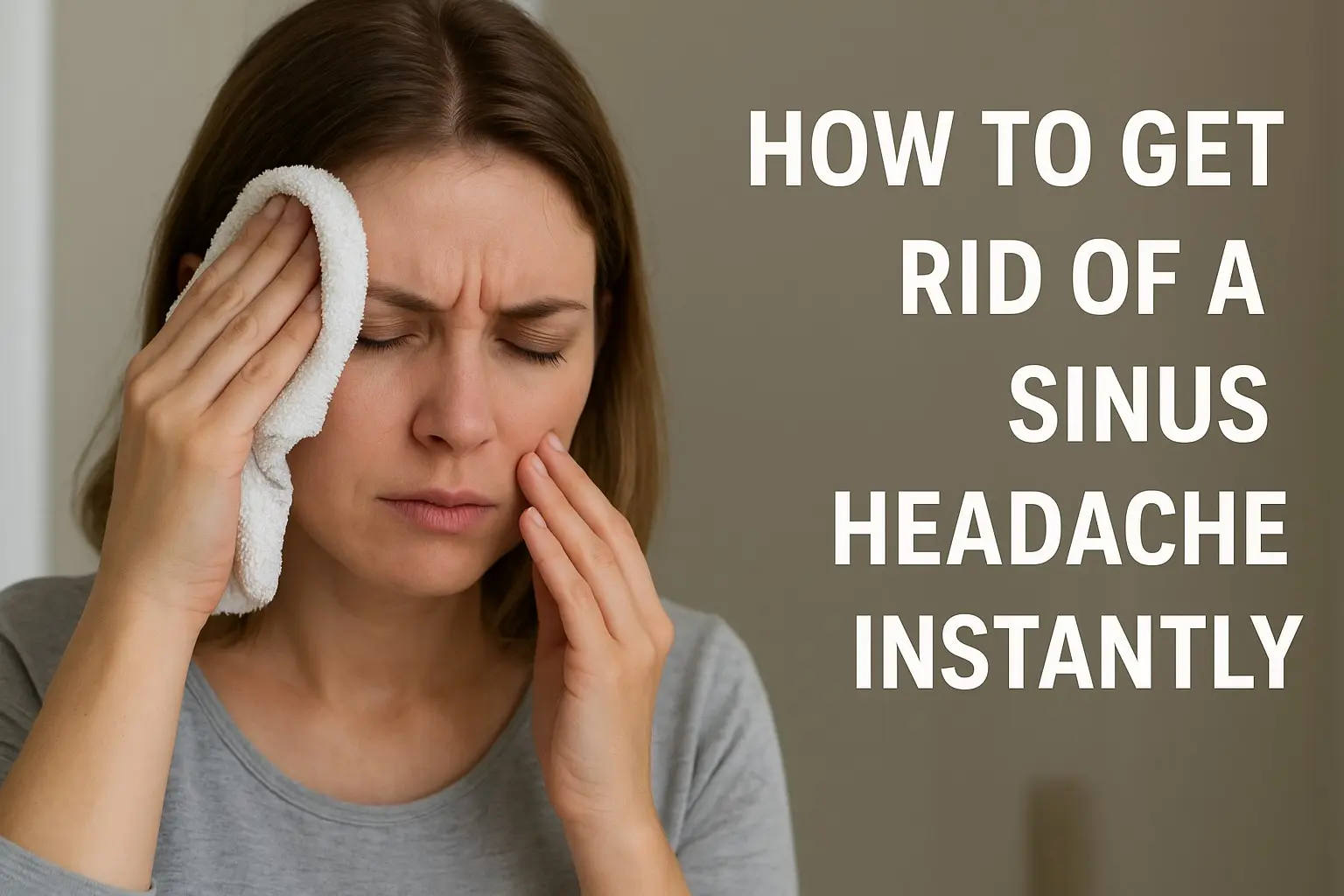
Editorial update: October 7, 2026. Independent medical review remains pending.
Medical review status: This educational article has not received an independent review by a licensed clinician. It summarizes the sources below and cannot diagnose symptoms or replace individual medical advice.
Facial pressure and a blocked nose can occur with sinusitis, but the phrase “sinus headache” is not a diagnosis. Migraine and other headache disorders may also cause symptoms around the forehead or eyes. There is no reliable home method that promises relief in seconds or minutes.
What sinusitis means
Sinusitis is inflammation affecting the spaces around the nose and forehead. It often follows a cold and can cause nasal blockage, facial discomfort and a reduced sense of smell. Many episodes settle without antibiotics. The pattern, duration and severity of symptoms matter more than a single sign.
Sinus symptoms and migraine can overlap
Migraine may involve throbbing pain, nausea and sensitivity to light or sound. Nasal symptoms do not rule it out. Improvement after a spray, warm cloth or rest does not prove which condition caused the headache. Recurrent headaches, worsening pain or uncertainty about the cause are reasons to seek assessment rather than repeat remedies indefinitely.
Reasonable symptom care
- Rest when unwell and drink fluids appropriate for your health. Follow any prescribed fluid restriction.
- A saline nasal spray or rinse may help nasal symptoms. Use the correct product and follow its instructions.
- Ask a pharmacist whether a pain medicine is suitable. Follow its label and avoid taking multiple products with the same ingredient. Pregnancy, kidney disease, stomach ulcers, blood thinners and other medicines can change which options are safe.
- Discuss nasal steroid or allergy treatment with a pharmacist or clinician when appropriate. Decongestants are not suitable for everyone, and nasal sprays should not be used beyond their recommended duration because congestion can rebound.
Do not use a bowl of boiling or hot water for steam inhalation. Do not add essential oils to a nasal rinse or inhale concentrated oils as a treatment. Pressure-point claims, breath-holding routines and nose pinching are not established methods for curing sinusitis or guaranteeing rapid relief.
Prepare nasal rinses safely
Use distilled or sterile water, or boil tap water and let it cool before use. The CDC advises a rolling boil for one minute, or three minutes above 6,500 feet. Follow the rinse product's instructions for the saline mixture, keep the equipment clean and let it dry. A ready-made saline product can avoid errors in mixing. Never rinse with untreated tap water.
When to seek clinical help
Arrange assessment if symptoms are worsening, pain medicine is not helping, episodes keep returning, or symptoms have not improved after about three weeks of self-care. Seek help sooner if you are very unwell or have a weakened immune system. Children need age-appropriate advice; do not apply adult medicine instructions to them.
Urgent eye symptoms or the emergency headache signs above should not wait for a routine appointment. After nasal rinsing, a new headache with fever, vomiting or confusion requires immediate medical attention. A clinician may examine the nose and eyes, consider migraine or other causes, and decide whether treatment or referral is necessary.
What treatment can and cannot promise
Antibiotics are not a routine remedy for every episode because many infections are viral. A clinician may select them for particular cases. Allergy medicines or nasal steroids may be appropriate for some people, but no medicine is a universal answer. Treatment aims to address the identified cause and control symptoms; guaranteed immediate relief and prevention claims are not supported.
Next steps
Use symptom care only when appropriate. Arrange clinical assessment for persistent or worsening symptoms, and act immediately on emergency warning signs.
Related reading: Understanding sinus headache and the Health guide.
About this article: NextFitLife publishes educational health information. Read about the author and editorial approach. This article has not been independently reviewed by a licensed clinician.
Frequently asked questions
Can a sinus headache be relieved instantly?
No treatment guarantees instant relief. Symptom care may help, but improvement depends on the cause. A headache attributed to the sinuses may instead be migraine or another condition.
Does mucus color diagnose a sinus infection?
No. Mucus color alone does not establish the cause of a headache or distinguish a bacterial infection from a viral illness. Persistent or worsening symptoms need clinical assessment.
Is steam inhalation a safe treatment?
Avoid leaning over bowls of hot water or covering your head with a towel over hot water. Spills can cause serious burns, and steam does not reliably shorten illness.
What water is safe for a nasal rinse?
Use distilled or sterile water, or tap water that has been boiled and cooled. Never use untreated tap water directly. Follow the device instructions for preparation and cleaning.
When does a headache need emergency care?
A sudden extremely painful headache, weakness, speech difficulty, confusion, seizure, loss of vision, or high fever with a stiff neck needs emergency assessment. Do not assume these symptoms are sinusitis.
References and Sources

Health & wellness writer with 30+ years of experience in nutrition, fitness, and healthy aging. Founder of NextFitLife.com — evidence-based health guidance.