
Editorial update: October 7, 2026. Independent medical review remains pending.
Medical review status: This educational article has not received an independent review by a licensed clinician. It summarizes the sources below and cannot diagnose symptoms or replace individual medical advice.
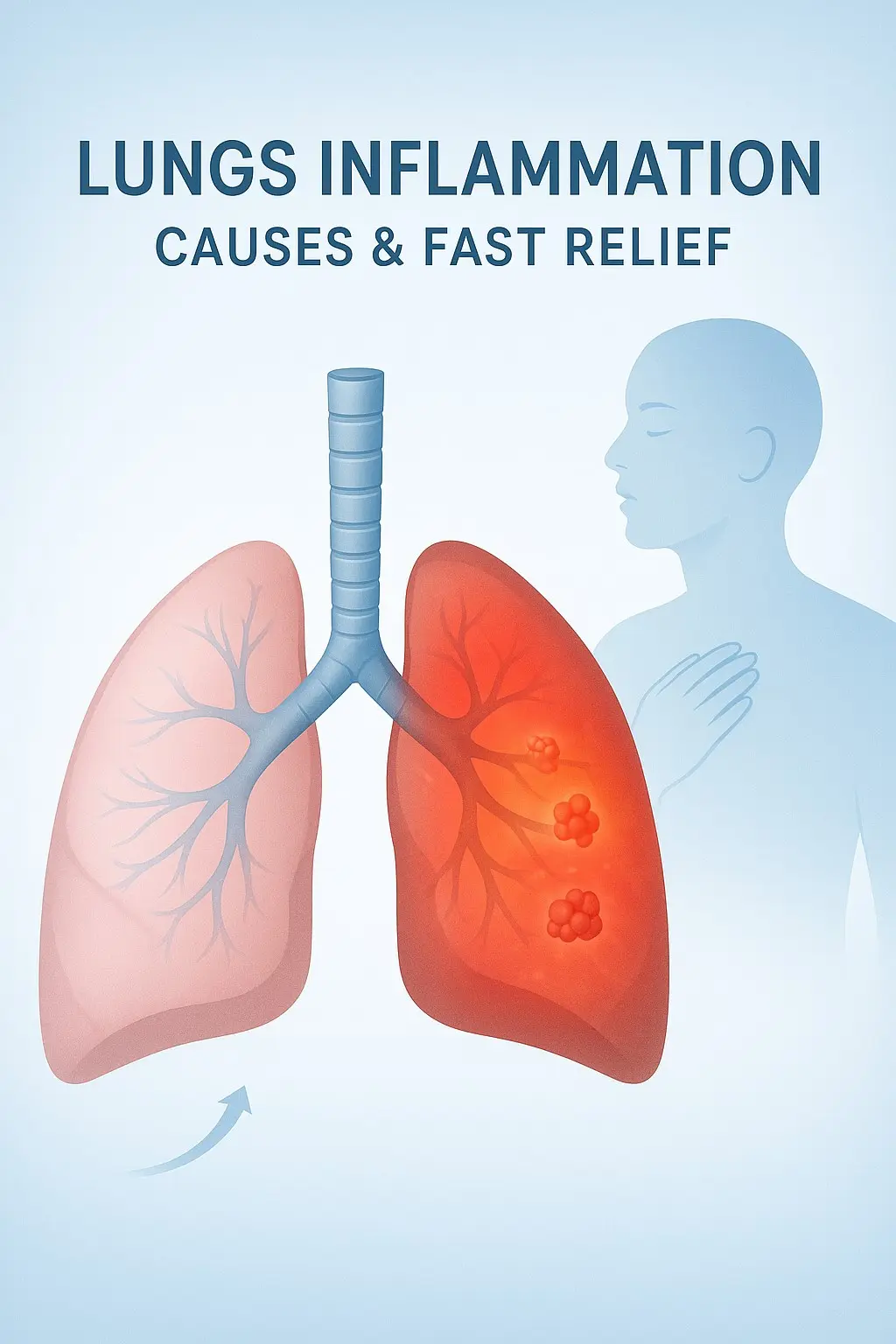
Lung inflammation is a description, not a single disease. Infection, asthma and other inflammatory or scarring conditions can affect different parts of the lungs. Symptoms may include cough, breathlessness, chest discomfort or fatigue, but these symptoms cannot confirm the cause.
Possible causes need different care
A chest infection or pneumonia may involve the airways or lung tissue. Asthma involves airway inflammation and needs an individual medicine and action plan. Some interstitial lung diseases affect tissue around the air sacs and can cause scarring. Other causes are also possible, including harmful exposures or reactions associated with other diseases.
When to seek help
Use emergency services for the warning signs above. New or worsening breathlessness, chest pain when breathing, coughing blood or persistent fever needs prompt assessment. Older adults, pregnant people and those with weakened immunity or existing heart, lung or kidney disease should seek advice early rather than relying on home remedies.
How the cause is assessed
A clinician reviews symptoms, exposures, medicines and existing conditions, examines breathing and may check oxygen levels. Depending on the findings, testing may include imaging, blood tests or lung-function tests. Not everyone needs every test. A home pulse-oximeter reading does not replace assessment when symptoms are serious.
Treatment is individualized
- Antibiotics may be needed for a bacterial infection. They do not treat a viral infection.
- Asthma treatment may include inhaled medicines and an action plan explaining what to do if breathing worsens.
- Some inflammatory lung conditions require prescribed medicines, while particular scarring conditions may need other specialist treatment.
- Severe illness may require hospital care, oxygen or additional support.
Do not start leftover antibiotics or steroids, borrow inhalers, or change prescribed treatment on the basis of a general article. Steroids are not a universal treatment and can carry important risks. Follow your care team's instructions and ask about side effects or uncertainty.
What home support can reasonably do
Rest during illness, avoid smoke and vaping, and follow advice on reducing relevant workplace or household exposures. Drink fluids appropriate for your medical situation, including any fluid restriction. Continue prescribed treatment and attend follow-up appointments. Food can support general nutrition, but an “anti-inflammatory” meal or supplement is not a substitute for lung treatment.
Do not lean over hot-water steam bowls. They can cause severe burns and do not reliably speed recovery. Inhaling concentrated essential oils is not a treatment for pneumonia or lung inflammation. Discuss any complementary product with your clinician because safety and interactions vary.
Recovery and long-term follow-up
Recovery differs by diagnosis and severity. Some people improve after an infection, while chronic conditions need continuing care. Interstitial lung disease treatment may slow further damage and support breathing but does not necessarily reverse established scarring. A healthy lifestyle cannot guarantee that all lung damage will heal.
Arrange reassessment if symptoms worsen, prescribed treatment is not helping, or recovery is not proceeding as your clinician expected. New emergency symptoms need immediate care regardless of a previous diagnosis. An individual follow-up plan is more useful than a promised timeline for rapid relief.
Next steps
Use symptom care only when appropriate. Arrange clinical assessment for persistent or worsening symptoms, and act immediately on emergency warning signs.
Related reading: Chest congestion without cough and the Lung and respiratory health guide.
About this article: NextFitLife publishes educational health information. Read about the author and editorial approach. This article has not been independently reviewed by a licensed clinician.
Frequently asked questions
What does lung inflammation mean?
It is a broad description that may relate to infection, airway disease or other lung conditions. Symptoms alone cannot establish the diagnosis or the right treatment.
Can foods or steam cure lung inflammation?
No food, supplement or steam routine is a proven universal cure. Avoid hot-water steam bowls because of burn risk. These approaches must not delay assessment or prescribed treatment.
Does everyone need antibiotics or steroids?
No. Antibiotics treat suitable bacterial infections and do not treat viral infections. Steroid treatment depends on the diagnosed condition and individual risks.
Which breathing symptoms need emergency care?
Severe breathing difficulty, inability to speak normally because of breathlessness, blue or very pale lips, sudden confusion, or chest pain with concerning symptoms need emergency care.
Can a healthy lifestyle repair all lung damage?
No. Avoiding smoke and harmful exposures supports lung health, but some damage or scarring may be permanent. Treatment and follow-up depend on the condition.
References and Sources

Health & wellness writer with 30+ years of experience in nutrition, fitness, and healthy aging. Founder of NextFitLife.com — evidence-based health guidance.