
Last updated: October 8, 2026
Written and source checked by: Adel Galal, Founder and Lead Writer at NextFitLife
Medical review status: This article has not been medically reviewed by a doctor.
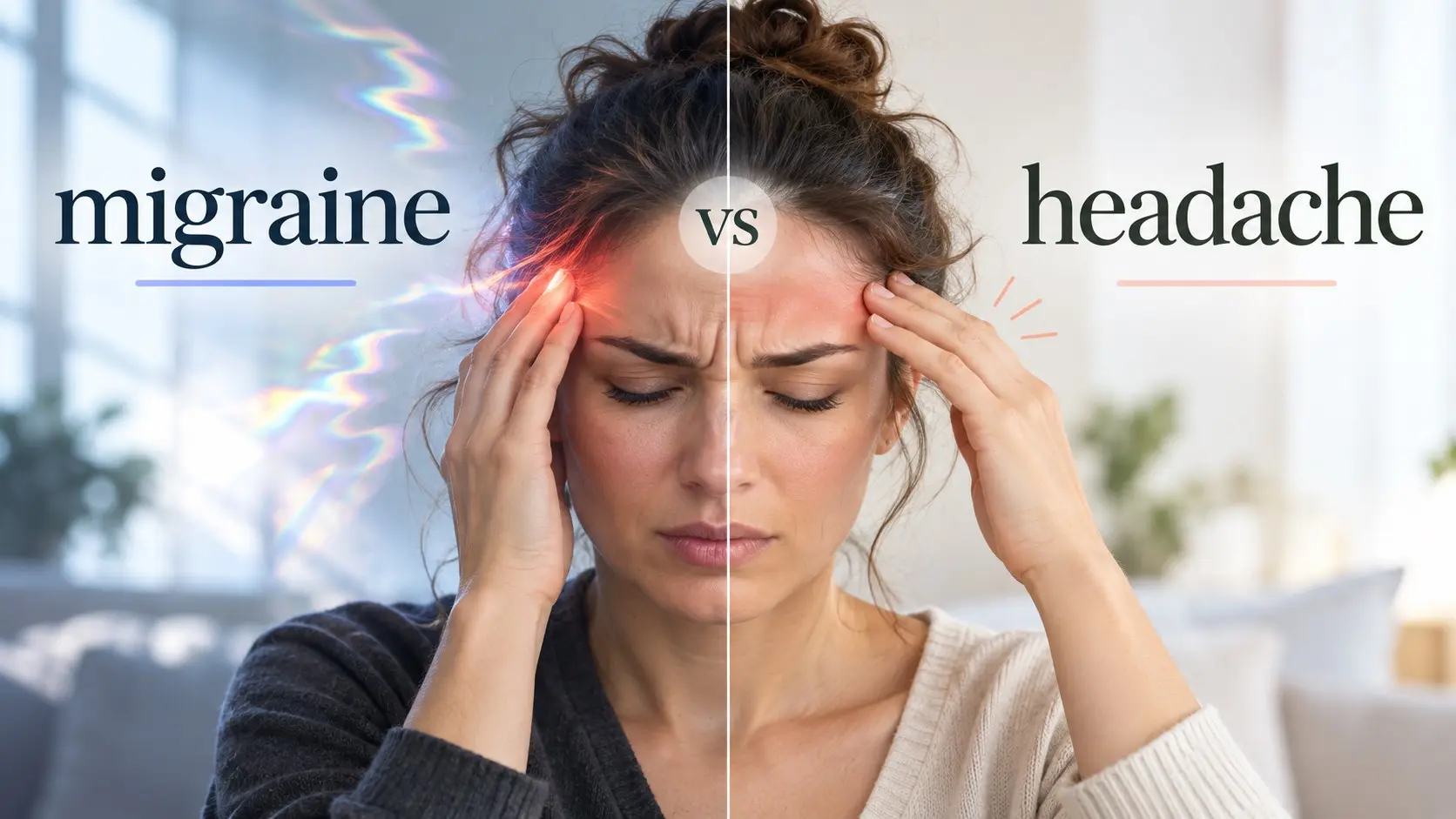
A headache starts, and one question often follows: is this a migraine or just a headache?
The simplest answer is that migraine is not simply a stronger headache. Migraine is a neurological disorder that can cause head pain along with nausea, sensitivity to light or sound, changes in vision, tiredness, and other symptoms. A headache is a much wider term. It can describe migraine, a tension headache, a cluster headache, pain linked to an illness, or another cause.
When people search for migraine vs headache, they are often really trying to compare migraine with the common tension headache. That is the main comparison in this guide.
Quick answer: Migraine is more likely when the pain is moderate or severe, throbs or pulses, becomes worse with normal movement, or comes with nausea, light sensitivity, sound sensitivity, or aura. A tension headache more often feels like steady pressure or tightness on both sides of the head and usually does not become worse with normal activity.
There are exceptions, so no single symptom proves which type you have.
This article is for general information and education. It does not replace medical advice, diagnosis, or treatment.
When a Headache Needs Urgent Help
Most headaches are not emergencies. Some symptoms should not be watched at home, though.
Seek urgent medical care if you have:
- A headache that starts suddenly and becomes extremely painful within seconds or minutes
- New weakness or numbness in your face, arm, or leg
- Trouble speaking, walking, remembering things, or staying awake
- New loss of vision, double vision, or a major change in vision
- A seizure
- A severe headache after a head injury
- A very high fever with a stiff neck, confusion, or severe illness
- A new severe headache during pregnancy or soon after giving birth
- A headache that feels very different from your usual pattern and is getting worse
Call your local emergency service when symptoms suggest an emergency. Do not assume a new neurological symptom is simply a migraine aura, especially if you have never had that symptom before.
Table of Contents
- What migraine and headache really mean
- 9 signs that help tell them apart
- Migraine vs tension headache comparison
- What migraine can feel like
- What a tension headache can feel like
- Other headache types that can be confused with migraine
- Common triggers
- How doctors diagnose recurring headaches
- What can help migraine
- What can help tension headaches
- Medication overuse and rebound headaches
- How to keep a useful headache diary
- When to make a medical appointment
- Frequently asked questions
What Is the Real Difference Between Migraine and Headache?
The word headache describes pain in the head. It does not tell you why the pain is happening.
Doctors divide headache disorders into many types. Some are primary headache disorders. In these conditions, the headache disorder itself is the main problem. Migraine, tension type headache, and cluster headache are examples.
Other headaches are secondary. This means another condition is causing the pain. An infection, head injury, medicine, withdrawal from a substance, or another health problem can sometimes be responsible.
Migraine belongs to the primary headache group. It is a neurological disorder with a pattern that can include pain, nausea, sensory changes, tiredness, and sometimes temporary visual or sensory symptoms.
This matters because treating every headache in the same way can lead to poor relief.
9 Warning Signs That Help Tell Migraine From Headache
No one sign can diagnose migraine. Doctors look at the whole pattern. These nine clues can help you understand what your symptoms resemble.
| Clue | More Typical of Migraine | More Typical of Tension Headache |
|---|---|---|
| 1. Pain feeling | Pulsing or throbbing | Pressure, tightness, or a steady ache |
| 2. Pain strength | Often moderate to severe | Often mild to moderate |
| 3. Movement | Normal activity may make pain worse | Normal activity usually does not make it worse |
| 4. Nausea | Common in many attacks | Usually absent |
| 5. Light and sound | Sensitivity is common | Usually limited or absent |
| 6. Aura | Some people have aura | Aura is not typical |
| 7. Location | Can affect one or both sides | Often affects both sides |
| 8. Daily function | May stop work, exercise, or normal plans | Many people can keep doing normal tasks |
| 9. Recovery | Fatigue or brain fog may remain after pain ends | Recovery is often simpler once pain improves |
1. Migraine Often Pulses or Throbs
A classic throbbing headache raises the chance of migraine, especially when other migraine symptoms are present.
Tension headache pain more often feels like pressure or squeezing. Some people describe it as a band around the forehead or a weight pressing around the head.
These descriptions are useful, but they are not rules. Migraine can sometimes feel like pressure, and not every throbbing headache is migraine.
2. Migraine Pain Is Often More Disruptive
Migraine pain is often moderate or severe. It may make working, reading, driving, exercising, or caring for children difficult.
Tension headache pain is often milder. It can still be unpleasant, but many people can continue normal tasks.
Pain level alone cannot diagnose migraine. A tension headache can be painful, and some migraine attacks are mild.
3. Normal Movement May Make Migraine Worse
This is one of the more useful clues.
Walking upstairs, bending over, moving quickly, or doing normal physical activity can make migraine pain feel worse. A person may want to lie still until the attack settles.
Routine movement usually does not make a tension headache much worse.
4. Nausea Points More Strongly Toward Migraine
Nausea is a common part of many migraine symptoms. Some people also vomit during a severe attack.
That is much less typical of tension headache.
If a headache repeatedly comes with nausea, especially when light or sound also feels painful, migraine deserves consideration.
5. Light and Sound Sensitivity Are Strong Clues
During migraine, normal light can feel too bright and everyday sounds can feel harsh. Some people also become unusually sensitive to smells.
This is why a person with a migraine attack may want a dark, quiet room.
Strong light sensitivity and sound sensitivity are less typical of an ordinary tension headache.
Long hours at a computer can also cause eye strain, neck tension, and head discomfort. Read our guide to health problems caused by computer use if screens seem to play a role in your symptoms.
6. Aura Can Occur With Migraine
Some people have migraine aura. Aura may cause temporary changes in vision, feeling, or speech.
Visual aura can include flashing lights, zigzag shapes, bright spots, or an area of missing vision. Some people notice tingling or numbness.
Aura is not present in every migraine. Many people have migraine without aura.
New vision loss, weakness, numbness, or speech trouble should not automatically be called aura. Those symptoms can overlap with serious conditions and may need urgent assessment, especially when they are new or unusual for you.
7. Migraine Does Not Have to Stay on One Side
People often hear that migraine always affects one side of the head. That is too simple.
Migraine often affects one side, but it can affect both sides. Pain can also change sides between attacks.
A tension headache commonly affects both sides, the forehead, temples, face, neck, or back of the head.
So location helps, but location alone is not enough.
8. Migraine Can Stop Your Normal Day
One useful question is not only “How much does it hurt?” Ask, “What does the headache make me stop doing?”
A migraine may force you to stop work, cancel plans, leave a bright room, avoid food, or lie down.
Tension headaches may be distracting, but many people can still function.
This difference in daily impact can help a clinician understand your symptoms.
9. Migraine Can Affect You Before and After the Pain
Migraine is more than the headache phase.
Some people notice changes hours before pain begins. These may include tiredness, food cravings, trouble focusing, neck discomfort, mood changes, or repeated yawning.
After the pain ends, a person may still feel tired, foggy, or drained for a while.
This wider pattern is one reason migraine is better understood as a neurological disorder rather than just a bad headache.
Migraine vs Tension Headache at a Glance
| Feature | Migraine | Tension Headache |
|---|---|---|
| Pain | Often pulsing or throbbing | Often pressing or tightening |
| Strength | Often moderate or severe | Often mild or moderate |
| Location | One or both sides | Often both sides |
| Activity | May make pain worse | Usually does not make pain worse |
| Nausea | Can occur | Usually absent |
| Light and sound sensitivity | Common | Less typical |
| Aura | Occurs in some people | Not typical |
| Daily activity | Can be disabling | Often still possible |
The pattern matters more than any single box in this table.
What Does a Migraine Attack Feel Like?
A migraine attack can vary from one person to another and from one attack to the next.
Common features include:
- Moderate or severe head pain
- Pulsing or throbbing pain
- Pain on one side or both sides
- Nausea
- Vomiting
- Light sensitivity
- Sound sensitivity
- Smell sensitivity
- Pain that becomes worse with routine activity
- Fatigue
- Difficulty concentrating
Some people also experience aura.
A typical untreated migraine attack can last for hours and sometimes for several days. The exact pattern varies, which is why repeated attacks deserve individual assessment rather than a simple online label.
What Does a Tension Headache Feel Like?
A tension headache often feels like pressure rather than pulsing pain.
You may notice:
- Pain on both sides of the head
- Pressure across the forehead
- A tight feeling around the head
- Tender muscles around the head, face, neck, or shoulders
- Mild or moderate pain
- Ability to continue normal activity
Stress, poor sleep, caffeine changes, muscle tension, and long periods in one position may play a role in some people.
For broader ways to support sleep, stress control, and daily wellbeing, visit the NextFitLife Mental Health and Wellness Hub and our General Wellness and Lifestyle Guide.
Other Headaches That Can Be Confused With Migraine
Cluster Headache
A cluster headache is not migraine.
Cluster headache causes extremely severe pain, often around or behind one eye. The eye on that side may water or become red. The eyelid may droop, and the nose may run or feel blocked.
Attacks often occur repeatedly during periods called clusters.
Because cluster headache needs specific treatment, severe repeated pain around one eye deserves medical assessment.
Sinus Related Head Pain
Facial pressure does not always mean a sinus problem.
Migraine itself can cause facial pain, watery eyes, or nasal symptoms. A true sinus related headache is more likely when there is clear evidence of sinus inflammation or infection, such as marked congestion and other nasal symptoms.
If facial pressure is your main concern, see our detailed guide to sinus headache symptoms and relief.
Medication Overuse Headache
Medicine used to stop headaches can sometimes become part of the problem when it is taken too often.
This is called medication overuse headache. Head pain may become more frequent, creating a cycle where more medicine leads to more headache days.
If you are reaching for acute headache medicine on many days each month, speak with a doctor or pharmacist instead of simply taking more.
Secondary Headache
A secondary headache is caused by another condition.
Examples include infections, injuries, some medicines, changes in pressure around the brain, or other medical problems.
A new headache, a major change in your usual pattern, or headache with neurological symptoms deserves professional assessment.
Do Migraine and Headache Have Different Triggers?
There is no perfect trigger list because triggers vary between people. Many possible triggers overlap.
Common reported headache triggers include:
- Too little sleep
- Changes in sleep routine
- Stress
- Skipped meals
- Dehydration
- Caffeine changes
- Alcohol
- Bright or flashing light
- Strong smells
- Hormonal changes
- Long periods of screen use
- Muscle tension
- Some illnesses
A trigger does not prove the diagnosis. For example, stress can occur before both migraine and tension headache.
It is also easy to mistake an early migraine symptom for a trigger. A food craving may begin because an attack is already starting rather than because that food caused the migraine.
How Doctors Diagnose Migraine and Other Headaches
There is no single blood test that confirms a routine migraine.
A doctor will usually ask about:
- Where the pain occurs
- How the pain feels
- How long attacks last
- How often they happen
- Whether movement makes the pain worse
- Whether nausea is present
- Whether light or sound bothers you
- Whether you experience aura
- What medicines you use
- Whether the pattern has recently changed
- Your medical and family history
A physical and neurological examination may also be done.
Brain scans are not automatically required for every person with migraine. Imaging may be considered when symptoms are unusual, the neurological examination is abnormal, or the doctor is concerned about another cause.
This prevents unnecessary tests while making sure unusual warning signs are investigated.
What Can Help During a Migraine Attack?
Treatment depends on your symptoms, other health conditions, age, pregnancy status, medicines, and how often attacks occur.
Some people use nonprescription pain medicines for occasional attacks. These may include acetaminophen, also called paracetamol, or anti inflammatory medicines such as ibuprofen when those medicines are safe for that person.
People with stronger or frequent migraine may need migraine specific medicines prescribed by a clinician.
Options can include:
- Triptans
- Gepants
- Medicines for nausea
- Other migraine specific treatments chosen for the individual
Some medicines are not safe for everyone. Pregnancy, heart or blood vessel disease, kidney problems, stomach problems, and other medicines can change what is suitable.
Ask a doctor or pharmacist before using a new medicine if you have health conditions, take other medicines, are pregnant, or are trying to become pregnant.
Simple Comfort Steps
During an attack, some people find it helpful to:
- Rest in a dark and quiet room
- Drink fluids if dehydration may be present
- Eat if a meal was missed and nausea allows it
- Reduce bright screens
- Use a cool pack if it feels comfortable
- Follow the acute treatment plan given by their healthcare professional
These steps can support comfort, but they do not replace treatment when migraine is frequent or disabling.
What Can Help Prevent Frequent Migraine?
Preventive treatment may be considered when attacks happen often, cause major disability, last a long time, or do not respond well to acute treatment.
Depending on the person, a clinician may discuss treatments such as:
- Certain blood pressure medicines
- Some antiseizure medicines
- Some antidepressant medicines
- CGRP targeted medicines
- Botulinum toxin treatment for some people with chronic migraine
- Other preventive therapies
Regular sleep, meals, hydration, and physical activity may also help some people build a steadier routine.
Supplements are sometimes promoted for migraine. Evidence and safety differ by product and dose. Check with a healthcare professional before using supplements, especially during pregnancy or when you take medicine.
For broader information on vitamins, minerals, and supplement safety, visit the NextFitLife Nutrition and Vitamins Hub.
What Can Help a Tension Headache?
A mild tension headache may improve with simple care.
This can include:
- Rest
- Regular meals
- Water
- Gentle movement
- Relaxing tight neck and shoulder muscles
- Improving sleep
- Taking breaks from long periods at a desk
- Nonprescription pain medicine when it is safe and appropriate
If headaches happen several times a week, become severe, or keep returning despite self care, speak with a healthcare professional.
Be Careful With Frequent Pain Medicine
It is easy to think that more headache days simply require more pain medicine.
That can backfire.
Frequent use of some acute headache medicines can contribute to medication overuse headache. The headache then becomes more common, and the person may take even more medicine.
If you need headache medicine very often, discuss the pattern with a doctor or pharmacist. You may need a clearer diagnosis or a preventive plan.
Keep a Headache Diary
A simple headache diary can be more useful than trying to remember every attack at your appointment.
Record:
- The date and time the headache started
- How long it lasted
- Where the pain was located
- Whether it pulsed, pressed, burned, or felt sharp
- Pain strength
- Nausea or vomiting
- Light, sound, or smell sensitivity
- Any aura symptoms
- Sleep the night before
- Meals and fluid intake
- Menstrual timing when relevant
- Medicine taken and whether it worked
- Anything unusual about that day
After several weeks, patterns may become easier to see.
Do not become so focused on triggers that you remove many foods or normal activities without evidence. The goal is to find useful patterns, not to build a long list of things to fear.
When Should You See a Doctor About Headaches?
Make a medical appointment if:
- You have headaches several times a week
- Your headaches are becoming more frequent
- The pattern has changed
- Pain is severe or disabling
- You regularly miss work, school, exercise, or social plans
- Nonprescription treatment is no longer helping
- You need pain medicine very often
- You are not sure whether symptoms are migraine, tension headache, or another condition
- You have new headaches later in life
- You have unusual visual, sensory, or neurological symptoms
Getting the right diagnosis can make treatment much more useful.
Common Migraine Myths
Myth: Migraine Is Just a Bad Headache
Migraine is a neurological disorder. Head pain is only one possible part of an attack.
Myth: Migraine Always Hurts on One Side
No. One sided pain is common, but migraine can affect both sides.
Myth: Everyone With Migraine Gets Aura
No. Many people with migraine never have aura.
Myth: Sinus Pressure Always Means a Sinus Headache
No. Migraine can cause facial pressure and nasal symptoms too.
Myth: A Very Painful Headache Must Be Migraine
No. Pain strength cannot identify the cause by itself. Some dangerous headaches can also be severe, which is why sudden or unusual symptoms matter.
Conclusion
The key lesson in migraine vs headache is that migraine is not simply a stronger version of ordinary head pain. Look at the whole pattern: throbbing pain, nausea, sensitivity to light or sound, worsening with movement, aura in some people, and the effect on daily life.
A tension headache often feels more like steady pressure and usually allows normal activity, but symptoms can overlap.
If your headaches keep returning, change suddenly, or interfere with daily life, start a headache diary and discuss the pattern with a qualified healthcare professional. The right diagnosis can lead to much better treatment.
Internal Links + Hub
- NextFitLife Health Guides
- General Wellness and Lifestyle Guide
- Mental Health and Wellness Hub
- Sinus Headache Symptoms and Relief
- Health Problems Caused by Computer Use
- Nutrition and Vitamins Hub
References and Sources
- National Institute of Neurological Disorders and Stroke. Migraine.
https://www.ninds.nih.gov/health-information/disorders/migraine - NHS. Migraine.
https://www.nhs.uk/conditions/migraine/ - NHS. Tension Headaches.
https://www.nhs.uk/conditions/tension-headaches/ - Mayo Clinic. Migraine Diagnosis and Treatment.
https://www.mayoclinic.org/diseases-conditions/migraine-headache/diagnosis-treatment/drc-20360207 - International Headache Society. International Classification of Headache Disorders, Third Edition.
https://ichd-3.org/
About the Author
Adel Galal is the founder and lead writer of NextFitLife. He has maintained a personal interest in health, fitness, nutrition, sleep, wellness, and healthy aging for more than 30 years, with more than 15 years of health and wellness writing experience.
His work focuses on comparing credible sources, explaining what the evidence does and does not show, and turning complex health topics into simple, practical information.
Adel is not a doctor, dermatologist, registered dietitian, pharmacist, physiotherapist, psychologist, or other licensed healthcare professional. His articles are based on real life experience, extensive research, and consultation with healthcare providers. Always consult qualified medical professionals for diagnosis and treatment of any health condition.
Learn more about the author, editorial approach, and NextFitLife standards on the About NextFitLife page.
Frequently Asked Questions About Migraine vs Headache
Is migraine just a severe headache?
No. Migraine is a neurological disorder. Head pain is common during an attack, but migraine can also cause nausea, light and sound sensitivity, aura, tiredness, and difficulty thinking clearly.
How can I tell migraine from a tension headache?
Migraine is more likely to cause throbbing or pulsing pain, nausea, sensitivity to light or sound, and pain that becomes worse with normal activity. A tension headache more often feels like steady pressure or tightness and usually does not become worse with routine movement.
Can migraine affect both sides of the head?
Yes. Migraine often affects one side, but it can affect both sides. Pain location by itself cannot confirm or rule out migraine.
Can you have migraine without aura?
Yes. Many people with migraine never experience aura. Aura occurs only in some people and may involve temporary visual, sensory, or speech symptoms.
Can sinus pressure actually be migraine?
Yes. Migraine can sometimes cause facial pressure, watery eyes, nasal congestion, or pain around the forehead and cheeks. Repeated sinus like headaches without clear infection should be discussed with a healthcare professional.
When is a headache an emergency?
Get urgent medical help for a sudden extremely painful headache, or a headache with new weakness, numbness, speech trouble, major vision changes, confusion, seizure, a very high fever with a stiff neck, or a recent head injury.

Health & wellness writer with 30+ years of experience in nutrition, fitness, and healthy aging. Founder of NextFitLife.com — evidence-based health guidance.