
Published: Jan 21, 2023
Last Updated: September 22, 2026
Written and Source Checked by: Adel Galal, Founder and Lead Writer at NextFitLife
Review Status: Updated using current American Heart Association, NIH, FDA, NIDDK, and peer reviewed nutrition evidence. This article has not been medically reviewed by a registered dietitian, physician, or allergist.
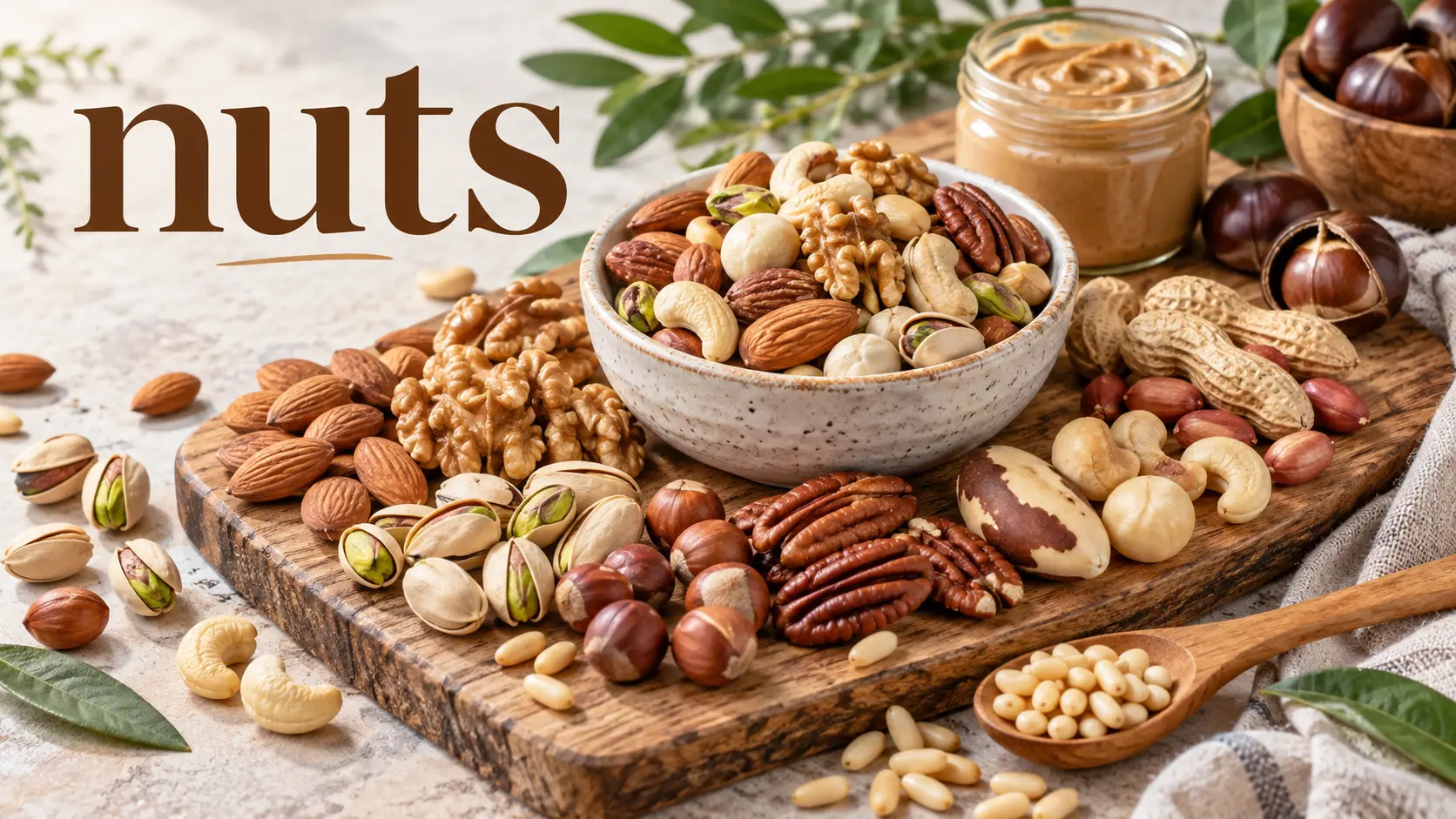
Nuts pack a lot of nutrition into a small amount of food. Most provide unsaturated fats, plant protein, fiber, vitamins, minerals, and plant compounds that can fit well into a heart healthy eating pattern.
They are also easy to misunderstand.
Eating more nuts does not automatically mean better health. A handful is different from eating half a bag while watching television. Salted nuts are different from heavily sugared or chocolate coated nuts. Brazil nuts need special care because their selenium content is unusually high.
The strongest evidence is also more specific than many articles suggest. Regular nut intake is consistently linked with better cardiovascular health and improved blood lipid markers. Evidence for preventing type 2 diabetes is less certain, while claims that nuts prevent individual cancers are not strong enough to treat them as cancer prevention foods.
Table of Contents
- What makes nuts healthy?
- How much is one serving?
- 12 smart nut choices
- 1. Almonds
- 2. Walnuts
- 3. Pistachios
- 4. Pecans
- 5. Hazelnuts
- 6. Cashews
- 7. Macadamia nuts
- 8. Brazil nuts
- 9. Peanuts
- 10. Pine nuts
- 11. Chestnuts
- 12. Unsalted mixed nuts
- Evidence-based health benefits
- Do nuts cause weight gain?
- Nuts and blood sugar
- Raw versus roasted
- Nut butter
- When nuts need extra care
- Storage and freshness
- References and Sources
- Frequently asked questions
What Makes Nuts Healthy?
Nuts are nutrient-dense foods. They provide a useful amount of nutrition in a relatively small serving.
Depending on the type, nuts can provide:
- Unsaturated fats
- Plant protein
- Dietary fiber
- Vitamin E
- Magnesium
- Copper
- Manganese
- Potassium
- Phosphorus
- Plant sterols
- Polyphenols
Walnuts also stand out for providing alpha linolenic acid, a plant form of omega-3 fat.
No nut provides every nutrient in the ideal amount. Variety is more useful than declaring one nut the winner.
For a broader look at nutrient-rich foods, visit the NextFitLife Healthy Foods Guide.
How Much Is a Serving of Nuts?
The American Heart Association uses about 1 ounce of whole nuts as a practical serving.
That is roughly one small handful.
For nut butter, about 2 tablespoons is a common serving.
| Food | Practical Serving | Easy Visual |
|---|---|---|
| Most nuts | About 1 ounce or 28 grams | A small handful |
| Nut butter | About 2 tablespoons | A thin spread rather than a large scoop |
| Brazil nuts | Treat differently because selenium is extremely high | One nut may already provide more than a full day's selenium need |
Nuts are energy dense, so portion awareness can be useful if you are managing total calorie intake.
That does not mean you need to fear them.
12 Smart Nut Choices at a Glance
| No. | Choice | Standout Feature | Best Use | Watch |
|---|---|---|---|---|
| 1 | Almonds | Fiber, vitamin E, magnesium | Snacks, oats, yogurt | Salt and sugar coatings |
| 2 | Walnuts | Plant Omega 3 fat | Oats, salads, fruit | Rancidity after long storage |
| 3 | Pistachios | Protein, fiber, potassium | Snack or salad | Salted varieties |
| 4 | Pecans | Unsaturated fats, manganese | Oats, salads, snacks | Candied versions |
| 5 | Hazelnuts | Monounsaturated fat, vitamin E | Snack or yogurt | Chocolate spreads with added sugar |
| 6 | Cashews | Copper, magnesium, plant protein | Stir fries, sauces, snacks | Salted snack packs |
| 7 | Macadamias | High monounsaturated fat | Small snack portion | Very energy dense |
| 8 | Brazil nuts | Very high selenium | Small occasional portion | Too much selenium |
| 9 | Peanuts | Protein, unsaturated fat, affordability | Snack or peanut butter | Allergy and added salt |
| 10 | Pine nuts | Unsaturated fats and minerals | Salads, pesto, vegetables | Cost and portion size |
| 11 | Chestnuts | Lower fat and more starch than most nuts | Roasted winter snack | Counts more like a carbohydrate food |
| 12 | Unsalted mixed nuts | Easy nutrient variety | Simple everyday snack | Candy, salt, fried coatings |
1. Almonds
Almonds are one of the easiest healthy nuts to use regularly.
They provide plant protein, fiber, unsaturated fat, magnesium, and vitamin E. Among common nuts, almonds are especially useful when you want more fiber in a snack.
Easy ways to eat almonds
- Add sliced almonds to oatmeal
- Mix them into plain yogurt
- Eat a small handful with fruit
- Use unsweetened almond butter on toast
What to watch
Honey roasted, chocolate coated, and heavily salted almonds can add much more sugar, sodium, or calories than plain almonds.
2. Walnuts
Walnuts are unusual because they provide a meaningful amount of alpha linolenic acid, also called ALA.
ALA is a plant based omega 3 fatty acid.
That does not make walnuts the same as oily fish, which provide EPA and DHA, but walnuts can still be a useful part of a heart healthy diet.
Simple ways to use walnuts
- Add them to oats
- Mix them into salad
- Pair them with an apple or pear
- Add chopped walnuts to plain yogurt
Walnuts contain a lot of unsaturated fat, so store them well. Heat, light, and air can eventually make the fats rancid.
3. Pistachios
Pistachios provide plant protein, fiber, unsaturated fat, potassium, and several plant compounds.
In shell pistachios can also slow down snacking because you have to open each shell.
That does not guarantee portion control, but it can make eating more deliberate.
Choose unsalted when practical
Salted pistachios can provide a surprising amount of sodium when several servings are eaten at once.
4. Pecans
Pecans provide mainly unsaturated fat along with fiber, copper, manganese, and other nutrients.
They work well in savory foods as well as desserts.
A better use than pecan pie
Try chopped pecans over:
- Oatmeal
- Plain yogurt
- Roasted vegetables
- Salads
- Fruit
The nut remains nutritious even when it appears in pie, but sugar, pastry, and large portions change the overall meal.
5. Hazelnuts
Hazelnuts provide monounsaturated fat, vitamin E, copper, manganese, and fibre.
They can be eaten whole or ground into nut butter.
Hazelnut spread is not automatically the same thing
Many commercial chocolate hazelnut spreads contain a large amount of added sugar and other fats.
Look at the ingredient list rather than assuming the word “hazelnut” makes the entire product equivalent to whole nuts.
6. Cashews
Cashews have a softer texture than many nuts and provide unsaturated fat, plant protein, copper, magnesium, and other minerals.
They work well in both savory and sweet dishes.
Use cashews in
- Vegetable stir fries
- Salads
- Plain yogurt bowls
- Homemade sauces
- Small snack portions
Cashews are nutritious, but they are not a special bone treatment or inflammation cure.
7. Macadamia Nuts
Macadamia nuts are rich in monounsaturated fat.
They are also among the more energy-dense nuts.
This can be useful when someone needs extra calories, but it makes portion awareness helpful when total energy intake matters.
Think replacement rather than addition
A small serving of macadamias can replace chips, pastries, or another less nutrient dense snack.
Adding large amounts on top of an already high calorie diet is a different situation.
8. Brazil Nuts
Brazil nuts deserve their own safety section.
They are extremely rich in selenium.
NIH data indicate that one Brazil nut may contain roughly 68 to 91 micrograms of selenium, although the amount can vary greatly depending on where the nut was grown.
The recommended intake for most adults is 55 micrograms per day.
The United States adult upper intake level is 400 micrograms per day from all sources.
Can too much selenium cause problems?
Yes.
Regular excessive selenium intake can cause:
- Garlic smelling breath
- Metallic taste
- Nausea
- Diarrhea
- Hair loss
- Brittle nails
- Skin rash
- Fatigue
- Nervous system problems
Brazil nuts are nutritious.
They are also a good example of why “healthy” does not mean unlimited.
9. Peanuts
Peanuts are technically legumes, not tree nuts.
Nutrition research and everyday eating patterns often group them with nuts because their nutrient profile and uses are similar.
Peanuts provide protein, unsaturated fats, fiber, magnesium, niacin, and other nutrients.
They are also usually less expensive than many tree nuts.
Peanut butter can work too
Choose a product with a short ingredient list when possible.
The American Heart Association recommends comparing labels and choosing nut butters with less sodium and little or no added sugar or tropical oils.
10. Pine Nuts
Pine nuts are technically seeds, but they are used as culinary nuts.
They provide unsaturated fats, protein, magnesium, and other minerals.
They are especially useful when a small amount adds flavor and texture.
Try pine nuts with
- Leafy salads
- Roasted vegetables
- Whole grain dishes
- Homemade pesto
Because they are expensive and energy dense, a small amount usually makes sense.
11. Chestnuts
Chestnuts are different from almonds, walnuts, and most other nuts.
They are much lower in fat and higher in starch.
That gives them a different nutrition profile and makes them feel more like a starchy food in a meal.
Why they still belong here
Chestnuts provide fiber and several vitamins and minerals and can be a simple seasonal food.
Roasted chestnuts are very different from sugar glazed chestnuts or sweetened chestnut desserts.
12. Unsalted Mixed Nuts
You do not need to decide which nut is “best.”
A simple unsalted mix can provide variety without much effort.
Look for mixes containing foods such as:
- Almonds
- Walnuts
- Pistachios
- Hazelnuts
- Cashews
- Pecans
Avoid turning a nut mix into candy by adding large amounts of chocolate, caramel, sugar coated fruit, or sweetened cereal.
What Health Benefits of Nuts Have the Best Evidence?
1. Heart health
This is where the evidence is strongest.
An umbrella review covering 89 articles found that nut and seed intake was associated with lower cardiovascular disease risk. A daily intake around 28 grams was associated with lower cardiovascular disease and coronary heart disease risk in observational evidence.
That does not prove that nuts alone prevent a heart attack.
People who regularly eat nuts may have other healthy behaviors too, and cardiovascular risk depends on many factors.
Still, randomized feeding trials also show favorable changes in blood lipids, which strengthens the heart health case.
Visit the NextFitLife Heart and Cardiovascular Health Hub for a broader prevention guide.
2. Better fat quality
Most nuts are rich in unsaturated fats.
The most useful approach is often replacement.
For example, replacing part of a snack based on butter, processed meat, or refined pastry with nuts can improve the overall fat profile of the diet.
Simply adding nuts to everything does not automatically make the whole diet healthier.
3. LDL cholesterol
Clinical trials consistently show that nut-enriched diets can modestly lower total cholesterol and LDL cholesterol.
This is likely related to their unsaturated fats, fibre, plant sterols, and other components.
Nuts should still be part of the full cholesterol plan, not a replacement for prescribed medicine when medication is needed.
4. Fullness
Protein, fibre, fat, and texture make nuts satisfying.
A small serving with fruit can be more filling than fruit alone for many people.
This can make nuts a useful snack even though they are calorie-dense.
5. Plant protein
Plant protein from nuts can contribute to daily protein intake.
Peanuts, almonds, and pistachios are useful examples.
Nuts are not as protein dense as foods such as lean meat, fish, Greek yogurt, tofu, or some legumes, so they do not have to carry the entire protein load of the diet.
6. Fiber
Many nuts provide fiber.
Fiber supports digestive health and fullness and can contribute to better cardiovascular and metabolic health.
Almonds and pistachios are particularly useful choices when fiber is a priority.
Do Nuts Make You Gain Weight?
This question comes up because nuts contain a lot of calories in a small volume.
The simple answer is: not automatically.
A systematic review and meta analysis of 55 randomized trials found that diets containing nuts did not produce significant increases in body weight, BMI, or waist circumference overall.
Several things may help explain this.
- Nuts can increase fullness
- People may naturally eat less later
- Chewing and food structure can limit complete calorie absorption
- Nuts may replace less nutritious snacks
That does not mean unlimited nuts have no calories.
If you repeatedly add several large handfuls without reducing anything else, total calorie intake can rise.
For healthy weight guidance, see How to Lose Weight in a Healthy Way.
Are Nuts Good for Blood Sugar?
Nuts contain relatively little available carbohydrate compared with foods such as bread, cereal, sweets, or juice.
They also provide fat, protein, and fibre.
That makes them easy to pair with carbohydrate foods.
Simple pairings
- Apple with almonds
- Pear with walnuts
- Plain yogurt with pistachios
- Whole grain toast with peanut butter
- Oatmeal with walnuts
However, the evidence that nuts themselves prevent type 2 diabetes is mixed.
A large 2023 systematic review found probable evidence for cardiovascular benefits but could not reach a firm conclusion about type 2 diabetes incidence.
That is more accurate than saying nuts “prevent diabetes.”
For practical meal planning, read Foods for Blood Sugar Control and the Type 2 Diabetes Guide.
Do Nuts Reduce Inflammation?
Nuts contain unsaturated fats, vitamin E, minerals, and polyphenols that may influence inflammatory pathways.
Some studies show improvements in inflammatory markers.
The effect is not strong or consistent enough to call nuts an anti inflammatory treatment.
Think about the full eating pattern.
A diet rich in vegetables, fruit, beans, whole grains, fish, nuts, seeds, and healthier oils is more meaningful than using one food to fight inflammation.
Are Nuts Good for Brain Health?
Nuts provide nutrients needed by the brain, including unsaturated fats, vitamin E, minerals, and plant compounds.
Some observational studies connect greater nut intake with healthier cognitive outcomes.
That is interesting, but it does not prove that a handful of walnuts prevents dementia.
Brain health depends on blood pressure, physical activity, sleep, smoking, diabetes, hearing, social connection, cardiovascular health, and many other factors.
Do Nuts Prevent Cancer?
No nut should be marketed as a cancer prevention treatment.
Some observational research links higher nut intake with lower cancer mortality, but this does not establish that nuts directly prevent individual cancers.
The stronger advice is to include nuts as one part of an overall plant-rich eating pattern.
Are Raw Nuts Healthier Than Roasted Nuts?
Both raw and roasted nuts can fit into a healthy diet.
Roasting changes flavour, texture, moisture, and some heat-sensitive compounds, but it does not suddenly turn a nut into junk food.
What matters more?
- Added salt
- Added sugar
- Large amounts of added oil
- Portion size
- Freshness
Dry roasted and plain roasted nuts can be good choices.
Are Salted Nuts Unhealthy?
Salted nuts still contain the nutrients found in nuts.
The problem is that sodium can add up quickly, especially if you already eat many packaged foods.
If you have high blood pressure, heart failure, kidney disease, or another reason to reduce sodium, unsalted or lightly salted nuts may fit better.
Is Nut Butter as Healthy as Whole Nuts?
Nut butter can be a useful option.
Whole nuts require more chewing and may feel more filling for some people, but plain nut butter still provides many of the same fats, protein, and minerals.
Check the ingredient list
Simple products may contain only:
- Peanuts
- Almonds
- Cashews
- Another nut
- A small amount of salt
Compare this with products containing substantial added sugar, hydrogenated fat, palm oil, or large amounts of sodium.
Two tablespoons is a more useful starting portion than eating directly from the jar.
What About Nut Milk?
Nut drinks are not nutritionally identical to whole nuts.
Many contain relatively little nut material after processing and may provide much less protein and fiber.
If you use almond or another nut drink, compare:
- Added sugar
- Protein
- Calcium fortification
- Vitamin D fortification
- Ingredients
Unsweetened fortified versions can be useful, but they do not replace the nutrition of whole nuts.
When Nuts Need Extra Care
Nut allergy
Tree nuts and peanuts are major allergens.
FDA guidance requires packaged foods containing major allergens to identify the allergen source clearly.
People with diagnosed allergies should not experiment with tiny amounts at home to test tolerance.
What does a serious allergic reaction look like?
Possible warning signs include:
- Trouble breathing
- Wheezing
- Throat tightness
- Tongue swelling
- Repeated vomiting
- Faintness
- Collapse
- Symptoms affecting several body systems
Anaphylaxis is an emergency.
Follow the emergency allergy plan and use prescribed epinephrine as directed.
Kidney disease
Nuts can contain meaningful amounts of potassium and phosphorus.
This does not mean everyone with kidney disease must stop eating nuts.
Kidney function, blood results, medications, dialysis, overall diet, and portion size all affect the advice.
NIDDK recommends individualized guidance for potassium, phosphorus, sodium, protein, and fluid as chronic kidney disease progresses.
See the NextFitLife Kidney Disease Symptoms Guide for related information.
Young children
Whole nuts can be a choking hazard for young children.
Age-appropriate smooth nut butter or appropriately prepared nut forms may be safer, depending on the child's age and feeding skills.
Ask a pediatric professional for individualized advice if allergy risk or feeding safety is a concern.
Dental or swallowing problems
Whole nuts can be difficult to chew.
Nut butter or finely ground nuts may be easier, but swallowing difficulties require professional assessment because texture recommendations vary.
How Should You Store Nuts?
Nuts contain oils that can oxidize over time.
Heat, oxygen, and light speed this process.
The American Heart Association recommends refrigerating nuts for longer freshness.
Signs nuts may be rancid
- Sharp unpleasant smell
- Bitter flavor
- Paint like or stale taste
Do not keep eating nuts simply because the date on the package has not passed if they smell or taste rancid.
What Is the Healthiest Way to Buy Nuts?
Use this simple checklist.
- Choose plain or dry roasted nuts often.
- Choose unsalted or lightly salted varieties when sodium matters.
- Avoid making candy coated nuts your everyday choice.
- Check flavored nuts for added sugar and sodium.
- Buy an amount you can finish while it is still fresh.
- Store larger packages in the refrigerator or freezer when appropriate.
Seven Easy Ways to Eat More Nuts
- Add walnuts to oatmeal.
- Add almonds to plain yogurt.
- Pair pistachios with whole fruit.
- Add pecans to salad.
- Use peanut butter on whole grain toast.
- Add cashews to vegetable stir-fry.
- Use a small portion of mixed nuts as a portable snack.
Five Nut Mistakes Worth Avoiding
1. Assuming unlimited portions are healthy
Nuts are nutrient-dense and energy-dense.
2. Treating Brazil nuts like ordinary mixed nuts
Their selenium content can be very high.
3. Confusing chocolate spread with plain nut butter
Read the ingredient list.
4. Believing nuts cure diabetes, inflammation, or cancer
Nuts can support a healthy eating pattern, but they are not medicine.
5. Choosing the nut label instead of the whole product
“Contains almonds” does not make a cookie, candy bar, or sugary cereal a health food.
Are Expensive Nuts Healthier?
No.
A lower price does not mean lower nutrition.
Peanuts are one of the most affordable choices and provide protein, unsaturated fat, fiber, vitamins, and minerals.
There is no need to buy macadamias, pine nuts, or specialty nuts if they do not fit your budget.
Nutrition works best when it is affordable enough to repeat.
Should You Eat Different Nuts?
Yes, if you enjoy them and tolerate them.
Different nuts provide different nutrient profiles.
Almonds are useful for fibre and vitamin E.
Walnuts stand out for ALA.
Brazil nuts are exceptionally high in selenium.
Cashews provide copper.
Pistachios provide protein, fibre, and potassium.
Variety can make the diet more interesting without requiring a perfect rotation schedule.
Conclusion: Nuts Are Healthy, but Variety and Portions Matter
Nuts can be an excellent part of a healthy eating pattern.
The strongest evidence supports their place in heart healthy diets, especially when they replace foods higher in saturated fat, refined carbohydrate, or sodium.
Choose plain or lightly seasoned nuts more often. Use a small handful as a practical portion, vary the types you eat, and treat Brazil nuts differently because of their very high selenium content.
If you have a nut allergy, kidney disease, swallowing difficulty, or another condition that affects your diet, general nutrition advice may not fit you.
Your next step can be simple: choose one unsalted nut you enjoy and use a small portion in place of a less nutritious snack this week.
Explore More NextFitLife Nutrition and Health Guides
- Top Healthy Foods for Everyday Nutrition
- Nutrition and Vitamins Hub
- Foods for Blood Sugar Control
- Type 2 Diabetes Guide
- Heart and Cardiovascular Health Hub
- DASH Diet Guide
- Healthy Weight Loss Guide
- General Wellness and Lifestyle Hub
- NextFitLife Health, Fitness, Nutrition and Beauty Guides
References and Sources
- American Heart Association. Go Nuts, But Just a Little. Covers nut nutrients, healthier nut choices, the 1 ounce serving, nut butter portions, sodium, added sugar, and storage.
Read the American Heart Association guide - National Institutes of Health Office of Dietary Supplements. Selenium Fact Sheet for Consumers. Covers selenium needs, Brazil nut selenium content, safe upper limits, and symptoms of excessive selenium intake.
Read the NIH selenium guide - U.S. Food and Drug Administration. Food Allergies. Covers tree nuts and peanuts as major allergens, severe allergic reactions, and current U.S. allergen labeling requirements.
Read the FDA allergy guide - Balakrishna R, et al. Advances in Nutrition. Consumption of Nuts and Seeds and Health Outcomes Including Cardiovascular Disease, Diabetes and Metabolic Disease, Cancer, and Mortality: An Umbrella Review. Reviews evidence from 89 articles and finds the most consistent benefits for cardiovascular outcomes.
Read the open access review - National Institute of Diabetes and Digestive and Kidney Diseases. Healthy Eating for Adults With Chronic Kidney Disease. Covers individualized potassium, phosphorus, sodium, protein, and fluid considerations.
Read the NIDDK kidney nutrition guide
These organizations and researchers do not endorse NextFitLife. Nutrition needs vary with allergies, kidney disease, diabetes, medication use, pregnancy, swallowing problems, calorie needs, and other health conditions.
About the Author
Adel Galal is the Founder and Lead Writer of NextFitLife. He has more than 15 years of experience researching and communicating health and wellness information, with more than 30 years of personal interest in nutrition, fitness, healthy aging, and preventive wellness.
For nutrition articles, Adel compares common food claims with recognized medical, public health, and peer reviewed sources. His approach is to separate useful everyday nutrition advice from exaggerated superfood claims and to explain where portion size, medical conditions, or safety concerns change the answer.
Adel is not a doctor, registered dietitian, allergist, endocrinologist, cardiologist, pharmacist, or other licensed healthcare professional.
This content is for general educational purposes and does not replace professional medical advice, diagnosis, or treatment. Consult an appropriately qualified healthcare professional for personal medical concerns. This article explains published guidance and does not provide a personal clinical assessment. Always consult qualified medical professionals for diagnosis and treatment of any health condition.
Learn more about Adel, NextFitLife, and the site's editorial approach at About NextFitLife and Founder Adel Galal.
Frequently Asked Questions About Nuts
Are nuts healthy?
Yes. Most nuts provide unsaturated fats, plant protein, fiber, vitamins, minerals, and plant compounds that can fit well into a healthy eating pattern.
What are the healthiest nuts?
There is no single healthiest nut. Almonds, walnuts, pistachios, pecans, hazelnuts, cashews, peanuts, and other nuts each provide a unique mix of nutrients.
How many nuts should I eat each day?
The American Heart Association uses about 1 ounce, or a small handful, as a practical serving of whole nuts for many adults.
Are nuts good for heart health?
Yes. Cardiovascular health has some of the strongest evidence supporting regular nut intake. Nuts can contribute unsaturated fats, fibre, plant sterols, minerals, and other nutrients.
Which nut is best for the heart?
No single nut is required. Walnuts, almonds, pistachios, pecans, hazelnuts, and peanuts can all fit into a heart-healthy eating pattern.
Are walnuts healthier than almonds?
Neither is universally healthier. Walnuts stand out for plant omega 3 fat, while almonds provide more fiber and are rich in vitamin E. Eating both can provide more variety.
Which nuts have the most protein?
Peanuts, almonds, and pistachios are among the stronger common choices for protein. Exact amounts vary by serving and product.
Which nuts have the most fibre?
Almonds and pistachios are useful higher-fibre choices among common nuts.
Are nuts good for weight loss?
Nuts can fit into a weight loss plan because protein, fibre, fat, and texture can support fullness. Randomized trial evidence does not show that adding nuts automatically causes weight gain, but portions still matter.
Do nuts make you fat?
No food automatically makes a person gain body fat. Weight change depends on overall energy intake and use over time. Nuts are calorie-dense, so large portions can add substantial energy.
Are nuts good for diabetes?
Nuts can fit well into a diabetes eating pattern because they provide fat, protein, and fiber with relatively little available carbohydrate. Evidence that they directly prevent type 2 diabetes is mixed.
Can nuts lower cholesterol?
Nut enriched diets have been shown in clinical trials to modestly improve total and LDL cholesterol, particularly when nuts replace foods higher in saturated fat.
Do nuts reduce inflammation?
Some studies report improvements in inflammatory markers, but nuts should not be treated as an anti-inflammatory medicine.
Do nuts prevent cancer?
No. Observational studies show some associations between nut intake and lower cancer mortality, but this does not prove that eating nuts prevents specific cancers.
Are raw nuts healthier than roasted nuts?
Both can be nutritious. Added salt, sugar, oils, portion size, and freshness often matter more than whether the nuts are raw or roasted.
Are salted nuts healthy?
Salted nuts still contain useful nutrients, but sodium can add up. Unsalted or lightly salted nuts may be better when blood pressure or sodium intake is a concern.
Is peanut butter healthy?
Plain peanut butter can be nutritious. Compare labels and choose products with little or no added sugar and moderate sodium.
Is almond butter healthier than peanut butter?
Both can fit into a healthy diet. Their nutrient profiles differ slightly, but ingredient quality and portion size usually matter more than declaring one universally better.
Are peanuts actually nuts?
No. Peanuts are legumes, but they are commonly grouped with nuts in nutrition because their nutrient profile and culinary uses are similar.
Are pine nuts actually nuts?
Pine nuts are seeds from pine trees. They are treated as culinary nuts and provide unsaturated fats and several minerals.
Are chestnuts healthy?
Yes. Chestnuts provide fiber and several nutrients, but they are lower in fat and higher in starch than most other nuts.
How many Brazil nuts should I eat?
Brazil nuts contain unusually high and highly variable amounts of selenium. One nut can already provide more than a full day's selenium requirement, so they should not be eaten by the handful every day.
Can you eat too many Brazil nuts?
Yes. Excessive selenium intake over time can cause nausea, hair and nail problems, skin changes, fatigue, and nervous system symptoms.
Are mixed nuts healthy?
Yes, especially when they are plain or lightly salted. Mixed nuts make it easy to get a variety of nutrients without choosing a single nut.
Should nuts be refrigerated?
Refrigeration can help nuts stay fresh longer because their oils can become rancid over time.
Can people with kidney disease eat nuts?
Sometimes, but kidney disease can change potassium, phosphorus, protein, sodium, and portion needs. Individual advice depends on kidney function and laboratory results.
Are nuts safe for people with nut allergies?
No. Anyone with a diagnosed nut or peanut allergy should avoid the specific foods identified by their healthcare team and follow their emergency allergy plan.
What is the easiest way to add nuts to a healthy diet?
Use a small handful as a snack, add chopped nuts to oatmeal or plain yogurt, sprinkle them over salad, or use a simple nut butter with fruit or whole grain toast.

Health & wellness writer with 30+ years of experience in nutrition, fitness, and healthy aging. Founder of NextFitLife.com — evidence-based health guidance.