
First published: Mar 29, 2023
Last updated: September 27, 2026
Written and source- checked by: Adel Galal, Founder and Lead Writer at NextFitLife
Medical review status: This article has not been medically reviewed by a gastroenterologist, pancreatic specialist, doctor, pharmacist, or registered dietitian.
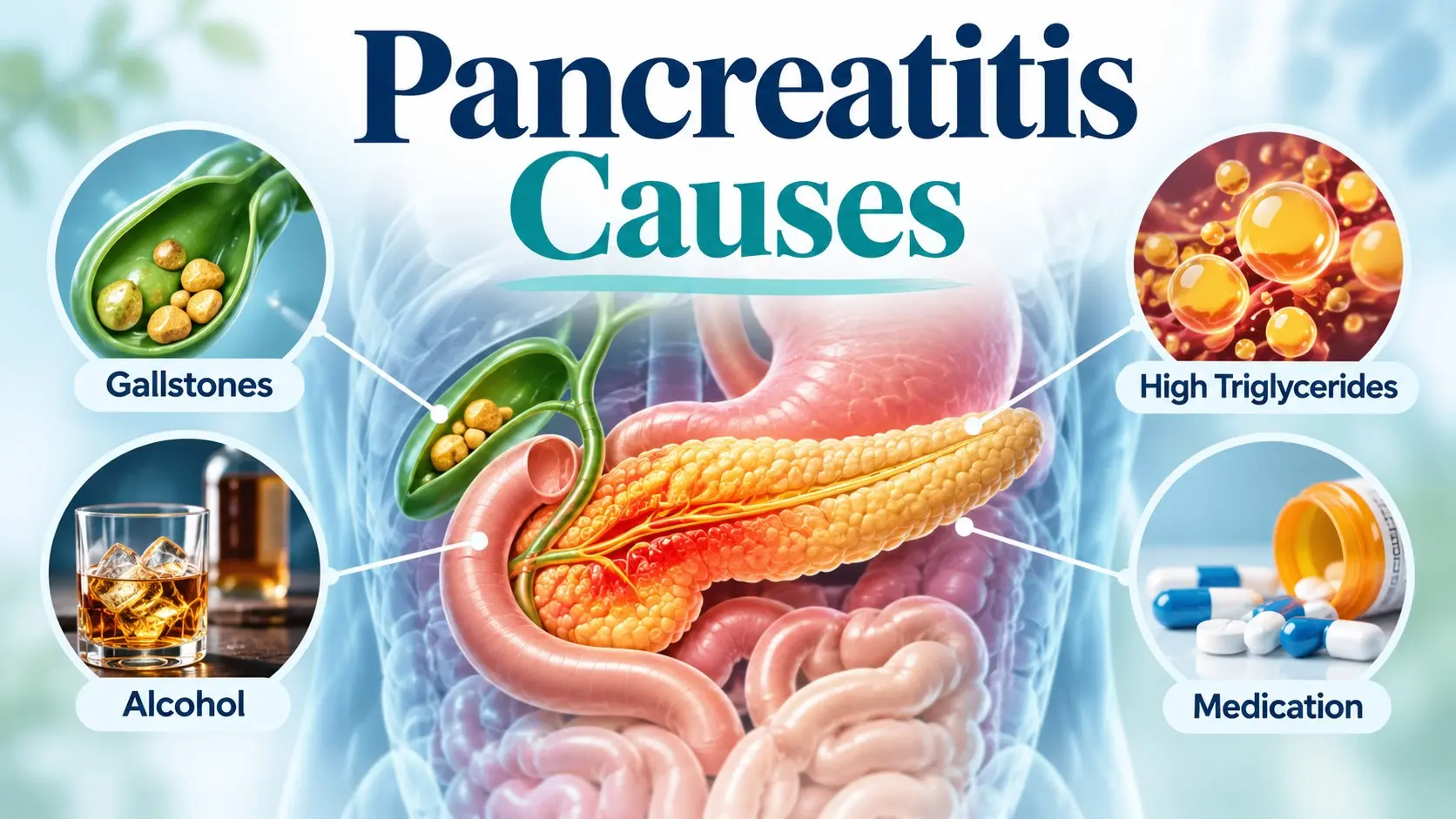
Pancreatitis Causes: 13 Critical Triggers to Know
Pancreatitis means inflammation of the pancreas. The pain can begin suddenly or build over time, and severe acute pancreatitis can become a medical emergency.
The two most common pancreatitis causes are gallstones and heavy alcohol use. Other causes include very high triglycerides, some medicines, high blood calcium, procedures such as ERCP, genetics, autoimmune disease, trauma, infections, and blockage of the pancreatic duct.
Quick answer: The leading pancreatitis causes are gallstones and alcohol. Acute pancreatitis can also be triggered by very high triglycerides, medicines, ERCP, high calcium, trauma, infection, autoimmune disease, inherited conditions, or pancreatic blockage. Sudden severe upper abdominal pain that spreads to the back, especially with vomiting, fever, fast heartbeat, or breathing trouble, needs urgent medical assessment.
The cause matters because treatment is not the same for everyone.
A blocked bile duct may need gallbladder treatment. Very high triglycerides need a different plan. Medicine related pancreatitis may require changing a drug, while chronic pancreatitis can need enzymes, nutrition support, diabetes care, procedures, or surgery.
Medical notice: This content is for general educational purposes and does not replace professional medical advice, diagnosis, or treatment. Consult an appropriately qualified healthcare professional for personal medical concerns. This article explains published guidance and does not provide a personal clinical assessment. Always consult qualified medical professionals for diagnosis and treatment of any health condition.
Table of Contents
- What the pancreas does
- Acute versus chronic pancreatitis
- 13 critical pancreatitis causes
- Symptoms that need attention
- How pancreatitis is diagnosed
- What lipase results mean
- How acute pancreatitis is treated
- Why early feeding now matters
- When ERCP is actually used
- Treatment for chronic pancreatitis
- Pancreatic enzyme replacement therapy
- Complications to know
- How to lower recurrence risk
- Food, alcohol, and smoking
- Emergency warning signs
- References and Sources
- Related NextFitLife guides
- About the author
- Frequently asked questions
What Does the Pancreas Do?
The pancreas sits behind the stomach.
It has two major jobs.
First, it makes pancreatic enzymes that help break down fat, protein, and carbohydrates in the small intestine.
Second, it makes hormones such as insulin and glucagon that help control blood sugar.
Normally, digestive enzymes remain inactive while they are inside the pancreas. They become active after reaching the small intestine.
During pancreatitis, that normal process breaks down. Enzymes become active too early and help trigger pancreatic inflammation and tissue injury.
What Is the Difference Between Acute and Chronic Pancreatitis?
| Feature | Acute Pancreatitis | Chronic Pancreatitis |
|---|---|---|
| Start | Sudden inflammation | Long lasting inflammation and damage |
| Recovery | Many people recover fully | Damage can become permanent and progress |
| Common symptoms | Sudden upper abdominal pain, nausea, vomiting, fever | Ongoing pain, weight loss, diarrhea, greasy stool |
| Long term problems | Recurrence, fluid collections, necrosis, organ problems | Poor digestion, malnutrition, diabetes, bone loss, cancer risk |
Acute pancreatitis is sudden and can range from mild to life threatening.
Chronic pancreatitis causes ongoing injury and scarring. Over time, the pancreas may stop making enough digestive enzymes or insulin.
13 Critical Pancreatitis Causes
1. Gallstones and Biliary Sludge
Gallstones are the leading cause of acute pancreatitis.
The gallbladder and pancreas drain near the same opening into the small intestine. A stone can move from the gallbladder into the bile duct and block that opening.
Pancreatic fluid then cannot drain normally.
This can trigger gallstone pancreatitis.
ACG guidance places gallstones among the two dominant causes of acute pancreatitis and recommends ultrasound to look for biliary disease.
If mild gallstone pancreatitis is confirmed, removing the gallbladder during the same hospital stay is often recommended to prevent another attack.
For more about gallstone symptoms and treatment, read the NextFitLife Gallbladder Pain Relief Guide.
2. Heavy Alcohol Use
Heavy alcohol use can cause both acute and chronic pancreatitis.
The exact way alcohol injures the pancreas is complex. It appears to alter pancreatic cell function and can make digestive enzymes more likely to activate inside the gland.
Not everyone who drinks heavily develops pancreatitis, which suggests that genes, smoking, nutrition, and other factors also influence risk.
If pancreatitis has already occurred, health professionals usually advise avoiding alcohol because continued drinking raises the chance of another acute attack and chronic disease.
If you drink heavily every day and may be physically dependent, do not suddenly stop without medical support. Alcohol withdrawal can be dangerous.
3. Very High Triglycerides
Hypertriglyceridemia means triglyceride levels in the blood are very high.
Triglycerides are a type of fat carried in the bloodstream.
ACG guidance says a triglyceride level above 1,000 mg/dL is more suggestive of hypertriglyceridemia as the cause of acute pancreatitis when gallstones and alcohol are not responsible.
Risk can rise with:
- Poorly controlled diabetes
- Genetic lipid disorders
- Obesity
- Some medicines
- Pregnancy
- Alcohol use
Long term treatment focuses on lowering triglycerides and treating the reason they became very high.
4. Certain Medicines
Drug induced pancreatitis is less common than gallstone or alcohol related disease.
Several medicine groups have been linked with pancreatitis, but the strength of evidence differs between drugs.
Examples reported in medical literature include some:
- Immune suppressing medicines
- Anti seizure medicines
- Diuretics
- Antibiotics
- Hormone treatments
- Other prescription medicines
Do not stop a medicine because you read that pancreatitis has been reported with it.
The correct approach is to review the timing, dose, other possible causes, and alternative treatment with the prescriber.
5. ERCP and Other Procedures
ERCP stands for endoscopic retrograde cholangiopancreatography.
It is a procedure used to treat problems in the bile or pancreatic ducts.
Pancreatitis is a known complication of ERCP.
Modern endoscopy teams use several methods to reduce this risk in suitable patients, including rectal anti inflammatory medicine, pancreatic duct stents in selected cases, and careful hydration.
ERCP should not be confused with a routine diagnostic scan.
MRCP or endoscopic ultrasound can often evaluate suspected bile duct stones without the same procedure related pancreatitis risk.
6. High Calcium Levels
Hypercalcemia means calcium in the blood is too high.
Severe or persistent hypercalcemia can trigger pancreatic inflammation in some people.
Possible causes include:
- Hyperparathyroidism
- Some cancers
- Very high calcium or vitamin D exposure in unusual situations
- Other endocrine or metabolic disorders
The treatment is not simply a low calcium diet.
The reason for the high blood calcium has to be found and treated.
7. Abdominal Injury or Surgery
A strong injury to the upper abdomen can damage the pancreas.
This can happen after:
- A vehicle crash
- A sports injury
- A fall
- A penetrating injury
- Some abdominal operations
Pancreatic injury is not always obvious right away because the pancreas sits deep behind the stomach.
8. Autoimmune Pancreatitis
Autoimmune pancreatitis happens when the immune system attacks pancreatic tissue.
It can cause pancreatic enlargement, jaundice, abdominal symptoms, or changes that may look similar to pancreatic cancer on imaging.
Diagnosis needs specialist assessment.
Unlike many other pancreatitis causes, autoimmune pancreatitis often responds to corticosteroid treatment once the diagnosis is secure.
Steroids should not be started simply because pancreatitis is suspected.
9. Genetic and Inherited Conditions
Some people inherit gene changes that raise the risk of recurrent or chronic pancreatitis.
Genes linked with pancreatic disease include changes affecting pathways involving:
- PRSS1
- SPINK1
- CFTR
- CTR C
- Other pancreatic function genes
Cystic fibrosis can also affect the pancreas.
Genetic evaluation is most useful in selected people, such as those with early onset disease, repeated unexplained attacks, or a strong family history.
10. Structural Problems and Duct Blockage
The pancreas drains through small ducts.
Anything that blocks that flow can raise pancreatitis risk.
Possible causes include:
- Pancreas divisum
- Scarring of a pancreatic duct
- Stones inside the pancreatic duct
- Narrowing after inflammation
- Other congenital duct differences
MRCP, endoscopic ultrasound, CT, or other specialist testing may be used when a structural problem is suspected.
11. Infections
Some viral, bacterial, or parasitic infections have been linked with pancreatitis.
This is much less common than gallstone or alcohol related disease in adults.
An infection should not be assumed simply because a person with pancreatitis has a fever. Fever can also come from the inflammatory response itself.
12. Pancreatic or Biliary Tumors
A mass that blocks the pancreatic or bile duct can trigger pancreatitis.
This is uncommon, but it becomes more important when pancreatitis has no clear cause, especially in an older adult.
The 2024 ACG acute pancreatitis guidance highlights concern for a pancreatic tumor in people age 40 or older when no clear cause of acute pancreatitis is found.
This does not mean unexplained pancreatitis usually equals cancer.
It means an unexplained attack deserves a proper evaluation.
13. Idiopathic Pancreatitis
Sometimes testing does not find the cause.
This is called idiopathic pancreatitis.
It does not mean the attack happened for no reason.
Small gallstones, bile sludge, genetic factors, anatomical differences, or other hidden problems may later be found.
For recurrent unexplained pancreatitis, current guidance may use repeat ultrasound, MRI, MRCP, endoscopic ultrasound, or other specialist evaluation.
Cause Versus Risk Factor: They Are Not the Same
This distinction is useful.
A gallstone blocking the bile duct can directly trigger pancreatitis.
Smoking is better described as a strong risk factor that increases the chance of acute, recurrent, and chronic disease.
| Factor | Role | Why It Matters |
|---|---|---|
| Gallstones | Direct common cause | Can block pancreatic drainage |
| Heavy alcohol use | Direct cause and risk factor | Can cause acute and chronic pancreatic injury |
| Very high triglycerides | Direct metabolic cause | Risk rises sharply at very high levels |
| Smoking | Important risk factor | Raises risk of chronic disease and pancreatic cancer |
| Obesity | Risk and severity factor | Linked with gallstones and more severe acute disease |
What Are the Symptoms of Acute Pancreatitis?
The main symptom is usually upper abdominal pain.
The pain may:
- Start suddenly
- Become severe
- Stay constant
- Spread to the back
- Feel worse after eating
- Feel worse when lying flat
Other symptoms can include:
- Nausea
- Vomiting
- Fever
- A fast heartbeat
- Abdominal tenderness
- Abdominal swelling
- Shortness of breath in severe disease
Acute pancreatitis usually needs hospital assessment.
What Are the Symptoms of Chronic Pancreatitis?
Chronic pancreatitis may cause ongoing or repeated upper abdominal pain.
As pancreatic function falls, other symptoms can appear:
- Unplanned weight loss
- Diarrhea
- Steatorrhea, which means oily or greasy stool
- Foul smelling stool
- Bloating
- Poor absorption of nutrients
- Low levels of vitamins A, D, E, and K
- Diabetes
Some people have less pain as chronic pancreatitis becomes more advanced.
Less pain does not mean the pancreas has healed.
How Do Doctors Diagnose Acute Pancreatitis?
Doctors combine symptoms, blood tests, and imaging.
Lipase is the most useful pancreatic enzyme blood test in many cases.
The evaluation may also include:
- Amylase
- Liver tests
- Blood count
- Kidney function
- Blood glucose
- Calcium
- Triglycerides
- Ultrasound
- CT when needed
- MRI or MRCP
- Endoscopic ultrasound
Current ACG guidance recommends ultrasound in acute pancreatitis to look for gallstones.
CT is usually reserved for cases where the diagnosis is unclear or the person is not improving after about 48 to 72 hours.
Does a High Lipase Always Mean Pancreatitis?
No.
A high lipase level supports the diagnosis, but blood results must be read with symptoms and the clinical picture.
Other medical problems can raise pancreatic enzymes.
Doctors do not diagnose pancreatitis from one number alone.
How Is Acute Pancreatitis Treated?
Acute pancreatitis treatment usually happens in the hospital.
The medical team may use:
- Carefully monitored intravenous fluids
- Pain relief
- Medicine for nausea
- Early food when tolerated
- Tube feeding if normal eating is not possible
- Treatment of the underlying cause
More severe disease may require intensive monitoring, treatment for organ failure, drainage procedures, or management of infected pancreatic tissue.
Why Is “Nothing by Mouth” No Longer the Default?
This is one of the biggest changes from older pancreatitis care.
The old idea was to keep the pancreas completely at rest by stopping all food.
Current evidence does not support prolonged fasting for everyone.
The 2024 ACG guidance recommends early oral feeding with a low fat solid diet within about 24 to 48 hours for mild acute pancreatitis when the patient can tolerate it.
For more severe illness, enteral feeding through the stomach or intestine is preferred over intravenous nutrition when possible.
Food should still be delayed or adjusted if vomiting, severe pain, obstruction, or another clinical problem makes eating unsafe.
Are Antibiotics Used for Acute Pancreatitis?
Not routinely.
Inflammation is not the same as infection.
Current ACG guidance says antibiotics should not be given simply to prevent infection in acute pancreatitis.
They are used when infection is suspected or confirmed, such as some cases of infected pancreatic necrosis or another bacterial infection.
This corrects the older idea that most severe pancreatitis needs antibiotics automatically.
When Is ERCP Needed?
ERCP is a treatment procedure, not a routine test for every patient.
It can be important when a gallstone remains stuck in the bile duct.
The 2024 ACG guideline recommends urgent ERCP when acute pancreatitis is complicated by acute cholangitis.
If there is no cholangitis or strong evidence of ongoing bile duct blockage, MRCP or endoscopic ultrasound may be safer ways to look for a stone.
When Is Gallbladder Surgery Needed?
If gallstones caused mild acute pancreatitis, cholecystectomy is usually recommended during the same hospital admission.
Removing the gallbladder lowers the chance of another gallstone attack.
Timing becomes more complicated when pancreatitis is severe or pancreatic necrosis is present.
In those cases, the gastroenterology and surgical teams decide when surgery is safest.
How Is Chronic Pancreatitis Treated?
There is no one treatment that reverses all chronic pancreatic damage.
Care focuses on symptoms, digestion, nutrition, blood sugar, and complications.
Treatment may include:
- Stopping alcohol
- Stopping smoking
- Pain management
- Pancreatic enzyme treatment
- Nutrition support
- Vitamin treatment when deficient
- Diabetes treatment
- Endoscopic procedures
- Stone removal
- Surgery in selected cases
What Is Pancreatic Enzyme Replacement Therapy?
Chronic pancreatic damage can lead to exocrine pancreatic insufficiency, often shortened to EPI.
The pancreas no longer makes enough enzymes to digest food properly.
Signs can include:
- Greasy stool
- Diarrhea
- Bloating
- Weight loss
- Vitamin deficiencies
- Malnutrition
Pancreatic enzyme replacement therapy, or PERT, provides prescription digestive enzymes.
The capsules are taken with meals and snacks so the enzymes mix with food while it is being digested.
PERT is treatment for poor enzyme production. It is not a supplement for healthy people who simply feel bloated after meals.
Can Chronic Pancreatitis Cause Diabetes?
Yes.
The pancreas contains cells that make insulin.
Long term pancreatic damage can destroy enough of these cells to cause diabetes.
This form of diabetes can behave differently from more common type 2 diabetes because pancreatic damage may also affect glucagon and digestion.
Blood sugar changes in chronic pancreatitis need individualized medical care.
What Complications Can Pancreatitis Cause?
| Complication | More Common With | Why It Matters |
|---|---|---|
| Pancreatic necrosis | Severe acute pancreatitis | Pancreatic tissue dies and can become infected |
| Pseudocyst | Acute or chronic disease | Fluid collection can bleed, rupture, compress organs, or become infected |
| Organ failure | Severe acute disease | Can affect lungs, kidneys, or circulation |
| EPI | Chronic pancreatitis | Causes poor digestion and malnutrition |
| Diabetes | Chronic pancreatitis | Damage reduces insulin production |
| Bone loss | Chronic disease with malabsorption | Raises fracture risk |
| Pancreatic cancer | Long standing chronic pancreatitis | Chronic inflammation raises long term risk |
What Should You Eat After Pancreatitis?
Nutrition depends on whether pancreatitis is acute or chronic and whether EPI is present.
In mild acute pancreatitis, modern care favors restarting food early when it is tolerated.
After recovery, a balanced eating pattern may include:
- Vegetables
- Fruit
- Whole grains when tolerated
- Lean protein
- Beans and lentils when suitable
- Fish
- Eggs
- Low fat dairy when appropriate
- Adequate fluids
Very fatty meals can be difficult for people with pancreatic disease, especially when enzyme production is poor.
But chronic pancreatitis nutrition should not become a very restrictive low calorie diet. People with EPI can already be at risk of weight loss and malnutrition.
A registered dietitian can help balance calories, fat intake, protein, enzymes, and vitamin needs.
For general food guidance, visit the NextFitLife Nutrition and Vitamins Hub.
Should Everyone With Pancreatitis Eat Very Low Fat?
No single fat target fits every person.
During mild acute pancreatitis, ACG guidance supports a low fat solid diet as feeding restarts.
Chronic pancreatitis is more complicated.
If someone has EPI and is taking effective PERT, overly strict fat restriction can make it harder to get enough calories and nutrients.
Diet should match symptoms, weight, digestion, triglycerides, diabetes, and pancreatic enzyme function.
Can Weight Loss Increase Pancreatitis Risk?
Rapid weight loss itself is better known for increasing gallstone risk.
Gallstones can then cause acute pancreatitis.
This is one reason crash diets and very low calorie plans deserve caution.
The NextFitLife Weight Loss and Metabolism Guide explains the link between rapid weight loss and gallstones.
Does Smoking Matter if Alcohol Is Not the Cause?
Yes.
Smoking is an independent pancreatitis risk factor.
It is linked with chronic pancreatic damage and raises pancreatic cancer risk.
NIDDK strongly advises people with pancreatitis to stop smoking, even when alcohol did not cause their disease.
Can You Prevent Another Attack?
Not every case is preventable, but treating the cause can lower recurrence risk.
Useful steps may include:
- Treat gallstones when they caused the attack.
- Avoid alcohol after pancreatitis unless your specialist gives different advice.
- Stop smoking.
- Control very high triglycerides.
- Manage diabetes.
- Maintain a healthy weight without crash dieting.
- Review possible medicine triggers with the prescriber.
- Complete specialist testing when the cause is unclear.
General digestive health habits can also support recovery. Visit the NextFitLife Gut Health and Digestion Guide for broader food and digestion guidance.
When Is Pancreatitis an Emergency?
Acute pancreatitis can become serious quickly.
Seek urgent medical care for sudden severe upper abdominal pain, especially when the pain does not go away.
Emergency warning signs include:
- Severe pain spreading to the back
- Repeated vomiting
- Fever or chills
- Fast heartbeat
- Difficulty breathing
- Persistent abdominal swelling
- Fainting or severe weakness
- Jaundice
- Confusion
- Blue or bruised looking skin around the abdomen in severe illness
Do not try to manage severe suspected acute pancreatitis with fasting, supplements, painkillers, or home remedies alone.
Important Principles in Pancreatitis Care
Treatment depends on the type, severity and cause of pancreatitis. These distinctions help explain why care must be individualized.
- Routine NPO is outdated. Mild acute pancreatitis should usually move toward early oral feeding when tolerated.
- Antibiotics are not routine treatment. They are used when infection is suspected or confirmed.
- ERCP is not a routine diagnostic test for everyone. It is mainly a therapeutic procedure in selected biliary disease.
- Gallstone pancreatitis needs recurrence prevention. Mild biliary pancreatitis often leads to gallbladder removal during the same hospital stay.
- Triglycerides need a meaningful threshold. Levels above about 1,000 mg/dL are much more suggestive as a cause of acute pancreatitis.
- Smoking should be treated as a major risk factor. It matters even when alcohol is not involved.
- Chronic pancreatitis nutrition is not simply low fat forever. EPI, PERT, weight loss, and vitamin status need to be considered.
- An unexplained attack after age 40 deserves careful evaluation. Pancreatic obstruction or tumor is uncommon but should not be missed.
Conclusion
Understanding pancreatitis causes matters because the trigger often determines how another attack can be prevented. Gallstones and alcohol lead the list, but high triglycerides, medicines, ERCP, high calcium, genetic conditions, autoimmune disease, trauma, infections, and duct blockage can all play a role.
If you have sudden severe upper abdominal pain that spreads to the back, especially with vomiting, fever, a fast heartbeat, jaundice, or breathing trouble, seek medical care rather than waiting for it to pass. If pancreatitis has already been diagnosed, ask what caused it and what specific step can reduce your risk of recurrence.
References and Sources
The medical information in this article was checked against current pancreatitis guidance and major medical sources. Full URLs are provided so readers can review the evidence directly.
- American College of Gastroenterology.
ACG Guideline Highlights: Management of Acute Pancreatitis.
2024.
Used for gallstone and alcohol prevalence, triglyceride evaluation, ultrasound, CT timing, hydration, early feeding, antibiotics, ERCP, gallbladder surgery, and pancreatic necrosis management.
URL:
https://webfiles.gi.org/links/journals/AJG-Clinical-Guidelines-Highlights-Acute-Pancreatitis-2024-FINAL.pdf
- National Institute of Diabetes and Digestive and Kidney Diseases.
Symptoms and Causes of Pancreatitis.
Used for acute and chronic symptoms, gallstones, alcohol, medicines, genetics, infection, trauma, ERCP, pancreatic cancer, and structural causes.
URL:
https://www.niddk.nih.gov/health-information/digestive-diseases/pancreatitis/symptoms-causes
- National Institute of Diabetes and Digestive and Kidney Diseases.
Treatment for Pancreatitis.
Used for hospital treatment, gallbladder surgery, ERCP, chronic pancreatitis care, pancreatic enzymes, alcohol avoidance, smoking cessation, and recurrence prevention.
URL:
https://www.niddk.nih.gov/health-information/digestive-diseases/pancreatitis/treatment
- Mayo Clinic.
Pancreatitis: Symptoms and Causes.
Used for acute and chronic symptoms, causes, risk factors, complications, smoking, triglycerides, hypercalcemia, and pancreatic cancer risk.
URL:
https://www.mayoclinic.org/diseases-conditions/pancreatitis/symptoms-causes/syc-20360227
- Cleveland Clinic.
Pancreatitis: What It Is, Symptoms and Treatment.
Updated August 12, 2026.
Used for the latest clinical overview of pancreatitis types, symptoms, gallstones, alcohol, less common causes, diagnosis, chronic pancreatitis, and treatment.
URL:
https://my.clevelandclinic.org/health/diseases/8103-pancreatitis
- NHS.
Acute Pancreatitis.
Updated in 2026.
Used for urgent warning signs, hospital treatment, gallstones, alcohol, medicines, high calcium, pancreatic necrosis, and recurrence prevention.
URL:
https://www.nhs.uk/conditions/acute-pancreatitis/
Continue With NextFitLife Digestive Health Guides
Use these related guides to understand gallstones, digestion, nutrition, weight management, and conditions that can overlap with pancreatic health.
Gallbladder and Digestion
- Gallbladder Pain Relief: Safe Steps and Warning Signs
- Gut Health Foods: Digestion, Fiber and Bloating Guide
Nutrition
Weight and Gallstone Risk
About the Author
Adel Galal is the founder and lead writer of NextFitLife. He researches and writes about health, nutrition, fitness, digestive health, liver health, metabolic health, and practical preventive care.
His approach is to compare health claims with current medical guidance, correct information that has become outdated, and explain complex topics in plain language readers can use when speaking with qualified healthcare professionals.
For pancreatic health topics, that means separating proven causes from risk factors, explaining why the cause changes treatment, and making clear when severe abdominal pain requires hospital care instead of self treatment.
This content is for general educational purposes and does not replace professional medical advice, diagnosis, or treatment. Consult an appropriately qualified healthcare professional for personal medical concerns. This article explains published guidance and does not provide a personal clinical assessment. Always consult qualified medical professionals for diagnosis and treatment of any health condition.
Learn more about Adel Galal and NextFitLife on the NextFitLife About Us page.
Frequently Asked Questions About Pancreatitis Causes
What is the most common cause of pancreatitis?
Gallstones are the leading cause of acute pancreatitis. Heavy alcohol use is another major cause and can contribute to both acute and chronic pancreatitis.
What does pancreatitis pain feel like?
Pancreatitis often causes severe pain in the upper abdomen. The pain may spread to the back, stay constant, become worse after eating, and occur with nausea or vomiting.
Can very high triglycerides cause pancreatitis?
Yes. Very high triglycerides can cause acute pancreatitis. Current ACG guidance says levels above about 1,000 mg/dL are more suggestive when gallstones and alcohol are not the cause.
Can medicine cause pancreatitis?
Yes, although medicine related pancreatitis is much less common than gallstone or alcohol related disease. Do not stop prescribed medicine on your own. Ask the prescriber to review the possible link.
Can gallstones cause pancreatitis?
Yes. A gallstone can move into the bile duct and temporarily block pancreatic drainage. This can trigger acute gallstone pancreatitis.
Can alcohol cause pancreatitis after one night?
Alcohol related pancreatitis is more often linked with repeated heavy use, although individual patterns differ. A single episode of abdominal pain after drinking should not automatically be blamed on alcohol because gallstones and other causes may be present.
Can smoking cause pancreatitis?
Smoking is a major independent risk factor for pancreatic disease. It raises the risk of chronic pancreatitis and pancreatic cancer and can add to the harmful effects of alcohol.
Can pancreatitis be genetic?
Yes. Some inherited gene changes increase the risk of recurrent or chronic pancreatitis. Genetic testing may be considered in people with early onset disease, repeated unexplained attacks, or a strong family history.
Can pancreatitis be caused by autoimmune disease?
Yes. Autoimmune pancreatitis is caused by immune system inflammation of pancreatic tissue. It needs specialist diagnosis because it can look similar to other pancreatic diseases on imaging.
How is acute pancreatitis diagnosed?
Doctors use symptoms, examination, blood tests such as lipase, and imaging when needed. Ultrasound is commonly used to look for gallstones. CT is often reserved for an unclear diagnosis or failure to improve.
Do you have to stop eating with acute pancreatitis?
Not always. Current ACG guidance recommends early low fat oral feeding within about 24 to 48 hours in mild acute pancreatitis when food is tolerated. Prolonged fasting is no longer routine for everyone.
Are antibiotics always given for pancreatitis?
No. Antibiotics are not routinely used to prevent infection in acute pancreatitis. They are used when a bacterial infection is suspected or confirmed.
When is ERCP used for pancreatitis?
ERCP is used mainly to treat selected bile or pancreatic duct problems. Urgent ERCP is recommended when gallstone pancreatitis is complicated by acute cholangitis. It is not a routine diagnostic test for every case.
Can pancreatitis cause diabetes?
Yes. Chronic pancreatic damage can reduce insulin production and lead to diabetes. This form of diabetes can require specialist management.
What is pancreatic enzyme replacement therapy?
Pancreatic enzyme replacement therapy provides prescription digestive enzymes for people whose pancreas no longer makes enough enzymes. The capsules are taken with meals and snacks to improve digestion and nutrient absorption.
Can pancreatitis turn into pancreatic cancer?
Pancreatitis does not simply turn into cancer, but long standing chronic pancreatitis is associated with a higher risk of pancreatic cancer. New or unexplained pancreatitis in an older adult may also prompt evaluation for a hidden pancreatic mass.
When should pancreatitis symptoms be treated as an emergency?
Seek urgent medical care for sudden severe upper abdominal pain that does not improve, especially with pain spreading to the back, repeated vomiting, fever, a fast heartbeat, breathing trouble, jaundice, fainting, or major abdominal swelling.

Health & wellness writer with 30+ years of experience in nutrition, fitness, and healthy aging. Founder of NextFitLife.com — evidence-based health guidance.