
Editorial update: October 7, 2026. Independent medical review remains pending.
Medical review status: This educational article has not received an independent review by a licensed clinician. It summarizes published guidance and cannot diagnose a rash or replace individual medical advice.
Medicine safety: Do not stop prescribed inhalers, nasal sprays, oral steroids or other prescribed medicines because of an online rash guide. Discuss suspected medicine-related skin symptoms with the prescriber. Changes to a prescribed facial steroid may also need a supervised plan.
What the rash can look like
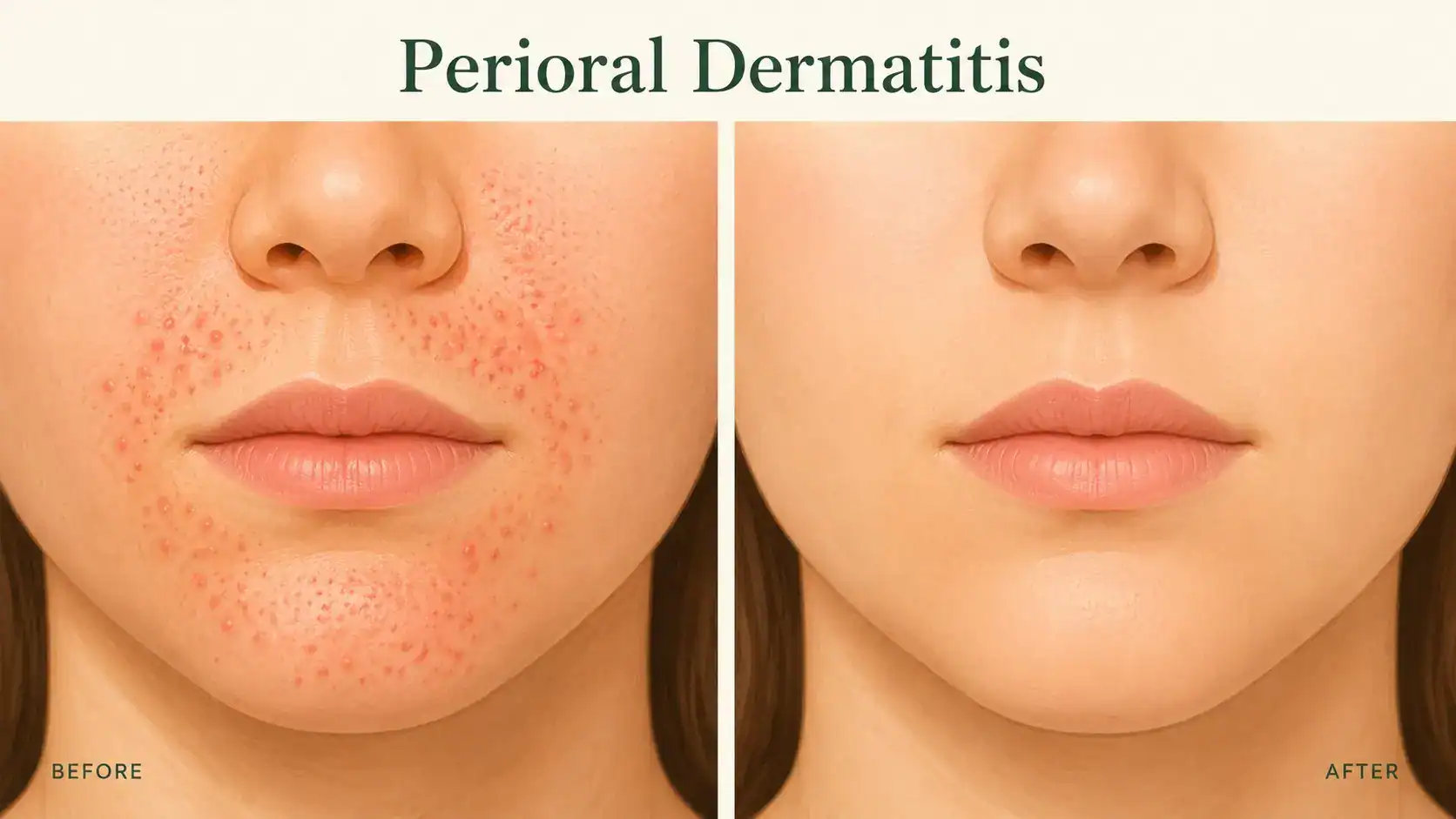
Perioral dermatitis can cause clusters of small bumps, dryness, burning or irritation around the mouth. Similar changes may occur near the nose or eyes, so the broader name periorificial dermatitis is sometimes used. The skin next to the lip edge is often spared, but appearance alone cannot confirm the condition.
Acne, rosacea, contact dermatitis and infections can look similar. These conditions may need different care. Avoid using a photograph, one symptom or a product reaction as a diagnosis.
Possible triggers
The cause is not fully understood. Facial corticosteroid use is an important association, and some cosmetics or skin-care products can contribute. The role of other suspected triggers varies. Do not assume toothpaste, food or a particular ingredient causes every case.
Tell your clinician about creams, cosmetics, prescription medicines, inhalers and nasal sprays you use. Include how long you have used them and whether stopping or restarting a product changed the rash. This history helps guide assessment.
Handle steroid medicines carefully
Do not start hydrocortisone or a stronger steroid cream on a suspected perioral rash without advice. A cream may temporarily reduce redness while contributing to a recurring problem. If the steroid was prescribed, contact the prescriber before stopping or changing it, especially after prolonged use.
Suddenly stopping a potent facial steroid can cause a flare. The clinician may recommend a gradual change or another treatment. Necessary inhaled, nasal or oral steroids should continue unless your treating clinician changes the plan. Ask about correct technique and whether rinsing the mouth or face after use is appropriate.
Keep skin care simple
A clinician may suggest reducing unnecessary cosmetics and using gentle skin care. Avoid scrubbing, picking the bumps, harsh exfoliation and trying several new products at once. Some heavy products can worsen a perioral rash, so ask which cleanser, moisturizer and sun protection fit your situation.
Do not use essential oils, household acids or abrasive mixtures as treatment. Skin care should reduce irritation while supporting the agreed plan. It should not become a reason to delay assessment of a persistent rash.
Professional treatment options
A clinician or dermatologist can examine the rash and consider other causes. If needed, testing may help exclude infection or identify an allergy. Treatment can include prescription topical medicines or an oral antibiotic in suitable cases.
The choice depends on age, pregnancy, other medicines and the condition's severity. Antibiotics should not be borrowed or started from leftovers. Follow the prescribed duration and arrange follow-up if treatment is not helping or causes problems.
Set realistic expectations
Improvement commonly takes weeks or months. There is no proven routine that guarantees rapid clearance or prevents every recurrence. Some mild cases settle with suitable changes, while others require treatment. A returning rash should be reassessed rather than repeatedly treated with an unprescribed steroid.
When to seek help
Arrange assessment for a persistent, spreading or uncertain facial rash. Seek prompt help for significant pain, fever, discharge, marked swelling or concerning eye symptoms. Eye pain or a change in vision needs urgent assessment. Breathing difficulty or sudden tongue or throat swelling requires emergency help.
Next steps
Perioral dermatitis needs a clear diagnosis and a suitable care plan. Make a list of the products and medicines you use, then discuss the rash with a clinician or dermatologist.
Related guides: Beauty and skin-care guide and Health guide.
About this article: NextFitLife publishes educational health information. Read about the author and editorial approach. Independent clinical review remains pending.
Frequently asked questions
What is perioral dermatitis?
Perioral dermatitis is an inflammatory rash that can cause small bumps, dryness or irritation around the mouth. It may also affect the nose or eyes. A clinician must distinguish it from other rashes.
What causes perioral dermatitis?
The exact cause is uncertain. Facial corticosteroid use and some skin-care products can contribute. A suspected trigger does not establish the diagnosis or mean every person should stop the same products.
How do you treat perioral dermatitis?
Treatment depends on the diagnosis and individual circumstances. A clinician may simplify skin care and prescribe topical or oral treatment. Do not start antibiotics or change prescribed medicines on your own.
Does perioral dermatitis go away on its own?
Some mild cases may improve after suitable skin-care changes, but others persist or recur and need treatment. There is no guaranteed home cure.
What should I stop using immediately for perioral dermatitis?
Avoid adding new irritating products or starting an unprescribed steroid on the rash. Ask the prescriber before stopping prescribed facial steroids, inhalers, nasal sprays or oral medicines. Medically necessary steroids should not be stopped on your own.
How long does perioral dermatitis take to clear?
Improvement is usually gradual and may take weeks or months. The time varies by severity, triggers and treatment, and the rash can recur. Persistent or worsening symptoms need follow-up.
References and Sources

Health & wellness writer with 30+ years of experience in nutrition, fitness, and healthy aging. Founder of NextFitLife.com — evidence-based health guidance.