
First published: May 29, 2023
Last updated: September 30, 2026
Written and source -checked by: Adel Galal, Founder and Lead Writer at NextFitLife
Medical review status: This article has not been medically reviewed by a doctor, endocrinologist, diabetes specialist nurse, pharmacist, or registered dietitian.
Prediabetes NHS guidance is simpler than the name may sound. Your blood glucose is higher than normal, but it has not reached the level used to diagnose type 2 diabetes.
In NHS records you may also see the term non diabetic hyperglycaemia, often shortened to NDH.
Prediabetes is a warning sign, not a promise that diabetes will happen. Many people can lower their blood glucose and reduce their future risk through sustainable changes to food, activity, weight where relevant, smoking, sleep, and other health habits.
Quick Answer
NICE considers an HbA1c of 42 to 47 mmol/mol, or 6.0% to 6.4%, to be a high risk range for type 2 diabetes. A fasting plasma glucose from 5.5 to 6.9 mmol/L also indicates high risk in its prevention guidance. Most people with prediabetes have no symptoms. NHS care focuses on regular blood tests, healthier eating, physical activity, weight support when needed, and referral to an evidence based prevention programme.
Do Not Assume New Diabetes Symptoms Are “Just Prediabetes”
Prediabetes usually causes no clear symptoms.
Contact your GP if you develop increased thirst, frequent urination, unexplained weight loss, marked tiredness, blurred vision, repeated infections, or another new symptom that could suggest diabetes.
Seek urgent medical help if you become severely unwell, confused, very dehydrated, repeatedly vomit, have severe breathing problems, collapse, or have another serious symptom.
Medical notice: This content is for general educational purposes and does not replace professional medical advice, diagnosis, or treatment. Consult an appropriately qualified healthcare professional for personal medical concerns. This article explains published guidance and does not provide a personal clinical assessment. Always consult qualified medical professionals for diagnosis and treatment of any health condition.
Table of Contents
- What Prediabetes Means in the NHS
- Prediabetes Blood Test Numbers
- HbA1c vs Fasting Glucose
- 13 Proven Steps to Lower Risk
- NHS Diabetes Prevention Programme
- What to Eat
- Exercise and Strength Training
- Weight and Waist Size
- Prediabetes at a Healthy Weight
- Annual Blood Tests
- Metformin and Medicines
- CGM and Home Glucose Testing
- Gestational Diabetes
- When Prediabetes Becomes Diabetes
- Questions to Ask Your GP
- References and Sources
- Related NextFitLife Guides
- About the Author
- Frequently Asked Questions
What Does Prediabetes Mean in the NHS?
Prediabetes means your blood glucose is above the normal range but below the level used to diagnose diabetes.
The NHS may call this non diabetic hyperglycaemia.
You may also hear:
- Prediabetes
- Borderline diabetes
- High risk of type 2 diabetes
- Impaired glucose regulation
These terms are related, but they are not always defined in exactly the same way.
The key point is that your glucose result is higher than it should be and your risk of future type 2 diabetes is increased.
It does not mean you definitely will develop diabetes.
What HbA1c Level Means Prediabetes?
For non pregnant adults, NICE considers:
| HbA1c Result | Common Interpretation | Typical Next Step |
|---|---|---|
| Below 42 mmol/mol | Below the NICE high risk range | Risk still depends on age, family history, weight, ethnicity, and other factors |
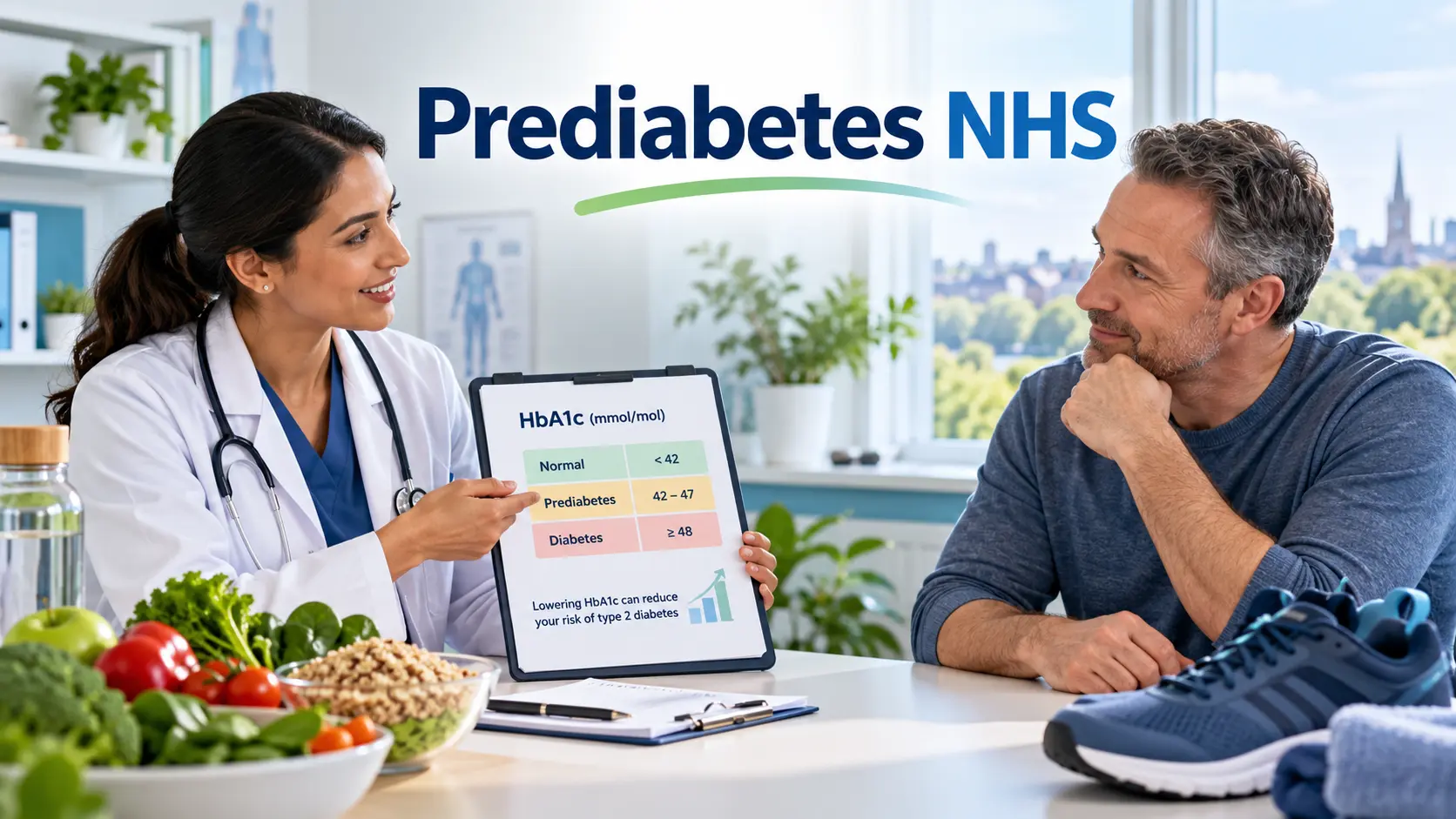
| 42 to 47 mmol/mol 6.0% to 6.4% | High risk, often called prediabetes or non diabetic hyperglycaemia | Lifestyle support and at least annual testing |
| 48 mmol/mol or above 6.5% or above | Possible diabetes | Clinical review and confirmation when required |
HbA1c gives an estimate of average blood glucose exposure over roughly the previous two to three months.
You do not normally need to fast for an HbA1c blood test.
What Fasting Blood Glucose Means Prediabetes?
NICE diabetes prevention guidance uses a fasting plasma glucose result of 5.5 to 6.9 mmol/L to identify people at high risk of type 2 diabetes.
A fasting result of 7.0 mmol/L or above can indicate diabetes.
If you do not have diabetes symptoms, a second blood test is usually needed to confirm a diabetes diagnosis.
Why Do Some Websites Say 6.1 Instead of 5.5?
You may see different numbers online.
This is not always an error.
NICE uses 5.5 to 6.9 mmol/L as the fasting glucose range for identifying people at high risk in its type 2 diabetes prevention programme.
The more specific term “impaired fasting glucose” has historically been defined using a fasting glucose from 6.1 to 6.9 mmol/L.
Do not diagnose yourself from one search result. Ask what test you had and how your clinician is interpreting it.
Is Prediabetes the Same as Diabetes?
No.
Prediabetes means the blood glucose result has not reached the diagnostic threshold for diabetes.
That difference matters because this is a window where prevention can help.
If your blood glucose reaches the diabetes range, you need proper diagnostic assessment and a different care plan.
Does Prediabetes Cause Symptoms?
Usually not.
That is why blood testing matters.
Many people feel completely well when prediabetes is found.
Symptoms such as frequent urination, intense thirst, unexplained weight loss, marked tiredness, or blurred vision are more concerning for diabetes than for uncomplicated prediabetes.
Do not wait for symptoms before attending follow up blood tests.
What Raises Your Risk of Prediabetes?
There is no single cause.
Risk can increase with:
- Family history of type 2 diabetes
- Older age
- Certain ethnic backgrounds
- Living with overweight or obesity
- Higher waist measurement
- Low physical activity
- High blood pressure
- Cardiovascular disease
- Polycystic ovary syndrome
- Previous gestational diabetes
- Fatty liver disease
- Some mental health conditions
- Some medicines
Weight is one factor.
It is not the whole explanation.
Diabetes UK notes that prediabetes can also occur in people who are in a healthy weight range.
13 Proven Steps to Lower Your Prediabetes Risk
1. Know Your Actual HbA1c Number
Do not settle for “your sugar is a bit high.”
Ask for the number.
Knowing whether your HbA1c is 42, 45, or 47 mmol/mol helps you and your care team understand where you are within the high risk range.
Keep a simple record of your results and dates.
2. Attend Your Repeat Blood Tests
NICE recommends at least one blood test each year for people confirmed to be at high risk.
Using the same type of test where possible makes trends easier to compare.
Annual follow up matters because prediabetes usually gives you no warning when glucose rises further.
3. Ask About Healthier You
If you live in England and are eligible, ask about the Healthier You NHS Diabetes Prevention Programme.
It is a free NHS programme that runs for about nine months.
It provides practical support with:
- Healthy eating
- Physical activity
- Weight management when needed
- Long term behaviour change
People with non diabetic hyperglycaemia usually need referral from their GP practice.
People with a history of gestational diabetes have a separate self referral route.
4. Build Meals Around High Fibre Foods
You do not need a special “prediabetes diet.”
A useful eating pattern includes plenty of:
- Vegetables
- Beans
- Lentils
- Whole grains
- Fruit
- Nuts and seeds when suitable
Dietary fibre helps make meals filling and supports overall metabolic and digestive health.
Simple foods count.
Oats, beans, frozen vegetables, lentils, apples, and wholegrain bread do not need to be expensive or complicated.
5. Replace Sugary Drinks More Often
Drinks can add a large amount of sugar without making you feel very full.
Useful swaps include:
- Water
- Sparkling water without added sugar
- Tea or coffee without large amounts of sugar
- Sugar free drinks when useful
Fruit juice still contains free sugar even though it comes from fruit.
You do not need to ban every sweet food forever. The goal is to reduce repeated high sugar intake and build an eating pattern you can keep.
6. Choose Carbohydrates With More Fibre
Carbohydrates are not automatically bad for prediabetes.
Quality and portion matter.
Try choosing more:
- Wholegrain bread
- Oats
- Brown rice
- Wholewheat pasta
- Beans
- Lentils
- Vegetables
Pair carbohydrate foods with vegetables, protein, or healthy fat where practical.
You do not need to follow a ketogenic diet simply because your HbA1c is in the prediabetes range.
7. Watch Portion Size Without Making Meals Tiny
Healthy food can still provide more energy than your body needs when portions are very large.
You do not need to weigh every bite.
Start with practical changes:
- Use a smaller serving when portions are regularly large
- Eat slowly
- Pause before having more
- Add vegetables to the meal
- Choose foods with protein and fibre
The goal is a meal you can repeat, not a short diet that leaves you hungry.
8. Reach 150 Minutes of Moderate Activity if It Is Safe for You
NHS guidance advises most adults to aim for at least 150 minutes of moderate activity each week, or 75 minutes of vigorous activity, or a suitable mix.
You can spread this across the week.
Examples include:
- Brisk walking
- Cycling
- Swimming
- Dancing
- Active gardening
If you are not active now, start smaller.
Ten minutes is still movement.
Build gradually.
9. Add Strength Training Twice a Week
The NHS also recommends muscle strengthening activity on at least two days each week.
Strength training can include:
- Weights
- Resistance bands
- Bodyweight exercises
- Heavy gardening
- Some forms of yoga
Muscle uses glucose for energy.
You do not need to become a bodybuilder to benefit from regular resistance exercise.
10. Break Up Long Sitting Time
One gym session does not make sitting for the rest of the week disappear.
NHS activity guidance recommends breaking up long periods of sitting.
Stand up.
Walk around the room.
Take the stairs when practical.
Walk after a meal when that is safe and comfortable for you.
Small periods of movement add up.
11. Lose Weight Only If Weight Loss Is Appropriate for You
Not everyone with prediabetes needs to lose weight.
If you live with excess weight, losing some weight can lower type 2 diabetes risk.
But health improvement is not a competition to reach the lowest possible number on the scale.
Focus on changes you can keep.
Your GP, prevention programme, or dietitian can help you decide whether weight loss should be part of your plan.
For broader support, see the NextFitLife Weight Management and Metabolism Hub.
12. Stop Smoking and Keep Alcohol Low Risk
If you smoke, stopping is one of the strongest changes you can make for your overall health.
It lowers risks far beyond diabetes, including cardiovascular disease, lung disease, and cancer.
If you drink alcohol, UK guidance recommends no more than 14 units a week on a regular basis, spread over three or more days.
Less is fine.
Alcohol can also add a lot of calories, which may matter when weight management is one of your goals.
13. Protect Sleep, Stress, and Long Term Routine
Prediabetes prevention is not a 14 day challenge.
Habits have to fit real life.
Poor sleep, chronic stress, shift work, low mood, pain, caregiving, money worries, and an unpredictable schedule can make healthy choices harder.
Work on the part you can change.
Set a regular sleep window when possible.
Ask for help when stress or mental health problems are getting in the way of daily care.
If one week goes badly, restart the next meal or the next day.
You have not failed.
What Does the NHS Diabetes Prevention Programme Do?
The NHS Diabetes Prevention Programme, known as Healthier You in England, supports people at high risk of type 2 diabetes.
The programme lasts about nine months and can be delivered:
- Face to face
- Digitally through an app
- Through other supported remote formats in some pathways
It focuses on realistic behaviour change rather than prescribing one rigid diet.
Your GP practice can check whether you meet the referral criteria.
Can Prediabetes Return to the Normal Range?
Yes, some people later have an HbA1c below 42 mmol/mol.
Diabetes UK often describes this as reversing prediabetes.
I prefer a more precise way to think about it:
Your blood glucose can return below the prediabetes range, but your underlying future risk may not disappear completely.
Age, family history, ethnicity, previous gestational diabetes, weight history, and other risk factors still matter.
Keep the habits and follow up that helped your result improve.
Do You Need to Lose Weight if Your BMI Is Already Healthy?
No.
Prediabetes also affects people who are not overweight.
If your weight is already suitable for you, the goal is not to force weight loss.
Focus instead on:
- Food quality
- Regular activity
- Strength training
- Blood pressure
- Sleep
- Smoking
- Alcohol
- Annual glucose testing
Ask your clinician whether another factor may be contributing to your glucose result.
What Should a Prediabetes Plate Look Like?
You do not need one exact plate at every meal.
A practical pattern can be:
| Part of Meal | Examples | Why It Helps |
|---|---|---|
| Vegetables | Broccoli, carrots, peppers, spinach, salad, frozen mixed vegetables | Adds fibre and volume |
| Protein | Fish, chicken, eggs, beans, lentils, tofu, plain yogurt | Helps make meals filling |
| Higher fibre carbohydrate | Oats, brown rice, wholegrain bread, wholewheat pasta, potatoes with skin | Provides energy and useful fibre |
| Healthy fats | Nuts, seeds, olive oil, avocado | Adds unsaturated fat and flavour |
Portions still depend on appetite, body size, activity, weight goals, pregnancy, medicines, and other health needs.
Do You Need to Avoid Fruit?
No.
Whole fruit can be part of a healthy diet for people at risk of type 2 diabetes.
Fruit contains natural sugar, but it also provides fibre, vitamins, minerals, and water.
Whole fruit is different from drinking large amounts of fruit juice.
Choose portions that fit your overall eating pattern.
Are Bananas, Potatoes, Rice, or Bread Bad for Prediabetes?
No single normal food causes prediabetes by itself.
You do not have to ban all carbohydrate.
The amount, type, cooking method, what you eat with it, and your total eating pattern all matter.
Choose higher fibre versions more often and keep portions realistic.
Should You Buy a Glucose Meter?
Most people with prediabetes do not need to turn every meal into a finger prick experiment.
Your GP blood tests are what diagnose and monitor the condition.
Home readings can also be affected by the meter, timing, food, activity, stress, and many other things.
Ask your healthcare professional before buying equipment because you may not need it.
Do You Need a Continuous Glucose Monitor for Prediabetes?
Usually not for diagnosis.
A continuous glucose monitor, or CGM, cannot diagnose prediabetes.
Diabetes UK notes that there is still very little published evidence on CGM use in people without diabetes.
Seeing every glucose rise after food can also create anxiety without telling you whether you are developing type 2 diabetes.
Your venous blood test remains more important.
How Often Should HbA1c Be Repeated?
If your result confirms high risk or non diabetic hyperglycaemia, NICE recommends a blood test at least once each year.
Your clinician may test sooner when:
- Your previous result was close to the diabetes threshold
- You develop symptoms
- Your health changes
- You start a medicine that can affect glucose
- Another clinical reason requires closer monitoring
Do not repeat HbA1c every few days.
It reflects longer term glucose exposure, not what happened at breakfast yesterday.
When Does Prediabetes Become Type 2 Diabetes?
For non pregnant adults, diabetes can be indicated by:
- HbA1c of 48 mmol/mol, or 6.5%, or above
- Fasting venous plasma glucose of 7.0 mmol/L or above
- A two hour glucose result of 11.1 mmol/L or above during an oral glucose tolerance test
- A random venous glucose of 11.1 mmol/L or above in the appropriate clinical setting
If you do not have symptoms, NICE recommends confirmation with another blood test when diabetes is suspected.
Do not try to decide the diagnosis from a home glucose meter.
What If Your HbA1c Is 47?
47 mmol/mol is still below the usual HbA1c threshold for diagnosing type 2 diabetes, but it is at the top of the high risk range.
NICE says that where prevention programme places are limited, people with HbA1c from 44 to 47 mmol/mol or fasting glucose from 6.5 to 6.9 mmol/L should receive priority.
This is a good time to act, not a reason to panic.
What If Your HbA1c Goes Back Below 42?
That is encouraging.
It means your current HbA1c is below the NICE high risk range.
Keep the habits that helped.
Your future testing schedule still depends on your overall risk profile.
A normal result does not erase family history or previous gestational diabetes.
What About Gestational Diabetes?
Having gestational diabetes raises your future risk of type 2 diabetes.
NHS England allows people with current or previous gestational diabetes to self refer to Healthier You, although someone who is currently pregnant starts the programme after pregnancy.
Regular glucose testing after pregnancy remains important.
Tell your GP if your history of gestational diabetes is missing from your health record.
Does Prediabetes Need Medicine?
Usually, lifestyle support comes first.
NICE says metformin can be considered for selected people whose HbA1c or fasting glucose continues to worsen despite an intensive lifestyle programme, or when they cannot participate in such a programme.
This may be especially relevant for some people with a BMI above 35.
Metformin is not something every person with an HbA1c of 42 needs automatically.
The decision should be individual.
What About Weight Loss Medicines?
Prediabetes by itself does not mean you should start a prescription weight management drug.
Some people with overweight or obesity may qualify for medical weight management based on separate clinical criteria.
Discuss the benefits, risks, side effects, pregnancy considerations, and long term plan with a qualified prescriber.
Do not buy prescription medicines from unregulated sellers.
Should You Take Supplements for Prediabetes?
No vitamin, herb, tea, powder, or supplement has replaced established prevention care.
Be careful with products that promise to:
- Reverse prediabetes in days
- Clean sugar from your blood
- Replace exercise
- Replace prescribed medicine
- Cure insulin resistance
Supplements can also interact with medicines or affect the liver, kidneys, or glucose.
If you have a proven deficiency, treat that deficiency with advice from an appropriate healthcare professional.
Does Prediabetes Increase Heart Risk?
Prediabetes often appears alongside other cardiovascular risk factors, such as high blood pressure, excess abdominal weight, abnormal cholesterol, smoking, or low physical activity.
This is one reason your GP may look beyond glucose alone.
For more detail, read our Diabetes and Heart Diseases guide.
What Should You Ask Your GP?
- What was my exact HbA1c result?
- Was my test HbA1c or fasting glucose?
- When should the test be repeated?
- Am I eligible for Healthier You?
- Do I need to lose weight, or is my current weight suitable?
- Should my blood pressure and cholesterol be checked?
- Could any of my medicines raise glucose?
- Does my family history change my risk?
- Does my ethnic background change my risk?
- Does a history of gestational diabetes affect my follow up?
- Do I need a dietitian?
- Is metformin relevant in my case?
- What symptoms should make me contact the surgery sooner?
A Simple Seven Day Prediabetes Starter Plan
| Day | Action | Keep It Simple |
|---|---|---|
| Day 1 | Know your number | Write down your latest HbA1c and test date |
| Day 2 | Change one drink | Swap one sugary drink for water or an unsweetened option |
| Day 3 | Add fibre | Add vegetables, beans, lentils, oats, or a wholegrain food |
| Day 4 | Walk | Take a short brisk walk if it is safe for you |
| Day 5 | Strength | Try a short strength session suitable for your ability |
| Day 6 | Review portions | Choose one meal where the portion is often larger than you need |
| Day 7 | Plan follow up | Check when your next blood test is due and ask about Healthier You |
You do not need to change your whole life in seven days.
Choose the actions you can keep.
Conclusion
Prediabetes NHS care is about spotting risk early and using that time well.
An HbA1c from 42 to 47 mmol/mol is a warning that your risk of type 2 diabetes is higher, but progression is not automatic.
Know your number, attend your follow up blood tests, ask about Healthier You, move regularly, eat more fibre rich foods, manage weight only when appropriate, and avoid miracle products that promise to fix blood glucose overnight.
Your next step is simple: check the date of your last HbA1c and ask your GP practice when the next test is due. If you have confirmed non diabetic hyperglycaemia in England, also ask whether you can join the NHS Diabetes Prevention Programme.
References and Sources
- National Institute for Health and Care Excellence, NICE.
Type 2 diabetes: prevention in people at high risk, PH38.
Covers HbA1c and fasting glucose high risk ranges, annual testing, intensive lifestyle programmes, risk assessment, and selected use of metformin.
NICE type 2 diabetes prevention recommendations - NHS.
Symptoms of type 2 diabetes and how it is diagnosed.
Explains prediabetes, diabetes symptoms, blood testing, NHS Health Checks, and the role of lifestyle change.
NHS type 2 diabetes symptoms and diagnosis - NHS England.
NHS Diabetes Prevention Programme.
Current information on Healthier You, risk assessment, GP referral, programme delivery, and local providers.
NHS England Diabetes Prevention Programme - Diabetes UK.
What is prediabetes?
Updated January 2026. Covers HbA1c, risk, lack of typical symptoms, healthy weight, lifestyle change, and returning blood glucose below the prediabetes range.
Diabetes UK prediabetes guide - Diabetes UK.
Prediabetes treatments.
Updated January 2026. Covers prevention support, treatment questions, and why CGM does not diagnose prediabetes.
Diabetes UK prediabetes treatments - NHS.
Physical activity guidelines for adults aged 19 to 64.
Covers the 150 minute moderate activity target, vigorous activity alternatives, strength training on two days, and reducing sedentary time.
NHS adult physical activity guidelines - NHS England.
Healthier You and gestational diabetes.
Explains the current self referral pathway for people with current or previous gestational diabetes and the nine month prevention programme.
NHS Healthier You gestational diabetes pathway
Related NextFitLife Guides and Hubs
- Weight Management and Metabolism Hub
- Diabetes and Heart Diseases: Risks, Prevention, and Care
- Weight Loss and Metabolism: Food, Habits, and Safe Progress
- 24 Proven Nutrition Tips for Better Health
- Nutrition and Vitamins Hub
- Health Screening 101: Your Guide to Wellness Checkups
About the Author
Adel Galal is the founder and lead writer of NextFitLife. He researches and writes clear educational content about health, fitness, food, nutrition, metabolic health, sleep, and healthy aging using recognised medical, public health, and academic sources.
For diabetes and blood glucose topics, his role is to compare reliable guidance and explain it in plain language. He does not diagnose diabetes, interpret individual blood tests as a clinician, prescribe medicine, or create personalised diabetes treatment plans.
This content is for general educational purposes and does not replace professional medical advice, diagnosis, or treatment. Consult an appropriately qualified healthcare professional for personal medical concerns. This article explains published guidance and does not provide a personal clinical assessment. Always consult qualified medical professionals for diagnosis and treatment of any health condition.
Learn more about Adel Galal and NextFitLife on the About Us page.
Frequently Asked Questions
What does prediabetes mean on the NHS?
Prediabetes means your blood glucose is above normal but below the level used to diagnose diabetes. NHS records may call this non diabetic hyperglycaemia.
What HbA1c level is prediabetes in the UK?
NICE considers an HbA1c of 42 to 47 mmol/mol, or 6.0% to 6.4%, to indicate high risk of type 2 diabetes.
Is HbA1c 48 diabetes?
An HbA1c of 48 mmol/mol, or 6.5%, or above is in the diabetes diagnostic range. If you do not have symptoms, further testing is normally needed to confirm the diagnosis.
What fasting glucose level means prediabetes?
NICE prevention guidance uses fasting plasma glucose from 5.5 to 6.9 mmol/L to identify people at high risk of type 2 diabetes.
Does prediabetes have symptoms?
Usually not. Prediabetes is commonly found through blood testing. Symptoms such as increased thirst, frequent urination, unexplained weight loss, or marked tiredness can suggest diabetes and should be discussed with a healthcare professional.
Can prediabetes go back to normal?
Yes. Some people later have an HbA1c below 42 mmol/mol after lifestyle changes. Future diabetes risk can still remain because factors such as age, family history, ethnicity, and previous gestational diabetes do not disappear.
How often should HbA1c be checked with prediabetes?
NICE recommends at least annual blood testing for people confirmed to be at high risk of type 2 diabetes.
What is the NHS Diabetes Prevention Programme?
Healthier You is a free NHS programme in England for eligible people at high risk of type 2 diabetes. It provides around nine months of support with food, activity, weight management, and long term behaviour change.
Can I self refer to Healthier You?
People with non diabetic hyperglycaemia normally need a GP practice referral. People with current or previous gestational diabetes have a separate self referral pathway in England.
Do I need to lose weight if I have prediabetes?
Not everyone does. Prediabetes can affect people at a healthy weight. Weight loss can help some people who live with overweight or obesity, but your plan should reflect your individual health and needs.
Should I avoid all carbohydrates?
No. You do not need to remove all carbohydrate. Higher fibre options such as whole grains, beans, lentils, vegetables, and whole fruit can fit into a healthy eating pattern.
Do I need a CGM for prediabetes?
A continuous glucose monitor does not diagnose prediabetes. Diabetes UK notes that evidence for CGM use in people without diabetes is still limited. Your clinical blood tests remain the main way to diagnose and monitor risk.
Is metformin used for prediabetes in the UK?
Sometimes. NICE says metformin can be considered for selected people whose glucose results worsen despite an intensive lifestyle programme, or when they cannot take part in one, particularly in some people with a BMI above 35.
Can exercise lower the risk of type 2 diabetes?
Yes. Regular physical activity is a core part of diabetes prevention. NHS guidance recommends at least 150 minutes of moderate activity each week for most adults, plus muscle strengthening on at least two days.
Does gestational diabetes increase future risk?
Yes. A history of gestational diabetes increases future type 2 diabetes risk. NHS England provides a Healthier You self referral route for people with current or previous gestational diabetes.
Can supplements reverse prediabetes?
No supplement has replaced evidence based prevention care. Be cautious with products promising rapid reversal or a cure. Food, activity, weight support where needed, regular testing, and appropriate medical care remain the main approach.

Health & wellness writer with 30+ years of experience in nutrition, fitness, and healthy aging. Founder of NextFitLife.com — evidence-based health guidance.