
Published: Mar 6, 2023
Last updated: September 26, 2026
Next review: September 2027, or sooner if major respiratory failure or oxygen guidance changes
Written and source checked by: Adel Galal, Founder and Lead Writer at NextFitLife
The signs and symptoms of hypercapnia can start quietly.
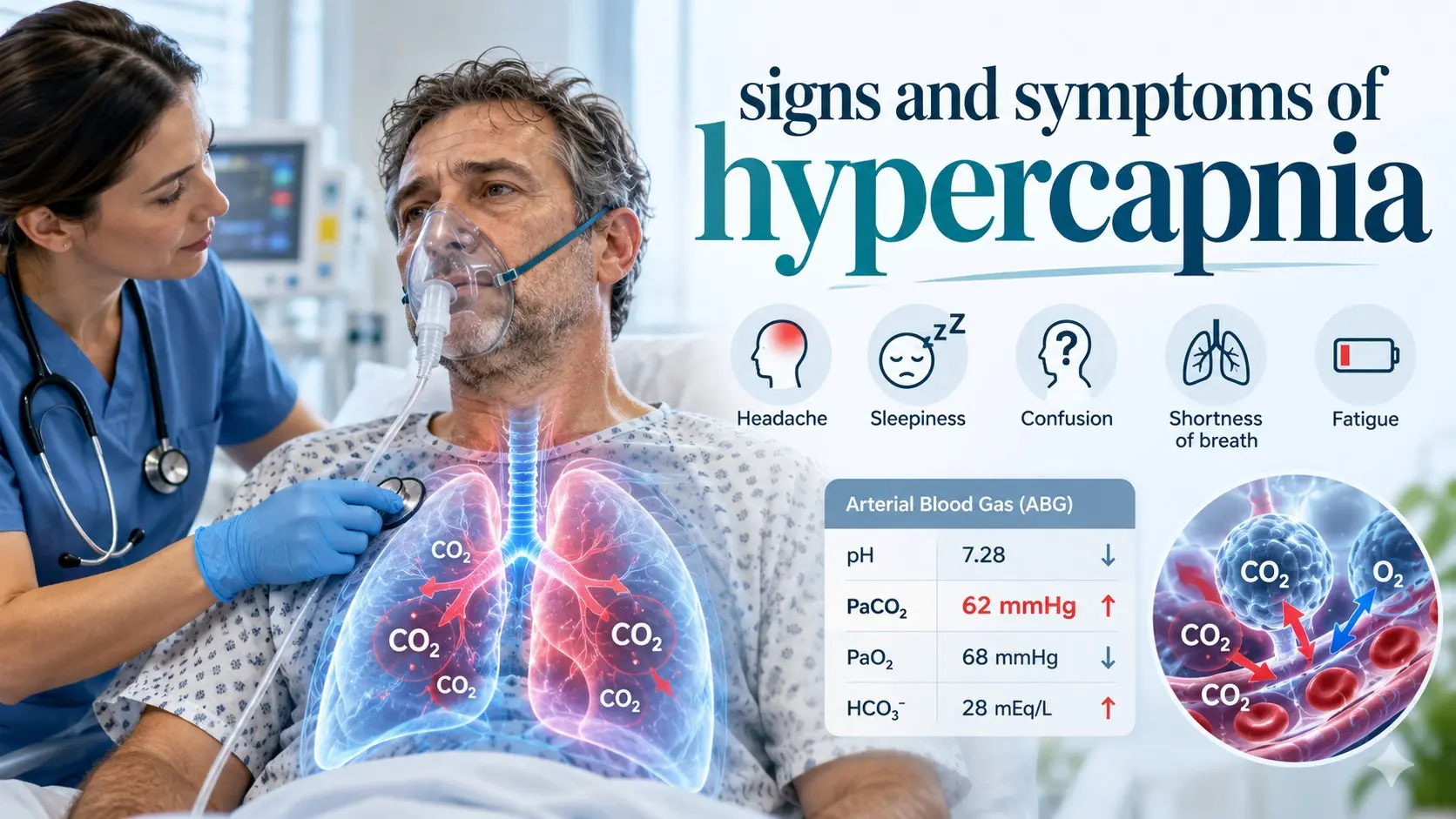
A person may notice morning headaches, daytime sleepiness, unusual fatigue, shortness of breath, or trouble concentrating. If carbon dioxide rises quickly or reaches a dangerous level, confusion, severe drowsiness, seizures, loss of consciousness, and respiratory failure can follow.
Hypercapnia means too much carbon dioxide, or CO2, has built up in the blood because the body is not removing it effectively.
It is usually a ventilation problem.
Your lungs do more than bring oxygen in. Every breath out also removes carbon dioxide made by normal metabolism. When breathing becomes too slow, too shallow, mechanically difficult, or inefficient, CO2 retention can develop.
COPD is one important cause, but it is not the only one.
Severe asthma, obesity hypoventilation syndrome, sleep related breathing disorders, sedative or opioid effects, neuromuscular weakness, chest wall disorders, neurological disease, and severe respiratory illness can all interfere with carbon dioxide removal.
Get Urgent Help for Severe Hypercapnia Signs
Seek emergency medical care for new or worsening confusion, severe drowsiness, difficulty staying awake, seizures, blue or gray lips or skin, severe breathing difficulty, very slow or weak breathing, collapse, or loss of consciousness.
If opioid or sedative overdose is possible, treat the situation as an emergency. Do not wait for a home pulse oximeter to prove that carbon dioxide is high.
Medical notice: This content is for general educational purposes and does not replace professional medical advice, diagnosis, or treatment. Consult an appropriately qualified healthcare professional for personal medical concerns. This article explains published guidance and does not provide a personal clinical assessment. Always consult qualified medical professionals for diagnosis and treatment of any health condition. Breathing difficulty, confusion, severe sleepiness, seizures, blue or gray skin, or reduced consciousness can be medical emergencies.
Quick Answer: What Are the Signs and Symptoms of Hypercapnia?
Common signs and symptoms of hypercapnia include headache, shortness of breath, daytime sleepiness, unusual fatigue, difficulty concentrating, dizziness, flushed skin, and a fast heartbeat.
As carbon dioxide rises, a person may become confused, disoriented, extremely drowsy, or difficult to wake. Muscle twitching, seizures, reduced consciousness, and respiratory failure can occur in severe cases.
Symptoms depend on how high the carbon dioxide becomes and how quickly it rises. Someone with chronic CO2 retention may tolerate a level that would make a person with sudden acute hypercapnia very ill.
A normal pulse oximeter reading does not rule out hypercapnia. Pulse oximeters measure oxygen saturation, not carbon dioxide. A blood gas is usually needed when CO2 retention is suspected.
For broader breathing and lung information, start with the NextFitLife Lung and Respiratory Health Hub.
Table of Contents
- What hypercapnia means
- 15 critical signs and symptoms
- Acute versus chronic hypercapnia
- Hypercapnia versus hypoxemia
- Why COPD can cause CO2 retention
- Asthma and hypercapnia
- Sleep disorders and obesity hypoventilation
- Medicines and respiratory depression
- Neuromuscular and chest wall causes
- How hypercapnia is diagnosed
- Why pulse oximetry is not enough
- Blood gas results explained
- How hypercapnia is treated
- Oxygen therapy and COPD
- When noninvasive ventilation is used
- How to reduce future risk
- References and Sources
- Continue Reading on NextFitLife
- About the Author
- Frequently Asked Questions
What Does Hypercapnia Mean?
Hypercapnia, also called hypercarbia, means the arterial blood contains too much carbon dioxide.
A PaCO2 above about 45 mmHg is commonly used to define hypercapnia.
Carbon dioxide is not a poison your body accidentally creates.
It is a normal waste product of metabolism.
Your blood carries CO2 from tissues back to the lungs, then you remove it when you breathe out.
If ventilation becomes inadequate, carbon dioxide begins accumulating.
This is called carbon dioxide retention.
The central problem is usually that the lungs cannot ventilate enough to match the body's production of CO2.
15 Critical Signs and Symptoms of Hypercapnia
None of these symptoms proves hypercapnia by itself.
The pattern matters, especially when someone has COPD, a sleep breathing disorder, severe obesity with hypoventilation, a neuromuscular disorder, or has taken medication that can suppress breathing.
1. Headache
Headache is a common symptom of elevated carbon dioxide.
Some people with chronic nighttime hypoventilation notice headaches most strongly after waking.
A morning headache is not specific to hypercapnia, but it becomes more meaningful when it occurs with heavy snoring, daytime sleepiness, known lung disease, or poor nighttime breathing.
2. Shortness of Breath
Shortness of breath can occur when the lungs are struggling to ventilate effectively.
The sensation may come from the disease causing the CO2 retention as much as from the high carbon dioxide itself.
COPD, severe asthma, respiratory muscle weakness, and chest wall disorders can all produce breathlessness.
3. Daytime Sleepiness
Unusual daytime sleepiness can be an early clue to chronic hypoventilation.
Someone may sleep for a normal number of hours yet struggle to stay alert during the day.
This deserves particular attention when sleep apnea or obesity hypoventilation syndrome is possible.
4. Persistent Fatigue or Sluggishness
Fatigue is easy to dismiss because it has many possible causes.
With chronic hypercapnia, people may describe themselves as unusually sluggish, slow, or drained.
Fatigue combined with headache and breathing symptoms deserves more attention than fatigue by itself.
5. Difficulty Concentrating
Rising carbon dioxide can affect brain function.
Early changes may feel like poor concentration, slower thinking, or difficulty following a conversation.
A family member may notice the change before the person experiencing it does.
6. Dizziness
Dizziness or lightheadedness can occur with hypercapnia.
It is not specific.
Blood pressure problems, dehydration, heart rhythm problems, anemia, low glucose, medications, and many other conditions can cause the same symptom.
7. Flushed Skin
Higher carbon dioxide can dilate blood vessels.
Some people develop warm or flushed skin.
This sign alone is not enough to identify hypercapnia.
8. Fast Heart Rate
The heart rate may increase as the body responds to respiratory stress.
A fast heartbeat can also come from fever, infection, dehydration, asthma medicine, anxiety, low oxygen, or the lung disease itself.
9. Increased Breathing Effort
Some people with acute respiratory disease breathe faster and work harder to move air.
You may notice neck or chest muscles working with each breath.
Others, especially people affected by sedatives or neurological problems, may instead breathe too slowly or too shallowly.
Both patterns can lead to poor ventilation.
10. Confusion
New confusion is a serious warning sign.
A person who was speaking normally may suddenly have trouble understanding where they are, answering questions, or following simple instructions.
Do not assume sudden confusion in someone with respiratory disease is just tiredness.
11. Disorientation
As CO2 rises further, a person may become disoriented to time, place, or what is happening around them.
Acute neurological change alongside breathing difficulty requires urgent medical evaluation.
12. Behavior or Personality Changes
Severe hypercapnia can affect behavior.
Agitation, unusual anxiety, paranoia, or other unexpected mental changes have been reported.
These are advanced warning signs, not symptoms to manage at home by simply resting.
13. Muscle Twitching or Flapping Tremor
More severe CO2 retention can affect the nervous system.
Muscle twitching or a flapping movement of the hands may occur in advanced illness.
These findings are not unique to hypercapnia and need clinical assessment.
14. Severe Drowsiness or Difficulty Staying Awake
A person who is becoming unusually difficult to wake may be developing severe respiratory failure.
This is particularly dangerous after opioid, benzodiazepine, alcohol, or other sedating exposure.
Do not let someone with abnormal breathing and reduced consciousness simply sleep.
15. Seizures, Loss of Consciousness, or Coma
Very severe hypercapnia can cause seizures, loss of consciousness, coma, respiratory arrest, and death.
These are emergency findings.
Call your local emergency service immediately.
Acute Hypercapnia and Chronic Hypercapnia Are Different
How fast carbon dioxide rises changes how the body responds.
| Feature | Acute Hypercapnia | Chronic Hypercapnia |
|---|---|---|
| Timing | Develops quickly | Builds over a longer period |
| Kidney compensation | Little time to compensate | Kidneys retain more bicarbonate |
| Blood pH | Can fall quickly and cause respiratory acidosis | May remain closer to normal because of compensation |
| Symptoms | Can become severe quickly with confusion and reduced consciousness | Can be subtle with fatigue, headache, or sleepiness |
| Common situation | Severe COPD flare, severe asthma, overdose, acute muscle weakness | Advanced COPD, obesity hypoventilation, chronic neuromuscular disease |
A person can also develop acute on chronic hypercapnic respiratory failure.
For example, someone who normally retains some CO2 because of advanced COPD may develop an infection or severe exacerbation that suddenly pushes the carbon dioxide much higher.
What Is Hypercapnic Respiratory Failure?
Hypercapnic respiratory failure, sometimes called type 2 respiratory failure, happens when ventilation is no longer adequate to remove enough carbon dioxide.
It can occur with low oxygen too.
Common causes include severe COPD exacerbations, severe asthma, respiratory depressant drug overdose, sleep related breathing disorders, neuromuscular weakness, and other conditions that overwhelm the body's ability to ventilate.
Acute hypercapnic respiratory failure can become life threatening.
Hypercapnia and Hypoxemia Are Not the Same
This distinction is easy to miss.
Hypercapnia means too much CO2 in the blood.
Hypoxemia means too little oxygen in the blood.
You can have one without the other.
You can also have both at the same time.
| Problem | What Is Abnormal | How It Is Assessed |
|---|---|---|
| Hypercapnia | Carbon dioxide is too high | Blood gas testing is central |
| Hypoxemia | Oxygen in arterial blood is too low | Pulse oximetry and blood gas testing can help assess it |
Can You Have Hypercapnia With a Normal Pulse Oximeter Reading?
Yes.
This is one of the most useful facts to understand.
A finger pulse oximeter estimates oxygen saturation.
It does not directly measure carbon dioxide.
Someone can therefore have a reassuring looking oxygen saturation while still retaining too much CO2.
This is why new headache, sleepiness, confusion, or reduced alertness in a person at risk of hypercapnia should not be dismissed because the pulse oximeter looks acceptable.
A healthcare professional may need a blood gas.
Why Does COPD Cause Hypercapnia?
COPD can make it difficult to move air fully out of the lungs.
Damaged airways and lung tissue can cause airflow obstruction, air trapping, and poor matching between ventilation and blood flow.
During a severe exacerbation, the breathing muscles may struggle to keep up with the increased work.
Carbon dioxide can then accumulate.
Not everyone with COPD develops chronic hypercapnia.
Its presence can indicate more advanced ventilatory impairment or an acute deterioration that requires assessment.
For broader respiratory education, use the Lung and Respiratory Health Hub.
Can Severe Asthma Cause Hypercapnia?
Yes.
During a mild or moderate asthma attack, people often breathe rapidly and may initially have normal or even low carbon dioxide.
In a severe attack, rising CO2 can be a concerning sign that ventilation is failing.
A very quiet chest during severe asthma is not necessarily an improvement either. It can mean so little air is moving that wheezing becomes difficult to hear.
Read Silent Asthma for more on severe asthma warning signs and why the absence of wheezing does not automatically mean breathing is safe.
How Are Sleep Disorders Linked to Hypercapnia?
Breathing changes naturally during sleep.
Some disorders make nighttime ventilation too weak.
Repeated airway obstruction, reduced respiratory drive, obesity related restriction, or a combination can impair gas exchange.
Possible clues include:
- Loud snoring
- Observed pauses in breathing
- Morning headaches
- Severe daytime sleepiness
- Poor concentration
- Unrefreshing sleep
- Low nighttime oxygen levels
Sleep apnea alone does not mean a person automatically has daytime hypercapnia.
A sleep study and other testing may be needed to understand the problem.
What Is Obesity Hypoventilation Syndrome?
Obesity hypoventilation syndrome, or OHS, is a specific breathing disorder.
It is defined by obesity, sleep disordered breathing, and awake daytime hypercapnia after other causes of hypoventilation have been excluded.
Most people with OHS also have obstructive sleep apnea.
The condition can lead to serious complications if untreated, including pulmonary hypertension, heart failure, and episodes of acute on chronic respiratory failure.
Diagnosis may involve bicarbonate testing, arterial blood gas measurement, and a sleep study.
Positive airway pressure treatment is commonly used.
Can Medicines Cause Hypercapnia?
Yes.
Medicines or drugs that suppress respiratory drive can make breathing too slow or too shallow.
Examples include opioids and benzodiazepines.
The risk becomes greater when sedating substances are combined.
An overdose can progress from sleepiness to severely depressed breathing, hypercapnia, low oxygen, respiratory failure, and cardiac arrest.
Suspected overdose with abnormal breathing or reduced consciousness is an emergency.
How Do Neuromuscular Diseases Cause CO2 Retention?
Breathing requires muscle power.
The diaphragm and other respiratory muscles must generate enough movement to bring fresh air into the lungs and push carbon dioxide out.
Conditions affecting the brain, spinal cord, nerves, or muscles can weaken that system.
Examples can include:
- Myasthenia gravis
- Amyotrophic lateral sclerosis
- Muscular dystrophy
- Guillain Barré syndrome
- Spinal cord injury
- Other severe neuromuscular disorders
Someone can have serious ventilatory weakness without loud wheezing or a dramatic cough.
Can Chest Wall Problems Cause Hypercapnia?
Yes.
The lungs sit inside a mechanical system made of the ribs, spine, respiratory muscles, and chest wall.
Severe chest wall restriction can reduce how much air moves with each breath.
Some spinal deformities and significant chest injuries can therefore contribute to hypoventilation and CO2 retention.
How Do Doctors Diagnose Hypercapnia?
Symptoms can raise suspicion.
They cannot measure carbon dioxide.
Testing may include:
- Arterial blood gas
- Venous blood gas in selected situations
- Pulse oximetry
- Serum bicarbonate
- Pulmonary function testing
- Chest X ray
- Chest CT when needed
- ECG
- Blood tests
- Toxicology testing if overdose is possible
- Thyroid testing in selected cases
- Sleep studies
- Neuromuscular testing when weakness is suspected
The tests chosen depend on the story.
A person with COPD and sudden confusion needs a different evaluation from someone with months of morning headaches, severe obesity, and loud snoring.
What Does an Arterial Blood Gas Show?
An arterial blood gas, or ABG, gives clinicians several important pieces of information at once.
| Result | What It Helps Show |
|---|---|
| PaCO2 | How much carbon dioxide is present in arterial blood |
| pH | Whether the blood has become too acidic or alkaline |
| Bicarbonate | Helps show whether the kidneys have compensated for chronic CO2 retention |
| PaO2 | The arterial oxygen level |
Hypercapnia is commonly defined as PaCO2 above 45 mmHg.
The number should never be interpreted alone.
The pH, bicarbonate, oxygen level, symptoms, previous results, and underlying condition tell clinicians whether the problem is acute, chronic, or acute on chronic.
What Is Respiratory Acidosis?
Carbon dioxide and blood acidity are closely connected.
When CO2 rises quickly, the blood can become more acidic.
This is called respiratory acidosis.
In chronic hypercapnia, the kidneys have time to retain bicarbonate, which helps bring the pH closer to normal.
This is why two people with the same PaCO2 can look very different clinically.
One may have chronic compensation.
The other may be developing dangerous acute respiratory failure.
How Is Hypercapnia Treated?
There is no single treatment for high CO2.
Clinicians treat the reason ventilation has failed.
Depending on the situation, treatment can include:
- Bronchodilator treatment for obstructive airway disease
- Treatment of COPD or asthma exacerbations
- Careful oxygen therapy when oxygen is low
- Reversal medicine for certain overdoses
- Noninvasive ventilation
- Positive airway pressure treatment for sleep related disorders
- Treatment of infection or heart failure when present
- Management of neuromuscular weakness
- Invasive mechanical ventilation when less invasive support is inadequate or unsafe
The goal is not simply to force one CO2 number back into a reference range.
The goal is to restore adequate ventilation while treating the disease or trigger that caused the problem.
Is Oxygen Dangerous for People With COPD and Hypercapnia?
This question needs careful wording.
Oxygen is not automatically dangerous in COPD.
Low oxygen still needs treatment.
The concern is uncontrolled excessive oxygen in some people who are vulnerable to hypercapnic respiratory failure.
In healthcare settings, British Thoracic Society guidance recommends an oxygen saturation target of 88 to 92 percent for many patients with known COPD or another risk for hypercapnic respiratory failure while clinicians wait for blood gas results.
The target can change after the blood gas is known.
Do not use 88 to 92 percent as a do it yourself home oxygen rule. People using prescribed oxygen should follow their own clinician's target and prescription. Do not lower, stop, or increase prescribed oxygen because of something you read online.
Controlled oxygen means giving enough oxygen for the person's clinical need while avoiding unnecessary over treatment.
It does not mean withholding oxygen from a dangerously hypoxemic patient.
Why Can Too Much Oxygen Worsen Hypercapnia in Some COPD Patients?
The old explanation was often simplified to “oxygen switches off the drive to breathe.”
That is incomplete.
Several physiological mechanisms can contribute.
Higher oxygen levels can worsen ventilation and blood flow mismatch in damaged lungs and can alter the way hemoglobin carries carbon dioxide.
The result can be a rise in PaCO2 in susceptible patients.
This is why clinicians use controlled oxygen and repeat blood gases rather than guessing.
When Is Noninvasive Ventilation Used?
Noninvasive ventilation, often delivered through a fitted face mask, supports ventilation without immediately placing a breathing tube into the windpipe.
Bilevel pressure support is commonly used because the machine can provide greater pressure during inhalation and lower pressure during exhalation.
In acute COPD related hypercapnic respiratory failure with respiratory acidosis, noninvasive ventilation can be an important treatment when standard initial care does not correct the problem.
It can reduce the work of breathing and help remove carbon dioxide.
Noninvasive ventilation is not appropriate in every situation.
A person who cannot protect the airway, is severely unstable, or is not improving may need invasive ventilation.
Is CPAP the Same as Bilevel Ventilation?
No.
Both deliver positive airway pressure through a mask, but they work differently.
CPAP provides a more constant pressure.
Bilevel ventilation provides different pressures for inhaling and exhaling, which can directly assist ventilation.
Which form is appropriate depends on the cause.
For example, American Thoracic Society guidance supports CPAP as first line therapy for many stable patients with obesity hypoventilation syndrome who also have severe obstructive sleep apnea.
Other patients with hypoventilation or acute respiratory failure may need bilevel noninvasive ventilation instead.
Can Hypercapnia Be Prevented?
You cannot prevent every episode.
You can lower risk by managing the condition that makes CO2 retention likely.
Depending on the cause, that may mean:
- Following a COPD action plan
- Using prescribed inhalers correctly
- Avoiding smoking and vaping
- Using prescribed PAP or ventilation therapy consistently
- Treating sleep apnea or obesity hypoventilation
- Reviewing sedating medicines with a clinician
- Avoiding opioid or sedative misuse
- Keeping vaccines current when appropriate
- Treating respiratory infections promptly when advised
- Following neuromuscular respiratory monitoring plans
For broader everyday lung protection, read the NextFitLife Lung Health Guide.
When Should You Call a Doctor?
Contact a healthcare professional if you develop new or persistent symptoms that could fit hypercapnia, especially when you already have a condition that raises the risk.
Examples include:
- New morning headaches
- Unusual daytime sleepiness
- Worsening breathlessness
- New difficulty concentrating
- A clear decline in exercise tolerance
- New symptoms after a medicine change
- Increasing problems using prescribed PAP or ventilatory support
Do not wait for a routine appointment if severe neurological or breathing symptoms appear.
When Is Hypercapnia an Emergency?
Seek emergency medical care for:
- New confusion or disorientation
- Severe drowsiness or inability to stay awake
- Severe breathing difficulty
- Very slow, weak, or shallow breathing
- Blue or gray lips, skin, or nails
- Seizures
- Collapse
- Loss of consciousness
- Suspected opioid or sedative overdose with abnormal breathing
Do not drive yourself if you are severely confused, faint, or struggling to breathe. Contact your local emergency service.
Seven Hypercapnia Myths That Need Correcting
1. “A Normal Pulse Oximeter Means My CO2 Is Normal”
False.
Pulse oximetry measures oxygen saturation, not PaCO2.
2. “Hypercapnia Only Happens With COPD”
False.
Sleep related breathing disorders, obesity hypoventilation, drugs, neuromuscular weakness, severe asthma, chest wall disease, and other conditions can cause it.
3. “High CO2 and Low Oxygen Are the Same Thing”
No.
They are different problems, although they can occur together.
4. “Everyone With Hypercapnia Will Feel Very Breathless”
No.
Chronic hypercapnia can cause subtle fatigue, morning headaches, or sleepiness.
5. “Oxygen Should Never Be Given to Someone With COPD”
False.
Hypoxemia still needs treatment. In people at risk of CO2 retention, oxygen is usually controlled to a clinical target and guided by blood gases.
6. “CPAP and Bilevel Ventilation Are the Same”
No.
They use different pressure strategies and are selected for different clinical problems.
7. “You Can Diagnose Hypercapnia From Symptoms Alone”
No.
Symptoms raise suspicion.
A blood gas and clinical assessment help confirm what is actually happening.
A Practical Hypercapnia Safety Checklist
- Know whether you have a condition that raises hypercapnia risk.
- Know your usual breathing symptoms and what counts as a change.
- Do not rely on pulse oximetry to measure CO2.
- Take COPD or respiratory medicines as prescribed.
- Use prescribed PAP or ventilation support consistently.
- Do not change prescribed oxygen flow without medical guidance.
- Review opioids and sedatives when breathing problems are present.
- Get unexplained morning headaches and severe sleepiness assessed.
- Seek urgent help for confusion or worsening alertness.
- Treat severe breathing difficulty as an emergency.
Conclusion
The signs and symptoms of hypercapnia range from subtle morning headaches, fatigue, daytime sleepiness, and shortness of breath to severe confusion, seizures, reduced consciousness, and respiratory failure.
The underlying problem is usually inadequate ventilation.
COPD is an important cause, but sleep related disorders, obesity hypoventilation, severe asthma, neuromuscular disease, chest wall problems, medications, and neurological conditions can also lead to CO2 retention.
Do not use a normal pulse oximeter reading to rule it out.
Do not change prescribed oxygen on your own.
And do not dismiss new confusion or extreme drowsiness as simple fatigue when someone already has serious respiratory disease.
Your next step: if you have a condition that puts you at risk, ask your healthcare professional which symptoms should trigger a call, whether you have ever had a blood gas test, and what your personal oxygen and ventilation plan should be during a flare.
References and Sources
- Merck Manual Professional Edition.
Ventilatory Failure. Reviewed and updated June 2026. Covers acute hypercapnic respiratory failure, COPD exacerbations, severe asthma, respiratory depressant drugs, neuromuscular disease, diagnosis with arterial blood gases, and ventilatory treatment.Source:
https://www.merckmanuals.com/professional/critical-care-medicine/respiratory-failure-and-mechanical-ventilation/ventilatory-failure
- Cleveland Clinic.
Hypercapnia: Causes, Symptoms and Treatment. Covers acute and chronic hypercapnia, symptoms, COPD, sleep disorders, hypoventilation, diagnostic tests, noninvasive ventilation, and emergency warning signs.Source:
https://my.clevelandclinic.org/health/diseases/24808-hypercapnia
- National Library of Medicine, StatPearls.
Arterial Blood Gas Analysis: Fundamentals, Interpretation, and Clinical Utility. Updated July 5, 2026. Covers arterial blood gas testing, PaCO2, pH, oxygen measurement, bicarbonate, and acid base interpretation.Source:
https://www.ncbi.nlm.nih.gov/books/NBK536919/
- British Thoracic Society.
Guideline for Oxygen Use in Healthcare and Emergency Settings. Covers controlled oxygen therapy, COPD and other conditions at risk for hypercapnic respiratory failure, the 88 to 92 percent initial target in appropriate clinical situations, repeat blood gases, and noninvasive ventilation.Source:
https://www.brit-thoracic.org.uk/clinical-resources/guidelines/emergency-oxygen/
- National Heart, Lung, and Blood Institute, National Institutes of Health.
Obesity Hypoventilation Syndrome. Covers excess daytime carbon dioxide, low oxygen, the relationship with sleep apnea, diagnosis, complications, and treatment.Source:
https://www.nhlbi.nih.gov/health/obesity-hypoventilation-syndrome
Continue Reading on NextFitLife
- Lung and Respiratory Health Hub
for breathing symptoms, cough, asthma, COPD, smoking, vaping, respiratory testing, and lung health - Lung Health Guide
for smoking avoidance, respiratory health habits, exercise, air quality, and when breathing symptoms need assessment - Silent Asthma
for asthma without obvious wheezing, severe attack warning signs, spirometry, and why a quiet chest can be dangerous - Sleep and Heart Health
for sleep apnea, nighttime breathing, blood pressure, metabolic health, and cardiovascular risk - Why Do I Wake Up With Dry Mouth?
for mouth breathing, sleep apnea clues, dehydration, medicines, and other possible causes - General Wellness and Healthy Lifestyle Guide
for smoking, sleep, movement, nutrition, preventive care, and sustainable daily health habits
About the Author
Adel Galal is the founder and lead writer of NextFitLife. His personal interest in health, fitness, nutrition, sleep, wellness, and healthy aging spans more than 30 years, and his health and wellness writing experience spans more than 15 years.
Before focusing on NextFitLife, Adel spent 29 years working as an IT Manager for the Nestlé Egypt Region. His professional background involved information systems, data analysis, structured review, planning, problem solving, and information management.
He applies those research skills to consumer health writing by comparing current clinical guidance, separating symptoms from diagnoses, explaining where home devices have limits, and making emergency warning signs clear.
The sources cited in this article include current material from the Merck Manual Professional Edition, Cleveland Clinic, the National Library of Medicine, the British Thoracic Society, the National Heart, Lung, and Blood Institute, and respiratory medicine literature on hypercapnic respiratory failure.
Adel is not a doctor, pulmonologist, sleep physician, respiratory therapist, critical care physician, registered nurse, pharmacist, or other licensed healthcare professional. NextFitLife provides educational information and does not replace blood gas testing, respiratory diagnosis, oxygen prescriptions, ventilation settings, emergency assessment, or individualized medical treatment.
Learn more about Adel Galal, NextFitLife, sourcing standards, corrections, and the site's editorial approach on the About Us page.
Frequently Asked Questions
What are the first signs and symptoms of hypercapnia?
Early symptoms can include headache, daytime sleepiness, fatigue, shortness of breath, dizziness, and trouble concentrating. Chronic hypercapnia can be subtle, so symptoms alone cannot confirm the diagnosis.
What are severe symptoms of hypercapnia?
Severe hypercapnia can cause confusion, disorientation, extreme drowsiness, muscle twitching, seizures, reduced consciousness, coma, and respiratory failure. Severe symptoms require urgent medical care.
What carbon dioxide level is considered hypercapnia?
Hypercapnia is commonly defined as an arterial PaCO2 above 45 mmHg. The seriousness of the result depends on the pH, bicarbonate, symptoms, rate of change, and underlying condition.
Can you have hypercapnia with normal oxygen saturation?
Yes. A pulse oximeter measures oxygen saturation and does not directly measure carbon dioxide. A person can therefore retain CO2 even when the oxygen saturation does not appear dramatically low.
Can a pulse oximeter detect hypercapnia?
No. A standard finger pulse oximeter estimates oxygen saturation. Blood gas testing is used when clinicians need to measure carbon dioxide accurately.
What is the difference between hypercapnia and hypoxemia?
Hypercapnia means too much carbon dioxide is present in the blood. Hypoxemia means the blood contains too little oxygen. They can happen separately or together.
Why does hypercapnia cause headaches?
Elevated carbon dioxide affects blood vessels in the brain and can contribute to headache. Morning headaches are especially relevant when nighttime hypoventilation or sleep disordered breathing is suspected.
Can COPD cause hypercapnia?
Yes. COPD can cause airflow obstruction, air trapping, ventilation and blood flow mismatch, and high breathing muscle workload. During severe disease or an exacerbation, the lungs may not remove carbon dioxide effectively.
Does every person with COPD have high CO2?
No. Many people with COPD do not have chronic hypercapnia. CO2 retention is more likely with severe ventilatory impairment or during significant exacerbations.
Can asthma cause hypercapnia?
Severe asthma can cause hypercapnia when airflow obstruction becomes so serious that ventilation begins to fail. Rising CO2 during a severe asthma attack can be a concerning sign.
Can sleep apnea cause hypercapnia?
Sleep related breathing disorders can contribute to CO2 retention, especially when combined with obesity hypoventilation or another condition affecting ventilation. Not everyone with obstructive sleep apnea has daytime hypercapnia.
What is obesity hypoventilation syndrome?
Obesity hypoventilation syndrome combines obesity, sleep disordered breathing, and awake daytime hypercapnia after other causes of hypoventilation are excluded. Most people with the condition also have obstructive sleep apnea.
Can opioids cause hypercapnia?
Yes. Opioids can suppress respiratory drive and make breathing too slow or shallow to remove carbon dioxide effectively. Overdose with abnormal breathing or reduced consciousness is an emergency.
How is hypercapnia diagnosed?
Diagnosis combines symptoms and clinical examination with blood gas testing. Doctors may also use pulse oximetry, lung function tests, imaging, blood tests, sleep studies, toxicology testing, or neuromuscular evaluation depending on the suspected cause.
What does an arterial blood gas test show?
An arterial blood gas measures values including PaCO2, pH, PaO2, and bicarbonate. Together these results help clinicians assess ventilation, oxygenation, respiratory acidosis, and whether high CO2 appears acute or chronic.
How is hypercapnia treated?
Treatment depends on the cause. It can include treatment of COPD or asthma, controlled oxygen when needed, reversal of certain overdoses, noninvasive ventilation, positive airway pressure for sleep related disorders, or invasive mechanical ventilation in severe cases.
Is oxygen dangerous if you have hypercapnia?
Oxygen is not automatically dangerous. Hypoxemia still needs treatment. In patients at risk of hypercapnic respiratory failure, clinicians often use controlled oxygen targets and blood gas monitoring rather than giving unnecessary excess oxygen.
Why is an oxygen saturation of 88 to 92 percent sometimes used in COPD?
In healthcare settings, this range is commonly used initially for many acutely ill patients with COPD or another known risk of hypercapnic respiratory failure while blood gas results are pending. It is not a universal home oxygen target and should not replace an individual's prescription.
What is noninvasive ventilation?
Noninvasive ventilation uses a fitted mask and pressure support to help a person breathe without immediately placing a tube into the airway. It can help remove carbon dioxide in selected cases of hypercapnic respiratory failure.
When should I seek emergency care for possible hypercapnia?
Seek urgent medical help for new confusion, severe drowsiness, difficulty staying awake, seizures, blue or gray skin, severe breathing difficulty, very slow or weak breathing, collapse, loss of consciousness, or suspected overdose with abnormal breathing.

Health & wellness writer with 30+ years of experience in nutrition, fitness, and healthy aging. Founder of NextFitLife.com — evidence-based health guidance.