
Published on: Jul 13, 2023
Last updated: October 4, 2026
Next review: October 2027, or sooner if major sleep guidance changes.
Written and source checked by: Adel Galal, Founder and Lead Writer at NextFitLife
Medical review status: This article has not been medically reviewed by a sleep medicine doctor, physician, psychologist, psychiatrist, pharmacist, or other licensed healthcare professional.
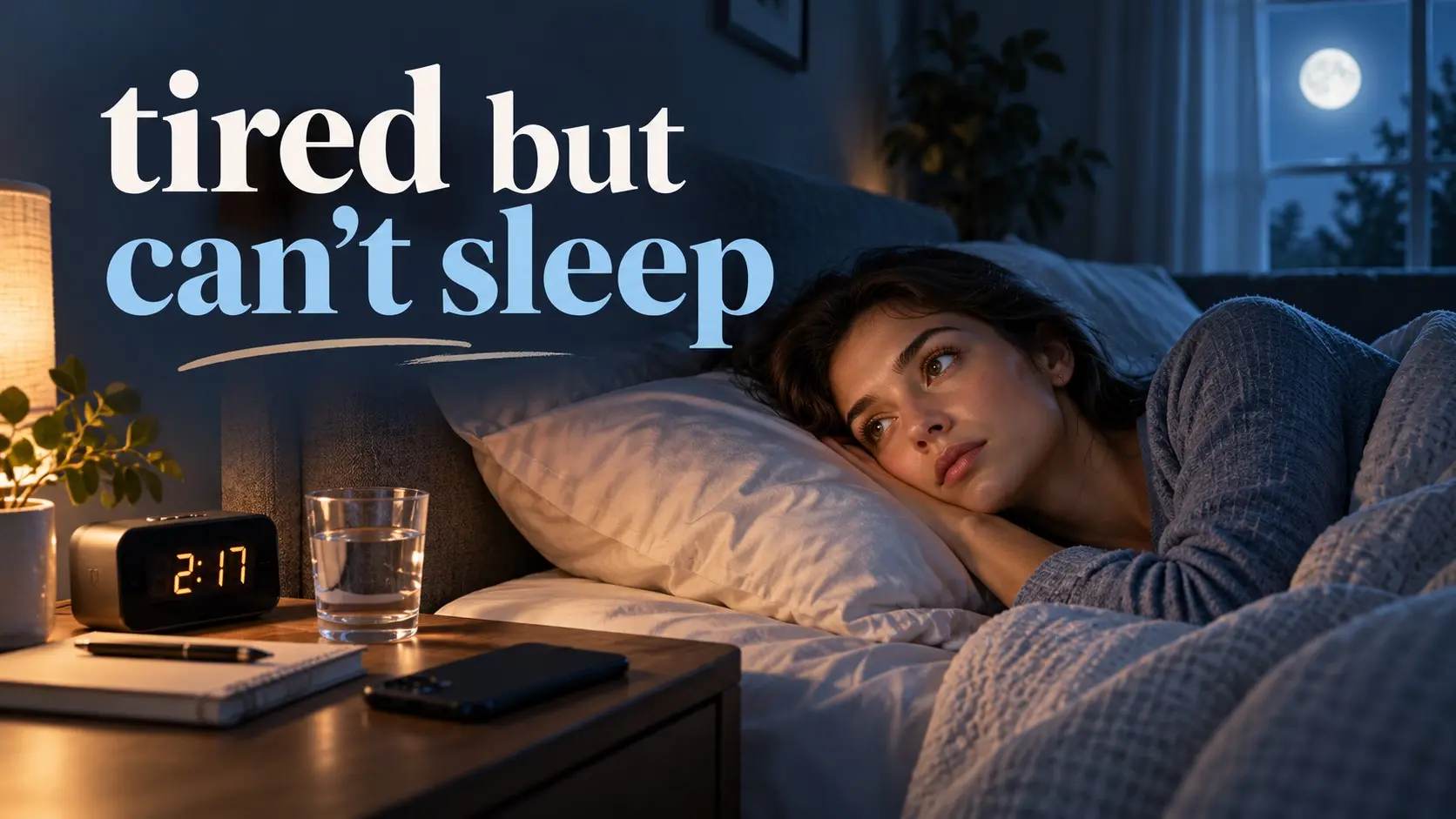
If you feel tired but can't sleep, your body may need rest while your brain, body clock, or environment is still keeping you alert. Stress, caffeine, an irregular schedule, pain, medicines, insomnia, sleep apnea, restless legs, and other health problems can all create this frustrating pattern.
The first step is not trying harder to sleep.
It is working out what kind of tired you are.
You may feel drained after a long day yet still be mentally alert. Or you may feel truly sleepy, with heavy eyes and repeated yawning, but something keeps interrupting sleep.
Those are different problems, so they may need different answers.
Medical Notice: This content is for general educational purposes and does not replace professional medical advice, diagnosis, or treatment. Consult an appropriately qualified healthcare professional for personal medical concerns. This article explains published guidance and does not provide a personal clinical assessment. Always consult qualified medical professionals for diagnosis and treatment of any health condition.
Do not drive or operate dangerous equipment if you feel sleepy enough that you may doze off. Seek prompt medical or mental health care if severe sleep loss comes with confusion, hallucinations, unsafe behavior, or major changes in mood or energy.
Table of Contents
- Quick Answer
- Tired versus sleepy
- Why sleep does not happen on command
- 15 Common Clues
- Stress
- Anxiety and sleep worry
- Body clock timing
- Caffeine
- Nicotine
- Alcohol
- Light and evening stimulation
- Naps and sleeping late
- Pain and physical symptoms
- Medicines
- Chronic insomnia
- Sleep apnea
- Restless legs
- Medical conditions
- Major mood changes and reduced need for sleep
- What to Do Tonight
- Keep tomorrow's wake time steady
- Wait for real sleepiness
- Build a short wind down
- Stop fighting the bed
- Calm racing thoughts
- When Sleep Tips Are Not Enough
- CBT I
- Melatonin
- Sleeping pills
- Medical assessment
- Red Flags and FAQs
Being tired is not the same as being sleepy
This small difference explains a lot.
Tiredness or fatigue means you feel drained. Your body may feel heavy, your mind may feel worn out, and normal tasks may take more effort.
Sleepiness is different.
When you are sleepy, you feel as though you could actually fall asleep. Your eyes may become heavy, you may yawn, and staying awake becomes harder.
You can have plenty of fatigue without enough sleepiness at that moment.
That is why someone can say, “I am exhausted, but the second I get into bed I feel awake.”
| What You Feel | What It May Mean | Useful Clue |
|---|---|---|
| Drained but mentally alert | Fatigue or high arousal | Stress, worry, pain, illness, or poor sleep may be involved |
| Heavy eyes and repeated yawning | True sleepiness | Your sleep drive is stronger |
| Sleepy on the sofa but alert in bed | Possible conditioned alertness | The bed itself may have become linked with trying and worrying |
| Tired early but wide awake at your planned bedtime | Possible body clock mismatch | Your schedule may not match your current sleep timing |
| Very little sleep but unusually high energy | This is different from ordinary insomnia | Mood symptoms need prompt assessment when marked |
For more sleep, stress, brain fog, and emotional health guides, visit the NextFitLife Mental Health and Wellness Hub.
Why does sleep not happen just because you are exhausted?
Your sleep is shaped by more than one signal.
One part is sleep pressure. This tends to build while you are awake. The longer you stay awake, the stronger the drive for sleep usually becomes.
Another part is your circadian rhythm, often called your body clock. Light, darkness, wake time, meals, activity, and routine all help tell this system what time of day it is.
Stress and alertness can push against both.
You can therefore have a tired body, plenty of sleep pressure, and a brain that is still too alert to settle.
This is sometimes called feeling tired but wired.
1. Stress can keep an exhausted brain alert
Stress is one of the most common reasons people struggle to fall asleep.
Your body may be worn out while your mind is still solving problems. Work, money, health, relationships, unfinished tasks, or tomorrow's plans can all show up once the room gets quiet.
Then a second problem can start.
You begin worrying about sleep itself.
“I have to sleep now.”
“I only have six hours left.”
“Tomorrow will be terrible.”
This extra effort can make you more alert.
2. Anxiety can turn bedtime into thinking time
Racing thoughts at night can come from anxiety, but they can also occur during ordinary stress.
You may replay conversations, predict future problems, check how your body feels, or keep searching for the reason you are awake.
If anxiety affects your daytime life too, do not treat it only as a sleep problem.
Therapy, mental health care, stress support, and treatment of an anxiety disorder can all matter.
Sleep and mental health affect each other, so treating one can help the other.
3. Your body clock may not agree with your bedtime
You can be tired without being at the right biological time for sleep.
Your body clock responds strongly to regular timing and light.
It can shift when you:
- Sleep much later on weekends
- Wake at different times each day
- Work night shifts
- Travel across time zones
- Spend very little time in daylight
- Stay in bright light late at night
- Regularly go to bed much earlier than your natural sleep time
A steady wake time is one of the clearest daily signals you can give your body clock.
4. Caffeine may still be working hours later
Caffeine blocks some of the signals that help you feel sleepy.
Coffee is only one source.
Caffeine can also come from:
- Tea
- Cola
- Energy drinks
- Chocolate
- Pre workout products
- Some headache medicines
- Some cold or weight management products
People clear caffeine at different speeds, so there is no perfect cutoff time for everyone.
If you can't fall asleep, move caffeine earlier for a week or two and watch what changes.
5. Nicotine can keep you alert
Nicotine is a stimulant.
Cigarettes, vaping products, and other nicotine products can make sleep harder. Nicotine withdrawal during the night can also disturb sleep.
If you use nicotine, your sleep problem may be another reason to discuss quitting support with a healthcare professional.
6. Alcohol can make you sleepy and still harm sleep
Alcohol can make you feel drowsy at first.
That is why some people use it as a sleep aid.
The problem comes later. Alcohol can make sleep lighter and more broken during the night.
It may also worsen snoring and breathing problems in some people.
Do not use alcohol as a treatment for insomnia.
7. Your evening may still be telling your brain to stay awake
A screen is not evil, but what you do with it matters.
Bright light late at night can affect normal sleep timing. Phones also bring work, messages, news, games, arguments, videos, and social media directly into bed.
If your brain feels busy after scrolling, give yourself a quieter period before bed.
You do not need one magic screen cutoff.
You need a routine that helps your mind move from active time toward rest.
8. Long or late naps can reduce nighttime sleep pressure
Naps are not automatically bad.
They can be useful when you are very sleepy or recovering from lost sleep.
But a long or late nap can make it harder to become sleepy at bedtime.
If you have ongoing trouble sleeping, write down when you nap and how long you sleep. The pattern may become obvious after several days.
9. Pain and physical symptoms can keep the body alert
Sometimes sleep is not the main problem.
The real problem is what happens when you lie down.
This may include:
- Back pain
- Joint pain
- Headache
- Acid reflux
- Cough
- Itching
- Hot flashes
- Frequent urination
- Shortness of breath
If one physical symptom keeps waking you or stopping sleep, treating that symptom may matter more than adding another bedtime routine.
10. A medicine or supplement may affect sleep
Some prescription and nonprescription medicines can interfere with sleep.
Examples can include certain antidepressants, asthma medicines, blood pressure medicines, stimulant medicines, cold medicines, allergy products, and products that contain caffeine.
Do not stop a prescribed medicine because of this article.
Ask your doctor or pharmacist whether the medicine, dose, or timing could be affecting your sleep.
11. Chronic insomnia can become its own pattern
Insomnia means having trouble falling asleep, staying asleep, or getting good quality sleep despite having enough opportunity for sleep.
A short period of insomnia can follow stress, travel, illness, grief, or another change.
Long term insomnia is different.
Chronic insomnia involves repeated sleep difficulty over at least three months together with daytime problems.
One part of the cycle can be learned alertness.
If you spend many nights lying awake, worrying, checking the clock, and trying harder to sleep, your brain can begin linking the bed with wakefulness.
You may then feel sleepy on the sofa and strangely alert once you lie down.
This does not mean the problem is imaginary.
It means the sleep system has learned an unhelpful pattern, and that pattern can be treated.
12. Sleep apnea can leave you exhausted even after a full night
Some people do not have much trouble falling asleep.
They are tired because the sleep they get is repeatedly disturbed.
Sleep apnea causes breathing to stop and start during sleep.
Clues can include:
- Loud regular snoring
- Gasping during sleep
- Witnessed breathing pauses
- Morning headaches
- Dry mouth
- Repeated nighttime urination
- Strong daytime sleepiness
- Sleep that never feels refreshing
You may not know about the breathing pauses unless another person notices them.
If this pattern fits you, a sleep study may be needed.
Read the NextFitLife Sleep Apnea and Hypercapnia Guide for more on sleep related breathing problems.
13. Restless legs can make lying still feel impossible
Restless legs syndrome creates an urge to move the legs, often with crawling, pulling, aching, tingling, or another uncomfortable feeling.
Symptoms tend to become worse when resting and are often stronger in the evening.
Moving the legs can give temporary relief.
If this sounds familiar, tell a healthcare professional. Some medicines and health problems can contribute, and treatment depends on the cause.
14. Another health condition can disturb sleep
Persistent insomnia should not automatically be blamed on bad habits.
Medical conditions linked with sleep trouble include:
- Long term pain
- Asthma
- GERD
- Diabetes
- Heart disease
- Overactive thyroid
- Parkinson's disease
- Menopause symptoms
- Some neurological conditions
This does not mean insomnia proves you have one of these conditions.
It means persistent sleep problems deserve a wider look when the pattern does not improve.
15. Very little sleep with high energy is a different warning sign
This distinction is easy to miss.
With insomnia, a person usually wants to sleep and feels upset or tired because sleep will not come.
A decreased need for sleep is different.
A person may sleep very little yet feel unusually energetic, wired, powerful, productive, irritable, or euphoric.
Other signs can include:
- Racing thoughts
- Talking much faster than usual
- Markedly increased activity
- Unusual confidence
- Risky or impulsive behavior
- Feeling unusually high or very irritable
This pattern can occur during mania or hypomania and deserves prompt professional assessment, especially when the change is new or severe.
Hallucinations, severe confusion, dangerous behavior, or risk of harm require urgent help.
What should you do tonight if you are tired but cannot sleep?
Do less, not more.
You do not need 20 sleep hacks in one night.
1. Keep tomorrow's wake time steady
Start with the morning.
Try to get up at roughly your usual time even after a poor night. Sleeping very late can make the next bedtime harder for some people.
A steady wake time also gives your body clock a regular signal.
2. Go to bed when you feel sleepy
Do not use bedtime only because the clock says you should be asleep.
If your eyes are heavy and you are nodding off, that is useful sleepiness.
If you feel exhausted but wide awake, a little quiet time outside bed may work better.
3. Build a short wind down
A bedtime routine can be simple.
You might dim the lights, take a warm shower, read something calm, listen to quiet music, or write tomorrow's tasks on paper.
The routine does not need to take an hour.
A repeatable 15 or 20 minute transition can be enough.
4. Move caffeine earlier
If sleep onset is a problem, try avoiding caffeine later in the day.
Do this consistently for several days rather than judging the idea after one night.
5. Keep the bedroom dark, quiet, and comfortable
Your room should support sleep rather than fight it.
Use curtains, an eye mask, earplugs, or quiet background sound if they help.
There is no single perfect bedroom temperature for everyone.
6. Stop clock watching
Looking at the time can turn wakefulness into arithmetic.
“Five hours left.”
“Now four and a half.”
That mental calculation creates more pressure.
Turn the clock away if you keep checking it.
7. If you are wide awake, stop fighting the bed
This is an important part of insomnia treatment.
If you have been awake long enough that you are becoming frustrated, get out of bed and do something quiet in low light.
Read a calm book or sit somewhere comfortable.
Return to bed when you feel sleepy again.
The aim is to rebuild the link between bed and sleep.
8. Put tomorrow's problems on paper
If your mind keeps repeating tasks, write them down.
You do not have to solve tomorrow at midnight.
A short list can tell your brain that the information has been saved somewhere.
9. Use relaxation without trying to force sleep
Slow breathing, a body scan, gentle muscle relaxation, prayer, or meditation can help some people settle.
The goal is not to knock yourself unconscious.
The goal is to reduce effort and arousal.
For a guided option, see the NextFitLife Sleep Meditation Guide.
10. Get daylight and movement tomorrow
Daytime light and physical activity can support healthy sleep timing.
A walk is a simple place to start.
You do not need an intense workout to earn sleep.
What is CBT I, and why is it different from sleep tips?
CBT I means cognitive behavioral therapy for insomnia.
It is a structured treatment for chronic insomnia. NHLBI describes it as a treatment plan that commonly lasts about six to eight weeks, and professional sleep guidance considers it a first line treatment.
CBT I can include:
- Sleep education
- Stimulus control
- Changing unhelpful beliefs about sleep
- Relaxation work
- A planned sleep window
- Tracking sleep patterns
This is different from being told to drink herbal tea and put your phone away.
Sleep hygiene supports good sleep, but sleep hygiene alone is not considered a complete treatment for chronic insomnia.
Why can staying in bed longer make insomnia worse?
This feels backward at first.
If you slept badly, spending more time in bed sounds logical.
But long periods awake in bed can teach the brain that bed is a place for wakefulness, worry, and trying.
Stimulus control in CBT I works in the opposite direction.
Go to bed when sleepy. Leave the bed when wakefulness becomes prolonged and frustrating. Return when sleepiness comes back.
This should not be confused with extreme sleep restriction done on your own.
Formal sleep window changes are best guided by a trained professional, especially if you have another sleep disorder, seizures, bipolar disorder, pregnancy, or a job where sleepiness creates safety risks.
Should you try melatonin?
Melatonin is a hormone involved in sleep timing.
That does not mean a melatonin supplement is a universal treatment for insomnia.
NHLBI notes that research has not proved melatonin to be an effective general treatment for insomnia.
It can also cause side effects and interact with medicines or health conditions.
Timing matters because melatonin affects the body clock as well as sleepiness.
If you are considering melatonin for a persistent sleep problem, ask a doctor or pharmacist whether it fits your situation instead of assuming a larger dose will work better.
What about antihistamine sleep aids?
Some over the counter sleep products contain sedating antihistamines.
They can make people drowsy, but that does not make them the best long term treatment for insomnia.
NHLBI advises discussing these products with a healthcare professional because antihistamines can be unsafe for some people.
They can also cause next day sleepiness.
Are prescription sleeping pills bad?
No medicine is simply good or bad for everyone.
Prescription sleep medicines can have a role in selected cases.
The choice depends on the type of insomnia, other health conditions, other medicines, age, pregnancy status, side effects, and whether CBT I is available.
Some sleep medicines can cause next day drowsiness, confusion, dependence, unusual behaviors during sleep, or dangerous interactions.
Use them only as prescribed.
Use a sleep diary before buying more remedies
A sleep diary can reveal patterns that memory misses.
For one or two weeks, write down:
- When you got into bed
- When you tried to sleep
- Roughly when you fell asleep
- How often you woke
- When you finally woke up
- When you got out of bed
- Naps
- Caffeine
- Alcohol
- Exercise
- Medicines
- Major stress
Do not turn the diary into another thing to obsess over.
You are looking for broad patterns, not perfect numbers.
Use this pattern guide to choose your next step
| Pattern | Possible Clue | Useful Next Step |
|---|---|---|
| One bad night after stress | Short term sleep disruption | Return to a normal routine |
| Racing thoughts every night | Stress, anxiety, or conditioned alertness | Review stress, mental health, and insomnia treatment |
| Sleep comes easily only very late | Possible body clock mismatch | Track timing, morning light, and wake time |
| Loud snoring and gasping | Possible sleep apnea | Ask about a sleep assessment |
| Uncomfortable legs at rest | Possible restless legs syndrome | Discuss symptoms and possible causes with a clinician |
| Sleep trouble started after a new medicine | Possible medicine effect | Ask the prescriber or pharmacist |
| Three months of repeated insomnia with daytime problems | Chronic insomnia | Ask about CBT I |
| Very little sleep with unusually high energy | Possible mood episode | Seek prompt mental health assessment |
What are the biggest sleep mistakes when you cannot fall asleep?
1. Going to bed much earlier because you are exhausted
Extra time in bed does not guarantee extra sleep.
If you are not sleepy yet, it can create more time to lie awake.
2. Checking the clock every few minutes
This turns sleep into a countdown.
Hide the clock if it feeds your worry.
3. Trying a new remedy every night
Tea tonight, magnesium tomorrow, melatonin next, then another supplement.
You never learn which part of the pattern actually matters.
4. Using alcohol to knock yourself out
Sedation is not the same as healthy sleep.
5. Sleeping very late after every bad night
This can make your wake time and body clock less regular.
6. Assuming chronic insomnia is just poor sleep hygiene
Chronic insomnia is a treatable sleep disorder.
It deserves more than being told to put your phone away.
7. Ignoring loud snoring because you fall asleep quickly
Falling asleep fast does not prove the sleep is healthy.
Repeated breathing pauses can fragment sleep all night.
A simple seven day sleep reset
This is not a treatment for every sleep disorder.
It is a simple way to clean up the most common timing and routine problems while you watch the pattern.
| Day | Focus | Simple Action |
|---|---|---|
| 1 | Wake time | Choose a realistic daily wake time |
| 2 | Caffeine | Move your last caffeine earlier |
| 3 | Daylight | Get outdoor light earlier in the day when practical |
| 4 | Naps | Notice whether late or long naps affect bedtime |
| 5 | Wind down | Create a short quiet routine before bed |
| 6 | Bed association | Leave the bed if prolonged wakefulness becomes frustrating |
| 7 | Review | Look for patterns rather than judging one night |
Keep what helps.
If the same problem continues despite sensible habits, move from self help to assessment.
When should you see a healthcare professional?
NHS guidance advises getting help when changing sleep habits has not helped, when sleep trouble has continued for months, or when insomnia is making daily life hard to cope with.
Arrange an assessment if you:
- Regularly cannot fall asleep or stay asleep
- Have had the problem for months
- Are struggling at work, school, or home because of sleep
- Feel dangerously sleepy during the day
- Snore loudly or gasp during sleep
- Have uncomfortable legs that keep you moving at night
- Have pain, reflux, coughing, or another symptom that prevents sleep
- Develop insomnia after starting or changing medicine
- Have major depression, anxiety, or another mental health concern
- Have unexplained weight change, tremor, heat intolerance, or other possible thyroid symptoms
A doctor may review your sleep habits, medicines, physical health, and mental health. A sleep diary, blood tests, or a sleep study may be useful in selected cases.
When does sleep loss need faster help?
Seek urgent medical or mental health help if severe sleep loss occurs with:
- Hallucinations
- Severe confusion
- Unsafe or highly impulsive behavior
- Very little sleep with unusually high energy or marked agitation
- Thoughts of suicide or self harm
- Thoughts of harming someone else
- Severe breathing trouble
- Chest pain or another medical emergency
If you or another person is in immediate danger, contact local emergency services or an appropriate crisis service.
What if you are tired every day even when you think you sleep enough?
Do not assume you simply need more coffee.
Persistent fatigue can come from poor sleep quality, sleep apnea, anemia, thyroid problems, depression, medicine effects, chronic illness, or many other causes.
The issue may be sleep.
It may also be something else that is making you tired.
For broader sleep and wellness guidance, visit the NextFitLife General Wellness and Lifestyle Hub.
Conclusion
If you are tired but can't sleep, do not assume your body has forgotten how to rest. Start by separating fatigue from true sleepiness, then look at timing, stress, caffeine, naps, pain, medicines, breathing, and the way you respond to being awake in bed.
Tonight, keep it simple. Protect tomorrow's wake time, wait for real sleepiness, stop watching the clock, and leave the bed for a quiet activity if you become frustrated. If the problem keeps returning or affects your daytime life, ask about the cause and about CBT I rather than collecting more random sleep remedies.
Related NextFitLife Guides and Hubs
- Mental Health and Wellness Hub for sleep, stress, anxiety, mood, brain fog, and self care.
- Sleep Meditation Guide for breathing, body scans, guided imagery, and relaxation before bed.
- Sleep Apnea and Hypercapnia Guide for snoring, breathing pauses, daytime sleepiness, and sleep related breathing problems.
- General Wellness and Lifestyle Hub for sleep, movement, stress care, healthy habits, and preventive health.
- Sleep and Heart Health for the connection between sleep quality and cardiovascular health.
References and Sources
- National Heart, Lung, and Blood Institute. Insomnia Treatment.
https://www.nhlbi.nih.gov/health/insomnia/treatment
- NHS. Insomnia.
https://www.nhs.uk/conditions/insomnia/
- Mayo Clinic. Insomnia: Symptoms and Causes.
https://www.mayoclinic.org/diseases-conditions/insomnia/symptoms-causes/syc-20355167
- National Heart, Lung, and Blood Institute. Sleep Apnea Symptoms.
https://www.nhlbi.nih.gov/health/sleep-apnea/symptoms
- National Institute of Mental Health. Bipolar Disorder.
https://www.nimh.nih.gov/health/publications/bipolar-disorder
About the Author
Adel Galal is the founder and lead writer at NextFitLife. He researches health, fitness, nutrition, sleep, mental wellness, and healthy aging topics using recognized medical, government, public health, and scientific sources.
His goal is to turn complex health information into clear steps that readers can understand without turning normal symptoms into frightening diagnoses or presenting simple wellness tips as medical cures.
Adel is not a doctor, sleep medicine specialist, psychologist, psychiatrist, pharmacist, respiratory therapist, or other licensed healthcare professional.
Learn more about Adel Galal, NextFitLife, and the site's editorial approach on the About Us page.
Medical Disclaimer: This content is for general educational purposes and does not replace professional medical advice, diagnosis, or treatment. Consult an appropriately qualified healthcare professional for personal medical concerns. This article explains published guidance and does not provide a personal clinical assessment. Always consult qualified medical professionals for diagnosis and treatment of any health condition.
Frequently Asked Questions
Why am I tired but can't sleep?
You can feel tired while your brain is still alert. Stress, anxiety, caffeine, body clock timing, naps, pain, medicines, insomnia, sleep apnea, and other health problems can all create this pattern.
Why do I feel sleepy until I get into bed?
If this happens often, your bed may have become linked with wakefulness, effort, or worry. This pattern is addressed in stimulus control, which is one part of CBT I.
What should I do if I cannot fall asleep?
If you become wide awake and frustrated in bed, get up and do something quiet in low light. Return to bed when you feel sleepy again. Keep your normal wake time the next morning when practical.
Should I stay in bed if I cannot sleep?
Not for long periods while becoming frustrated. CBT I uses stimulus control to rebuild the link between bed and sleep by leaving the bed during prolonged wakefulness and returning when sleepy.
Can anxiety make you tired but unable to sleep?
Yes. Anxiety can leave you mentally and physically tired while keeping the brain alert through worry, racing thoughts, and repeated checking or planning.
Can caffeine keep me awake even if I feel exhausted?
Yes. Caffeine is a stimulant, and its effects can last for hours. People process caffeine at different speeds, so moving it earlier can be worth testing.
Does alcohol help insomnia?
Alcohol may make you sleepy at first, but it can make sleep lighter and more broken later in the night. It is not a recommended treatment for insomnia.
Is melatonin good for chronic insomnia?
Melatonin is not a proven general treatment for chronic insomnia. It may have specific uses related to sleep timing, but dose, timing, medicines, and health conditions matter.
What is CBT I?
CBT I is cognitive behavioral therapy for insomnia. It is a structured first line treatment for chronic insomnia and can include stimulus control, sleep scheduling, cognitive therapy, relaxation, and sleep education.
How do I know if I may have sleep apnea?
Clues include loud snoring, gasping, breathing pauses during sleep, morning headaches, dry mouth, repeated nighttime urination, daytime tiredness, and strong sleepiness despite spending enough time in bed.
Can restless legs stop me from sleeping?
Yes. Restless legs syndrome causes an uncomfortable urge to move the legs that is often worse during rest in the evening and can make falling asleep difficult.
When should insomnia be checked by a doctor?
Seek professional care if sleep problems have continued for months, do not improve with sensible habit changes, affect daytime life, or occur with loud snoring, breathing pauses, severe sleepiness, pain, restless legs, or another health concern.
Is sleeping only a few hours always insomnia?
No. Insomnia usually causes unwanted sleep difficulty and daytime problems. Very little sleep together with unusually high energy, racing thoughts, marked irritability, euphoria, or risky behavior is a different pattern and deserves prompt mental health assessment.
Can I drive if I barely slept?
Do not drive if you feel sleepy enough that you may doze off or cannot stay alert safely. Use another form of transport and address persistent daytime sleepiness with a healthcare professional.

Health & wellness writer with 30+ years of experience in nutrition, fitness, and healthy aging. Founder of NextFitLife.com — evidence-based health guidance.