
Published on: Aug 13, 2023
Last updated: October 5, 2026
Next review: October 2027, or sooner if major liver or gallbladder guidance changes.
Written and source checked by: Adel Galal, Founder and Lead Writer at NextFitLife
Medical review status: This article has not been medically reviewed by a gastroenterologist, hepatologist, surgeon, registered dietitian, pharmacist, or other licensed healthcare professional.
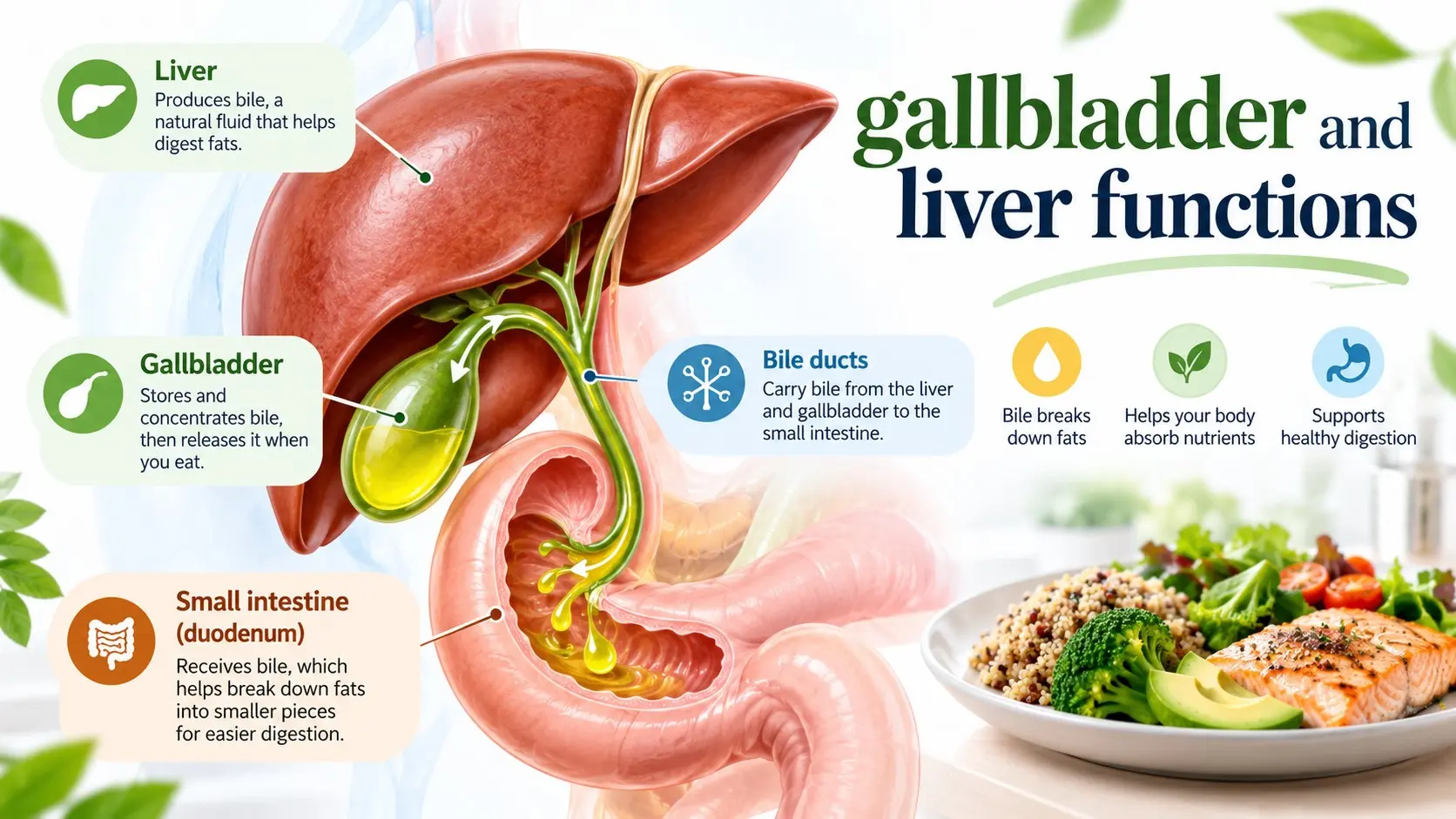
Gallbladder and liver functions are closely connected through bile. The liver makes bile, processes nutrients, stores energy, makes important proteins, manages bilirubin, and helps process medicines and waste. The gallbladder stores and concentrates some of that bile, then releases it into the small intestine when digestion needs it.
They work together, but they are not interchangeable organs.
You can live without a gallbladder.
You cannot live without liver function.
That one difference explains why gallbladder removal is common, while severe liver failure is a major medical emergency.
Medical Notice: This content is for general educational purposes and does not replace professional medical advice, diagnosis, or treatment. Consult an appropriately qualified healthcare professional for personal medical concerns. This article explains published guidance and does not provide a personal clinical assessment. Always consult qualified medical professionals for diagnosis and treatment of any health condition.
Upper abdominal pain, jaundice, fever, vomiting, pale stools, dark urine, confusion, or severe illness can have several causes. This article cannot diagnose gallstones, hepatitis, fatty liver disease, pancreatitis, bile duct blockage, or another abdominal condition.
Table of Contents
- Quick Answer
- What the liver does
- What the gallbladder does
- How bile connects them
- 11 Vital Facts
- The liver makes bile
- The gallbladder stores bile
- Bile helps digest fat
- The liver manages nutrients
- The liver helps control blood glucose
- The liver makes important proteins
- The liver processes bilirubin and waste
- Gallstones can block bile flow
- You can live without a gallbladder
- Liver disease may be silent
- Testing depends on the suspected problem
- Gallbladder Pain and Liver Symptoms
- Gallstones and Complications
- Tests and Imaging
- Living Without a Gallbladder
- How to Support Liver and Gallbladder Health
- Frequently Asked Questions
What is the difference between the liver and gallbladder?
The liver is a large organ in the upper right part of the abdomen.
It performs hundreds of jobs.
The gallbladder is a much smaller pear shaped organ tucked beneath the liver.
Its main job is to store and concentrate bile.
| Organ | Main Jobs | Can You Live Without It? |
|---|---|---|
| Liver | Makes bile, processes nutrients, manages glucose, makes proteins, processes bilirubin, and helps clear medicines and waste | No, adequate liver function is essential for life |
| Gallbladder | Stores and concentrates bile and releases it when food enters the intestine | Yes, most people can live normally without it |
Fact 1: The liver makes bile
The liver produces bile.
This is one of the most important facts to get right.
The gallbladder does not make bile.
Bile contains water, bile salts, cholesterol, bilirubin, and other substances.
It has two important roles.
- It helps the digestive system handle dietary fat.
- It helps carry some waste products from the liver into the intestine.
Bile moves from the liver into a network of bile ducts.
Some bile flows toward the intestine, while some is stored in the gallbladder between meals.
Fact 2: The gallbladder stores and concentrates bile
The gallbladder function is much narrower than liver function.
Its main job is storage.
Between meals, bile can collect in the gallbladder.
The gallbladder removes some water from it, which makes the bile more concentrated.
When you eat, especially when fat reaches the small intestine, digestive signals tell the gallbladder to contract.
Bile then travels through the ducts toward the first part of the small intestine.
Fact 3: Bile helps your body digest and absorb fat
Fat digestion is one of bile's best known jobs.
Fat and water do not mix well.
Bile salts help break large fat droplets into much smaller droplets.
This gives digestive enzymes more surface area to work on.
Bile also helps the intestine absorb fats and fat soluble vitamins.
Those vitamins include:
- Vitamin A
- Vitamin D
- Vitamin E
- Vitamin K
The gallbladder helps time the release of concentrated bile with meals.
But the liver keeps making bile even after the gallbladder has been removed.
How does bile travel?
The route is easier to understand as a simple sequence.
- The liver makes bile.
- Small ducts inside the liver collect it.
- The right and left hepatic ducts carry it from the liver.
- The cystic duct connects the gallbladder to the biliary system.
- The common bile duct carries bile toward the small intestine.
- Bile enters the duodenum, where it helps with digestion.
The pancreas also connects to this area.
That close anatomy explains why a gallstone that becomes stuck near the shared drainage area can sometimes trigger pancreatitis.
Fact 4: The liver processes nutrients after you eat
The liver is deeply involved in metabolism.
Blood carrying absorbed nutrients from the digestive system travels to the liver.
The liver then helps process, store, transform, or release those nutrients depending on what the body needs.
This includes carbohydrate, fat, and protein metabolism.
The liver can store glucose as glycogen.
It can also release glucose later when the body needs energy.
Fact 5: The liver helps control blood glucose
Liver function is closely tied to blood sugar control.
After a meal, the liver can store some excess glucose.
Between meals, it can release glucose into the blood.
This helps keep the brain and other organs supplied with energy.
This is one reason liver health is closely connected with diabetes and metabolic health.
Fat accumulation in the liver is also strongly linked with insulin resistance.
Read the NextFitLife Diabetes, Obesity and Metabolism Guide for more on that connection.
Fact 6: The liver makes important proteins
The liver makes albumin.
Albumin is an important blood protein that helps keep fluid inside blood vessels and carries many substances through the bloodstream.
The liver also makes many proteins involved in normal blood clotting.
When severe liver disease develops, these jobs can become impaired.
That can contribute to swelling, bruising, and bleeding problems.
Fact 7: The liver processes bilirubin, medicines, and waste
Bilirubin forms as old red blood cells are broken down.
The liver processes bilirubin so it can leave the body through bile.
If bilirubin builds up, the skin or whites of the eyes can turn yellow.
This is called jaundice.
The liver also processes many medicines, alcohol, and other chemicals.
This does not mean the liver is a sponge that becomes dirty and needs a juice cleanse.
It means liver cells use complex enzyme systems to process substances continuously.
Your liver does not need a detox drink
“Liver detox” is one of the most misleading phrases in wellness marketing.
Your liver already performs normal waste processing.
No lemon drink, juice fast, detox tea, or supplement has been shown to wash toxins out of a healthy liver.
Some concentrated herbal and dietary supplements can even injure the liver.
Drinking enough fluid is important for normal health.
But water does not flush fat, scar tissue, gallstones, or toxins out of the liver.
Fact 8: Gallstones can block the bile system
Gallstones are hard pieces of material that form in the gallbladder.
The two main types are cholesterol stones and pigment stones.
Many people have gallstones without symptoms.
These are called silent gallstones.
They often do not require treatment.
The problem starts when a stone blocks bile flow.
What does a gallbladder attack feel like?
A gallbladder attack, also called biliary colic, often causes pain in the upper right abdomen.
It may also be felt in the upper middle abdomen.
The pain can be severe and may last for hours.
It may spread toward the back or right shoulder area.
Nausea and vomiting can occur.
Attacks often happen after meals, but the pattern varies.
Do not rely on a drawing or one pain location to diagnose gallstones.
Heart, stomach, pancreas, liver, lung, muscle, and bowel problems can produce pain in nearby areas.
For a full symptom guide, read Gallbladder Pain Relief: Safe Steps and Warning Signs.
What is cholecystitis?
Cholecystitis means inflammation of the gallbladder.
A gallstone blocking the gallbladder outlet is a common cause.
This is more serious than a short episode of biliary colic.
Symptoms can include:
- Persistent upper right abdominal pain
- Tenderness
- Fever
- Nausea
- Vomiting
It needs medical assessment.
Gallstones can also affect the pancreas
The bile duct and pancreatic drainage system meet near the small intestine.
A gallstone can become stuck and block pancreatic drainage.
This can cause acute pancreatitis.
Possible symptoms include severe upper abdominal pain that may spread to the back, nausea, vomiting, fever, and a fast heartbeat.
Acute pancreatitis can become serious and needs prompt medical care.
Fact 9: You can live without a gallbladder
Gallbladder removal is called cholecystectomy.
It is a common treatment for symptomatic gallstones.
After the gallbladder is removed, the liver continues making bile.
The main change is that bile is no longer stored in a gallbladder between meals.
Instead, it flows more continuously through the bile ducts into the small intestine.
Most people can live normally without a gallbladder.
A small number of people notice softer or more frequent bowel movements, especially during early recovery.
Do you need a special diet forever after gallbladder removal?
Usually, no.
Many people eventually return to a normal balanced diet.
During early recovery, smaller meals and less very fatty food may feel easier.
If one food repeatedly causes diarrhea, cramping, or urgency, adjust the portion and discuss persistent symptoms with your clinician.
You still need dietary fat after gallbladder surgery.
Healthy fats provide energy and help the body absorb fat soluble vitamins.
Fact 10: Liver disease can be silent
The old idea that liver disease always causes a clear dull ache is unreliable.
Many liver conditions cause few or no symptoms in early stages.
This includes chronic viral hepatitis and fatty liver disease.
The modern term for fatty liver associated with metabolic risk is MASLD.
It is closely linked with obesity, type 2 diabetes, high blood pressure, and abnormal cholesterol.
Some people develop inflammation and fibrosis.
Others never reach advanced disease.
For current treatment information, read Fatty Liver Disease Treatments.
What happens when liver disease becomes advanced?
Long term liver injury can cause fibrosis.
Severe scarring is called cirrhosis.
Early cirrhosis may cause few symptoms.
As liver function worsens, signs can include:
- Fatigue
- Poor appetite
- Unplanned weight loss
- Muscle loss
- Easy bruising
- Jaundice
- Swelling in the legs
- Fluid in the abdomen
- Confusion
- Internal bleeding
These are very different from the symptoms of a simple gallbladder attack.
Gallbladder symptoms versus possible liver disease
| Pattern | Gallbladder Problem May Cause It | Liver Disease May Cause It |
|---|---|---|
| Upper right abdominal pain | Yes | Possible |
| Pain after a meal | Common with symptomatic gallstones | Not specific |
| Jaundice | Can occur if a stone blocks bile flow | Can occur in liver disease |
| Dark urine and pale stool | Possible with bile duct obstruction | Possible with impaired bile processing or flow |
| Fever and chills | Can signal inflammation or infection | Can occur with some liver or bile duct infections |
| Fluid in the abdomen | Not typical | Can occur with advanced cirrhosis |
| Confusion | Not a typical simple gallstone symptom | Can occur with advanced liver failure |
The overlap is why symptoms alone cannot reliably tell you which organ is responsible.
Fact 11: Testing depends on the suspected problem
There is no single gallbladder and liver test.
Doctors choose tests based on the symptoms and likely condition.
Blood tests
Blood testing may include markers often called liver enzymes along with bilirubin, albumin, blood count, clotting tests, pancreatic enzymes, and other tests.
The word “liver function tests” can be confusing because not every test directly measures how well the liver works.
Some show liver cell injury.
Others show bile duct problems or actual liver function.
Ultrasound
Ultrasound is commonly used when gallstones are suspected.
It can show stones, bile duct changes, gallbladder features, and some liver abnormalities.
NICE recommends liver blood tests and ultrasound for suspected gallstone disease.
MRCP
Magnetic resonance cholangiopancreatography, usually shortened to MRCP, is a special MRI technique that can show the bile ducts.
It may be used when a common bile duct stone is still suspected after ultrasound.
HIDA scan
A nuclear medicine gallbladder scan can examine bile flow and gallbladder function.
It may help when inflammation or abnormal gallbladder emptying is suspected.
CT and MRI
CT or MRI may be useful when doctors are looking for complications, liver disease, tumors, pancreatitis, or another cause of abdominal symptoms.
Are silent gallstones dangerous?
Most gallstones do not cause symptoms.
These are called silent stones.
They often do not need treatment.
NIDDK notes that silent gallstones do not stop the gallbladder, liver, or pancreas from working.
Treatment becomes more important when stones cause attacks or complications.
What causes gallstones?
Gallstones can form when the chemistry of bile becomes unbalanced or when the gallbladder does not empty normally.
Cholesterol stones are the most common type in many populations.
Risk can be influenced by:
- Age
- Sex
- Genetics
- Obesity
- Pregnancy
- Some medical conditions
- Rapid weight loss
Rapid weight loss deserves special attention.
Crash dieting and rapid loss after weight loss surgery can increase gallstone risk.
Slow, sustainable weight management is generally the better approach when there is no medical reason for rapid loss.
Can food dissolve gallstones?
No food has been shown to reliably dissolve a gallstone during an attack.
Olive oil flushes, lemon cleanses, apple cider vinegar, and other so called gallbladder flushes are not established gallstone treatments.
A stone blocking a duct is a mechanical problem.
Food cannot safely reopen that duct on demand.
Do fatty foods cause gallstones?
It is more complicated than that.
A meal containing fat can stimulate the gallbladder to contract.
That contraction may trigger symptoms when a gallstone is already blocking the outlet.
This does not mean all dietary fat created the stone.
Nor does it mean everyone with gallstones needs a fat free diet.
Very restrictive diets can make nutrition harder and may be unnecessary.
How can you support gallbladder health?
There is no perfect gallbladder diet.
Useful long term habits include:
- Maintaining a weight that supports your health
- Avoiding unnecessary rapid weight loss
- Eating enough fibre
- Including vegetables and fruit
- Choosing whole grains when tolerated
- Including suitable sources of unsaturated fat
- Staying physically active
If one large or high fat meal repeatedly triggers known gallbladder symptoms, smaller meals may feel more comfortable while you are waiting for medical assessment.
How can you support liver health?
The most useful steps are less glamorous than detox marketing.
- Limit harmful alcohol exposure.
Alcohol can damage liver cells when intake is high enough. - Manage metabolic risk.
Treat diabetes, high blood pressure, high cholesterol, and obesity when present. - Stay physically active.
Movement can improve metabolic and liver health. - Choose a balanced diet.
Vegetables, fruit, whole grains, beans, suitable protein foods, and unsaturated fats can all fit. - Use medicines correctly.
Do not exceed medication doses, especially acetaminophen or other medicines that can harm the liver when misused. - Be cautious with supplements.
Natural does not always mean liver safe. - Use vaccination and screening when appropriate.
Some people benefit from hepatitis vaccination or testing based on age, health, travel, or exposure risk.
For broader digestion guidance, use the NextFitLife Gut Health and Digestion Hub.
When should upper right abdominal pain be checked?
New pain beneath the right ribs should not automatically be labelled liver pain or gallbladder pain.
Get medical advice when pain:
- Is severe
- Keeps returning
- Lasts for hours
- Occurs with vomiting
- Occurs with fever
- Is associated with jaundice
- Comes with dark urine or pale stools
- Is associated with unexplained weight loss
When is gallbladder or liver disease urgent?
Seek urgent medical care for:
- Severe or worsening abdominal pain
- Upper abdominal pain with fever or chills
- Repeated vomiting
- New jaundice
- Dark urine with pale stool and significant illness
- Vomiting blood
- Black tar like stools
- Fainting
- New confusion
- Severe abdominal swelling
- Shortness of breath with severe abdominal symptoms
A blocked bile duct can lead to serious inflammation or infection.
Gallstones can also trigger pancreatitis.
These conditions should not be managed with a cleanse or restrictive diet at home.
Can liver problems cause jaundice?
Yes.
But jaundice does not always mean the problem began in the liver cells.
A gallstone blocking the common bile duct can also stop bilirubin from draining normally.
That can cause yellow skin or eyes, darker urine, and pale stools.
Pancreatic and other biliary diseases can also cause obstruction.
Jaundice needs medical assessment so the cause can be identified.
Can gallbladder disease damage the liver?
It can when bile flow becomes blocked or infection develops.
A stone in the common bile duct can cause obstruction and alter liver blood tests.
Severe infection of the biliary system can become dangerous.
This is another reason persistent jaundice, pain, fever, and chills should not be ignored.
Can liver disease cause gallstones?
Some liver and blood disorders can change bile chemistry and increase the risk of pigment stones.
But most liver disease does not simply turn directly into gallstones.
They are separate conditions with overlapping risk factors in some people.
What happens to bile after gallbladder removal?
The liver keeps making bile.
Without the gallbladder, bile travels through the liver ducts and common bile duct directly into the small intestine.
The body therefore loses the storage pouch, not the ability to produce bile.
This is why digestion can continue after surgery.
Does gallbladder removal harm the liver?
Routine gallbladder removal does not mean the liver can no longer function normally.
The liver continues producing bile.
Like any operation, cholecystectomy has possible complications, including bile duct injury, but major complications are uncommon.
If new jaundice, severe pain, fever, or persistent vomiting develops after surgery, contact the surgical team promptly.
Can the liver regenerate?
The liver has a remarkable ability to regrow functional tissue after some injuries or surgical removal of part of the organ.
This does not mean every form of liver damage reverses completely.
Advanced cirrhosis changes the structure of the liver through scar tissue.
Removing the cause of injury can still improve outcomes, but a person with cirrhosis needs medical follow up.
Seven gallbladder and liver myths to drop
Myth 1: The gallbladder makes bile
No.
The liver makes bile.
The gallbladder stores and concentrates it.
Myth 2: You cannot digest fat without a gallbladder
No.
Your liver continues making bile after gallbladder removal.
Myth 3: Upper right pain always comes from the liver
No.
The gallbladder, stomach, pancreas, lung, muscle, bowel, and other structures can cause nearby pain.
Myth 4: Drinking lots of water flushes toxins from the liver
No.
Normal hydration supports health, but it does not wash liver disease away.
Myth 5: A gallbladder cleanse removes gallstones
No reliable evidence shows that home gallbladder flushes safely remove true gallstones.
Myth 6: All gallstones need surgery
No.
Silent gallstones often need no treatment.
Myth 7: Fatty liver always causes pain
No.
Many people with fatty liver disease have no clear symptoms.
Questions to ask your healthcare professional
- Do my symptoms sound more like gallbladder disease or another cause?
- Do I need liver blood tests?
- Do I need an abdominal ultrasound?
- Could a gallstone be blocking my bile duct?
- Would MRCP or another scan help?
- Are my gallstones silent or symptomatic?
- Do I need gallbladder surgery?
- Could my medicines or supplements affect my liver?
- Do I have risk factors for MASLD?
- Do I need fibrosis testing?
- What symptoms should send me to urgent care?
Conclusion
Gallbladder and liver functions are connected by bile, but the two organs have very different jobs. The liver makes bile and manages nutrients, glucose, proteins, bilirubin, medicines, and many other processes. The gallbladder mainly stores and concentrates bile, then releases it when digestion needs it.
Knowing that difference makes symptoms easier to understand, but symptoms alone cannot diagnose which organ is responsible. If you develop repeated upper right abdominal pain, jaundice, fever, vomiting, dark urine, pale stools, or another persistent change, make medical assessment your next step rather than trying a detox or gallbladder flush.
Related NextFitLife Guides and Hubs
Gut Health and Digestion Hub
for digestion, fibre, bloating, bowel habits, food tolerance, and digestive warning signs.
Gallbladder Pain Relief
for gallstone attacks, safe symptom care, diagnosis, and urgent warning signs.
Fatty Liver Disease Treatments
for MASLD, MASH, fibrosis assessment, metabolic risk, and current treatments.
Life Expectancy with Fatty Liver Disease
for fibrosis stages, cirrhosis risk, cardiovascular health, and long term outlook.
Diabetes, Obesity and Metabolism
for insulin resistance, metabolic risk, liver fat, weight management, and diabetes treatment.
Bariatric Surgery Guide
for weight loss surgery, rapid weight loss, gallstone risk, nutrition, and long term follow up.
References and Sources
- Johns Hopkins Medicine. The Biliary System: Anatomy and Functions.
https://www.hopkinsmedicine.org/health/conditions-and-diseases/biliary-system-anatomy-and-functions
- Johns Hopkins Medicine. The Digestive Process: The Liver and Its Many Functions.
https://www.hopkinsmedicine.org/health/conditions-and-diseases/the-digestive-process-the-liver-and-its-many-functions
- National Institute of Diabetes and Digestive and Kidney Diseases. Gallstones: Definition and Facts.
https://www.niddk.nih.gov/health-information/digestive-diseases/gallstones/definition-facts
- NHS. Gallstones.
https://www.nhs.uk/conditions/gallstones/
- National Institute of Diabetes and Digestive and Kidney Diseases. Cirrhosis: Symptoms and Causes.
https://www.niddk.nih.gov/health-information/liver-disease/cirrhosis/symptoms-causes
About the Author
Adel Galal is the Founder and Lead Writer at NextFitLife. He researches practical health, nutrition, digestive health, liver health, metabolic health, fitness, and healthy aging topics using recognized government, hospital, medical, and scientific sources.
His goal is to turn complicated anatomy and health information into clear explanations without presenting pain location as a diagnosis, promoting detox myths, or suggesting that home remedies can replace proper evaluation of gallstones, jaundice, or liver disease.
For digestive and liver articles, Adel reviews recognized sources including NIDDK, NHS, NICE, Johns Hopkins Medicine, liver societies, gastroenterology guidance, and peer reviewed evidence.
Adel is not a doctor, gastroenterologist, hepatologist, surgeon, radiologist, pharmacist, registered dietitian, or other licensed healthcare professional.
Learn more about Adel Galal, NextFitLife, and the site's editorial standards on the About Us page.
Medical Disclaimer: This content is for general educational purposes and does not replace professional medical advice, diagnosis, or treatment. Consult an appropriately qualified healthcare professional for personal medical concerns. This article explains published guidance and does not provide a personal clinical assessment. Always consult qualified medical professionals for diagnosis and treatment of any health condition.
Frequently Asked Questions
What are the main gallbladder and liver functions?
The liver makes bile, processes nutrients, helps control blood glucose, makes important proteins, manages bilirubin, and processes many medicines and waste products. The gallbladder mainly stores and concentrates bile before releasing it into the small intestine.
Does the liver or gallbladder make bile?
The liver makes bile. The gallbladder stores and concentrates some of it between meals.
What does bile do?
Bile salts help the digestive system handle dietary fat and help with absorption of fat soluble vitamins. Bile also carries substances such as bilirubin and cholesterol into the intestine.
Can you live without a gallbladder?
Yes. After gallbladder removal, the liver continues to make bile and it flows directly through the bile ducts into the small intestine.
Can you live without a liver?
No. Liver function is essential for life. Severe liver failure may require liver transplantation.
Where is gallbladder pain felt?
Gallbladder attacks often cause pain in the upper right or upper middle abdomen. The pain can spread to the back or right shoulder area. Pain location alone cannot confirm the diagnosis.
Where is liver pain felt?
Some liver conditions can cause discomfort in the upper right abdomen, but many liver diseases cause no pain at all. Symptoms and testing are needed to identify the cause.
What are signs of a blocked bile duct?
Possible signs include upper abdominal pain, jaundice, dark urine, pale stool, itching, nausea, or vomiting. Fever and chills can signal a serious infection and need prompt medical care.
What causes gallstones?
Gallstones can form when bile contains too much cholesterol or bilirubin, too few bile salts, or when the gallbladder does not empty well. Genetics, age, obesity, pregnancy, some health conditions, and rapid weight loss can affect risk.
Do silent gallstones need treatment?
Usually not. Gallstones that cause no symptoms often do not need treatment. Treatment becomes more important when stones cause attacks or complications.
Can gallstones affect the liver?
Yes. A stone blocking the common bile duct can stop normal bile flow, cause jaundice, change liver blood tests, and sometimes lead to serious infection.
Can gallstones cause pancreatitis?
Yes. Gallstones are a major cause of acute pancreatitis when a stone blocks drainage near the pancreatic duct.
Can fatty liver cause gallbladder pain?
Fatty liver and gallbladder disease are separate conditions. Their symptoms can overlap, and fatty liver often causes no symptoms. Imaging and blood tests may be needed to find the cause of upper abdominal discomfort.
Does drinking water detox the liver?
No. Normal hydration supports health, but drinking extra water does not wash toxins, liver fat, fibrosis, or gallstones out of the body.
Do gallbladder cleanses work?
There is no reliable evidence that olive oil, lemon juice, vinegar, or other home gallbladder flushes safely remove true gallstones.
Which test checks the gallbladder?
Ultrasound is commonly used when gallstones are suspected. Blood tests, MRCP, HIDA scanning, CT, or other testing may also be used depending on the symptoms.
What tests check liver function?
Doctors may use ALT, AST, alkaline phosphatase, bilirubin, albumin, clotting tests, blood counts, imaging, fibrosis tests, and other tests depending on the suspected condition.
When are gallbladder or liver symptoms urgent?
Seek urgent care for severe or worsening abdominal pain, fever or chills with abdominal pain, jaundice, repeated vomiting, vomiting blood, black stools, fainting, new confusion, severe abdominal swelling, or serious illness.

Health & wellness writer with 30+ years of experience in nutrition, fitness, and healthy aging. Founder of NextFitLife.com — evidence-based health guidance.