
First published: Jun 10, 2023
Last updated: September 30, 2026
Written and source- checked by: Adel Galal, Founder and Lead Writer at NextFitLife
Medical review status: This article has not been medically reviewed by a doctor, endocrinologist, diabetes specialist nurse, pharmacist, or registered dietitian.
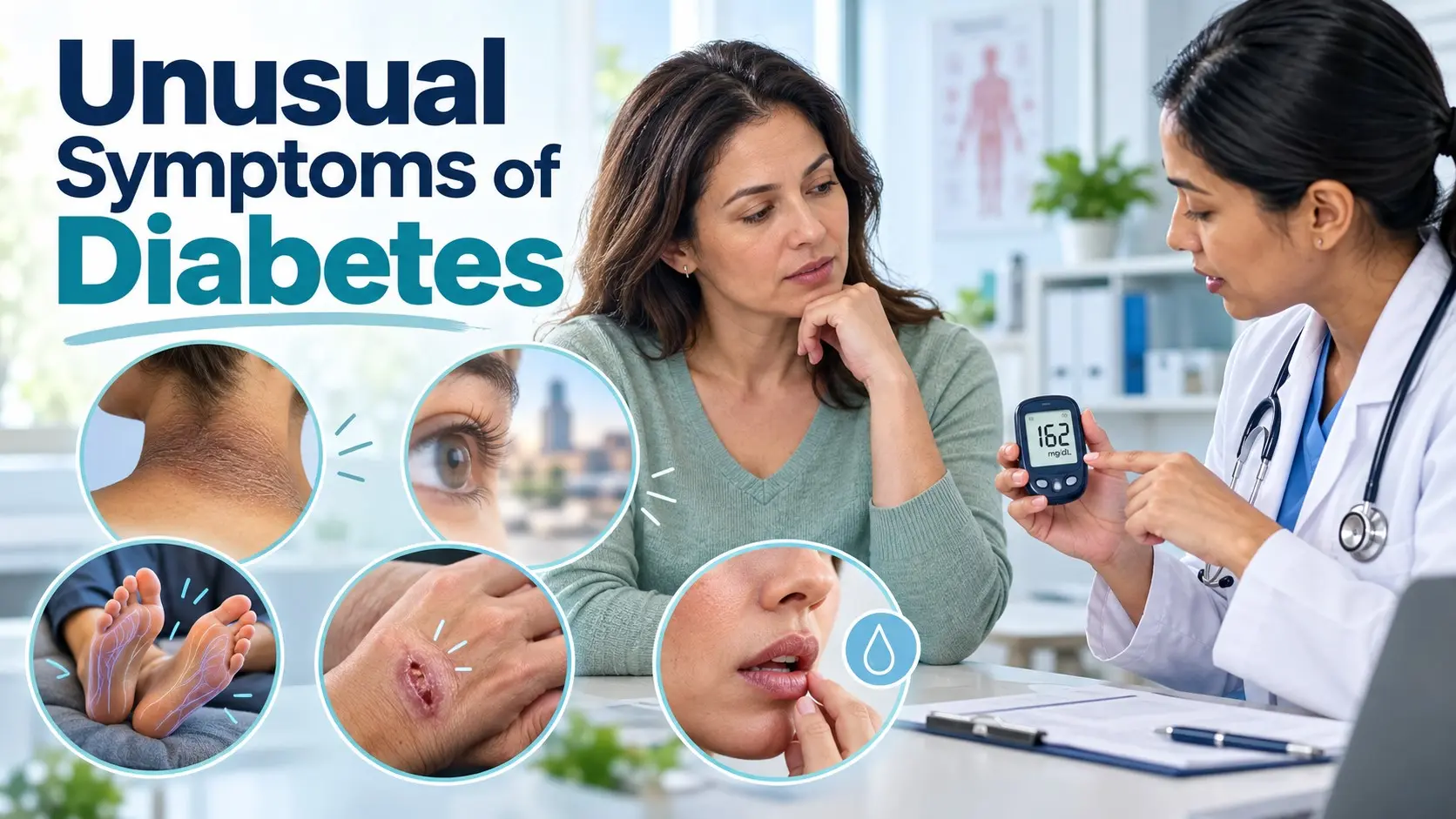
Unusual Symptoms of Diabetes can show up in places you may not connect with blood sugar. Your skin may change. A minor cut may heal slowly. Thrush may keep coming back. Your feet may tingle, your mouth may feel dry, or your vision may blur.
None of these symptoms proves that you have diabetes.
That point matters because many of them have other causes. Diabetes is confirmed with proper blood testing, not by counting symptoms from an online list.
Quick Answer
Less obvious diabetes signs can include dark velvety skin, recurring thrush or urinary infections, slow healing cuts, tingling feet, dry mouth, gum problems, sexual problems, digestive changes, mood changes, and blurred vision. Some are possible clues to undiagnosed diabetes, while others are complications that develop after high blood sugar has affected nerves or blood vessels. A blood test is needed to know the cause.
Fruity Breath Can Be an Emergency
Fruity smelling breath with vomiting, stomach pain, deep or fast breathing, severe thirst, sleepiness, confusion, or marked weakness can be a sign of diabetic ketoacidosis.
DKA can be the first obvious sign of type 1 diabetes, including in someone who has never been diagnosed before.
In the UK, call 999 or go to A&E if DKA is suspected. Do not drive yourself.
Medical notice: This content is for general educational purposes and does not replace professional medical advice, diagnosis, or treatment. Consult an appropriately qualified healthcare professional for personal medical concerns. This article explains published guidance and does not provide a personal clinical assessment. Always consult qualified medical professionals for diagnosis and treatment of any health condition.
Table of Contents
- Common Diabetes Symptoms First
- 15 Hidden Warning Signs
- Early Clues vs Complications
- Skin Changes
- Infections and Slow Healing
- Nerve Symptoms
- Mouth and Gum Changes
- Sexual and Bladder Changes
- Digestive Symptoms
- Children and Type 1 Diabetes
- DKA Emergency Signs
- Diabetes Myths
- How Diabetes Is Tested
- When to See a Doctor
- References and Sources
- Related NextFitLife Guides
- About the Author
- Frequently Asked Questions
What Are the Usual Symptoms of Diabetes?
Before looking at unusual symptoms, know the classic signs.
Diabetes UK often teaches the four main symptoms of type 1 diabetes as the four Ts:
- Toilet: peeing much more than usual
- Thirsty: feeling very thirsty
- Tired: feeling unusually tired
- Thinner: losing weight without trying
Type 2 diabetes can cause the same symptoms, but they may develop slowly.
Some people with type 2 diabetes have no obvious symptoms at all.
This is why unusual symptoms can be useful clues, but they should never replace a blood glucose test.
15 Unusual Symptoms of Diabetes You Should Know
1. Dark Velvety Skin on the Neck or Armpits
One of the more useful skin clues is acanthosis nigricans.
This causes areas of skin to become darker, thicker, and sometimes velvety. Common places include the neck, armpits, and groin.
Acanthosis nigricans is linked with insulin resistance, which is common in prediabetes and type 2 diabetes.
But diabetes is not its only possible cause.
Hormone conditions, some medicines, body weight, genetics, and rare medical conditions can also cause it.
New dark or thick skin patches should be checked rather than diagnosed from appearance alone.
2. Thrush That Keeps Coming Back
Repeated genital thrush can be an overlooked diabetes clue.
Higher glucose levels can make it easier for yeast to grow, and diabetes can make some infections harder to clear.
You might notice:
- Genital itching
- White discharge
- Red or sore skin
- Repeated episodes after treatment
Thrush has many possible causes.
But if it keeps returning along with thirst, frequent urination, tiredness, or unexplained weight change, ask about diabetes testing.
3. Frequent Urinary Tract Infections
Repeated urinary tract infections can also occur more often in people with diabetes.
Possible UTI symptoms include:
- Burning when you pee
- Needing to pee often
- Urgent need to pee
- Lower abdominal discomfort
- Cloudy urine
A UTI does not mean you have diabetes.
Repeated infections deserve proper assessment because diabetes is only one possible explanation.
4. Skin Infections That Keep Returning
High blood glucose can affect immune defence.
People with diabetes can have more bacterial and fungal skin infections.
You may notice repeated problems around:
- Hair follicles
- Nails
- Skin folds
- Feet
- Areas that stay damp
Redness, heat, swelling, pus, fever, or rapidly spreading skin infection needs medical care.
5. Cuts That Take Too Long to Heal
Slow wound healing is a well recognised diabetes warning sign.
Long term high blood sugar can affect circulation, nerves, and the body's ability to fight infection.
This becomes especially important on the feet because reduced feeling can hide an injury.
Do not wait for a foot wound to become painful before seeking help.
People with nerve damage may feel very little pain even when a wound is serious.
6. Tingling, Burning, or Numb Feet
High blood glucose over time can damage nerves.
This is called diabetic neuropathy.
Symptoms can include:
- Pins and needles
- Burning
- Numbness
- Sharp pain
- Reduced ability to feel heat or cold
The feet and lower legs are common places for symptoms to begin.
Tingling is not proof of diabetes because vitamin deficiency, trapped nerves, thyroid disease, medicines, alcohol, and other conditions can cause similar symptoms.
7. Vision That Suddenly Seems Blurry
Blurred vision can occur when changing blood glucose affects fluid levels in the eye.
Diabetes can also cause longer term eye disease.
A new vision problem should not automatically be blamed on blood sugar.
Sudden vision loss, a dark curtain in your vision, new severe eye pain, or a major sudden change needs urgent assessment.
8. Dry Mouth, Bleeding Gums, or Oral Thrush
Your mouth can give clues about blood sugar too.
Diabetes is linked with:
- Dry mouth
- Gum disease
- Red or swollen gums
- Gums that bleed easily
- Tooth problems
- Oral thrush
- Burning sensations in the mouth
High blood glucose can increase glucose in saliva and make it harder for the body to control infection.
Repeated oral thrush in an otherwise healthy adult deserves attention.
Read our Oral Thrush in Adults Guide for symptoms and treatment.
9. Mood Changes or Irritability
Some people notice mood or behaviour changes when diabetes is developing or when glucose is poorly controlled.
You may feel:
- More irritable
- Tired
- Unable to concentrate
- Low in energy
Mood changes alone are not a useful diabetes test.
Stress, depression, anxiety, poor sleep, medicines, hormones, and many other conditions can cause the same change.
Look at the full symptom pattern.
10. Erectile Dysfunction or Other Sexual Changes
Sexual problems are rarely the first symptom people connect with diabetes.
Over time, high blood glucose can damage blood vessels and nerves needed for normal sexual function.
Possible changes include:
- Erectile dysfunction
- Reduced genital sensation
- Vaginal dryness
- Difficulty becoming aroused
- Pain during sex
Sexual problems have many causes, including medicines, heart disease, hormone conditions, stress, and relationship factors.
They deserve assessment rather than embarrassment.
11. Dizziness When You Stand Up
Some people with longer term diabetes develop autonomic neuropathy.
This is nerve damage affecting automatic body functions.
It can affect blood pressure and heart rate.
You may feel light headed or faint after standing.
You may also notice an unusually fast heart rate.
This is more often a diabetes complication than an early sign of newly developing diabetes.
Dehydration, blood pressure medicines, anaemia, heart problems, and many other conditions can also cause dizziness on standing.
12. Bloating, Nausea, or Feeling Full Very Quickly
Diabetes can damage nerves controlling the digestive system.
One possible complication is gastroparesis.
This means the stomach empties more slowly than normal.
Symptoms can include:
- Feeling full after very little food
- Bloating
- Nausea
- Vomiting
- Upper abdominal discomfort
- Unpredictable blood glucose
Gastroparesis is not a typical early sign of diabetes.
It is more often linked with nerve damage after diabetes has been present for some time.
Persistent vomiting or inability to keep fluids down needs medical care.
13. A Child Starts Wetting the Bed Again
A child who was previously dry at night and suddenly begins wetting the bed can be showing a diabetes warning sign.
Type 1 diabetes causes the kidneys to remove excess glucose through urine, which pulls more water with it.
The child may also:
- Pee more often
- Drink constantly
- Feel very tired
- Lose weight
- Look thinner
Type 1 diabetes can develop quickly.
Do not wait several weeks to see if a child with these symptoms improves.
14. Persistent Dry or Itchy Skin
Some people with diabetes develop dry or itchy skin.
Changes in circulation, nerve function, dehydration, infection, and other skin conditions can all play a part.
Itching around the genitals can also occur with thrush.
But itching is extremely common and has many causes.
A skin symptom becomes more useful as a diabetes clue when it appears with other signs such as thirst, frequent urination, recurrent infections, or unexplained weight loss.
15. Fruity Breath With Nausea or Deep Breathing
This is different from the other symptoms on this list because it can signal an emergency.
A sweet or fruity smell on the breath can happen when ketones build up during diabetic ketoacidosis, or DKA.
Other DKA symptoms include:
- Severe thirst
- Frequent urination
- Stomach pain
- Nausea
- Vomiting
- Deep or fast breathing
- Dry mouth
- Marked tiredness
- Sleepiness
- Confusion
DKA most often occurs in type 1 diabetes, but it can happen in type 2 diabetes too.
It can also be the first sign of previously undiagnosed diabetes.
Seek emergency medical help.
Early Diabetes Clues vs Diabetes Complications
This distinction is easy to miss.
| Symptom or Sign | Can Be an Early Clue | Can Reflect a Complication |
|---|---|---|
| Dark velvety skin | Yes, through insulin resistance | Usually considered a metabolic clue rather than a classic complication |
| Thrush and repeated infections | Yes | Can continue when glucose stays high |
| Blurred vision | Yes | Long term diabetes can also damage the retina |
| Tingling and numbness | Sometimes discovered around diagnosis | Commonly linked with diabetic neuropathy |
| Sexual dysfunction | Occasionally prompts testing | Often linked with blood vessel or nerve damage |
| Gastroparesis | Not a typical early sign | Can result from autonomic nerve damage |
This is why it is misleading to call every diabetes related problem an “early symptom.”
Some symptoms help uncover undiagnosed disease. Others tell us that high blood glucose may already have affected another part of the body.
Can You Have Type 2 Diabetes With No Symptoms?
Yes.
Many people with type 2 diabetes have no obvious symptoms.
Others develop mild changes so slowly that they become normal to them.
This is why risk assessment and blood testing matter.
You may be more likely to develop type 2 diabetes if you have a close family history, certain ethnic backgrounds, excess weight, low activity, high blood pressure, or other metabolic risk factors.
If your glucose is above normal but below the diabetes range, read our Prediabetes NHS Guide.
Are Prediabetes Symptoms the Same?
Prediabetes usually has no clear symptoms.
If someone with prediabetes starts getting strong thirst, frequent urination, unexplained weight loss, blurred vision, or repeated thrush, they should not assume those are ordinary prediabetes symptoms.
They may have progressed to type 2 diabetes and should be tested.
Are Symptoms Different in Type 1 and Type 2 Diabetes?
The symptoms overlap, but the speed can be different.
Type 1 Diabetes
Type 1 diabetes symptoms can develop over days or weeks.
They can occur at any age.
The classic symptoms are frequent urination, thirst, tiredness, and weight loss.
DKA can develop if insulin becomes severely deficient.
Type 2 Diabetes
Type 2 diabetes often develops much more slowly.
A person can have it for years before noticing a clear problem.
Some people first discover it because of a blood test, infection, nerve problem, eye problem, or another health check.
Are Diabetes Symptoms Different in Women?
The core symptoms are the same.
Some problems can be easier to notice in women, including:
- Repeated vaginal thrush
- Genital itching
- Urinary infections
- Vaginal dryness
- Changes in sexual sensation
These problems also have many causes unrelated to diabetes.
Menopause can produce tiredness, vaginal symptoms, sleep problems, and mood changes that overlap with diabetes symptoms.
A blood test can help separate the possibilities.
Are Diabetes Symptoms Different in Men?
The usual thirst, urination, tiredness, and weight changes still apply.
One less obvious issue is erectile dysfunction.
Diabetes can affect the nerves and blood vessels needed for an erection.
But erectile dysfunction can also be linked with cardiovascular disease, medicine effects, smoking, hormone problems, and psychological factors.
A medical review can look at the whole picture.
What Are Unusual Diabetes Symptoms in Children?
Type 1 diabetes is especially important because symptoms can become severe quickly.
Look for:
- New bedwetting
- Heavier nappies
- Drinking much more
- Frequent urination
- Weight loss
- Severe tiredness
- Blurred vision
- Repeated thrush or nappy rash
Fruity breath, vomiting, stomach pain, deep breathing, drowsiness, or confusion can suggest DKA.
That needs urgent medical care.
Can Diabetes Affect the Feet Before You Notice It?
Yes.
Nerve damage can reduce sensation.
A person may not feel:
- A blister
- A cut
- A hot surface
- A tight shoe
- An infected wound
Diabetes can also affect circulation.
That combination can make a small foot problem become serious.
Read our Poor Circulation in Feet Guide for warning signs and safe care.
Can Diabetes Affect the Heart Without Clear Chest Pain?
Yes.
People with diabetes have a higher cardiovascular risk.
Autonomic nerve damage can sometimes change how heart symptoms are felt.
A heart problem may present with breathlessness, sweating, nausea, unusual weakness, or mild pressure rather than dramatic chest pain.
For more detail, read our Diabetes and Heart Diseases Guide.
Can Diabetes Affect the Kidneys Before Symptoms Appear?
Yes.
Early diabetic kidney disease can be silent.
Symptoms often appear only after kidney function has fallen further.
This is why blood and urine testing matter for people with diabetes.
See our Diabetes and Kidney Disease Guide.
Common Myths About Unusual Diabetes Symptoms
Myth 1: Sugar Cravings Prove You Have Diabetes
Fact: No.
Wanting sweet food is common and is not a diabetes diagnosis.
Blood testing is needed.
Myth 2: Every Dark Neck Patch Means Diabetes
Fact: No.
Acanthosis nigricans is associated with insulin resistance and type 2 diabetes, but it has other possible causes.
Myth 3: Tingling Feet Always Mean Diabetic Neuropathy
Fact: No.
Several nerve, vitamin, medicine, circulation, and metabolic problems can cause tingling.
Myth 4: Hearing Loss Is a Reliable Early Diabetes Test
Fact: No.
Research has found associations between diabetes and hearing problems, but hearing loss has many causes and is not used by itself to diagnose diabetes.
Myth 5: Sleep Apnoea Is an Unusual Symptom of Diabetes
Fact: Not exactly.
Sleep apnoea and type 2 diabetes often occur in the same people because they share important risk factors.
Sleep apnoea should not be presented as a simple symptom caused by diabetes.
Myth 6: Prediabetes Usually Causes Lots of Symptoms
Fact: Prediabetes usually causes no obvious symptoms.
Clear diabetes symptoms deserve testing rather than being blamed on prediabetes.
Myth 7: One Symptom Can Diagnose Diabetes
Fact: No symptom list can confirm the diagnosis.
You need proper blood testing.
How Is Diabetes Tested?
If your symptoms or risk factors raise concern, contact a healthcare professional.
Type 2 diabetes is diagnosed with a blood test that measures glucose.
Testing can include an HbA1c blood test or another blood glucose test depending on the situation.
Type 1 diabetes can develop quickly, so a person with strong type 1 symptoms may need urgent testing rather than waiting for a routine appointment.
Do not use a home glucose meter as your only way to diagnose yourself.
When Should You Ask for a Diabetes Test?
Consider speaking with your GP or healthcare professional if you have:
- Frequent urination
- Constant thirst
- Unexplained weight loss
- Persistent tiredness
- Repeated thrush
- Repeated urinary or skin infections
- Slow healing wounds
- New dark velvety skin patches
- Persistent numbness or tingling
- Blurred vision
- Several less obvious symptoms together
- Important type 2 diabetes risk factors even without symptoms
The purpose of testing is to find out what is happening, not to prove that every symptom comes from diabetes.
When Is Diabetes an Emergency?
Get emergency medical help when DKA may be present.
Warning symptoms include:
- Fruity smelling breath
- Vomiting
- Stomach pain
- Deep or fast breathing
- Severe thirst
- Very frequent urination
- Severe weakness
- Drowsiness
- Confusion
- Difficulty breathing
If you have diabetes and use insulin, follow the sick day and ketone advice given by your diabetes care team.
Do not stop insulin because you are sick unless your clinical team gives you specific instructions.
What Should You Do if You Already Have Diabetes and Notice a New Symptom?
Do not assume every new problem is “just diabetes.”
Diabetes can raise the risk of several complications, but unrelated illnesses still happen.
Tell your healthcare team about new:
- Vision changes
- Foot wounds
- Numbness
- Repeated infections
- Digestive symptoms
- Sexual problems
- Dizziness
- Kidney concerns
- Mouth or gum problems
Your treatment plan may need review.
Conclusion
Unusual Symptoms of Diabetes can appear in the skin, feet, eyes, mouth, bladder, sexual health, digestion, and infection pattern.
The key is not to turn every strange symptom into diabetes. Look for patterns, notice whether symptoms are new or persistent, and use proper blood testing to find the cause.
Dark velvety skin, recurrent thrush, slow wound healing, tingling feet, dry mouth, gum problems, sexual changes, and repeated infections are worth discussing with a healthcare professional when they are unexplained.
If you have fruity breath, vomiting, stomach pain, deep breathing, confusion, or other signs of DKA, seek emergency care now.
Your next practical step is simple: if several unusual symptoms are appearing together, ask your healthcare professional whether a blood glucose or HbA1c test is appropriate.
References and Sources
- NHS.
Symptoms of Type 2 Diabetes and How It Is Diagnosed.
Official NHS guidance on tiredness, frequent urination, thirst, weight loss, blurred vision, slow wound healing, genital itching, thrush, risk factors, and blood testing.
https://www.nhs.uk/conditions/type-2-diabetes/symptoms/
- NHS.
Symptoms of Type 1 Diabetes and How It Is Diagnosed.
Official NHS guidance covering the four Ts, bedwetting in children, blurred vision, fruity breath, slow healing wounds, repeated infections, rapid symptom development, and DKA risk.
https://www.nhs.uk/conditions/type-1-diabetes/symptoms/
- NHS.
Diabetic Ketoacidosis.
Official guidance covering fruity smelling breath, vomiting, stomach pain, deep breathing, drowsiness, confusion, ketone testing, emergency treatment, and sick day care.
https://www.nhs.uk/conditions/diabetic-ketoacidosis/
- Centers for Disease Control and Prevention.
Symptoms of Diabetes.
Covers common symptoms, mood changes, infections, slow healing wounds, dark skin patches, numbness or tingling, child bedwetting, and DKA related symptoms.
https://www.cdc.gov/diabetes/signs-symptoms/index.html
- Centers for Disease Control and Prevention.
Diabetes and Your Skin.
Explains acanthosis nigricans, skin infections, digital sclerosis, and other skin changes associated with diabetes and insulin resistance.
https://www.cdc.gov/diabetes/signs-symptoms/diabetes-and-your-skin.html
- National Institute of Diabetes and Digestive and Kidney Diseases.
Diabetes, Gum Disease, and Other Dental Problems.
Explains dry mouth, gum disease, oral thrush, burning mouth, cavities, infection risk, slow healing, and the relationship between blood glucose and oral health.
https://www.niddk.nih.gov/health-information/diabetes/overview/preventing-problems/gum-disease-dental-problems
- National Institute of Diabetes and Digestive and Kidney Diseases.
Autonomic Neuropathy.
Explains dizziness on standing, heart rate changes, digestive symptoms, gastroparesis, bladder problems, and other effects of diabetic autonomic nerve damage.
https://www.niddk.nih.gov/health-information/diabetes/overview/preventing-problems/nerve-damage-diabetic-neuropathies/autonomic-neuropathy
- National Institute of Diabetes and Digestive and Kidney Diseases.
Diabetes, Sexual, and Bladder Problems.
Explains how diabetes can affect sexual function, erections, bladder control, nerves, and blood vessels.
https://www.niddk.nih.gov/health-information/diabetes/overview/preventing-problems/sexual-bladder-problems
- Diabetes UK.
Diabetes Signs and Symptoms.
Covers the four Ts, thrush, slow healing cuts, blurred eyesight, hunger, behaviour changes, and the need to speak with a healthcare professional when diabetes is suspected.
https://www.diabetes.org.uk/about-diabetes/symptoms
Related NextFitLife Diabetes and Health Guides
- Prediabetes NHS: Tests, Prevention, and Daily Care
- Diabetes and Heart Diseases: Risks, Prevention, and Care
- Diabetes and Kidney Disease
- Poor Circulation in Feet: Signs, Causes, and Care
- Oral Thrush in Adults: Symptoms and Treatment
- Weight Management and Metabolism Hub
- NextFitLife Health Hub
About the Author
Adel Galal is the founder and lead writer of NextFitLife. He writes clear educational content about diabetes, metabolic health, nutrition, fitness, cardiovascular health, kidney health, and healthy aging.
His approach is to compare information from recognised medical, diabetes, government, and public health sources, then explain the findings in simple language without turning general health information into a personal diagnosis.
For diabetes topics, Adel does not diagnose type 1 or type 2 diabetes, interpret individual glucose results as a clinician, prescribe medicine, adjust insulin, or replace care from a doctor, diabetes specialist nurse, endocrinologist, pharmacist, or registered dietitian.
This content is for general educational purposes and does not replace professional medical advice, diagnosis, or treatment. Consult an appropriately qualified healthcare professional for personal medical concerns. This article explains published guidance and does not provide a personal clinical assessment. Always consult qualified medical professionals for diagnosis and treatment of any health condition.
Learn more about Adel Galal and NextFitLife on the About Us page.
Frequently Asked Questions
What are unusual symptoms of diabetes?
Less obvious diabetes symptoms can include dark velvety skin, repeated thrush or urinary infections, slow healing cuts, tingling feet, dry mouth, gum disease, sexual problems, blurred vision, and mood changes.
What is the most unusual early sign of type 2 diabetes?
Dark velvety skin called acanthosis nigricans can be an early clue to insulin resistance. It is not specific to diabetes, so new skin changes should be assessed rather than self diagnosed.
Can diabetes cause dark skin on the neck?
Yes. Acanthosis nigricans can cause darker, thicker, velvety skin around the neck, armpits, or groin and is associated with insulin resistance and type 2 diabetes.
Can frequent thrush be a sign of diabetes?
Yes. Repeated genital or oral thrush can occur more often when blood glucose is high. Thrush has several other causes, so repeated infection should be assessed.
Can urinary infections be a sign of diabetes?
Frequent urinary tract infections can occur more often in people with diabetes. One UTI does not mean you have diabetes.
Why do wounds heal slowly with diabetes?
Long term high blood glucose can affect blood vessels, nerves, circulation, and immune function. These changes can make wounds harder to heal and infections harder to control.
Can tingling feet mean diabetes?
Yes. Diabetic neuropathy can cause numbness, tingling, burning, or pain, especially in the feet. Many other conditions can cause the same symptoms.
Can diabetes cause dry mouth?
Yes. Diabetes and some medicines used for diabetes can contribute to dry mouth. Dry mouth can also increase the risk of cavities and other oral problems.
Can diabetes affect your gums?
Yes. People with diabetes have a higher risk of gum disease, especially when blood glucose is not well controlled.
Can erectile dysfunction be an early sign of diabetes?
Erectile dysfunction can sometimes lead to the discovery of diabetes, but it has many other causes. Long term diabetes can damage nerves and blood vessels needed for erections.
Can diabetes cause stomach problems?
Yes. Diabetic autonomic neuropathy can affect digestion and sometimes cause gastroparesis, with nausea, bloating, vomiting, and feeling full quickly. This is more often a complication than an early diabetes symptom.
Can diabetes cause mood changes?
Diabetes can be associated with irritability and mood changes, but these symptoms are not specific. Stress, sleep problems, mental health conditions, hormones, and medicines can also affect mood.
Is bedwetting a diabetes symptom in children?
New bedwetting in a child who was previously dry can be a type 1 diabetes warning sign, especially with thirst, frequent urination, tiredness, or weight loss.
What does fruity breath mean in diabetes?
Fruity smelling breath can be a sign of diabetic ketoacidosis. If it occurs with vomiting, stomach pain, deep breathing, severe thirst, sleepiness, or confusion, seek emergency medical care.
Can you have diabetes without symptoms?
Yes. Many people with type 2 diabetes have no clear symptoms. This is why testing is important for people with risk factors.
Does prediabetes cause unusual symptoms?
Prediabetes usually has no obvious symptoms. Clear diabetes symptoms in someone diagnosed with prediabetes should prompt medical review and repeat testing.
Can hearing loss be a diabetes symptom?
Diabetes has been associated with hearing problems, but hearing loss has many causes and is not used alone as an early diagnostic sign of diabetes.
Is sleep apnoea a symptom of diabetes?
Sleep apnoea is not simply a diabetes symptom. The two conditions often occur together and share important risk factors, including obesity and metabolic health problems.
How do I know if unusual symptoms are caused by diabetes?
You cannot know from symptoms alone. A healthcare professional can review your symptoms and risk factors and arrange an appropriate blood glucose test.
When should I seek emergency help for diabetes symptoms?
Seek emergency care for possible DKA, especially fruity breath with vomiting, stomach pain, deep or fast breathing, severe weakness, drowsiness, confusion, or difficulty breathing.

Health & wellness writer with 30+ years of experience in nutrition, fitness, and healthy aging. Founder of NextFitLife.com — evidence-based health guidance.