
First published: Jun 13, 2023
Last updated: September 30, 2026
Written and source checked by: Adel Galal, Founder and Lead Writer at NextFitLife
Medical review status: This article has not been medically reviewed by a doctor, sleep specialist, occupational physician, registered dietitian, pharmacist, or other licensed healthcare professional.
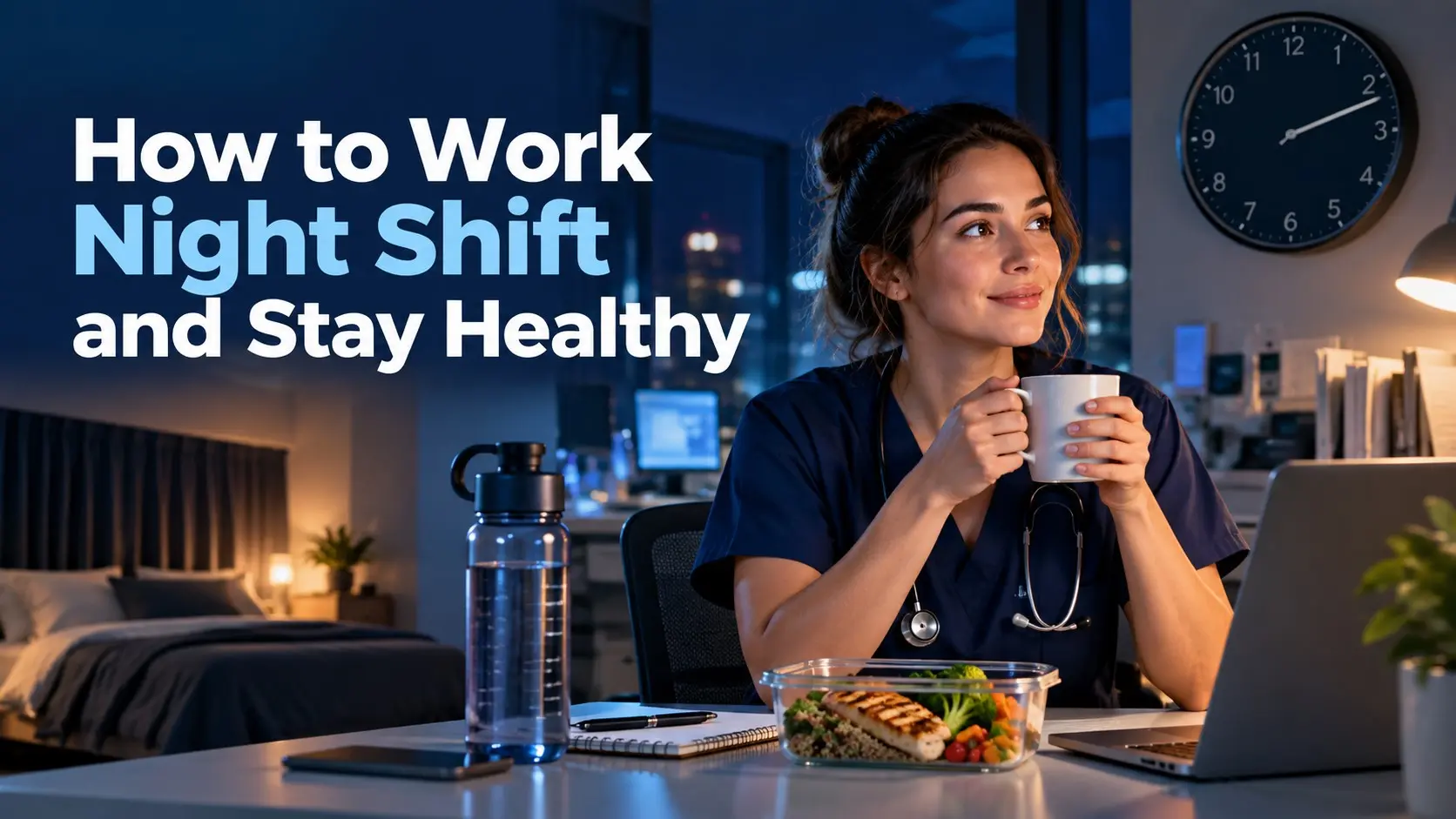
Learning How to Work Night Shift and Stay Healthy starts with one truth: night work asks your body to be awake when its internal clock is pushing toward sleep.
You cannot remove that biological conflict with coffee, supplements, or willpower. You can, however, reduce some of the strain by protecting sleep, using light and caffeine carefully, planning food, moving regularly, and taking fatigue seriously.
The best routine is not the one that looks perfect on paper. It is the one that helps you get enough sleep, stay safe at work and on the road, and still function when the shift is over.
Quick Answer
To stay healthier on night shift, protect at least seven hours of sleep when possible, keep part of your sleep schedule consistent, make the bedroom dark and quiet, use bright light earlier in the shift, limit caffeine near bedtime, use planned naps when safe, eat lighter balanced food overnight, exercise regularly, and never drive when you are struggling to stay awake.
The Biggest Immediate Risk Is Fatigue
Night shift fatigue is not just feeling tired. It can slow reaction time, reduce attention, affect memory, and impair judgement.
If your eyelids are heavy, you keep yawning, you cannot remember the last few miles of a journey, or you are drifting across a lane, you are too sleepy to drive safely.
Do not try to beat severe sleepiness with an open window, loud music, or willpower. Stop driving and use a safer transport plan, or sleep before continuing.
Medical notice: This content is for general educational purposes and does not replace professional medical advice, diagnosis, or treatment. Consult an appropriately qualified healthcare professional for personal medical concerns. This article explains published guidance and does not provide a personal clinical assessment. Always consult qualified medical professionals for diagnosis and treatment of any health condition.
Table of Contents
- Why Night Shift Feels So Hard
- 20 Smart Night Shift Tips
- The Best Sleep Schedule
- How to Use Light
- Caffeine Timing
- Napping Safely
- Eating During Night Shift
- Exercise and Movement
- Safe Driving After Work
- Night Shift on Days Off
- Shift Work Sleep Disorder
- Long Term Health Risks
- A Sample Night Shift Routine
- When to Seek Medical Help
- References and Sources
- Related NextFitLife Guides
- About the Author
- Frequently Asked Questions
Why Is Night Shift Hard on the Body?
Your body follows a roughly 24 hour cycle called the circadian rhythm.
Light is one of its strongest signals. Daylight tells the brain that it is time to be awake, while darkness helps prepare the body for sleep.
Night work turns that pattern around.
You are trying to stay alert when the biological drive for sleep is strong, then trying to sleep while daylight is telling your brain to wake up.
This mismatch is called circadian misalignment.
It can affect more than sleep. Your digestion, appetite, blood glucose regulation, mood, body temperature, and alertness also follow daily rhythms.
Does Night Shift Affect Long Term Health?
Research has linked long term night and rotating shift work with higher rates of several health problems.
These include:
- Sleep disorders
- Type 2 diabetes
- Cardiovascular disease
- Metabolic problems
- Digestive symptoms
- Mood and mental health problems
- Some reproductive problems
The International Agency for Research on Cancer classifies night shift work as probably carcinogenic to humans because of evidence involving circadian disruption.
That classification describes a potential hazard. It does not mean everyone who works nights will develop cancer.
Your individual risk depends on many factors, including how often you work nights, how long you have done it, sleep, smoking, alcohol, weight, physical activity, genetics, and other health conditions.
20 Smart Tips for Working Night Shift and Staying Healthy
1. Treat Sleep as Your Main Health Appointment
Everything else becomes harder when you are chronically sleep deprived.
Adults generally need at least seven hours of sleep in each 24 hour period, although individual needs vary.
Do not give your daytime sleep the leftovers after chores, appointments, and errands.
Block it in your calendar as if it were an important appointment.
2. Go to Bed Soon After You Get Home When That Works for You
NIOSH advises night workers to make use of the morning sleep window rather than spending those hours doing errands.
If you finish work in the early morning, a simple routine can be:
- Travel home safely
- Have a small meal if you are genuinely hungry
- Keep light and stimulation low
- Prepare for bed
- Sleep as soon as practical
Waiting until midday to sleep may make it harder because the body's daytime alerting signal becomes stronger.
3. Keep an Anchor Sleep Period
A complete switch from nights to a normal daytime schedule every few days can leave your body feeling like it is travelling through time zones again and again.
If your life allows it, keep a few hours of sleep at the same time on workdays and days off.
For example, someone who sleeps from 8 a.m. to 3 p.m. after work might still protect late morning sleep on days off rather than instantly switching to a 10 p.m. bedtime.
This is sometimes called an anchor sleep approach.
Your exact schedule should fit work, family life, and how well you sleep.
4. Make Your Daytime Bedroom Very Dark
Daytime sleep is often shorter and lighter than nighttime sleep.
Create as much darkness as you can.
Useful options include:
- Blackout curtains
- A comfortable eye mask
- Covering bright clocks
- Turning off unnecessary screens
- Blocking light around the door
A dark room gives the brain fewer wake signals.
5. Make the Room Quiet, Cool, and Protected
Noise that would barely disturb night sleep can wake you more easily during the day.
Try:
- Earplugs
- A fan
- White noise
- Phone on silent
- A sign asking visitors not to ring the doorbell
- A comfortable room temperature
Tell people in your home when your sleep hours are.
Your daytime sleep is not spare time.
6. Use Bright Light Earlier in the Shift
Bright light can improve alertness.
NIOSH suggests that permanent night workers may benefit from more light during the first half of the shift and less bright light later.
This can support alertness at work while making it easier to wind down afterward.
Light timing is more complicated for rotating workers, so do not turn powerful light therapy into a do it yourself medical treatment if your sleep pattern is already severely disrupted.
7. Reduce Bright Light Before Daytime Sleep
Light after work can tell the brain that the biological day has started.
Once you are home, reduce unnecessary bright light and screens as you prepare for sleep.
Dark glasses after work are sometimes suggested, but there is an important safety warning.
If you are driving and already very sleepy, dark glasses may make you less alert. In that situation, protecting the drive matters more than controlling your body clock.
8. Use Caffeine Early, Not All Night
Caffeine can improve alertness, but timing matters.
Its average caffeine half life is around five to six hours, and it lasts longer in some people.
A coffee near the beginning of your shift may help.
A large energy drink near the end can still be affecting your brain when you are trying to sleep at home.
A practical rule is to stop caffeine several hours before planned sleep.
If you are sensitive to caffeine, you may need a longer gap.
9. Take a Planned Nap Before the First Night Shift
A nap before work can reduce the pressure for sleep later in the night.
NIOSH reviews studies in which longer naps before a night shift improved alertness during the shift.
This can be useful before the first night in a block of shifts.
Do not deliberately stay awake all day before working all night.
That creates a very long period without sleep before you even start work.
10. Use Short Work Naps When They Are Allowed and Safe
A short planned nap can restore some alertness.
NIOSH reports benefits from brief naps of about 15 to 30 minutes.
This is not the same as accidentally falling asleep at your desk, in a vehicle, or while responsible for another person's safety.
Use naps only where your employer allows them and where the environment is safe.
11. Leave Time for Sleep Inertia After a Nap
You may feel slow and groggy immediately after waking.
This is called sleep inertia.
Reaction time, memory, and thinking can be temporarily worse.
The effect is especially important when your job involves:
- Driving
- Machinery
- Medication
- Clinical decisions
- Emergency work
- Other safety critical tasks
Do not wake from a deep nap and immediately perform a high risk task if you can avoid it.
12. Avoid Large Heavy Meals in the Middle of the Night
Your digestive system also follows a circadian rhythm.
Eating a huge meal at 3 a.m. can feel very different from eating it at 3 p.m.
Recent laboratory research suggests that eating large meals during biological night may worsen glucose handling during simulated night work.
This research is promising, but it is not a reason for every night worker to fast all night.
A more practical approach for many people is to eat a proper meal before or earlier in the shift and keep overnight food lighter.
13. If You Need Food Overnight, Choose a Balanced Option
Some workers cannot comfortably or safely work eight to twelve hours without food.
If you need to eat overnight, choose food that gives steady energy rather than a large sugar load.
Ideas include:
- Plain yogurt with fruit and nuts
- Wholegrain toast with eggs
- Oats
- A small chicken or bean wrap
- Fruit with nut butter
- Vegetable soup with a protein source
- Hummus with vegetables and wholegrain crackers
A randomized trial in female night workers found that low glycaemic index meals produced a more stable glucose pattern than a high glycaemic index meal during night shift.
14. Prepare Food Before Work
At 3 a.m., healthy options may be limited to whatever is in the vending machine or open nearby.
Meal preparation removes that decision.
Try packing:
- A main meal
- One or two simple snacks
- Fruit
- A protein source
- A whole grain option
- Water
For broader food planning, see our Nutrition Tips for Better Health.
15. Stay Hydrated Without Flooding Your Sleep
Drink regularly during your waking hours.
Water is a simple default.
But drinking a very large amount immediately before sleep may wake you repeatedly to urinate.
Drink steadily through the shift, then reduce large fluid loads as bedtime gets close.
If you have heart, kidney, or another condition with a prescribed fluid plan, follow your healthcare team's advice.
16. Exercise Across the Week
Night shift is not a reason to abandon exercise.
UK guidance recommends that most adults aim for at least 150 minutes of moderate activity each week, or 75 minutes of vigorous activity, plus strength work on at least two days.
You can split activity into shorter sessions.
Walking, cycling, swimming, strength training, and home workouts all count.
Do not place a very hard workout immediately before your daytime sleep if you find it keeps you awake.
17. Move During the Shift
A workout does not cancel ten hours of sitting.
When your job allows it, break up long periods of sitting.
Try:
- A short walk
- Standing for a few minutes
- Gentle stretching
- Taking the stairs
- Walking during a break
Movement can also help during the low alertness hours of the night.
18. Keep Alcohol and Nicotine Away From Sleep
Alcohol can make you feel sleepy at first, but it can fragment sleep later.
Nicotine is stimulating and can also disturb sleep.
Do not use alcohol as a sleep medicine after night shift.
If stopping smoking is difficult, professional stop smoking support can help.
19. Protect Your Social and Mental Health
Night work can make you feel out of step with everyone around you.
You may sleep during family events and work while friends are free.
Plan connection rather than hoping it happens.
Tell family and friends when you are available and when you must sleep.
Keep some protected time for:
- Family
- Friends
- Exercise
- Hobbies
- Outdoor light
- Rest
If your mood is persistently low, anxious, irritable, or overwhelmed, seek support.
Our Mental Health and Wellness Hub has more practical guidance.
20. Ask for Help When the Schedule Is the Problem
You cannot solve a damaging rota with perfect sleep hygiene.
Work design matters.
UK Health and Safety Executive guidance advises employers to manage fatigue through sensible shift design, adequate breaks, limits on demanding night work, and suitable recovery time.
If your shifts are leaving you unsafe, chronically sleep deprived, or unable to recover, raise the problem with your manager, occupational health team, union representative, or another appropriate workplace contact.
What Is the Best Sleep Schedule for Night Shift?
There is no single schedule that works for every night worker.
Your best pattern depends on:
- Your shift start and finish time
- Your commute
- Whether you work permanent or rotating nights
- Childcare
- Your natural sleep tendency
- How many nights you work together
For a permanent 11 p.m. to 7 a.m. worker, one possible pattern might look like this:
| Time | Example Routine |
|---|---|
| 7:00 a.m. | Finish work and arrange safe travel home |
| 7:30 a.m. | Light meal if hungry, low stimulation, prepare for sleep |
| 8:00 a.m. | Begin main sleep period |
| 3:00 p.m. | Wake, eat, hydrate and get some daylight |
| 4:00 to 7:00 p.m. | Exercise, errands, family time or normal activities |
| 7:00 to 9:00 p.m. | Main meal and prepare for work |
| 10:00 p.m. | Travel to work and use brighter light as shift begins |
| 11:00 p.m. to early shift | Work, hydrate, caffeine only if needed and early enough |
| Overnight | Light balanced snack if needed and planned break or nap if allowed |
This is an example, not a prescription.
Should You Switch Back to Daytime Sleep on Days Off?
That depends on how often you work nights.
If you work permanent nights, changing completely back to daytime life after every shift block can make adjustment harder.
A compromise schedule can help some people retain part of the same sleep period each day.
If you only work occasional night shifts, full adaptation may not be realistic or useful.
In that situation, strategic naps and recovery sleep may make more sense than trying to turn your whole body clock around.
How Many Night Shifts Should You Work in a Row?
There is no universal safe number for every job.
Workload matters.
An office night is not the same as a twelve hour emergency medical shift or operating heavy machinery.
UK HSE good practice guidance recommends restricting long shifts, night shifts, and early morning shifts to around two or three consecutive shifts in many settings, especially where work is demanding or safety critical.
Employers also have responsibility for managing fatigue risk rather than leaving the whole burden with individual workers.
When Is the Hardest Time to Stay Awake?
The strongest biological pressure for sleep is usually during the early morning hours.
NIOSH identifies roughly 2 a.m. to 5 a.m. as a particularly difficult period.
This is when attention can slip and microsleeps become more dangerous.
If possible, avoid placing your most monotonous or safety critical work in your lowest alertness period without suitable safeguards.
What Is the Best Way to Use Caffeine on Night Shift?
Use the smallest amount that helps rather than drinking caffeine automatically all night.
A simple pattern can be:
- Start the shift without caffeine if you already feel alert.
- Use coffee or tea early in the shift if needed.
- Avoid repeated large doses.
- Stop several hours before planned sleep.
- Remember that energy drinks can contain large caffeine and sugar amounts.
Caffeine can improve alertness.
It cannot replace sleep.
Should You Take Melatonin After Night Shift?
Melatonin can affect sleep timing, but it is not a simple answer for every night worker.
The best dose and timing depend on your shift pattern and what you are trying to do with your body clock.
It can also cause sleepiness and interact with medicines.
If you are considering melatonin regularly, especially if you take prescription medicines, are pregnant, or have a long term condition, discuss it with a doctor, pharmacist, or sleep specialist.
Do not take a sedating product and then drive.
Should Night Workers Eat During the Night?
This question is changing as new research appears.
Small controlled trials suggest that avoiding large meals during biological night may reduce some of the metabolic disruption caused by night work.
A 2025 randomized controlled study found that overnight fasting protected some measures of glucose tolerance compared with eating a full meal at night.
Another randomized study found that a low glycaemic index night meal produced a better glucose pattern than a high glycaemic index meal.
This does not prove that every worker should fast for an entire night shift.
People with diabetes, pregnancy, certain medical conditions, physically demanding jobs, eating disorder history, or medicine that depends on food may need a different approach.
A useful middle ground is to place larger meals before or earlier in the shift and choose lighter food overnight when hunger requires it.
What Foods Work Well on Night Shift?
Choose food that is easy to digest and gives steady energy.
| Need | Useful Options | Limit When Possible |
|---|---|---|
| Protein | Eggs, yogurt, fish, chicken, tofu, beans, lentils | Very greasy fried meals |
| Carbohydrate | Oats, wholegrain bread, brown rice, fruit | Large amounts of sweets and refined snacks |
| Fibre | Vegetables, fruit, beans, whole grains, nuts | Huge portions if they cause overnight bloating |
| Drinks | Water, unsweetened drinks, tea or coffee early if needed | Repeated sugary energy drinks and late caffeine |
Can Night Shift Cause Weight Gain?
Night work does not guarantee weight gain.
It can, however, make weight management harder.
Several things may contribute:
- Short sleep
- Irregular meals
- Night eating
- Stress
- Reduced activity
- Easy access to snack foods
- Changes in appetite regulation
Focus on repeatable habits rather than aggressive dieting while sleep deprived.
See our Weight Management and Metabolism Hub for more guidance.
Can Night Shift Cause Diabetes?
Night shift does not mean you will develop diabetes.
But long term shift work has been associated with a higher risk of type 2 diabetes and metabolic problems.
Circadian disruption, sleep loss, eating timing, weight, activity, and other factors may all contribute.
If you already have prediabetes, read our Prediabetes NHS Guide for blood testing and prevention information.
Can Night Shift Affect Heart Health?
Long term shift work is associated with cardiovascular risk.
That does not mean one night shift damages your heart.
Think about risk over years and the full health pattern.
Protect:
- Sleep
- Blood pressure
- Physical activity
- Smoking status
- Weight where relevant
- Blood glucose
- Cholesterol
Regular health checks become more important when several cardiovascular risk factors are present.
How Dangerous Is Driving Home After Night Shift?
This deserves its own section because it can be the most immediate danger in the entire article.
Fatigue can impair driving before you realise how impaired you are.
NIOSH notes that after long periods awake, driving performance can become comparable with alcohol related impairment.
Warning signs include:
- Heavy eyelids
- Frequent blinking
- Repeated yawning
- Drifting from your lane
- Missing an exit
- Not remembering part of the journey
- Difficulty keeping your head up
If this happens, stop.
Safer options include:
- Getting a lift
- Using a taxi or public transport
- Taking a planned nap before driving
- Arranging a family pickup
- Sleeping near work when that is available
Turning up the radio does not make dangerous sleepiness safe.
What Is Shift Work Sleep Disorder?
Shift work sleep disorder is a circadian sleep problem linked with a work schedule that conflicts with normal sleep timing.
Typical symptoms include:
- Difficulty sleeping when you have time to sleep
- Severe sleepiness while you need to work
- Poor concentration
- Reduced alertness
- Fatigue despite having enough time available for sleep
Not every tired night worker has the disorder.
But persistent insomnia or excessive sleepiness deserves assessment.
When Should a Night Worker See a Doctor?
Talk with your GP, occupational health service, or a sleep specialist if:
- You cannot sleep even when you have enough time available
- You regularly fall asleep unintentionally
- You nearly fall asleep while driving
- Your partner notices loud snoring or breathing pauses
- You depend on large amounts of caffeine just to function
- Your mood is getting worse
- You are making fatigue related mistakes
- Your blood pressure, glucose, or weight has changed significantly
- Night work is making an existing medical condition difficult to control
If you repeatedly feel unsafe at work or on the road, do not treat that as a normal part of working nights.
A Simple Night Shift Checklist
- Protect at least seven hours for sleep when possible
- Make the sleep room dark, quiet, cool, and comfortable
- Use brighter light earlier in the shift
- Stop caffeine several hours before sleep
- Use planned naps rather than accidental dozing
- Choose lighter balanced food overnight
- Prepare food before work
- Stay hydrated
- Move during breaks
- Exercise through the week
- Keep some sleep timing consistent on days off
- Do not drive when severely sleepy
- Tell family when your protected sleep hours are
- Ask for workplace support when fatigue is becoming unsafe
Conclusion
How to Work Night Shift and Stay Healthy is not about finding a trick that makes the human body stop caring about daylight and darkness.
The strongest strategy is to protect sleep first, then make light, caffeine, food, movement, and recovery work around that sleep.
Use caffeine early instead of all night. Prepare lighter food rather than depending on vending machines. Consider planned naps when they are allowed, and never treat dangerous sleepiness behind the wheel as something you can push through.
Your next step is simple: choose a sleep window for your next block of night shifts, protect it on your calendar, and build the rest of your routine around it.
References and Sources
- CDC, National Institute for Occupational Safety and Health.
Fatigue and Work.
Updated July 14, 2026. Covers work related fatigue, night work, extended schedules, impaired attention, memory, reaction time, judgement, and shared employer and worker responsibility for fatigue management.
https://www.cdc.gov/niosh/fatigue/about/
- CDC, National Institute for Occupational Safety and Health.
Coping With the Night and Evening Shifts: Sleep.
Practical guidance on sleeping soon after a night shift, protecting morning sleep, getting enough total sleep, and using naps when needed.
https://www.cdc.gov/niosh/work-hour-training-for-nurses/longhours/mod9/05.html
- CDC, National Institute for Occupational Safety and Health.
Coping With the Night and Evening Shifts: Light.
Explains strategic light exposure for alertness and sleep, including the safety concern around dark glasses when a sleepy worker must drive home.
https://www.cdc.gov/niosh/work-hour-training-for-nurses/longhours/mod9/03.html
- CDC, National Institute for Occupational Safety and Health.
Napping, an Important Fatigue Countermeasure.
Covers planned naps before and during night work, short naps for alertness, longer naps before night shift, and sleep inertia after waking.
https://www.cdc.gov/niosh/work-hour-training-for-nurses/longhours/mod7/01.html
- CDC, National Institute for Occupational Safety and Health.
Caffeine and Shift Work.
Explains that caffeine can improve alertness, takes roughly 30 minutes to act, has a typical half life of about five to six hours, and can interfere with sleep when used near the end of a night shift.
https://www.cdc.gov/niosh/work-hour-training-for-nurses/longhours/mod6/11.html
- CDC, National Institute for Occupational Safety and Health.
Preventing Crashes From Drowsy Driving.
Guidance on the dangers of driving while sleep deprived, why willpower cannot prevent microsleeps, and safer choices such as alternative transport or sleeping before the journey.
https://www.cdc.gov/niosh/work-hour-training-for-nurses/longhours/mod11/05.html
- UK Health and Safety Executive.
Hints and Tips for Shift Workers.
Practical UK guidance covering sleep schedules, daytime sleep, sleeping before a first night shift, recovery after night work, food, exercise, and sleep environment.
https://www.hse.gov.uk/humanfactors/topics/shift-workers.htm
- UK Health and Safety Executive.
Good Practice Guidelines for Shift Work.
Guidance for employers on night shift length, consecutive shifts, breaks, shift rotation, recovery time, lighting, fatigue, and health assessment.
https://www.hse.gov.uk/humanfactors/topics/good-practice-guidelines.htm
- National Institutes of Health.
Daytime Meals May Reduce Health Risks of Night Shift Work.
Reports a controlled laboratory study in which restricting food intake to daytime prevented the rise in average glucose seen with nighttime eating during simulated night work.
https://www.nih.gov/news-events/nih-research-matters/daytime-meals-may-reduce-health-risks-night-shift-work
- Diabetologia.
Fasting as an Intervention to Alter the Impact of Simulated Night Shift Work on Glucose Metabolism in Healthy Adults.
Randomized controlled laboratory trial published for 2025 examining fasting, snacking, and meal intake during simulated night shift and their effects on glucose metabolism.
https://pmc.ncbi.nlm.nih.gov/articles/PMC11663163/
- Nature Communications.
Daytime Eating During Simulated Night Work Mitigates Changes in Cardiovascular Risk Factors.
A 2025 randomized trial analysis finding that daytime meal timing reduced several adverse cardiovascular changes produced by simulated night work.
https://www.nature.com/articles/s41467-025-57846-y
- NHS.
Physical Activity Guidelines for Adults Aged 19 to 64.
Current UK guidance recommending at least 150 minutes of moderate activity or 75 minutes of vigorous activity each week, plus strengthening activity on at least two days.
https://www.nhs.uk/live-well/exercise/physical-activity-guidelines-for-adults-aged-19-to-64/
- International Agency for Research on Cancer, World Health Organization.
IARC Monographs Volume 124: Night Shift Work.
Explains the IARC classification of night shift work as probably carcinogenic to humans and the role of circadian disruption in the evidence assessment.
https://www.iarc.who.int/news-events/iarc-monographs-volume-124-night-shift-work/
Related NextFitLife Guides and Hubs
- Mental Health and Wellness Hub
- 24 Proven Nutrition Tips for Better Health
- Physical Fitness and Mental Health
- Prediabetes NHS: Prevention, Tests and Daily Care
- Weight Management and Metabolism Hub
- General Wellness and Healthy Lifestyle Hub
About the Author
Adel Galal is the founder and lead writer of NextFitLife. He writes practical health, fitness, sleep, nutrition, metabolic health, and healthy lifestyle content using recognised medical, occupational health, government, and academic sources.
For sleep and shift work topics, his role is to compare current evidence and turn it into realistic habits that people can use around work and family responsibilities.
He does not diagnose sleep disorders, prescribe sleeping medicine, recommend individual work restrictions, or replace care from a doctor, sleep specialist, occupational health physician, pharmacist, or other qualified healthcare professional.
This content is for general educational purposes and does not replace professional medical advice, diagnosis, or treatment. Consult an appropriately qualified healthcare professional for personal medical concerns. This article explains published guidance and does not provide a personal clinical assessment. Always consult qualified medical professionals for diagnosis and treatment of any health condition.
Learn more about Adel Galal and NextFitLife on the About Us page.
Frequently Asked Questions
How can I work night shift and stay healthy?
Protect sleep first. Keep the bedroom dark and quiet, use caffeine early rather than near bedtime, prepare balanced food, exercise regularly, use planned naps when safe, and never drive when severely sleepy.
How much sleep should a night shift worker get?
Most adults need at least seven hours of sleep in each 24 hour period, although individual needs vary. Night workers often need to protect more time in bed because daytime sleep can be shorter and lighter.
When should I sleep after a night shift?
Many night workers sleep best when they go to bed fairly soon after getting home. Delaying sleep for errands can use up the morning period when sleep may be easier to obtain.
Should I sleep before my first night shift?
A planned nap before the first night shift can improve alertness later. Staying awake all day before working all night increases sleep deprivation.
Should I sleep during my night shift?
A planned short nap can improve alertness when your employer allows it and the setting is safe. Allow time after waking for sleep inertia to pass before doing safety critical work.
How long should a night shift nap be?
Brief naps of about 15 to 30 minutes can improve alertness. Longer naps before a shift may also help, but they can cause more sleep inertia immediately after waking.
When should I drink coffee on a night shift?
Caffeine is usually more useful earlier in the shift. Avoid it for several hours before planned sleep because its effects can remain for many hours.
Should I use energy drinks on night shift?
Energy drinks can contain large amounts of caffeine and sugar. They may temporarily increase alertness but can interfere with sleep and do not replace adequate rest.
What should I eat during a night shift?
A balanced meal before or early in the shift can work well. If you need food overnight, choose a lighter option with protein, fibre, and lower glycaemic carbohydrates rather than a very large, greasy, or high sugar meal.
Should I fast during night shift?
Recent small trials suggest that avoiding large nighttime meals may improve some metabolic measures, but there is not enough evidence to tell every night worker to fast. Medical conditions, medicines, pregnancy, physical workload, and individual needs matter.
Can night shift cause weight gain?
Night work can make weight management harder through sleep loss, irregular food timing, stress, lower activity, and changes in appetite, but weight gain is not inevitable.
Can working nights cause diabetes?
Long term night and rotating shift work is associated with a higher risk of type 2 diabetes. Sleep, meal timing, activity, weight, genetics, and other factors can all affect individual risk.
Is night shift bad for your heart?
Long term shift work has been associated with cardiovascular disease, although it does not mean every night worker will develop heart disease. Managing blood pressure, sleep, physical activity, smoking, glucose, and cholesterol remains important.
Should I exercise after a night shift?
You can if it feels comfortable, but avoid delaying needed sleep for a workout. If vigorous exercise immediately before sleep keeps you awake, exercise after waking or before your shift instead.
Should I wear sunglasses after night shift?
Reducing bright morning light can sometimes help with daytime sleep. However, NIOSH warns that dark glasses may reduce alertness if you are already very sleepy and driving. Driving safety comes first.
Is it safe to drive home after a night shift?
Only if you are alert enough to drive safely. Heavy eyelids, repeated yawning, lane drifting, missing exits, or not remembering the journey are warning signs to stop driving and use another plan.
What is shift work sleep disorder?
Shift work sleep disorder is a circadian sleep disorder in which a work schedule contributes to persistent insomnia, excessive sleepiness, or both. Symptoms that keep affecting safety or daily function deserve medical assessment.
Should I take melatonin for night shift?
Melatonin can affect sleep timing, but the right timing and dose depend on the person's schedule. Discuss regular use with a doctor, pharmacist, or sleep specialist, especially if you take medicines or have medical conditions.
How should I manage days off after night shift?
Permanent night workers may benefit from keeping part of their sleep period similar on days off. Occasional night workers may use recovery sleep and naps instead of trying to fully adapt to a night schedule.
When should I see a doctor about night shift fatigue?
Seek advice if you repeatedly cannot sleep despite having enough time, fall asleep unintentionally, nearly fall asleep while driving, snore with breathing pauses, or have persistent mood, concentration, or health problems related to the schedule.

Health & wellness writer with 30+ years of experience in nutrition, fitness, and healthy aging. Founder of NextFitLife.com — evidence-based health guidance.