
Published on: Jul 18, 2023
Last updated: October 4, 2026
Next review: October 2027, or sooner if major liver guidance or treatment approvals change.
Written and source checked by: Adel Galal, Founder and Lead Writer at NextFitLife
Medical review status: This article has not been medically reviewed by a hepatologist, gastroenterologist, doctor, pharmacist, or registered dietitian.
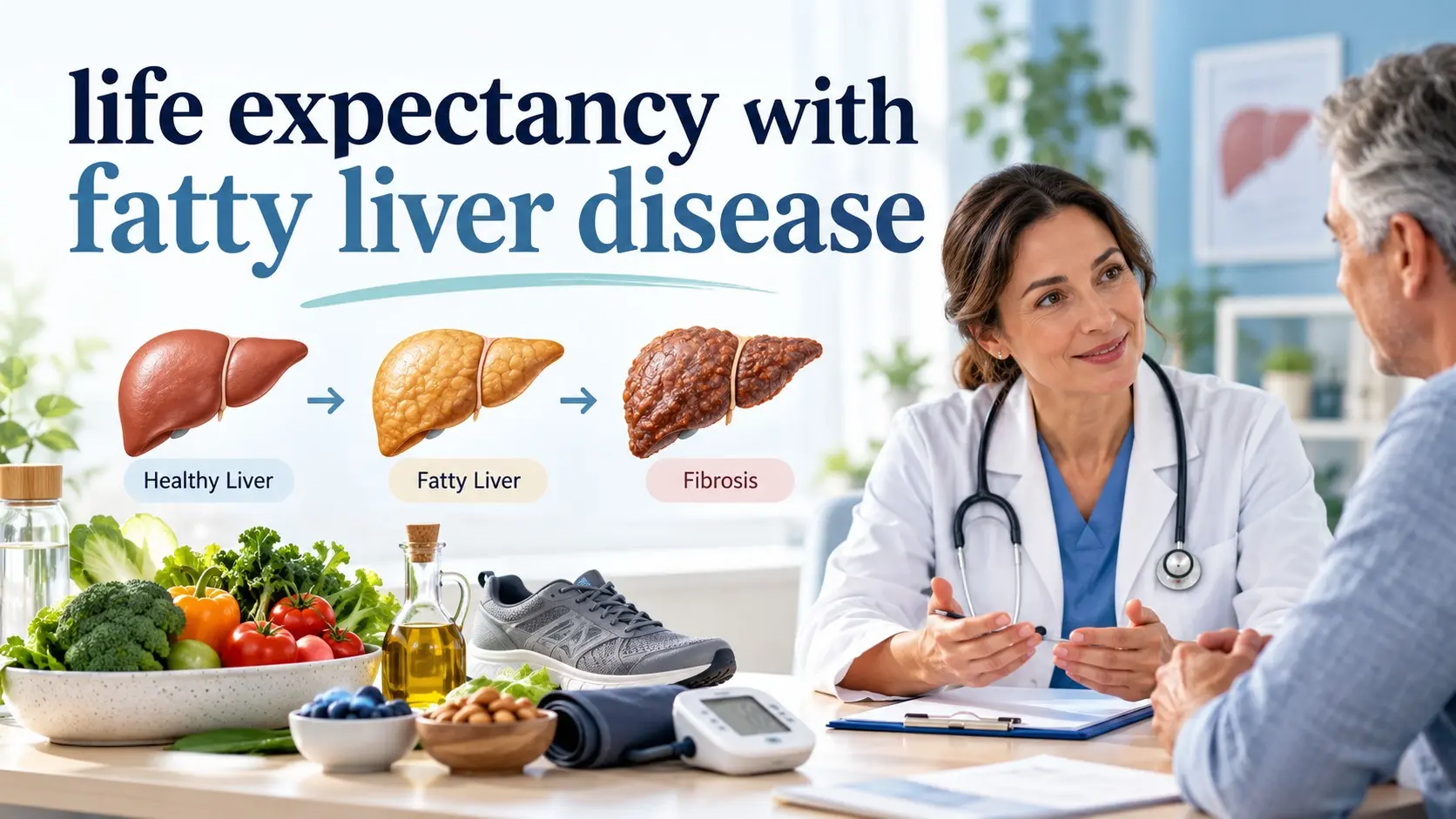
Life expectancy with fatty liver disease cannot be predicted from liver fat alone. Many people with early disease never develop severe liver damage. Risk rises most when liver fibrosis advances, especially with cirrhosis. Heart disease, type 2 diabetes, kidney disease, obesity, alcohol exposure, and other health problems also affect long term outlook.
That is the answer I would want someone to hear first.
A fatty liver diagnosis does not come with a countdown clock.
Two people can both have fat in the liver and have very different levels of risk. One may have little or no scarring. Another may already have advanced fibrosis.
The difference matters far more than the words “fatty liver” on an ultrasound report.
Medical Notice: This content is for general educational purposes and does not replace professional medical advice, diagnosis, or treatment. Consult an appropriately qualified healthcare professional for personal medical concerns. This article explains published guidance and does not provide a personal clinical assessment. Always consult qualified medical professionals for diagnosis and treatment of any health condition.
This article cannot estimate your personal lifespan, determine your fibrosis stage, diagnose cirrhosis, or tell you whether a liver medicine is right for you.
Seek urgent medical care for vomiting blood, black stools, severe abdominal swelling, new confusion, fainting, severe weakness, yellow skin or eyes with worsening illness, or major breathing trouble.
Table of Contents
- Quick Answer
- Why there is no single life expectancy number
- Why fibrosis matters most
- 11 Critical Facts
- Early liver fat is different from cirrhosis
- Fibrosis stage drives liver risk
- Heart disease matters
- Diabetes changes prognosis
- Cirrhosis changes the picture
- Symptoms do not show the stage
- Normal liver enzymes do not prove low risk
- Lifestyle treatment still matters
- New MASH medicines are now available
- Medicines have not yet proved longer survival
- Monitoring can find risk earlier
- Fibrosis Stages F0 to F4
- How Doctors Estimate Risk
- FIB 4
- Elastography
- Blood tests
- Specialist assessment
- Ways to Improve Outlook
- Red Flags and FAQs
What is fatty liver disease called now?
The language has changed.
The condition once widely called nonalcoholic fatty liver disease, or NAFLD, is now commonly called metabolic dysfunction associated steatotic liver disease, or MASLD.
The inflammatory form once called NASH is now commonly called metabolic dysfunction associated steatohepatitis, or MASH.
You will still see the older terms in medical records, research papers, and older websites.
The new names do not mean it is a new disease.
They describe the condition in a way that gives more attention to metabolic risk.
For a full treatment guide, read the NextFitLife Fatty Liver Disease Treatments Guide.
Does fatty liver shorten life expectancy?
It can, but the answer depends on the stage.
Simple liver fat without significant fibrosis has a much different outlook from advanced fibrosis or cirrhosis.
Current liver guidelines point to fibrosis stage as the strongest liver related predictor of poor outcomes in MASLD.
This is why asking only, “Do I have fatty liver?” is not enough.
A more useful question is:
Do I have liver scarring, and if so, how advanced is it?
Fact 1: Liver fat alone does not tell you your lifespan
An ultrasound may report fatty liver, but that image does not tell you how long you will live.
It does not fully tell you whether there is inflammation or how much scar tissue is present.
Many people with early MASLD have no symptoms.
Some stay stable for years.
Others develop MASH and progressive scarring.
The goal is to find the people at higher risk before major liver damage occurs.
Fact 2: Fibrosis is the most useful liver risk marker
Liver fibrosis means scar tissue has formed in the liver.
Fibrosis can be described from F0 to F4.
As fibrosis becomes more advanced, the chance of liver complications and liver related death rises.
Current European and Asian liver guidelines identify fibrosis as a key predictor of long term liver outcomes.
This is the single biggest concept to take away from this article.
What do F0, F1, F2, F3, and F4 mean?
| Stage | Simple Meaning | General Risk Picture |
|---|---|---|
| F0 | No fibrosis | Lowest liver scarring risk group |
| F1 | Mild fibrosis | Early scar tissue is present |
| F2 | Moderate or significant fibrosis | Risk becomes more important and closer follow up is often needed |
| F3 | Advanced or bridging fibrosis | Higher risk of progression and liver complications |
| F4 | Cirrhosis | Highest risk group and needs specialist monitoring |
This table is a simple guide.
Your stage should come from proper medical assessment, not from symptoms or an online quiz.
Fact 3: Heart disease may matter as much as the liver
MASLD is closely linked with cardiovascular risk.
People with fatty liver often also have high blood pressure, abnormal cholesterol, insulin resistance, abdominal obesity, or type 2 diabetes.
Large studies show that cardiovascular disease is one of the leading causes of death in people with fatty liver disease.
That means good fatty liver care is not just about liver enzymes.
Your clinician may also focus on:
- Blood pressure
- LDL cholesterol
- Triglycerides
- Blood glucose
- HbA1c
- Body weight when relevant
- Smoking
- Physical activity
This wider view can protect more than your liver.
For more on metabolic risk, visit the NextFitLife Weight Management and Metabolism Guide.
Fact 4: Type 2 diabetes raises the risk of progression
Type 2 diabetes is one of the most important risk factors in MASLD.
Current guidance links diabetes with greater risk of fibrosis progression and poor liver outcomes.
Diabetes also raises heart and kidney risk.
This is why blood sugar treatment is part of liver treatment.
Someone with liver fat and diabetes deserves more careful risk assessment than someone with liver fat and no metabolic risk factors.
Fact 5: Cirrhosis changes the prognosis
Liver cirrhosis means scar tissue has changed the structure of the liver.
Some people have compensated cirrhosis.
This means the liver is scarred but can still perform its main jobs well enough that major complications have not appeared.
Decompensated cirrhosis is more serious.
It means complications have developed.
These can include:
- Fluid in the abdomen
- Bleeding from enlarged veins
- Confusion from hepatic encephalopathy
- Jaundice
- Kidney problems
- Other signs of liver failure
At this stage, prognosis depends on liver function, complications, other health conditions, and whether liver transplantation is an option.
Can someone with fatty liver live for decades?
Yes, many people live for many years after fatty liver is found.
But that statement needs context.
A person with F0 liver fat is not in the same risk group as someone with F4 cirrhosis.
This is why questions such as “Can I live 20 years with fatty liver?” cannot be answered honestly without knowing the stage and the rest of the person's health.
No responsible article can turn one ultrasound finding into a personal survival clock.
What do long term studies show?
Research does show a clear rise in risk as fibrosis advances.
One large prospective study cited in American liver guidance followed people with biopsy proven fatty liver disease.
| Fibrosis Group | Deaths per 100 Person Years in the Study | How to Read It |
|---|---|---|
| F0 to F2 | 0.32 | Lower group mortality than advanced stages |
| F3 bridging fibrosis | 0.89 | Mortality was higher as fibrosis advanced |
| Cirrhosis | 1.76 | The highest rate among these groups |
Do not turn these study rates into your personal life expectancy.
They describe groups of patients, not one person.
Age, diabetes, heart disease, cancer, kidney health, alcohol use, treatments, and many other factors can change individual risk.
Fact 6: Symptoms do not tell you the fibrosis stage
Fatty liver disease can stay silent for a long time.
You can feel well and still have fibrosis.
You can also feel tired for many reasons that have nothing to do with liver scarring.
This means symptoms are a poor way to track disease stage.
The old idea that “more energy” or “clearer skin” proves the liver is healing is too weak to use as medical monitoring.
Doctors use objective tests.
Fact 7: Normal liver enzymes do not rule out fibrosis
ALT and AST are useful blood tests.
They do not tell the whole story.
A person can have significant fibrosis even when liver enzyme levels are not dramatically raised.
This is why fibrosis assessment may include more than routine liver blood tests.
How do doctors estimate liver fibrosis?
The goal is to find people who may have advanced scarring without sending everyone straight to a liver biopsy.
FIB 4
FIB 4 is a blood based risk score.
It uses age, AST, ALT, and platelet count.
It can help identify people who are unlikely to have advanced fibrosis and people who need more testing.
It is a screening and risk tool.
It is not a personal life expectancy calculator.
Liver elastography
Liver elastography measures liver stiffness.
Transient elastography is one common method.
Greater stiffness can suggest more fibrosis, although results need proper interpretation.
Blood tests and imaging
A clinician may also review liver enzymes, platelet count, glucose, HbA1c, cholesterol, triglycerides, ultrasound results, and other tests.
Liver biopsy
A biopsy is not required for every person.
It can still be useful when the diagnosis or stage is unclear or when treatment decisions need more information.
Fact 8: Lifestyle treatment can change the risk picture
Early MASLD is not something to ignore, but it is also not a reason to give up.
Weight management when appropriate, regular movement, nutritious food, and good control of diabetes and cardiovascular risk can improve metabolic health and reduce liver fat.
Exercise may improve liver fat and insulin sensitivity even when body weight changes only a little.
The goal is not a two week detox.
It is a pattern you can keep.
Build meals around simple foods
A useful eating pattern can include vegetables, fruit, beans, whole grains, fish, eggs, lean poultry, yogurt or suitable alternatives, nuts, seeds, and unsaturated fats such as olive oil.
Limit frequent sugary drinks and large amounts of highly refined food.
You do not need one perfect liver diet.
For practical food guidance, read 24 Proven Nutrition Tips for Better Health.
Move regularly
Walking, cycling, swimming, resistance exercise, and other activities can all contribute.
Choose movement you can repeat.
Manage diabetes and cholesterol
Good metabolic health is part of liver care.
Do not stop statins or diabetes medicine because you have fatty liver unless your clinician tells you to.
How much weight loss helps fatty liver?
There is no single target that is right for every person.
Weight loss is not needed for everyone with liver disease.
When a person has overweight or obesity and weight reduction is medically appropriate, greater sustained weight loss tends to produce larger improvements in liver fat and MASH.
The plan should still protect muscle, nutrition, and long term health.
Crash diets and severe fasting are not the goal.
For safer weight guidance, use the NextFitLife Weight Loss and Metabolism Guide.
What about alcohol?
The cause of the liver disease matters.
Alcohol can add more liver injury in someone who already has metabolic liver disease.
Current MASLD guidance discourages alcohol, especially as fibrosis advances.
People with cirrhosis should discuss alcohol directly with their liver team.
If you drink heavily every day, do not suddenly stop on your own if there is a risk of alcohol withdrawal. Withdrawal can be dangerous and may need medical care.
Fact 9: There are now targeted medicines for selected MASH patients
Treatment eligibility depends on the diagnosis, fibrosis stage and individual safety considerations.
There is no one medicine for every person with fatty liver disease.
But there are now targeted prescription options for selected adults with MASH and moderate to advanced fibrosis.
Resmetirom
Resmetirom, sold in the United States as Rezdiffra, received FDA approval in 2024.
It is used with diet and exercise for selected adults with noncirrhotic MASH and fibrosis consistent with F2 to F3.
It is not a treatment for everyone with simple liver fat.
It also requires attention to medicine interactions, liver tests, thyroid related effects, and other safety issues.
Semaglutide
In August 2025, the FDA approved Wegovy, which contains semaglutide, for selected adults with noncirrhotic MASH and moderate to advanced fibrosis.
The approval was based on improvement in MASH and liver fibrosis during an ongoing clinical trial.
The medicine already had other approved uses, but products and doses are not interchangeable for every condition.
A qualified prescriber needs to decide whether the medicine fits the patient.
Fact 10: New treatments have not yet proved that they extend life
This is a very important limit.
Both current MASH approvals use the FDA accelerated approval pathway.
That means the approvals are based on evidence such as improvement in liver inflammation and fibrosis.
Longer trials are continuing to find out whether these improvements lead to fewer cases of cirrhosis, liver failure, transplantation, or death.
So it would be wrong to say:
“Take this medicine and you will live X years longer.”
We do not have that answer yet.
Fact 11: Monitoring matters even when you feel fine
Fatty liver disease is often silent.
That makes follow up important.
Depending on risk, monitoring may include:
- Weight and waist measurement when relevant
- Blood pressure
- Glucose or HbA1c
- Cholesterol and triglycerides
- AST and ALT
- Platelet count
- FIB 4
- Elastography
- Other liver imaging
- Medicine monitoring
The frequency depends on your fibrosis risk, diabetes, age, current treatment, and previous results.
What happens if fatty liver reaches cirrhosis?
Cirrhosis changes medical care.
People with cirrhosis need specialist follow up because of risks such as liver cancer, portal hypertension, varices, and hepatic decompensation.
American liver guidance recommends regular surveillance for hepatocellular carcinoma in people with cirrhosis.
Screening for enlarged veins and other complications may also be needed.
If cirrhosis becomes decompensated, liver transplant assessment may become part of care.
Can cirrhosis improve?
Cirrhosis has long been described as permanent scarring.
The picture is now more nuanced.
Some patients can show regression of fibrosis when the cause of injury is controlled.
That does not mean advanced cirrhosis can simply be erased.
Someone who has had cirrhosis may still need long term surveillance even if tests improve.
What raises the risk of worse outcomes?
| Factor | Why It Matters |
|---|---|
| F2 to F4 fibrosis | More advanced scarring raises liver related risk |
| Type 2 diabetes | Raises risk of fibrosis progression and cardiovascular disease |
| Abdominal obesity | Adds metabolic and cardiovascular risk |
| High blood pressure | Raises cardiovascular risk |
| Abnormal cholesterol or triglycerides | Contributes to cardiometabolic risk |
| Alcohol exposure | Can add liver injury |
| Smoking | Raises cardiovascular and cancer risk |
| Kidney disease | Adds to overall health risk |
What may improve the outlook?
No lifestyle step can promise a longer life.
Still, treating the risks that drive liver, heart, kidney, and metabolic disease is a sensible way to improve the health picture.
- Find out the fibrosis risk. Ask whether FIB 4 or elastography is appropriate.
- Manage diabetes. Keep glucose care on the same priority list as liver care.
- Treat high blood pressure. Cardiovascular health matters greatly in MASLD.
- Manage cholesterol and triglycerides. Do not assume lipid treatment is unsafe just because liver fat is present.
- Work toward sustainable weight management when appropriate. Avoid crash diets.
- Exercise regularly. Movement can improve metabolic health even without dramatic weight loss.
- Discuss alcohol honestly. The safest advice changes with liver stage and drinking pattern.
- Avoid unproven detox products. Some supplements can injure the liver or interact with medicine.
- Take prescribed medicine correctly. New MASH drugs are for selected patients, not general liver cleanses.
- Keep follow up appointments. Liver disease may progress without obvious symptoms.
Do liver detox drinks improve life expectancy?
No detox drink has been shown to extend life in fatty liver disease.
Lemon water does not remove liver fat.
Apple cider vinegar does not dissolve fibrosis.
Juice cleanses do not repair cirrhosis.
Milk thistle, turmeric, green tea extracts, and other supplements should not replace evidence based medical treatment.
Some concentrated herbal products can even cause liver injury.
What about coffee?
Coffee has been linked in observational research with better liver outcomes in some populations.
That does not make coffee a treatment for cirrhosis or MASH.
If you already drink coffee and caffeine is safe for you, it can fit a healthy eating pattern.
You do not need to start drinking large amounts of coffee to treat liver disease.
Can bariatric surgery improve fatty liver disease?
For selected people with obesity, metabolic or bariatric surgery can lead to major weight and metabolic improvements.
It may also improve MASLD and MASH.
Advanced liver disease changes the safety picture, so people with cirrhosis need specialist assessment before surgery.
Read the NextFitLife Bariatric Surgery Guide for a broader look at benefits, risks, and medical assessment.
What symptoms may suggest advanced liver disease?
Early fatty liver often causes no clear symptoms.
More advanced disease can cause:
- Yellow skin or eyes
- Swelling in the abdomen
- Swelling in the legs
- Easy bruising
- Severe itching
- Muscle loss
- Confusion or unusual sleepiness
- Vomiting blood
- Black stools
These symptoms need medical assessment.
Vomiting blood, black stools, major confusion, fainting, or severe illness can be emergencies.
Five life expectancy myths to drop
Myth 1: Fatty liver means you will die from liver disease
No.
Many people never reach liver failure.
Risk depends strongly on fibrosis and other diseases.
Myth 2: Stage 1 fatty liver means you have a fixed number of years left
No.
Early disease does not provide a countdown.
Myth 3: Normal ALT means the liver is safe
No.
Important fibrosis can exist even when liver enzymes are not very high.
Myth 4: Feeling better proves the liver has healed
No.
Symptoms are not a reliable fibrosis test.
Myth 5: A new MASH medicine guarantees longer life
No.
The current approved treatments improved liver biopsy outcomes in trials, but studies are still following patients to see whether they reduce major events and death.
What should you ask after a fatty liver diagnosis?
You do not need to ask your doctor to predict the exact year you will live to.
Ask questions that can change what happens next.
- Do I have MASLD, MASH, alcohol related disease, or another cause?
- What is my fibrosis risk?
- Should we calculate FIB 4?
- Do I need liver elastography?
- Do I need a hepatologist?
- How are my blood pressure, cholesterol, and diabetes?
- Is alcohol safe for me?
- Could any medicine or supplement affect my liver?
- Do I qualify for a MASH treatment?
- How often should my liver risk be checked?
When should you see a liver specialist?
A hepatology or gastroenterology referral may be useful when testing suggests advanced fibrosis, when the cause of liver disease is unclear, or when cirrhosis or another serious liver condition is suspected.
You may also need specialist care if you have:
- Persistent abnormal liver tests with unclear cause
- High liver stiffness
- Evidence of F3 or F4 fibrosis
- Signs of portal hypertension
- Possible liver cancer
- Decompensated cirrhosis
- Complex medicine decisions
Conclusion
Life expectancy with fatty liver disease cannot be reduced to one number. The most useful clue is the amount of liver fibrosis, while heart disease, diabetes, kidney health, metabolic risk, alcohol exposure, and other conditions also shape long term outcomes.
Your next step should be practical. If you know you have fatty liver but do not know your fibrosis risk, ask whether FIB 4 or liver elastography is appropriate. If fibrosis is already advanced, work with a qualified liver team rather than relying on symptoms, detox plans, or internet survival estimates.
Related NextFitLife Guides and Hubs
- Fatty Liver Disease Treatments for current lifestyle care, fibrosis testing, resmetirom, semaglutide, and monitoring.
- Weight Management and Metabolism Guide for obesity, diabetes, metabolic health, medicines, and sustainable weight care.
- Weight Loss and Metabolism Guide for safer nutrition and weight management strategies.
- Bariatric Surgery Guide for metabolic surgery benefits, risks, and liver considerations.
- Diabetes and Heart Diseases for the cardiovascular risks that commonly overlap with metabolic liver disease.
- Nutrition Tips for Better Health for a practical whole diet approach.
References and Sources
- EASL, EASD and EASO Clinical Practice Guidelines on MASLD
https://pmc.ncbi.nlm.nih.gov/articles/PMC11299976/
- American Association for the Study of Liver Diseases Practice Guidance on NAFLD and Liver Fibrosis
https://pmc.ncbi.nlm.nih.gov/articles/PMC10735173/
- U.S. Food and Drug Administration. FDA Approves First Treatment for Liver Scarring Due to Fatty Liver Disease
https://www.fda.gov/news-events/press-announcements/fda-approves-first-treatment-patients-liver-scarring-due-fatty-liver-disease
- U.S. Food and Drug Administration. FDA Approves Wegovy for MASH
https://www.fda.gov/drugs/news-events-human-drugs/fda-approves-treatment-serious-liver-disease-known-mash
- Korean Association for the Study of the Liver Clinical Practice Guidelines for MASLD 2025
https://pmc.ncbi.nlm.nih.gov/articles/PMC11925433/
About the Author
Adel Galal is the founder and lead writer at NextFitLife. He researches practical health, fitness, nutrition, metabolic health, liver health, and healthy aging topics using recognized government, medical, and scientific sources.
His goal is to turn complex health questions into clear information without using fear, miracle claims, fake life expectancy predictions, or unproven detox advice.
Adel is not a doctor, hepatologist, gastroenterologist, registered dietitian, pharmacist, or other licensed healthcare professional.
Learn more about Adel Galal, NextFitLife, and the site's editorial approach on the About Us page.
Medical Disclaimer: This content is for general educational purposes and does not replace professional medical advice, diagnosis, or treatment. Consult an appropriately qualified healthcare professional for personal medical concerns. This article explains published guidance and does not provide a personal clinical assessment. Always consult qualified medical professionals for diagnosis and treatment of any health condition.
Frequently Asked Questions
What is the life expectancy with fatty liver disease?
There is no single number. Prognosis depends most on fibrosis stage and also on age, heart disease, diabetes, kidney health, obesity, alcohol exposure, cancer risk, and other medical conditions.
Can you live a normal lifespan with fatty liver?
Many people with early fatty liver live for decades and never develop liver failure. However, no one can promise a normal lifespan from an online diagnosis because individual risk varies.
Does stage 1 fatty liver shorten life?
Early liver fat or mild fibrosis is generally lower risk than advanced fibrosis or cirrhosis. It does not provide a fixed estimate of years remaining.
Can you live 20 years with fatty liver disease?
Some people live far longer than 20 years after fatty liver is found, while people with advanced cirrhosis may have much higher risk. The diagnosis alone cannot predict a personal survival time.
What is the most important predictor of fatty liver prognosis?
For liver related outcomes, fibrosis stage is one of the strongest predictors. Advanced fibrosis and cirrhosis carry much greater risk than liver fat without major scarring.
What is FIB 4?
FIB 4 is a blood based risk score that uses age, AST, ALT, and platelet count. It helps identify people who may need more testing for advanced fibrosis.
Can fatty liver improve?
Yes. Liver fat and inflammation can improve in many people, especially before advanced fibrosis develops. The degree of improvement varies, and advanced liver disease needs specialist care.
Can liver fibrosis improve?
Fibrosis can improve in some people when the cause of ongoing liver injury is controlled. Advanced cirrhosis still requires long term specialist follow up.
What causes death in people with fatty liver disease?
Cardiovascular disease is a major cause of death in people with metabolic fatty liver disease. Cancer and liver related complications are also important risks, especially as fibrosis advances.
Does diabetes make fatty liver more dangerous?
Yes. Type 2 diabetes is linked with faster fibrosis progression and higher overall risk, so blood glucose care is an important part of fatty liver treatment.
Are there medicines for MASH now?
Yes. In the United States, resmetirom and semaglutide have FDA approved indications for selected adults with noncirrhotic MASH and moderate to advanced fibrosis.
Do resmetirom or semaglutide increase life expectancy?
That has not yet been proved. Their MASH approvals are based on improvements such as MASH resolution or fibrosis changes, while longer studies continue to measure major liver events and mortality.
Can normal liver enzymes mean there is no fibrosis?
No. Significant fibrosis can exist even when ALT or AST are not very high. Risk assessment may also use FIB 4, elastography, imaging, and specialist evaluation.
When does fatty liver become dangerous?
Risk rises when significant fibrosis, advanced fibrosis, cirrhosis, liver cancer, portal hypertension, or liver decompensation develops. Diabetes and cardiovascular disease also add risk.
When should I see a liver specialist?
Specialist assessment is important when tests suggest advanced fibrosis or cirrhosis, when the cause of liver disease is unclear, or when serious complications are suspected.

Health & wellness writer with 30+ years of experience in nutrition, fitness, and healthy aging. Founder of NextFitLife.com — evidence-based health guidance.