
Publication date: Sep 28, 2023
Last updated: October 7, 2026
Written and edited by: Adel Galal, Founder and Editor of NextFitLife
Medical review status: This article has not been medically reviewed by a pediatrician, neurologist, cardiologist, or other licensed healthcare professional.
Reflex anoxic seizures can be frightening to watch because a child may suddenly become very pale, collapse, lose consciousness, stiffen, and briefly jerk.
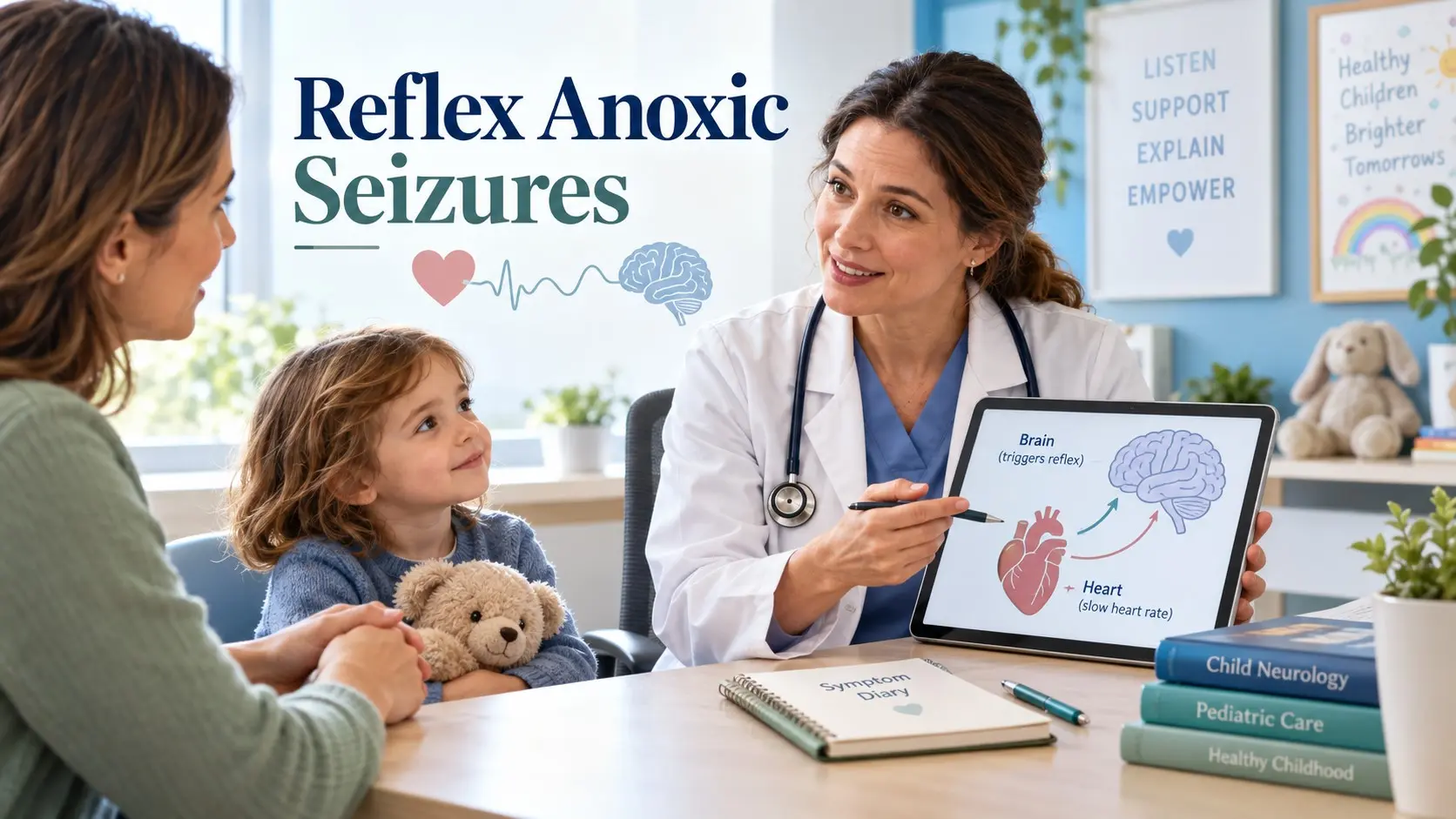
Despite the word “seizure,” typical reflex anoxic seizures are not epilepsy. They are a form of reflex fainting in which a sudden trigger causes a strong vagal response. The heart slows sharply or briefly pauses, blood flow to the brain falls, and the child temporarily loses consciousness.
Most episodes are short, and children recover quickly. However, a first blackout or an episode that has not been clearly diagnosed should be assessed because epilepsy, heart rhythm problems, breath-holding attacks, and other causes can sometimes look similar.
This article is for general information and education. It does not replace medical advice, diagnosis, or treatment.
Seek urgent medical help if an episode lasts 5 minutes or longer, the child is not recovering normally, breathing is abnormal after the episode, there is a serious injury, the blackout happens during exercise, or there is chest pain, severe breathlessness, or a family history of sudden unexplained death.
If the child is unresponsive and not breathing normally, call emergency services and begin CPR according to your first aid training.
Table of Contents
- Quick Answer
- What reflex anoxic seizures are
- Why they happen
- 9 Critical Facts
- RAS is not epilepsy
- Triggers are usually sudden
- Pallor is a key clue
- Jerking can happen
- Episodes are usually brief
- Diagnosis depends on the story
- An ECG may be important
- Most children improve with age
- Red flags still matter
- RAS Versus Similar Conditions
- Epilepsy
- Breath holding attacks
- Vasovagal fainting
- Heart rhythm problems
- What to Do During an Episode
- Diagnosis and Testing
- Treatment and Outlook
- Frequently Asked Questions
Reflex Anoxic Seizures: Quick Answer
Reflex anoxic seizures, often shortened to RAS, are brief episodes of loss of consciousness caused by a sudden vagal reflex.
A typical trigger might be:
- A minor bump or fall
- Sudden pain
- Fear
- A shock
- A medical procedure
- Seeing blood
- A sudden surprise
The child often becomes extremely pale, goes limp, loses consciousness, and may then stiffen or have a few jerking movements.
The episode is usually short, often around 30 to 60 seconds. The child normally wakes quickly but may be tired, emotional, confused, or sleepy for a short period afterward.
RAS is most common in infants and preschool children, particularly around 6 months to 2 years, although it can occur at other ages.
What Actually Happens During a Reflex Anoxic Seizure?
The key event is not an abnormal electrical discharge in the brain.
Instead, a trigger activates the vagus nerve very strongly.
This can cause severe slowing of the heart rate or a very brief pause in heart activity. Blood flow to the brain falls, and the child faints.
When brain blood flow drops for a few seconds, the body may become stiff or jerk.
This is why reflex anoxic seizures can look almost identical to a convulsive epileptic seizure to someone watching for the first time.
9 Critical Facts About Reflex Anoxic Seizures
1. Reflex Anoxic Seizures Are Not Epilepsy
This is the most important distinction.
RAS is non epileptic syncope.
The jerking movements happen because blood flow to the brain briefly falls, not because an epileptic electrical discharge begins in the brain.
This is also why ordinary epilepsy medicines are not routinely used for typical RAS.
2. The Trigger Is Often Sudden
Typical triggers include pain, shock, fright, or surprise.
Examples can include:
- Falling over
- Bumping the head
- Having an injection
- Seeing blood
- Being suddenly frightened
- Unexpected cold water
The event often follows the trigger almost immediately.
3. Pallor Is a Major Clue
Children with RAS often become strikingly pale.
Parents sometimes describe the child as looking “white as a sheet.”
A blue tinge may appear around the lips or eyes during the brief episode.
This colour change is one feature that can help doctors separate RAS from some other types of blackout.
4. Stiffening and Jerking Can Occur
A child may:
- Become stiff
- Clench the jaw
- Roll the eyes upward
- Jerk the arms or legs
- Occasionally wet themselves
These movements can look dramatic.
They do not automatically mean epilepsy.
5. Typical Episodes Are Brief
Many RAS episodes last about 30 to 60 seconds.
The child usually regains consciousness within a short time.
Afterward they may:
- Be sleepy
- Want comfort
- Appear washed out
- Be briefly confused
- Want to rest
A prolonged event does not fit the usual pattern and deserves urgent assessment.
6. The Witness Account Is Very Important
The diagnosis often depends heavily on what happened before, during, and after the blackout.
Useful details include:
- What triggered the episode
- Whether the child cried first
- Whether the child became pale or blue
- How quickly consciousness was lost
- How long stiffening or jerking lasted
- Whether the child recovered quickly
A video can sometimes be extremely useful if it can be recorded safely.
7. An ECG Can Help Exclude Heart Rhythm Problems
Because RAS involves a sudden change in heart rate, clinicians may use an ECG to make sure there is not another cardiac cause of the blackout.
Depending on the history, further testing may occasionally include:
- Longer heart rhythm monitoring
- An EEG
- A tilt table test
- Other specialist investigations
Not every child needs all of these tests.
8. Most Children Improve With Age
The outlook is usually good.
RAS is most common in early childhood, and episodes often become less frequent as the child grows.
Some people continue to experience reflex fainting or occasional RAS type episodes later in life, but this is less common.
9. Red Flags Still Need Proper Investigation
A child should not automatically be labelled as having RAS simply because they fainted and jerked.
Important warning signs include:
- Blackout during exercise
- Blackout while lying down or asleep
- Chest pain
- Palpitations
- Breathlessness
- Known heart disease
- Family history of sudden unexplained death
- Prolonged episodes
- An unclear trigger
- Delayed recovery
These features can point toward another cause and need medical assessment.
Reflex Anoxic Seizures Versus Epilepsy
| Feature | Reflex Anoxic Seizures | Epileptic Seizure |
|---|---|---|
| Typical trigger | Pain, fear, shock, surprise | May occur without an obvious trigger |
| Colour | Often very pale | Variable |
| Cause | Reflex slowing or brief pause of heart activity | Abnormal electrical activity in the brain |
| Jerking | Can be brief | Can be more prolonged depending on seizure type |
| Recovery | Usually quick | May include a longer post seizure period |
No table can diagnose an individual child.
A clinician needs to consider the full history.
Reflex Anoxic Seizures Versus Breath Holding Spells
These two conditions are often confused.
In a typical cyanotic breath holding spell, a child becomes upset, cries, holds their breath, turns blue, and may faint.
With RAS, the child often becomes pale almost immediately after a sudden pain or fright.
Both are non epileptic events and are most common in young children.
NICE notes that both breath holding attacks and RAS can include brief loss of consciousness and movements that resemble seizures.
Reflex Anoxic Seizures Versus Vasovagal Fainting
Both RAS and ordinary vasovagal fainting involve the autonomic nervous system.
Vasovagal fainting often develops more gradually.
A person may first notice:
- Feeling hot
- Sweating
- Nausea
- Dizziness
- Visual dimming
RAS often happens more suddenly after pain, shock, or fright.
Could a Heart Rhythm Problem Look Like RAS?
Yes.
This is why clinicians take blackout history seriously.
Possible cardiac warning signs include:
- Collapse during exercise
- Palpitations before collapse
- Chest pain
- Breathlessness
- A family history of sudden cardiac death
- A known inherited heart condition
An ECG can help look for problems such as long QT syndrome and other rhythm abnormalities.
What Should You Do During a Reflex Anoxic Seizure?
Stay as Calm as You Can
The event looks alarming, but panic makes it harder to respond safely.
Protect the Child From Injury
Move hard or sharp objects away.
If possible, lower the child safely to the floor.
Use the Recovery Position
Once it is safe to do so, place the child on their side in the recovery position.
This helps keep the airway open.
Do Not Restrain the Jerking
Let the movements stop naturally while protecting the child from injury.
Do Not Put Anything in the Mouth
Do not put your fingers, a spoon, food, drink, or any other object into the child's mouth.
Time the Episode
Watching a blackout can make seconds feel much longer than they really are.
Use a phone timer if practical.
Record a Video Only if It Is Safe
A video can help a doctor understand what happened, but safety comes first.
Stay With the Child During Recovery
Some children are sleepy, tearful, confused, or frightened afterward.
Offer reassurance and allow them to rest.
When Should You Call Emergency Services?
Call emergency services if:
- The episode lasts 5 minutes or longer
- The child is not breathing normally afterward
- The child remains unconscious
- Recovery is not happening as expected
- The child has been badly injured
- There is severe breathing difficulty
- There is chest pain
- The event occurred during exercise
- You are unsure what is happening and the child appears seriously unwell
If the child is unresponsive and not breathing normally, call emergency services and start CPR if you know how.
Should Every First Episode Be Checked?
Yes, especially in young children.
NICE recommends urgent paediatric assessment for blackouts in children under 12 because several conditions can cause temporary loss of consciousness and it may not be possible to diagnose the cause confidently from history alone.
A child who already has a clear diagnosis and experiences a familiar typical episode may have a different care plan from a child having their first event.
How Are Reflex Anoxic Seizures Diagnosed?
Diagnosis starts with a detailed account of the episode.
The clinician may ask:
- What was the child doing?
- Was there pain, fear, or surprise?
- Did the child become pale?
- Was there crying or breath holding?
- How long did loss of consciousness last?
- Were there jerking movements?
- How quickly did recovery occur?
- Has this happened before?
- Is there heart disease in the family?
A good witness description can sometimes make the pattern very clear.
Is an ECG Needed?
Many paediatric specialists consider a 12 lead ECG useful in a child with suspected RAS to exclude other cardiac causes.
Scottish NHS referral guidance describes ECG as the main investigation needed when the clinical picture is typical.
The test may look for:
- Long QT syndrome
- Conduction problems
- Pre excitation
- Other rhythm abnormalities
Does a Child Need an EEG?
Not always.
An EEG measures electrical activity in the brain.
It may be considered if the diagnosis is unclear or epilepsy remains a concern.
Routine EEG testing is not necessary for every typical fainting episode.
What About Heart Monitoring?
If episodes are frequent, unusual, or the ECG raises questions, a clinician may use longer heart rhythm monitoring.
This can help capture intermittent rhythm abnormalities that may not appear during a short ECG.
Is a Tilt Table Test Used?
Sometimes, but it is not needed for every child.
Tilt testing may help investigate recurrent unexplained syncope in selected cases.
The decision belongs with the clinical team.
Can Iron Deficiency Be Related?
Iron deficiency has been associated with some childhood fainting and breath holding patterns.
NICE notes that iron deficiency anaemia may be a contributing factor in children with reflex anoxic seizures or breath holding episodes.
A clinician may consider a blood count or iron assessment when the history or examination suggests deficiency.
Do not start high dose iron in a child without appropriate advice.
How Are Reflex Anoxic Seizures Treated?
For most children, treatment is based on:
- Correct diagnosis
- Education
- Reassurance
- First aid planning
- Reducing avoidable surprise triggers when practical
Medication is usually not required for typical childhood RAS.
Should a Child Take Epilepsy Medicine?
Not for typical reflex anoxic seizures.
RAS is not epilepsy, so antiseizure medicine does not treat the underlying mechanism.
This is one reason correct diagnosis matters.
Can Triggers Be Prevented?
Not every episode can be prevented.
You also should not stop a child from living normally simply because they have RAS.
Some practical strategies may reduce sudden shock.
Before Vaccinations
Explain what is about to happen in calm, simple language rather than surprising the child with the injection.
Before Swimming
Allow the child to get used to the water temperature gradually.
Before a New Activity
Watching first may reduce the shock of something unfamiliar.
These ideas are about reducing sudden surprise, not restricting normal childhood activity.
Can Children With RAS Play Sports?
Most children can take part in normal activity once the diagnosis is clear and their healthcare professional has not identified another condition.
Parents, teachers, coaches, and carers should know:
- What RAS looks like
- How to keep the child safe
- How to use the recovery position
- When to call emergency services
A blackout during exercise is different and should be medically assessed because it is a cardiac red flag.
Can a Child With RAS Go Swimming?
Swimming needs sensible supervision because any loss of consciousness in water can be dangerous.
A child should not swim alone.
Responsible adults should understand the condition and know what to do if an episode happens.
Can Reflex Anoxic Seizures Happen in Adults?
Yes, but they are far more common in young children.
Adults with unexplained blackouts should not diagnose themselves with childhood RAS.
Cardiac arrhythmias, vasovagal syncope, orthostatic problems, epilepsy, medications, and other causes may need investigation.
Do Children Grow Out of Reflex Anoxic Seizures?
Most do.
The episodes generally become less common as the autonomic nervous system matures.
Some people continue to have reflex fainting tendencies later in life.
Can Reflex Anoxic Seizures Damage the Brain?
Typical brief RAS episodes are generally considered benign and are not thought to cause brain damage.
The main immediate concerns are:
- Making sure the diagnosis is correct
- Preventing injury during a fall
- Recognising red flag features
A prolonged or atypical episode should not simply be assumed to be benign RAS.
Can Reflex Anoxic Seizures Be Fatal?
Typical diagnosed childhood RAS is generally considered a benign condition with a good outlook.
However, an unexplained blackout should not be labelled RAS until potentially serious causes have been considered.
Heart rhythm disorders can also cause sudden collapse, which is why red flags and ECG assessment matter.
Should Nursery or School Know?
Yes.
Provide simple written instructions that explain:
- The child's diagnosis
- Usual triggers
- What a typical episode looks like
- First aid steps
- How long the child's episodes usually last
- When emergency help is needed
- Parent or guardian contact details
Staff should understand that the event is involuntary.
What Should Parents Record?
A simple episode diary can be valuable.
Record:
- Date
- Time
- Trigger
- What the child was doing beforehand
- Skin colour
- Whether they cried
- Whether they lost consciousness
- Stiffening or jerking
- Estimated duration
- Recovery time
- Any injury
Bring the diary and any safe video recordings to medical appointments.
RAS Red Flag Checklist
| Feature | Typical RAS Pattern | Needs More Urgent Review |
|---|---|---|
| Trigger | Pain, fear, shock, surprise | Collapse during exercise or sleep |
| Colour | Marked pallor | Unusual pattern with severe breathing difficulty |
| Duration | Usually 30 to 60 seconds | 5 minutes or longer |
| Recovery | Rapid return toward normal | Persistent unresponsiveness or prolonged confusion |
| Cardiac symptoms | Usually absent before event | Chest pain, palpitations, breathlessness |
| Family history | May include similar benign childhood episodes | Sudden unexplained death or inherited heart disease |
Common Myths About Reflex Anoxic Seizures
Myth 1: They Are a Type of Epilepsy
False.
Typical RAS is a reflex syncopal event rather than an epileptic seizure.
Myth 2: Jerking Always Means Epilepsy
False.
Brief jerking can occur during fainting when blood flow to the brain falls.
Myth 3: The Child Is Doing It Deliberately
False.
RAS is involuntary.
Myth 4: The Child Should Avoid Normal Activities
Usually false.
Most children can live normally with appropriate supervision and a sensible first aid plan.
Myth 5: Every Blackout in a Child Is RAS
False.
Epilepsy, arrhythmias, ordinary fainting, breath holding spells, and other conditions can look similar.
Conclusion
Reflex anoxic seizures can look dramatic, but typical episodes are brief non epileptic fainting events caused by a strong vagal reflex.
A sudden pain, fright, shock, or surprise may lead to extreme pallor, loss of consciousness, stiffening, and short jerking movements. Most children recover quickly and gradually have fewer episodes as they grow.
The most important step is getting the diagnosis right.
If your child has never been assessed for a blackout, arrange medical evaluation rather than assuming it is RAS. Keep a record of triggers, colour changes, movements, duration, and recovery, and show your healthcare professional a video if one can be recorded safely.
Seek urgent help when an episode is prolonged, recovery is abnormal, the child has serious breathing problems, the blackout occurs with exercise, or cardiac red flags are present.
References and Sources
- Kingston and Richmond NHS Foundation Trust. Reflex Anoxic Seizures (RAS). Last updated December 6, 2024.
https://www.kingstonandrichmond.nhs.uk/patients-and-families/patient-leaflets/reflex-anoxic-seizures-ras - NHS Greater Glasgow and Clyde. Reflex Anoxic Seizures in Children: Advice for Referrers. Last reviewed November 25, 2024.
https://www.clinicalguidelines.scot.nhs.uk/rhc-for-health-professionals/guidelines/primary-care-referral-guidelines/medical-paediatric-pre-referral-guidance/reflex-anoxic-seizures-in-children-advice-for-referrers - NICE. Suspected Neurological Conditions: Recognition and Referral, Children Under 16.
https://www.nice.org.uk/guidance/ng127/chapter/recommendations-for-children-aged-under-16 - Patient.info. Reflexic Anoxic Seizures. Updated August 7, 2024.
https://patient.info/doctor/paediatrics/reflexic-anoxic-seizures - STARS, Syncope Trust And Reflex anoxic Seizures. FAQ for Reflex Anoxic Seizures. Reviewed April 2025.
https://heartrhythmalliance.org/stars/uk/
Internal Links + Hub
- How to Build and Maintain a Healthy Brain
- What Causes Low Blood Sugar Without Diabetes?
- Mental Health & Wellness Hub
- Nutrition & Vitamins Hub
- Deep Breathing Meditation Guide
About the Author
Adel Galal is the founder and editor of NextFitLife. He writes practical consumer health, nutrition, fitness, healthy ageing, and wellness content using information from recognized medical, public health, and academic sources.
I am not a doctor, paediatrician, neurologist, cardiologist, nurse, pharmacist, or other licensed healthcare professional. This content does not replace professional medical advice. What I share comes from real life experience, extensive research, and consultation with healthcare providers. Always consult qualified medical professionals for diagnosis and treatment of any health condition.
Learn more about NextFitLife, the author, and the site's editorial approach on the About Us page.
Frequently Asked Questions
What are reflex anoxic seizures?
Reflex anoxic seizures are brief non epileptic blackouts caused by a strong vagal reflex that sharply slows or briefly pauses the heart, reducing blood flow to the brain.
What triggers reflex anoxic seizures?
Common triggers include sudden pain, fright, shock, surprise, a minor injury, medical procedures, or seeing blood.
What does a reflex anoxic seizure look like?
The child often becomes very pale, goes limp, loses consciousness, and may then stiffen or briefly jerk. The eyes may roll upward, and the child may be sleepy after the event.
Are reflex anoxic seizures epilepsy?
No. Typical RAS is caused by reflex syncope rather than epileptic electrical activity in the brain.
How long do reflex anoxic seizures last?
Typical episodes are brief, often around 30 to 60 seconds, followed by fairly rapid recovery.
Should my child see a doctor after a first episode?
Yes. A first blackout should be medically assessed because epilepsy, cardiac rhythm problems, breath holding attacks, and other causes can look similar.
Does a child with RAS need an ECG?
An ECG is commonly used to help exclude abnormal heart rhythms or inherited cardiac conditions, particularly when the diagnosis is being established.
What should I do during a reflex anoxic seizure?
Keep the child safe, place them in the recovery position when appropriate, keep the airway clear, do not restrain jerking, put nothing in the mouth, time the episode, and stay with the child during recovery.
When should I call an ambulance?
Call emergency services if the episode lasts 5 minutes or longer, breathing is not normal, the child does not regain consciousness, recovery is abnormal, there is a serious injury, or other red flags are present.
Do children grow out of reflex anoxic seizures?
Most children have fewer episodes as they get older, and the condition usually has a good long term outlook.
Can reflex anoxic seizures cause brain damage?
Typical brief episodes are generally considered benign and are not expected to cause brain damage. Prolonged or atypical events should be assessed urgently rather than assumed to be ordinary RAS.

Health & wellness writer with 30+ years of experience in nutrition, fitness, and healthy aging. Founder of NextFitLife.com — evidence-based health guidance.