
Last updated: October 7, 2026
Written and edited by: Adel Galal, Founder and Editor of NextFitLife
Medical review status: This article has not been medically reviewed by a dermatologist, ophthalmologist, optometrist, or other licensed healthcare professional.
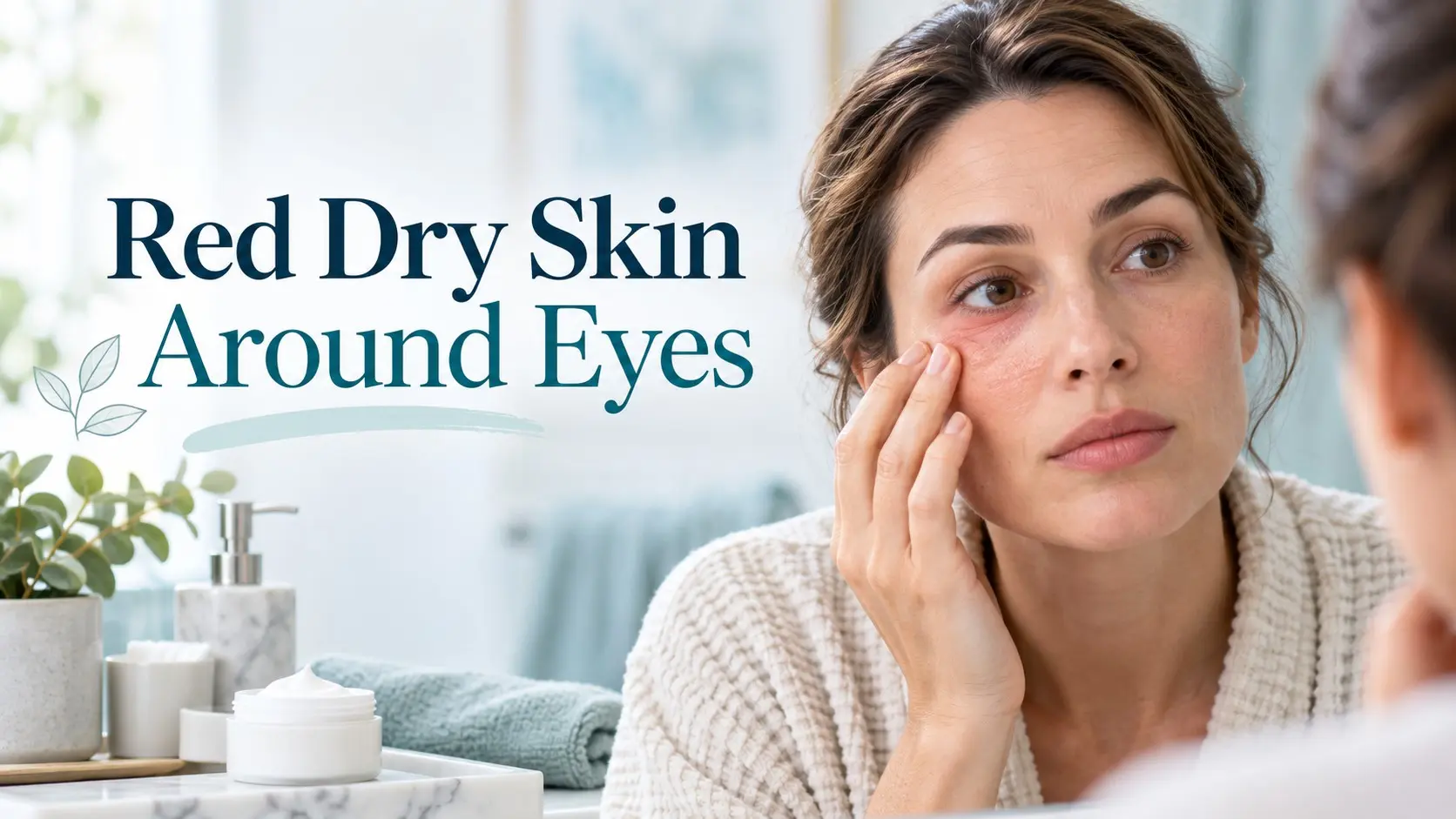
Red dry skin around eyes is common because eyelid skin is thin, sensitive, and exposed to skincare, makeup, shampoo, pollen, rubbing, weather, and many other triggers every day.
The cause is often simple irritation or eczema, but not always. Blepharitis, allergic contact dermatitis, seborrhoeic dermatitis, psoriasis, rosacea, and infection can also affect the skin around the eyes.
The most useful first step is to stop treating every eyelid rash as “just dry skin.” Look at whether the area mainly itches, burns, flakes, crusts, swells, hurts, or affects the eye itself.
This article is for general information and education. It does not replace medical advice, diagnosis, or treatment.
Get urgent medical care if redness or swelling around the eye comes with vision changes, severe eye pain, pain when moving the eye, a bulging eye, fever, severe headache, marked light sensitivity, or rapidly worsening swelling.
These features may point to a problem involving the eye or deeper tissues rather than simple dry skin.
Table of Contents
- Quick Answer
- Why eyelid skin gets red and dry
- When it may be more than dryness
- 9 Common Causes
- Irritant contact dermatitis
- Allergic contact dermatitis
- Atopic eczema
- Blepharitis
- Seborrhoeic dermatitis
- Psoriasis
- Rosacea and periorificial dermatitis
- Weather and over-cleansing
- Infection or deeper inflammation
- Safe Relief
- Simple skincare
- Moisturizers
- Warm or cool compresses
- Prescription treatments
- Products and Triggers to Avoid
- When to See a Doctor
- Prevention
- Frequently Asked Questions
Red Dry Skin Around Eyes: Quick Answer
Red dry skin around eyes is most often linked with irritation, allergy, eczema, or eyelid inflammation.
Common triggers include:
- Face creams
- Eye creams
- Makeup
- Makeup remover
- Sunscreen
- Soap
- Shampoo
- Hair dye
- Fragrance
- Eye drops
- Contact lens solution
- Nail polish or artificial nails
- Metals
- Pollen
- Rubbing
- Cold or dry weather
The safest home approach is usually to simplify your routine, stop new or scented products, avoid rubbing, and use a bland fragrance free moisturizer that does not irritate your eyes.
If the rash keeps returning, spreads, crusts heavily, becomes painful, or affects your vision, get professional advice.
For a wider overview of eye symptoms and warning signs, see our Eye Problems NHS Guide.
Why Is Skin Around the Eyes So Sensitive?
Eyelid skin is thinner than skin on many other parts of the body.
That means it can react more quickly to:
- Dry air
- Wind
- Soap
- Cosmetics
- Fragrance
- Preservatives
- Frequent washing
- Rubbing
The area also gets touched often.
You may transfer a trigger from your hands to your eyelids without realizing it.
For example, nail products or metal particles can cause allergic contact dermatitis around the eyelids even when the product was never applied directly to the face.
9 Common Causes of Red Dry Skin Around Eyes
1. Irritant Contact Dermatitis
Irritant contact dermatitis happens when a substance damages or irritates the skin barrier.
The reaction is not an allergy.
Common triggers include:
- Strong cleansers
- Soap
- Makeup remover
- Alcohol based products
- Retinoids
- Acids
- Fragranced skincare
- Chlorinated water
- Frequent rubbing
The skin may feel:
- Dry
- Tight
- Burning
- Stinging
- Rough
- Flaky
A product does not need to feel harsh on the rest of your face to irritate your eyelids.
2. Allergic Contact Dermatitis
Allergic contact dermatitis happens when your immune system reacts to something that touches your skin.
The eyelids are a common site because the skin is thin.
Possible triggers include:
- Fragrance
- Preservatives
- Cosmetics
- Sunscreen
- Eye drops
- Contact lens solution
- Hair dye
- False eyelashes
- Adhesives
- Nail polish
- Artificial nails
- Nickel
The rash may itch more than it hurts.
It can appear hours or even days after exposure, which makes the trigger difficult to identify.
3. Atopic Eczema
Atopic dermatitis, also called atopic eczema, can affect the eyelids and skin around the eyes.
It may cause:
- Dryness
- Itching
- Scaling
- Redness or darker discoloration
- Thickened skin after repeated scratching
Adults with eczema can develop symptoms around their eyes even if their childhood eczema was mainly elsewhere.
Repeated rubbing can make the skin thicker and more irritated.
4. Blepharitis
Blepharitis is inflammation along the eyelid margin.
It often causes:
- Itchy eyelids
- Sore eyelids
- Flakes around eyelashes
- Crusts at the lash line
- Gritty eyes
- Eyelids sticking together after sleep
Blepharitis can be linked with bacteria on the skin, seborrhoeic dermatitis, or problems with the oil glands in the eyelids.
If your dryness is mainly along the lash line, blepharitis becomes more likely.
5. Seborrhoeic Dermatitis
Seborrhoeic dermatitis can cause flaky, irritated skin in oily areas.
It may also appear:
- In the eyebrows
- Beside the nose
- On the scalp
- Behind the ears
- Along the eyelid margins
If you have dandruff plus flaky eyelids or eyebrows, seborrhoeic dermatitis may be part of the picture.
6. Psoriasis
Psoriasis can sometimes affect the face and eyelids.
It may produce:
- Dry patches
- Scaling
- Red or darker inflamed skin
- Well defined patches
Eyelid psoriasis should be treated carefully because the skin is delicate.
Do not use strong psoriasis creams near the eyes without professional advice.
7. Rosacea or Periorificial Dermatitis
Rosacea can affect the face and eyes.
Some people develop:
- Red eyelids
- Burning
- Dryness
- Gritty eyes
- Facial flushing
Another condition called periorificial dermatitis can produce small red bumps and irritated skin around the eyes, nose, or mouth.
Strong or prolonged topical steroid use on the face can sometimes make periorificial dermatitis worse.
8. Weather, Over Washing, and Skin Barrier Damage
Sometimes the problem is not a disease.
Cold weather, dry air, wind, hot water, frequent cleansing, or rubbing can weaken the skin barrier.
This can cause:
- Fine flakes
- Tightness
- Mild redness
- Stinging
Simple skin barrier care may be enough if no other condition is present.
9. Infection or Deeper Inflammation
Not all redness around the eye is eczema.
Infections can affect the eyelid or tissues around the eye.
Warning signs include:
- Increasing tenderness
- Marked swelling
- Fever
- Feeling unwell
- Pain when moving the eye
- Reduced eye movement
- Blurred or reduced vision
- A bulging eye
These symptoms need prompt medical assessment.
Red Dry Skin Versus Blepharitis
| Feature | Eyelid Dermatitis | Blepharitis |
|---|---|---|
| Main area | Skin above or below the eye | Eyelid edge and lash roots |
| Typical symptom | Itch, dryness, burning | Gritty eyes with crusting |
| Common clue | Reaction after skincare or cosmetics | Flakes around eyelashes |
| Self care focus | Trigger avoidance and gentle moisturising | Regular eyelid hygiene |
What Can You Do at Home?
Stop New Products First
If the rash appeared after changing skincare, makeup, shampoo, sunscreen, eye drops, or another product, stop the suspected trigger if it is safe to do so.
Do not stop prescription eye medication without asking the prescriber.
Simplify Your Routine
For a few days, use the smallest number of products possible.
A simple routine may include:
- Lukewarm water
- A mild fragrance free cleanser if needed
- A bland fragrance free moisturizer
More products are not always better.
Use a Gentle Moisturizer
Emollients help reduce water loss and support the skin barrier.
Choose a simple fragrance free product designed for sensitive skin.
Apply it gently rather than rubbing hard.
Keep products out of the eye itself.
Avoid Scratching
Scratching gives short relief but damages the skin barrier.
It can also increase swelling and make the itch return more strongly.
A cool clean compress may feel soothing when itching is strong.
Can Petroleum Jelly Help?
A small amount of plain petrolatum can help seal moisture into dry skin for some people.
Use it only on the external skin and stop if it stings or worsens symptoms.
Do not put petroleum jelly directly into the eye.
If your rash is recurrent, do not rely on moisturizer alone without looking for the cause.
Should You Use a Warm or Cool Compress?
It depends on the cause.
Cool Compress
A cool clean compress can calm itching and mild inflammatory swelling.
Warm Compress
A warm compress is often more useful for blepharitis because warmth can soften crusts and support the eyelid oil glands.
The NHS recommends regular eyelid cleaning for blepharitis.
How to Clean Eyelids With Blepharitis
If a healthcare professional believes your symptoms are caused by blepharitis, daily eyelid hygiene may help.
A simple routine is:
- Wash your hands.
- Place a clean warm cloth over closed eyelids for several minutes.
- Massage the eyelid gently.
- Clean the lash line carefully.
Avoid contact lenses and eye makeup while symptoms are active.
Can You Use Hydrocortisone Around the Eyes?
This requires caution.
Mild topical corticosteroids are sometimes prescribed for eyelid eczema.
However, eyelid skin is very thin.
Using steroid creams that are too strong, too often, or for too long can cause problems.
Prolonged excessive steroid use around the eyelids may increase the risk of:
- Skin thinning
- Glaucoma
- Cataracts
Do not use a strong steroid near the eye unless a qualified healthcare professional has told you exactly how to use it.
What Are Steroid Free Prescription Options?
Doctors sometimes prescribe topical calcineurin inhibitors such as tacrolimus or pimecrolimus for eyelid eczema.
These are not corticosteroids.
They can be useful on thin skin because they do not cause steroid related skin thinning.
They can still sting or cause other side effects and should be used according to the prescription.
When Is Patch Testing Useful?
If the eyelid rash keeps returning, patch testing can help identify allergic contact dermatitis.
A dermatologist or allergy specialist may test common allergens such as:
- Fragrance
- Preservatives
- Metals
- Cosmetic ingredients
- Hair product ingredients
- Adhesives
This can be especially useful when you have already stopped obvious products but the rash keeps coming back.
Products That Can Cause Eyelid Dermatitis
One of the most useful steps is to look beyond eye cream.
Possible triggers include:
Skincare
- Retinol products
- Anti ageing creams
- Acids
- Fragranced moisturizer
- Facial cleanser
- Sunscreen
Makeup
- Mascara
- Eyeliner
- Eye shadow
- Makeup remover
- False eyelash adhesive
Hair Products
- Shampoo
- Conditioner
- Hair dye
- Hair spray
Hand Transferred Triggers
- Nail polish
- Gel nails
- Acrylic nails
- Metal from tools
- Fragranced hand cream
You can transfer tiny amounts to your eyelids simply by touching or rubbing them.
Can Sunscreen Cause Dry Red Eyelids?
Yes.
Sunscreen can trigger either irritation or an allergic reaction in some people.
This does not mean you should stop sun protection completely.
If one sunscreen causes problems, a dermatologist may help you identify a better tolerated formula.
Sunglasses and a wide brimmed hat can provide extra protection.
Can Makeup Cause the Problem?
Yes.
Makeup can contain:
- Fragrance
- Preservatives
- Pigments
- Metals
- Adhesives
If the eyelids are actively irritated, stop eye makeup until the skin settles.
Old makeup can also collect bacteria, so replace expired eye products.
Can Nail Polish Really Cause Eyelid Eczema?
Yes.
This surprises many people.
You can react to chemicals in nail polish, gel nails, or artificial nails and then transfer those substances to the eyelid when touching your face.
The hands may look completely normal while the eyelids become itchy and inflamed.
Can Shampoo Cause Red Skin Around the Eyes?
Yes.
Shampoo and conditioner can run across the eyelids when you rinse your hair.
Fragrance, preservatives, and other ingredients may irritate sensitive skin or trigger an allergy.
Try rinsing your hair backward and keeping shampoo away from the face if you suspect this pattern.
Can Seasonal Allergies Cause Dry Skin Around Eyes?
Seasonal allergies commonly cause itchy or watery eyes.
The allergy itself may not be the only reason the skin becomes dry.
Repeated rubbing and wiping can damage the skin barrier and produce redness, scaling, and soreness.
Try not to rub the eyes.
Can Dry Eye Cause Skin Irritation?
Dry eye affects the eye surface rather than the skin, but the two problems can occur together.
Watery eyes may repeatedly wet the surrounding skin.
Frequent wiping can then irritate it.
If you also have burning eyes, gritty sensations, or persistent watering, an eye care professional can help determine whether dry eye or blepharitis is involved.
Can Stress Cause Eyelid Eczema?
Stress can worsen eczema in some people, but it is rarely useful to blame every flare on stress.
Look first for:
- New products
- Allergens
- Weather changes
- Rubbing
- Blepharitis
- Other skin conditions
A real physical trigger may be present even during stressful periods.
Does Diet Cause Eyelid Dermatitis?
Usually not.
Contact dermatitis is most often caused by something touching the skin rather than a food.
Do not remove large groups of foods simply because your eyelids are dry.
Unnecessary restriction can make your diet harder to manage without finding the true trigger.
If you have a proven food allergy, follow your allergy specialist's advice.
Does Drinking More Water Cure Dry Eyelids?
No.
Good hydration supports general health, but drinking extra water does not cure contact dermatitis, eczema, blepharitis, or an allergic reaction.
The skin barrier and underlying cause still need attention.
Can Coconut Oil Help?
Some people tolerate coconut oil, but it is not the best universal choice for eyelid dermatitis.
The eyelid area is sensitive, and even natural products can irritate or trigger allergy.
A simple fragrance free emollient is usually a more predictable starting point.
Should You Use Essential Oils?
No essential oil is required to treat eyelid dryness.
Essential oils can cause irritant or allergic contact dermatitis.
The fact that a product is natural does not mean it is gentle enough for eyelid skin.
Red Dry Skin Around Eyes in Children
Children can develop eyelid eczema, irritation, allergies, and infection.
Do not use adult strength steroid creams or medicated skincare around a child's eyes without advice.
Seek medical care promptly if a child has:
- Fever
- Rapidly worsening swelling
- Difficulty opening the eye
- Pain moving the eye
- Vision changes
- A bulging eye
- Increasing illness
When Should You See a Dermatologist?
Consider a dermatologist if:
- The rash keeps returning
- You cannot identify the trigger
- Both eyelids repeatedly flare
- The condition lasts for several weeks
- Standard gentle skincare does not help
- You may need patch testing
- You have eczema or psoriasis elsewhere
When Should You See an Eye Doctor?
See an optometrist or ophthalmologist if the eye itself becomes involved.
This includes:
- Eye pain
- Persistent red eye
- Blurred vision
- Strong light sensitivity
- Frequent gritty feeling
- Contact lens related symptoms
- Recurrent eye infections
Our National Eye Health Week Guide explains why routine eye assessment matters even when vision still feels normal.
When Is Redness Around the Eye an Emergency?
Seek urgent care when eyelid redness or swelling occurs with:
- Sudden vision change
- Severe eye pain
- Pain when moving the eye
- Reduced eye movement
- A bulging eye
- Fever
- Severe headache
- Marked swelling
- Rapid worsening
These symptoms can occur with deeper infection such as orbital cellulitis and should not be treated as ordinary eczema.
A Simple 7 Day Eyelid Reset
Day 1: Stop New Products
Pause any new cosmetic or skincare product that may be triggering the rash.
Day 2: Simplify Cleansing
Use lukewarm water and a gentle fragrance free cleanser if needed.
Day 3: Protect the Skin Barrier
Use a simple fragrance free moisturizer that you already tolerate.
Day 4: Check Hand Transferred Triggers
Think about nail products, fragrance, metals, and hair products.
Day 5: Check the Lash Line
If you see crusts or flakes around the eyelashes, ask whether blepharitis may be involved.
Day 6: Stop Rubbing
Use a clean cool compress when itching makes you want to rub.
Day 7: Review Progress
If the skin is not improving, keeps returning, or has become painful, arrange professional assessment.
Red Dry Skin Around Eyes: Cause and Clue Table
| Possible Cause | Useful Clue | Practical Next Step |
|---|---|---|
| Irritant dermatitis | Burning after products or washing | Simplify routine and stop irritants |
| Allergic dermatitis | Strong itch and recurrent rash | Review products and consider patch testing |
| Atopic eczema | Dry itchy skin with eczema history | Moisturize and seek targeted treatment if persistent |
| Blepharitis | Crusts and flakes at lashes | Regular eyelid hygiene |
| Seborrhoeic dermatitis | Dandruff plus eyebrow or eyelid flakes | Treat underlying skin condition |
| Infection | Pain, fever, rapid swelling | Prompt medical assessment |
Common Myths About Dry Skin Around the Eyes
Myth 1: It Is Always Caused by Dehydration
False.
Dermatitis and eyelid inflammation are far more specific explanations for many cases.
Myth 2: Natural Products Cannot Cause Allergy
False.
Fragrance and essential oils can trigger contact dermatitis.
Myth 3: Stronger Steroid Cream Works Faster and Is Better
False.
Strong steroid use near the eyelids can cause harm and should not be used without professional guidance.
Myth 4: Only Eye Makeup Can Trigger Eyelid Dermatitis
False.
Nail products, shampoo, hair dye, sunscreen, metals, eye drops, and hand transferred allergens can all be responsible.
Myth 5: Red Dry Skin Around the Eye Is Never Serious
False.
Most cases are minor, but pain, fever, vision changes, painful eye movement, or rapid swelling can indicate something more serious.
How to Prevent Future Flares
Once the skin improves, prevention becomes easier.
- Use fragrance free skincare
- Introduce one new product at a time
- Avoid rubbing the eyes
- Wash hands before touching the face
- Replace old eye makeup
- Remove makeup gently
- Avoid harsh facial scrubs around the eyelids
- Keep shampoo out of the eyes
- Use sunglasses in strong wind
- Continue eyelid hygiene if you have blepharitis
For broader skin barrier care, read our Daily Skin Care Guide for Dryness and Discomfort.
For long term eye wellness, see our Foods for Eye Health Guide and Senior Eye Care Guide.
Conclusion
Red dry skin around eyes is often caused by dermatitis, eczema, blepharitis, skincare irritation, or contact allergy.
The eyelids can react to much more than eye cream. Shampoo, sunscreen, fragrance, eye drops, cosmetics, hair dye, nail products, metals, rubbing, and weather can all contribute.
The safest first step is to simplify your routine, stop likely irritants, protect the skin barrier, and avoid rubbing.
If symptoms keep returning, a dermatologist may help identify allergic triggers through patch testing. If you develop eye pain, blurred vision, fever with swelling, painful eye movement, or rapidly worsening symptoms, seek medical care promptly.
Your next step is simple: look back at everything that has touched your face, hair, hands, and eyes during the past several days. Finding the trigger is often more useful than adding another cream.
References and Sources
- American Academy of Dermatology. Contact Dermatitis Signs and Symptoms.
https://www.aad.org/public/diseases/eczema/types/contact-dermatitis/symptoms - American Academy of Dermatology. Adults With Eczema Should Watch for Eye Problems.
https://www.aad.org/public/diseases/eczema/adult/eye-problems - NHS. Blepharitis.
https://www.nhs.uk/conditions/blepharitis/ - NHS. Contact Dermatitis Treatment.
https://www.nhs.uk/conditions/contact-dermatitis/treatment/ - American Academy of Dermatology. Atopic Dermatitis Clinical Guideline.
https://www.aad.org/member/clinical-quality/guidelines/atopic-dermatitis - Merck Manual. Orbital Cellulitis.
https://www.merckmanuals.com/home/eye-disorders/eye-socket-disorders/orbital-cellulitis - Cleveland Clinic. Eyelid Dermatitis.
https://my.clevelandclinic.org/health/diseases/21930-eyelid-dermatitis
Internal Links + Hub
- Eye Problems NHS Guide
- National Eye Health Week
- Contact Lens Safety Guide
- Foods for Eye Health
- Senior Eye Care Guide
- Daily Skin Care Guide for Dryness and Discomfort
About the Author
Adel Galal is the founder and editor of NextFitLife. He writes practical consumer health, skincare, nutrition, fitness, eye health, and healthy ageing content using information from recognized medical, public health, and academic sources.
I am not a dermatologist, doctor, ophthalmologist, optometrist, pharmacist, or other licensed healthcare professional. This content does not replace professional medical advice. What I share comes from real life experience, extensive research, and consultation with healthcare providers. Always consult qualified medical professionals for diagnosis and treatment of any health condition.
Learn more about NextFitLife, the author, and the site's editorial approach on the About Us page.
Frequently Asked Questions
What causes red dry skin around eyes?
Common causes include irritant contact dermatitis, allergic contact dermatitis, atopic eczema, blepharitis, seborrhoeic dermatitis, psoriasis, rosacea, weather related dryness, and less commonly infection.
Why are my eyelids red, dry, and itchy?
Itchy dry eyelids often point toward eczema or contact dermatitis. Skincare, makeup, sunscreen, shampoo, fragrance, eye drops, metals, and nail products can all trigger eyelid reactions.
Can makeup cause dry skin around the eyes?
Yes. Mascara, eyeliner, eye shadow, makeup remover, adhesives, fragrance, and preservatives can irritate the eyelids or cause an allergic reaction.
Can nail polish cause eyelid dermatitis?
Yes. Allergens from nail polish, gel nails, or artificial nails can transfer from the fingers to the eyelids and cause allergic contact dermatitis.
Can I put hydrocortisone around my eyes?
Mild hydrocortisone is sometimes prescribed for eyelid eczema, but steroid treatment near the eyes should be clinician guided. Prolonged or inappropriate use can thin eyelid skin and may increase the risk of glaucoma or cataracts.
What moisturizer is best for dry eyelids?
A simple fragrance free emollient made for sensitive skin is a reasonable starting point. Avoid highly fragranced products and stop any moisturizer that burns or makes symptoms worse.
Does blepharitis cause dry skin around the eyes?
Blepharitis commonly causes flakes, crusts, soreness, itching, and irritation around the eyelid edges and lash roots.
Can allergies cause dry red skin around the eyes?
Yes. Contact allergy can directly inflame eyelid skin, while seasonal allergies may lead to frequent rubbing that damages the skin barrier.
When should I worry about red skin around the eyes?
Get urgent medical care if redness or swelling comes with eye pain, vision changes, fever, pain when moving the eye, reduced eye movement, a bulging eye, severe headache, or rapid worsening.
Can dry skin around the eyes be caused by dehydration?
Dehydration can affect general skin comfort, but persistent red dry eyelids are more often linked with irritation, eczema, allergy, blepharitis, or another local skin problem.
Why does eyelid dermatitis keep coming back?
Repeated exposure to an unidentified trigger is common. Cosmetics, fragrance, preservatives, nail products, hair products, eye drops, and metals are possible causes. Patch testing can help when the trigger is unclear.

Health & wellness writer with 30+ years of experience in nutrition, fitness, and healthy aging. Founder of NextFitLife.com — evidence-based health guidance.