
Last updated: October 8, 2026
Written and edited by: Adel Galal, Founder and Editor of NextFitLife
Medical review status: This article has not been medically reviewed by a doctor, pulmonologist, ENT specialist, infectious disease specialist, or other licensed healthcare professional.
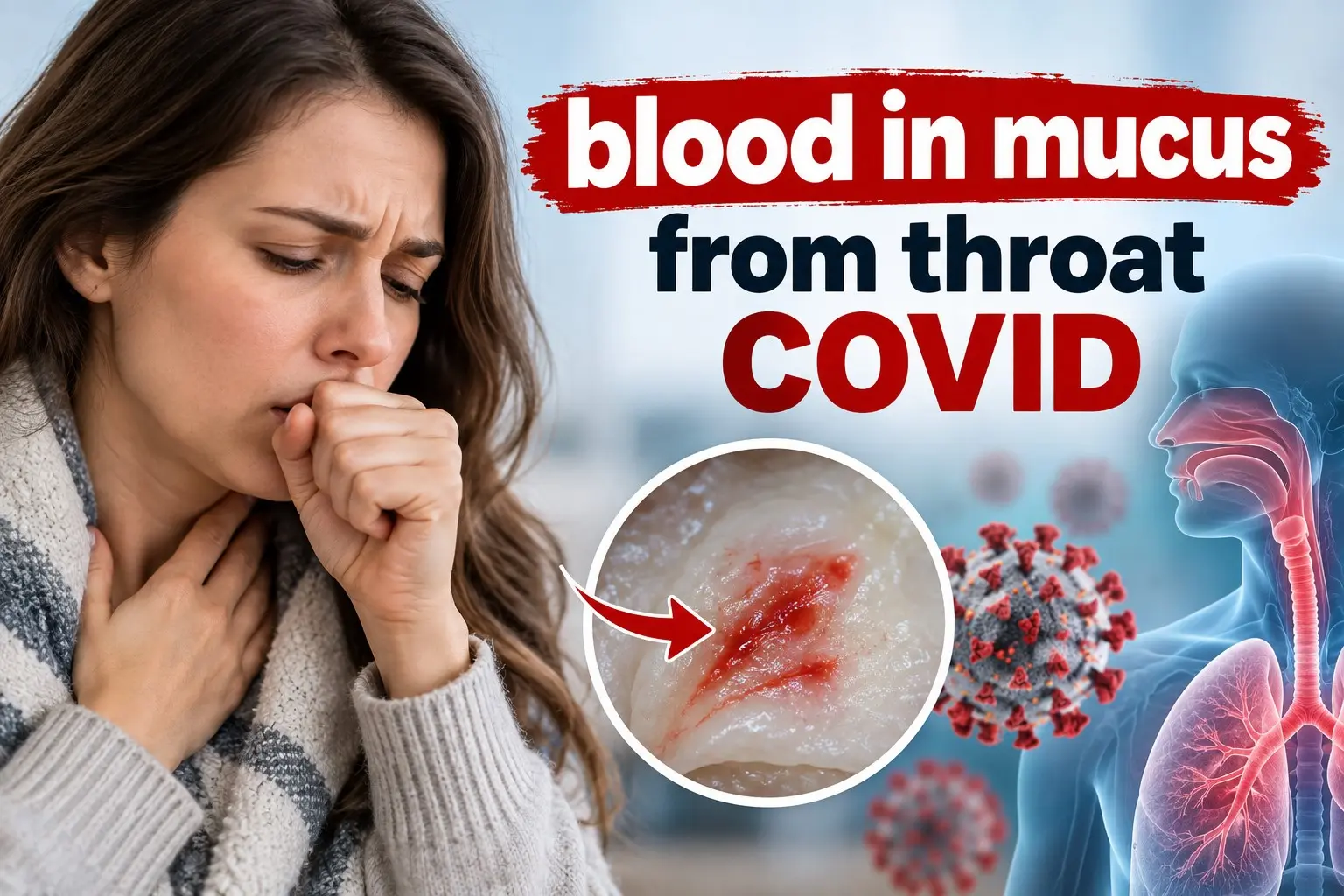
Blood in mucus from throat COVID can appear after repeated coughing or airway irritation, but blood in phlegm should never automatically be blamed on COVID 19.
A tiny red streak can sometimes come from an irritated nose, gum, throat, or airway. It can also occur with bronchitis or pneumonia. More serious causes include a blood clot in the lung, tuberculosis, bronchiectasis, or lung cancer.
The amount of blood and the symptoms around it matter.
NHS guidance advises urgent assessment even when you notice only a few small spots, flecks, or streaks of blood in phlegm.
This article is for general information and education. It does not replace medical advice, diagnosis, or treatment.
Get urgent medical advice if you cough up even a few spots or streaks of blood.
Seek emergency care if you cough up more than a few streaks, or if coughing up blood happens with difficulty breathing, chest or upper back pain, a very fast heartbeat, fainting, or severe weakness.
These symptoms can occur with serious conditions such as pulmonary embolism or severe respiratory illness.
Table of Contents
- Quick Answer
- 9 Important Causes and Clues
- Forceful coughing
- Blood from the nose
- Bleeding gums
- Bronchitis
- Pneumonia
- COVID 19 complications
- Pulmonary embolism
- Bronchiectasis or tuberculosis
- Lung cancer and other causes
- True Hemoptysis
- COVID 19 Warning Signs
- Safe Home Care
- Medical Tests
- When to Seek Help
- Frequently Asked Questions
Blood in Mucus from Throat COVID: Quick Answer
If you notice blood in mucus from throat COVID, do not assume COVID 19 is the only explanation.
A respiratory infection can irritate small blood vessels in the airway, especially after repeated or severe coughing. This may leave a small red streak in mucus.
However, blood can also originate from:
- The nose
- The gums
- The mouth
- The throat
- The bronchi
- The lungs
- Less commonly, the digestive tract
Finding the source matters because treatment depends on the cause.
Is Coughing Up Blood a Normal COVID 19 Symptom?
No.
COVID 19 commonly causes symptoms such as:
- Cough
- Sore throat
- Fever or chills
- Runny or blocked nose
- Fatigue
- Muscle aches
- Headache
- Shortness of breath
- Nausea or vomiting
- Diarrhoea
Coughing up blood is not one of the usual mild symptoms.
NICE includes coughing up blood among signs that can occur when COVID 19 is severe.
That does not mean every streak of blood means severe COVID 19. It means the symptom deserves proper assessment instead of being ignored.
What Is Hemoptysis?
Hemoptysis means coughing up blood that comes from the lower respiratory tract.
The blood may appear as:
- Small red streaks in phlegm
- Pink mucus
- Small blood spots
- Bright red blood mixed with mucus
Doctors first try to work out whether the blood really comes from the lungs or airways.
Blood May Not Actually Come From the Lungs
Blood that looks as though it was coughed up can sometimes come from somewhere else.
This is called pseudohemoptysis.
Nose
A small nosebleed can drain down the throat, especially while you sleep.
You may then clear your throat or cough and notice blood in mucus.
Gums
Bleeding gums can mix with saliva or throat mucus.
This is more likely when you have gum inflammation or notice blood while brushing.
Throat
A dry or irritated throat may develop tiny surface injuries after repeated coughing.
Stomach or Oesophagus
Blood from the digestive system is usually vomited rather than coughed up and may look darker or resemble coffee grounds.
Vomiting blood needs urgent medical care.
9 Causes of Blood in Mucus During or After COVID 19
1. Forceful Coughing
A severe or repeated cough can irritate the throat and airway.
Tiny surface blood vessels may break.
This can sometimes create a small streak of bright red blood.
NHS lists a long lasting or severe cough as one possible cause of coughing up blood.
Even so, do not simply assume the cough caused it if blood keeps appearing.
2. A Nosebleed Draining Into the Throat
Respiratory infections can leave the nose dry and irritated.
Frequent nose blowing can also damage small blood vessels.
Blood can then run backward into the throat and mix with mucus.
Clues include:
- Dry nostrils
- Blood when blowing your nose
- Blood mainly first thing in the morning
- No deep chest cough
3. Bleeding Gums
Inflamed gums can bleed easily.
If blood appears mainly when you spit rather than when you cough deeply from the chest, look at your gums and mouth.
Bleeding gums may occur with:
- Gingivitis
- Periodontitis
- Hard brushing
- Dental infection
4. Bronchitis
Bronchitis is inflammation of the larger airways.
It often follows a viral respiratory infection.
Symptoms can include:
- Cough
- Mucus
- Sore throat
- Chest discomfort
- Tiredness
Blood stained mucus can occur.
NHS advises urgent medical advice if bronchitis symptoms include coughing up blood or blood stained phlegm.
5. Pneumonia
Pneumonia is an infection or inflammation involving the lungs.
Possible symptoms include:
- Cough
- Fever
- Shortness of breath
- Chest pain
- Feeling very unwell
- Blood stained sputum in some cases
Pneumonia can occur with or after viral respiratory illness.
Symptoms that become worse after initially improving deserve medical assessment.
6. Severe COVID 19 Lung Disease
Most people with COVID 19 do not cough up blood.
However, severe COVID 19 can cause significant inflammation and lung complications.
NICE lists coughing up blood among features clinicians can use when identifying severe COVID 19 in the community.
Other severe warning signs include:
- Severe shortness of breath at rest
- Difficulty breathing
- Low oxygen levels
- Blue or pale lips or skin
- Collapse
- New confusion
- Difficulty staying awake
7. Pulmonary Embolism
A pulmonary embolism happens when a blood clot blocks a blood vessel in the lungs.
It can be life threatening.
Possible symptoms include:
- Sudden shortness of breath
- Chest pain that is worse when breathing in
- Coughing up blood
- A very fast heartbeat
- Fainting
A person may also have signs of a blood clot in one leg, such as:
- Calf pain
- One sided swelling
- Warmth
- Red or darker skin
Do not wait at home if this pattern develops.
8. Bronchiectasis or Tuberculosis
Bronchiectasis damages and widens the airways.
It can cause:
- Long term cough
- Large amounts of mucus
- Repeated chest infections
- Blood in sputum
Tuberculosis is another important cause of hemoptysis worldwide.
Possible TB symptoms include:
- A long lasting cough
- Weight loss
- Night sweats
- Fever
- Fatigue
COVID 19 does not rule out another infection.
9. Lung Cancer and Other Lung Conditions
Coughing up blood can occasionally be a sign of lung cancer.
Other warning symptoms may include:
- A cough that does not go away
- Repeated chest infections
- Persistent shortness of breath
- Chest or shoulder pain
- Unexplained weight loss
- Loss of appetite
Most people who see one tiny streak of blood do not have lung cancer.
Still, persistent or unexplained blood in sputum needs assessment.
Blood in Mucus Pattern Guide
| Pattern | Possible Source | What to Do |
|---|---|---|
| Tiny streak after repeated coughing | Irritated throat or airway | Still arrange medical advice if blood was truly coughed up |
| Blood after blowing the nose | Nasal source | Check for nosebleed or nasal dryness |
| Blood when brushing or spitting | Gums or mouth | Dental assessment if bleeding persists |
| Blood with fever and chest symptoms | Chest infection or pneumonia | Medical assessment |
| Blood with sudden breathlessness and chest pain | Possible pulmonary embolism | Emergency assessment |
| Repeated blood with chronic cough | Bronchiectasis, TB, cancer, or other lung disease | Prompt medical investigation |
What Colour Can Blood in Mucus Be?
Bright Red
Fresh blood from the nose, mouth, throat, or respiratory tract often looks bright red.
Pink
A small amount of blood mixed throughout mucus can make sputum look pink.
Rust Coloured
Older blood mixed with mucus may sometimes appear brownish or rust coloured.
Colour alone cannot identify the cause.
Does One Tiny Blood Streak Mean an Emergency?
Not always.
A tiny streak after a hard cough can come from minor irritation.
However, NHS guidance still recommends urgent medical advice when you cough up even a few flecks or streaks of blood.
This is because appearance alone cannot confirm the cause.
When Does Coughing Up Blood Become an Emergency?
Seek emergency care when:
- There is more than a small amount of blood
- You are struggling to breathe
- You have chest pain
- You have upper back pain
- Your heart is beating very fast
- You faint or nearly faint
- Your lips or skin look pale, blue, or grey
- You become confused or difficult to wake
Do not drive yourself if you are severely unwell.
COVID 19 and Pulmonary Embolism
One serious reason clinicians take coughing up blood and breathlessness seriously is pulmonary embolism.
NICE guidance says people with symptoms suggesting pulmonary embolism, such as chest pain, shortness of breath, or coughing up blood, need appropriate assessment.
The presence of COVID 19 does not remove the need to look for other causes of breathlessness.
NICE specifically advises clinicians managing COVID 19 related breathlessness to identify reversible causes, including pulmonary embolism.
What if Blood Appears Only When Clearing Your Throat?
The source may be above the lungs.
Look for:
- A nosebleed
- Dry nasal passages
- Bleeding gums
- A sore mouth
- Recent dental treatment
- A raw throat after coughing
Blood from the nose or gums can run backward and later appear when the throat is cleared.
What if Blood Appears Mainly in the Morning?
Blood first thing in the morning may come from:
- Nasal bleeding during sleep
- Bleeding gums
- Dry throat tissues
- Respiratory mucus that collected overnight
Repeated morning blood still deserves evaluation.
What if the Blood Comes With a Sore Throat?
A respiratory virus can cause both coughing and throat inflammation.
Repeated coughing can make a sore throat feel raw.
However, visible blood should not be dismissed simply because your throat hurts.
Persistent bleeding, severe pain, trouble swallowing, or neck swelling needs assessment.
Can Bronchitis Cause Bloody Mucus?
Yes.
Inflamed airways can bleed slightly, especially during frequent coughing.
NHS specifically lists bronchitis among common causes of coughing up blood.
Blood stained mucus with chest pain, breathing problems, or worsening illness needs prompt attention.
Can Pneumonia Cause Blood in Phlegm?
Yes.
Pneumonia can inflame lung tissue and airways enough to cause blood stained sputum in some cases.
Possible warning signs include:
- High temperature
- Shortness of breath
- Chest pain
- Feeling very weak
- Rapid worsening
Can COVID 19 and Pneumonia Occur Together?
COVID 19 itself can cause viral pneumonia.
A person with a respiratory virus can also sometimes develop another infection.
If cough or fever improves and then clearly becomes worse again, seek medical advice.
CDC lists illness that improves and then returns or worsens among warning signs that should prompt medical care.
Can Blood Thinners Make Bloody Mucus Worse?
Medicines that reduce blood clotting can increase bleeding.
Examples include anticoagulant medicines prescribed for blood clots, atrial fibrillation, or other conditions.
Do not stop a prescribed blood thinner on your own.
Tell the healthcare professional assessing the bleeding exactly which medicines you take.
Could It Be Tuberculosis?
TB remains an important worldwide cause of coughing up blood.
Consider medical assessment especially when blood in sputum occurs with:
- A cough lasting several weeks
- Night sweats
- Fever
- Unexplained weight loss
- Known TB exposure
Could It Be Bronchiectasis?
Bronchiectasis is a long term lung condition in which damaged airways become wider.
People may have:
- A chronic productive cough
- Large amounts of phlegm
- Repeated infections
- Breathlessness
- Blood in mucus
NHS advises urgent help if someone with bronchiectasis notices blood in their sputum.
What About Lung Cancer?
Coughing up blood is one possible symptom of lung cancer.
Risk is more concerning when blood is persistent or accompanies:
- A cough that does not resolve
- Breathlessness
- Repeated chest infections
- Unexplained weight loss
- Reduced appetite
- Persistent chest or shoulder pain
Smoking history also matters, but lung cancer can occur in people who have never smoked.
How Will a Doctor Investigate Blood in Mucus?
The first step is usually to work out where the blood came from and how severe the bleeding is.
A clinician may ask:
- How much blood appeared?
- Was it mixed with mucus?
- Did you cough it up?
- Was there a nosebleed?
- Do your gums bleed?
- Do you have fever?
- Do you have chest pain?
- Are you short of breath?
- Do you take blood thinning medicines?
- Do you smoke?
- Have you had previous lung disease?
Tests That May Be Used
Depending on your symptoms, testing may include:
- Oxygen measurement
- Chest examination
- Chest X ray
- Blood tests
- Sputum testing
- COVID 19 testing
- CT imaging
- Tests for pulmonary embolism
- Bronchoscopy in selected cases
Not everyone needs every test.
Should You Test for COVID 19?
If you have new respiratory symptoms, testing may help identify COVID 19 and guide treatment or steps to reduce spread.
CDC notes that symptoms alone cannot reliably distinguish COVID 19 from influenza because the two infections can overlap.
If you are at higher risk of severe COVID 19, contact a healthcare professional early because antiviral treatment works best when started quickly.
Current COVID 19 Antiviral Timing
CDC guidance updated in 2026 states that COVID 19 treatment for eligible higher risk people needs to begin early.
Depending on the medicine, treatment generally needs to start within five to seven days after symptoms begin.
Do not delay contacting a clinician if you may qualify.
What Can You Safely Do at Home?
Home care can support recovery from a mild respiratory infection, but it does not replace evaluation of coughing up blood.
Drink Enough Fluids
Fluids can help prevent dehydration and may make thick mucus easier to clear.
Rest
Allow your body time to recover from respiratory illness.
Avoid Smoking
Smoke irritates the respiratory tract and can worsen coughing.
Use Warm Drinks
A warm drink may soothe an irritated throat.
Honey can sometimes help calm a cough in people older than one year.
Avoid Forceful Throat Clearing
Repeated hard throat clearing can keep irritated tissues inflamed.
Use gentle coughing when possible.
Should You Take Antibiotics?
Not automatically.
COVID 19 is caused by a virus.
Antibiotics do not treat viral infections.
A healthcare professional may prescribe an antibiotic if there is evidence of a bacterial infection or a specific reason you need one.
Do not use leftover antibiotics.
Should You Take Cough Medicine?
Some over the counter products may reduce symptoms, but the right choice depends on your age, medicines, health conditions, and type of cough.
Ask a pharmacist when you are unsure.
Do not use a cough suppressant simply to hide ongoing hemoptysis without obtaining medical advice.
Should You Use a Pulse Oximeter?
A pulse oximeter can measure oxygen saturation, and clinicians may use it when monitoring some people with respiratory illness.
However, home pulse oximeters have limitations.
CDC notes that they may sometimes miss low oxygen, and smartphone based oxygen apps may not be accurate.
How you feel still matters.
Severe breathlessness needs urgent care even when a home device looks reassuring.
Can Anxiety Cause Blood in Mucus?
Anxiety can cause:
- Fast breathing
- Chest tightness
- Dry mouth
- A feeling of throat tightness
Anxiety itself does not normally cause true hemoptysis.
Visible blood should therefore not be dismissed as anxiety.
Can Acid Reflux Cause Blood in Throat Mucus?
Acid reflux can irritate the throat and cause cough.
However, visible blood should not automatically be blamed on reflux.
Repeated bleeding requires assessment for another source.
What if the Blood Appears After a Nosebleed?
If blood clearly started in the nose and then drained backward, the mucus may not represent true hemoptysis.
Even so, repeated nosebleeds deserve evaluation if they are heavy, frequent, difficult to stop, or occur while taking blood thinning medicine.
What if Blood Is Mixed With Saliva, Not Phlegm?
Check your:
- Gums
- Tongue
- Inside cheeks
- Teeth
- Nose
A dental or upper airway source becomes more likely when blood appears without a deep cough.
A Simple Symptom Check
Record the Amount
Was it one tiny streak, several spots, or more?
Record the Colour
Was it bright red, pink, dark red, or brown?
Record the Trigger
Did it happen after:
- Hard coughing?
- Blowing your nose?
- Brushing your teeth?
- Vomiting?
Record Other Symptoms
Note:
- Fever
- Chest pain
- Shortness of breath
- Calf swelling
- Weight loss
- Night sweats
- Worsening cough
This information can help a healthcare professional identify the source more quickly.
What Not to Do
Do Not Assume COVID 19 Explains Everything
A positive COVID 19 test does not rule out pneumonia, pulmonary embolism, tuberculosis, or another lung condition.
Do Not Ignore Repeated Blood Streaks
Repeated small amounts still need assessment.
Do Not Stop Blood Thinners Yourself
Stopping anticoagulants suddenly can be dangerous.
Do Not Start Antibiotics Yourself
They do not treat COVID 19.
Do Not Rely Only on a Pulse Oximeter
Severe symptoms matter even when a device reading appears normal.
Common Myths About Blood in Mucus and COVID 19
Myth 1: Blood Streaks Are a Normal COVID 19 Symptom
False.
They may occur during respiratory illness, but coughing up blood is not a routine mild COVID 19 symptom.
Myth 2: One Small Streak Never Matters
False.
Small streaks may come from minor irritation, but NHS still advises urgent medical assessment for blood in phlegm.
Myth 3: Blood Always Comes From the Lungs
False.
The nose, gums, mouth, throat, and digestive tract can sometimes be the source.
Myth 4: A Positive COVID Test Rules Out a Blood Clot
False.
Sudden breathlessness, chest pain, and coughing up blood can signal pulmonary embolism and need urgent assessment.
Myth 5: Antibiotics Treat Bloody Mucus From COVID 19
False.
Antibiotics do not treat the SARS CoV 2 virus.
Myth 6: Normal Oxygen Means There Is Nothing Serious
False.
Oxygen measurements are only one part of assessment.
When Should You Seek Urgent Medical Advice?
Seek urgent medical assessment if:
- You cough up a few blood spots or streaks
- Blood keeps returning
- You have blood stained phlegm
- You develop chest pain
- Your cough is getting worse
- You feel very unwell
- You have unexplained fever
- You have a cough lasting more than three weeks
When Is It an Emergency?
Seek emergency medical help if:
- You cough up more than a few streaks of blood
- You have severe difficulty breathing
- You have chest or upper back pain
- Your heart is beating very fast
- You faint
- You become confused
- Your lips or skin look blue, grey, or very pale
- You have sudden breathlessness with one swollen painful leg
Conclusion
Blood in mucus from throat COVID can sometimes result from repeated coughing and irritated airway tissue, but the symptom should not automatically be blamed on COVID 19.
Blood may actually come from the nose, gums, mouth, or throat. When it truly comes from the respiratory tract, possible causes range from bronchitis and pneumonia to bronchiectasis, tuberculosis, pulmonary embolism, and lung cancer.
The safest approach is based on the amount and pattern. Even a few streaks of blood deserve medical advice, while more significant bleeding, breathing difficulty, chest pain, a very fast heartbeat, or fainting requires emergency assessment.
Your next step is simple: note how much blood you saw, whether you truly coughed it up, and what other symptoms were present, then seek appropriate medical assessment rather than assuming COVID 19 is the cause.
References and Sources
- NHS. Coughing Up Blood.
https://www.nhs.uk/symptoms/coughing-up-blood/ - NICE. COVID 19 Rapid Guideline: Managing COVID 19, Assessment.
https://www.nice.org.uk/guidance/ng191/chapter/assessment - Centers for Disease Control and Prevention. Symptoms of COVID 19.
https://www.cdc.gov/covid/signs-symptoms/ - NHS. Pulmonary Embolism.
https://www.nhs.uk/conditions/pulmonary-embolism/ - NHS. Bronchitis.
https://www.nhs.uk/conditions/bronchitis/ - NHS. Bronchiectasis.
https://www.nhs.uk/conditions/bronchiectasis/ - Centers for Disease Control and Prevention. Types of COVID 19 Treatment.
https://www.cdc.gov/covid/treatment/index.html - American Family Physician. Hemoptysis: Evaluation and Management.
https://www.aafp.org/afp/2022/0200/p144
Internal Links + Hub
- Lung and Respiratory Health Hub
- Chest Congestion Without Cough
- Emphysema NHS
- Emphysema vs COPD
- Subcutaneous Emphysema
- Surgical Emphysema
About the Author
Adel Galal is the founder and editor of NextFitLife. He writes practical consumer health, respiratory health, nutrition, fitness, and healthy ageing content using information from recognized medical, public health, and academic sources.
I am not a dermatologist, doctor, pulmonologist, ENT specialist, infectious disease specialist, pharmacist, or other licensed healthcare professional. This content does not replace professional medical advice. What I share comes from real life experience, extensive research, and consultation with healthcare providers. Always consult qualified medical professionals for diagnosis and treatment of any health condition.
Learn more about NextFitLife, the author, and the site's editorial approach on the About Us page.
Frequently Asked Questions
Can COVID cause blood in mucus from the throat?
COVID 19 can cause coughing and airway inflammation, which may contribute to small blood streaks in some people. However, coughing up blood is not considered a routine mild symptom and should be medically assessed.
Is a tiny streak of blood in phlegm serious?
A tiny streak can sometimes result from a severe cough or irritated airway, but NHS guidance still advises urgent medical assessment when blood appears in phlegm.
Can coughing too hard cause blood in mucus?
Yes. Forceful or repeated coughing can irritate small blood vessels in the throat or airway and may cause a small amount of fresh blood.
How do I know if the blood comes from my lungs?
Blood from the lower respiratory tract is usually brought up by coughing and may be mixed with phlegm. Blood from the nose, gums, mouth, or digestive tract can sometimes look similar, so medical assessment may be needed to identify the source.
Can a nosebleed cause blood in throat mucus?
Yes. Blood from the nose can drain backward into the throat, especially while lying down, and later appear when you clear your throat or cough.
Can bronchitis cause blood streaks in phlegm?
Yes. Bronchitis can inflame the airways, and blood stained mucus can occur. NHS advises urgent medical advice when bronchitis causes coughing up blood.
Can pneumonia cause blood in mucus?
Yes. Pneumonia can cause blood stained sputum in some people, especially when lung and airway inflammation is significant.
Can a pulmonary embolism cause coughing up blood?
Yes. Pulmonary embolism can cause sudden breathlessness, chest pain that worsens when breathing in, and coughing up blood. It can be life threatening and needs urgent treatment.
Does blood in mucus mean severe COVID 19?
Not always. Minor airway irritation can cause a small streak, but NICE lists coughing up blood among signs that can occur with severe COVID 19, so it should not be ignored.
Should I take antibiotics for blood in mucus with COVID?
No, not unless a healthcare professional identifies a bacterial infection or another reason for antibiotics. Antibiotics do not treat COVID 19 itself.
When should I call a doctor about blood in mucus?
Seek urgent medical advice even for a few spots or streaks of blood in phlegm, especially if the bleeding repeats or comes with fever, chest pain, worsening cough, or feeling very unwell.
When is coughing up blood an emergency?
Seek emergency help if you cough up more than a few streaks of blood or if it occurs with severe breathing difficulty, chest or upper back pain, a very fast heartbeat, fainting, confusion, or blue or grey skin.

Health & wellness writer with 30+ years of experience in nutrition, fitness, and healthy aging. Founder of NextFitLife.com — evidence-based health guidance.