
Last updated: October 8, 2026
Written and edited by: Adel Galal, Founder and Editor of NextFitLife
Medical review status: This article has not been medically reviewed by a doctor, neurologist, psychologist, psychiatrist, physiotherapist, or other licensed healthcare professional.
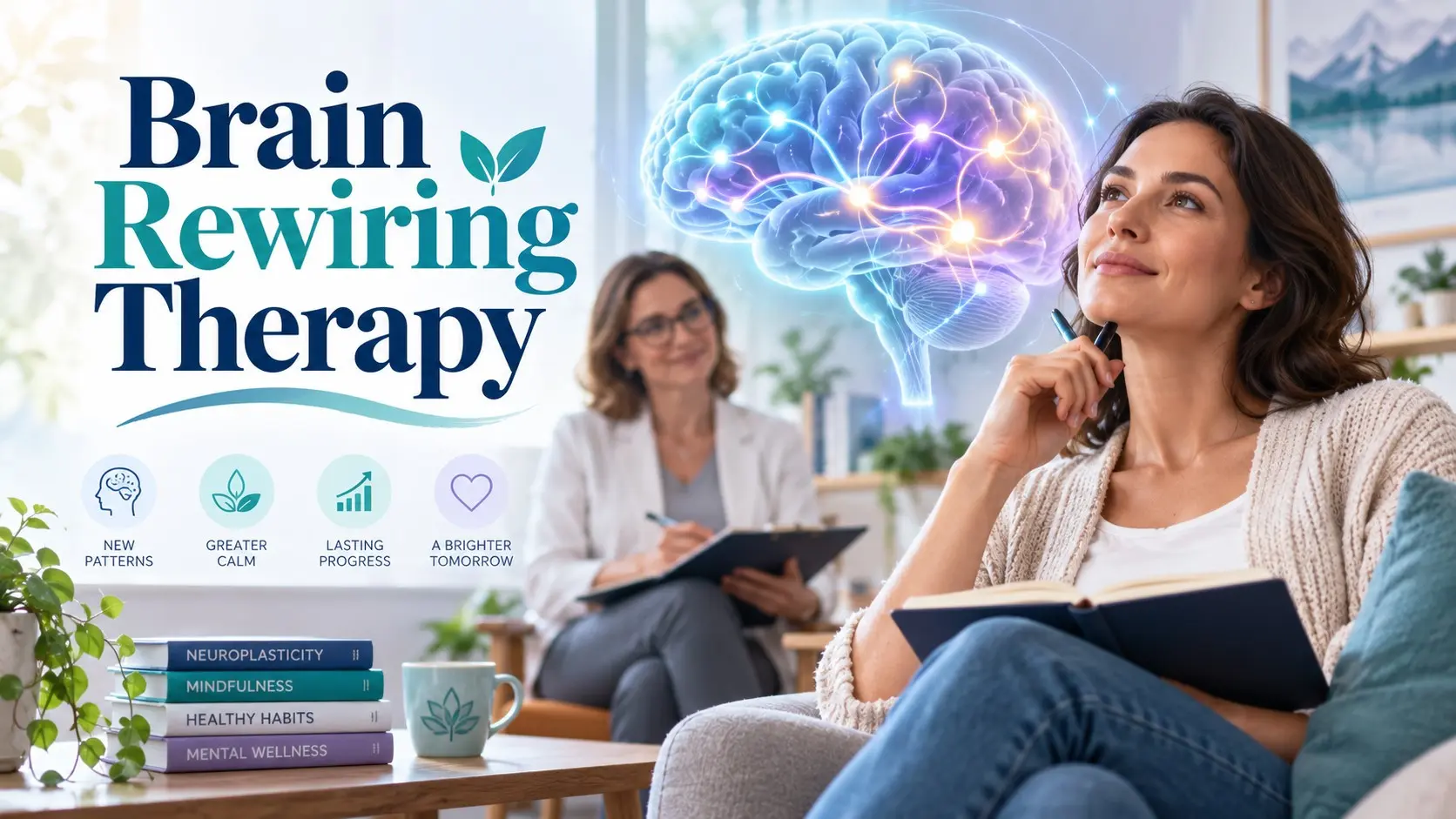
Brain rewiring therapy is an informal term for methods that aim to use the brain's natural ability to change with learning, experience, practice, and rehabilitation.
The scientific idea behind it is called neuroplasticity. Neuroplasticity is real. Your brain can strengthen some connections, weaken others, and reorganize networks as you learn skills or recover from some injuries.
What needs more care is the word “therapy.” There is no single medical treatment officially called brain rewiring therapy, and not every commercial brain retraining program has strong clinical evidence.
The best question is not, “Can the brain change?” It can. The better question is, “Which treatment has evidence for my condition?”
This article is for general information and education. It does not replace medical advice, diagnosis, or treatment.
Important: Do not use a brain retraining program as a reason to ignore new neurological symptoms, severe mental health symptoms, seizures, sudden weakness, significant memory change, severe pain, or symptoms of an undiagnosed medical condition.
Also be cautious with programs that promise a guaranteed cure, tell you that all symptoms are caused by your thoughts, ask you to ignore physical warning signs, or advise you to stop medical treatment.
A therapy should support appropriate healthcare, not replace it.
Table of Contents
- Quick Answer
- What brain rewiring means
- What neuroplasticity can do
- 11 Evidence Based Paths
- Repetitive skill practice
- Cognitive behavioural therapy
- Exposure therapy
- Physical rehabilitation
- Occupational therapy
- Speech therapy
- Exercise
- Acceptance and commitment therapy
- Mindfulness skills
- Sleep and learning
- Treating the real medical cause
- What Neuroplasticity Cannot Promise
- Brain Rewiring for Anxiety
- Brain Rewiring for Depression
- Brain Rewiring for Pain
- Stroke and Brain Injury
- ME/CFS Warning
- Choosing a Safe Program
- Frequently Asked Questions
Brain Rewiring Therapy: Quick Answer
Brain rewiring therapy usually refers to therapies or exercises designed around neuroplasticity.
The strongest examples are not magic techniques. They are familiar forms of healthcare that use repeated learning.
Examples include:
- Cognitive behavioural therapy
- Exposure therapy
- Stroke rehabilitation
- Physical therapy
- Occupational therapy
- Speech therapy
- Repeated motor practice
- Some chronic pain treatments
The brain changes because you repeatedly practise something meaningful.
Change usually comes through time, repetition, feedback, and the right level of challenge.
What Is Neuroplasticity?
Neuroplasticity is the nervous system's ability to adapt.
Your brain is made of networks of nerve cells.
When you repeat a skill, thought pattern, movement, or behaviour, some connections can become stronger.
When certain pathways are used less, their influence may change.
Neuroplasticity plays a role in:
- Learning
- Memory
- Movement
- Language
- Habit formation
- Emotional learning
- Recovery after some brain injuries
The important word is adaptation.
Plasticity does not mean the brain can repair every injury completely or that every illness can be reversed by thinking differently.
Can Adults Really Rewire Their Brains?
Yes.
Adult brains remain capable of change.
This is clear in learning and rehabilitation research.
For example, stroke rehabilitation uses repetitive practice to help people regain movement, language, and daily skills.
NINDS explains that the brain can reorganize circuits after stroke and that carefully directed repeated practice can help recovery.
However, the amount of recovery varies.
Age, injury severity, the brain area involved, health conditions, timing, and treatment intensity all matter.
11 Evidence Based Ways the Brain Can Change
1. Repetitive Skill Practice
Repetition is one of the clearest principles of neuroplasticity.
If you practise a useful skill repeatedly, the nervous system gets more chances to refine the movement or mental process.
Examples include:
- Practising a hand movement after stroke
- Repeating speech exercises
- Learning to play an instrument
- Practising a new language
- Repeating a new coping skill
Practice works best when it is meaningful and specific to the skill you want to improve.
2. Cognitive Behavioural Therapy
Cognitive behavioural therapy, or CBT, helps people notice links between thoughts, emotions, physical feelings, and behaviour.
NHS recommends CBT for many mental health problems, including:
- Depression
- Anxiety
- Phobias
- Obsessive compulsive disorder
- Post traumatic stress disorder
- Some eating disorders
CBT can also help with some sleep and long term pain problems.
During CBT, you practise new ways to respond to situations.
Those repeated cognitive and behavioural skills can become easier with time.
3. Exposure Therapy
Exposure therapy is often used for anxiety disorders and fears.
The goal is not to force yourself through overwhelming fear.
Instead, controlled exposure helps the brain learn that a feared situation can sometimes be handled safely.
NIMH describes exposure therapy as a type of CBT where people spend planned periods facing feared situations or ideas in a supportive setting until fear reduces over time.
This is a good example of new learning changing an old response.
4. Physical Rehabilitation
Physical rehabilitation is one of the clearest medical examples of neuroplasticity.
After stroke or neurological injury, physiotherapy may help people practise:
- Standing
- Walking
- Balance
- Reaching
- Grasping
- Using an affected arm
Modern rehabilitation often uses repeated, task specific practice.
The goal is to strengthen useful patterns rather than simply moving the body without purpose.
5. Occupational Therapy
Occupational therapy helps people practise activities needed for everyday life.
This may include:
- Dressing
- Preparing food
- Writing
- Using tools
- Managing daily routines
These activities provide repeated real world practice.
That repetition can support both learning and independence.
6. Speech and Language Therapy
Speech therapy can help after brain injury or stroke when language or speech is affected.
Practice may include:
- Naming objects
- Forming sounds
- Building sentences
- Understanding speech
- Using alternative communication
The brain may strengthen remaining language networks or recruit other networks to support communication.
7. Physical Exercise
Exercise supports brain and body health.
Aerobic activity can influence:
- Blood flow
- Sleep
- Mood
- Cardiovascular health
- Learning readiness
Exercise is also part of many rehabilitation programs.
The right amount depends on the person and the condition.
More exercise is not always better.
8. Acceptance and Commitment Therapy
Acceptance and commitment therapy, or ACT, teaches skills for handling difficult thoughts and feelings while moving toward meaningful goals.
NICE recommends considering ACT or CBT for adults with chronic primary pain.
This does not mean ACT removes every source of pain.
Its goal is often to reduce the impact pain has on daily life and improve function.
9. Mindfulness Skills
Mindfulness teaches people to notice thoughts, sensations, and emotions without reacting automatically.
This may help some people interrupt habitual stress responses.
Evidence varies by condition.
Mindfulness should therefore be described as a tool, not a universal cure.
10. Sleep Supports Learning
Sleep plays an important role in learning and memory.
New experiences need time to become stable memories.
Poor sleep can make attention, mood, and learning harder.
A brain training plan that ignores sleep may therefore miss an important part of recovery and learning.
11. Treating the Actual Cause
This may be the most important step of all.
If symptoms come from an untreated medical condition, the best treatment is not simply to train yourself to think differently.
Examples include:
- Epilepsy
- Stroke
- Vitamin deficiency
- Thyroid disease
- Sleep apnoea
- Heart disease
- Inflammatory disease
- Medication side effects
Neuroplasticity based strategies can complement medical treatment when appropriate.
They should not replace diagnosis.
What Brain Rewiring Can and Cannot Do
| Claim | Evidence Based View |
|---|---|
| The adult brain can change | Yes. Adult neuroplasticity is well established. |
| Practice can improve skills | Yes. Repetition and task specific rehabilitation are important in learning and recovery. |
| CBT can change behaviour patterns | Yes. CBT is evidence based for several mental health conditions. |
| Neuroplasticity guarantees full recovery | No. Recovery varies greatly. |
| Positive thinking cures physical illness | No. This claim is not supported. |
| Every brain retraining program is evidence based | No. Evidence must be checked program by program and condition by condition. |
What Does “Neural Pathway” Really Mean?
A neural pathway is a group of connected nerve cells involved in carrying or processing information.
You do not literally build a brand new road in your brain each time you learn something.
The phrase is a simple way to describe changing patterns of communication between nerve cells and brain networks.
Learning may involve:
- Changing synaptic strength
- Recruiting different networks
- Improving timing between brain regions
- Changing how efficiently a task is performed
Does Repetition Really Rewire the Brain?
Repetition matters, but repetition alone is not enough.
Effective learning often needs:
- Attention
- Feedback
- A clear goal
- Progressive challenge
- Rest
- Meaningful practice
Repeating the wrong movement or unhelpful habit can also strengthen that pattern.
Plasticity itself is neither good nor bad.
It depends on what the brain is learning.
Adaptive Versus Maladaptive Neuroplasticity
Adaptive plasticity helps function.
Examples include improving movement after stroke or learning healthier responses to anxiety triggers.
Maladaptive plasticity can reinforce patterns that are not helpful.
Examples may include:
- Persistent fear responses
- Some chronic pain patterns
- Compensatory movement that limits recovery
A 2026 review of post stroke rehabilitation highlights this difference and shows why therapy needs to guide plasticity toward useful functions.
Brain Rewiring Therapy for Anxiety
Anxiety involves patterns of attention, prediction, avoidance, and threat response.
Evidence based therapy can help people learn new ways to respond.
CBT
CBT can help identify inaccurate or unhelpful thoughts and change behaviours that keep anxiety going.
Exposure
Exposure therapy can reduce fear by providing safe new learning.
Relaxation Skills
Breathing and relaxation skills may reduce physical arousal for some people.
These methods are more useful than simply repeating positive statements while avoiding the feared situation.
Brain Rewiring Therapy for Depression
Depression can affect:
- Motivation
- Sleep
- Attention
- Activity
- Thought patterns
CBT is an established treatment for depression.
Behavioural approaches may help a person gradually return to meaningful activities instead of waiting to feel motivated first.
Medication may also be appropriate for some people.
The best treatment depends on severity, history, safety, and personal preference.
Read our High Functioning Depression Guide for more information about depression that may be hidden behind everyday functioning.
Can Brain Rewiring Help Trauma?
Evidence based trauma therapy can change learned fear responses and the way traumatic memories are processed.
Examples include trauma focused CBT and other validated therapies.
This is different from telling someone to stop thinking about trauma or to replace every negative thought with a positive one.
Trauma treatment should be delivered at a safe pace by appropriately trained professionals.
Brain Rewiring and Chronic Pain
Chronic pain is complex.
Pain can be influenced by:
- Tissue damage
- Nerve injury
- Inflammation
- Spinal cord processing
- Brain processing
- Sleep
- Stress
- Fear of movement
NICE recommends considering CBT or ACT for chronic primary pain.
These treatments can help people cope with pain and improve quality of life.
They do not prove the pain is imaginary.
Pain is real even when nervous system processing contributes to it.
Does Brain Rewiring Cure Chronic Pain?
No single technique cures every type of chronic pain.
Nerve injury, arthritis, cancer, endometriosis, migraine, spinal disease, and chronic primary pain are not the same problem.
Any program that claims one nervous system explanation cures every chronic pain condition should be viewed carefully.
Brain Rewiring After Stroke
This is where the science of neuroplasticity is especially strong.
Stroke can damage connections used for:
- Movement
- Speech
- Language
- Balance
- Vision
- Attention
Rehabilitation helps the nervous system relearn skills and find more effective ways to perform tasks.
NINDS states that repetitive rehabilitation practice can help stroke survivors regain function.
How Long Can Stroke Recovery Continue?
Recovery is often fastest earlier after stroke, but improvement can continue later.
The brain does not suddenly lose all ability to adapt after a fixed date.
A person's potential depends on many factors.
Modern rehabilitation therefore focuses on achievable goals rather than declaring recovery “finished” at an arbitrary time.
Does More Therapy Always Mean More Recovery?
No.
Therapy needs the right:
- Timing
- Intensity
- Task
- Rest
- Professional supervision
A 2026 review of stroke neuroplasticity found that intensive, repetitive, task specific rehabilitation has strong support, while some experimental brain stimulation approaches still show variable results.
Brain Rewiring and ME/CFS
This section needs special care because the phrase “brain retraining” is often marketed to people with ME/CFS.
NICE does not recommend programs that tell people they can cure ME/CFS by changing thoughts or pushing through symptoms.
NICE specifically states:
- Do not offer the Lightning Process or therapies based on it.
- CBT should not be presented as a cure for ME/CFS.
- CBT may help some people manage symptoms, distress, and the impact of living with the condition.
This is an important distinction.
A therapy can support coping without claiming to cure the underlying illness.
What About Long COVID?
Long COVID can involve many different problems, including:
- Fatigue
- Breathlessness
- Brain fog
- Post exertional symptoms
- Heart rate changes
- Sleep problems
A single “rewiring” explanation is unlikely to fit everyone.
People with persistent symptoms need medical assessment and a plan matched to their actual symptom pattern.
Do not push through significant post exertional worsening simply because a program says symptoms are only a learned brain response.
Brain Rewiring and Dysautonomia
Dysautonomia includes disorders affecting automatic functions such as heart rate, blood pressure, digestion, and sweating.
Psychological strategies may help a person cope with symptoms and fear.
They do not replace medical assessment of autonomic dysfunction.
Read our Dysautonomia NHS Guide for information about PoTS, postural symptoms, and autonomic testing.
Can Meditation Rewire the Brain?
Meditation involves repeated attention training.
Research suggests that regular meditation can influence some patterns of attention and emotional regulation.
However, this does not mean meditation cures neurological or psychiatric disease.
Think of it as a skill that may support wellbeing for some people.
Can Gratitude Rewire Your Brain?
Gratitude exercises can shift attention toward positive experiences and may support wellbeing.
However, the claim that a gratitude journal alone “rewires” illness away is too strong.
Positive practices should not become a reason to suppress real fear, grief, pain, or medical symptoms.
Can Affirmations Rewire Your Brain?
Repeating a statement is a form of practice.
But repeating something does not automatically make it biologically true or clinically useful.
A statement such as “I can take one useful step today” may support action.
A statement such as “my illness is gone” does not make a diagnosed disease disappear.
Can You Rewire Your Brain in 21 Days?
No universal 21 day rule exists.
Different skills take different amounts of time.
Learning speed depends on:
- Task difficulty
- Practice frequency
- Age
- Sleep
- Health
- Motivation
- Feedback
- Prior experience
Be cautious with programs that promise complete neurological change in a fixed number of days.
Can You Rewire Your Brain in 90 Days?
You can learn a great deal in three months.
That does not create a medical guarantee.
Three months of well designed practice may improve a skill, but recovery from stroke, anxiety, pain, depression, or brain injury follows very different paths.
Habits and Neuroplasticity
Habits become easier when a behaviour is repeated in a consistent setting.
A useful habit plan can follow four simple steps:
- Choose one small behaviour.
- Attach it to a clear cue.
- Repeat it often.
- Track whether it helps.
Start small enough that you can repeat the behaviour consistently.
A Simple Brain Learning Plan
Step 1: Choose One Target
Do not try to change everything at once.
Choose one skill, symptom response, or habit.
Step 2: Make It Specific
Instead of “improve my brain,” choose something measurable.
Examples include:
- Walk safely for five minutes
- Practise one speech exercise
- Challenge one anxious prediction
- Complete one meaningful task
Step 3: Repeat
Learning needs practice.
Step 4: Get Feedback
A therapist, clinician, coach, teacher, or objective measurement can show whether the approach is helping.
Step 5: Increase Challenge Slowly
A task that is always too easy gives little new learning.
A task that is overwhelmingly difficult can cause frustration or harm.
Step 6: Rest
Sleep and recovery support learning.
Step 7: Review Results
If symptoms are worsening, stop assuming that more effort is always the solution.
Reassessment may be needed.
How to Judge a Brain Rewiring Program
| Good Sign | Warning Sign |
|---|---|
| Explains which condition the method has been studied for | Claims to cure many unrelated diseases |
| Uses published research | Relies mostly on testimonials |
| Encourages appropriate medical care | Tells you to ignore doctors |
| Discusses limits and risks | Promises a guaranteed cure |
| Allows you to stop if symptoms worsen | Says worsening proves the program is working |
| Uses qualified practitioners when clinical treatment is involved | Uses vague titles without clear qualifications |
Questions to Ask Before Paying for a Program
- What exact condition has this program been tested for?
- Are there randomized clinical trials?
- Were the studies independent?
- How large were the studies?
- What outcomes improved?
- How many people did not improve?
- Were adverse effects measured?
- Does the program replace medical treatment?
- What qualifications does the practitioner have?
- What happens if my symptoms worsen?
- Is there a guaranteed cure claim?
Red Flags in Brain Rewiring Marketing
Be cautious when a program says:
- Every chronic illness is caused by the nervous system
- Symptoms only persist because you believe in them
- You must ignore physical warning signs
- Doctors do not understand the real cause
- You should stop medication
- You will recover if you think correctly
- Failure means you did not believe enough
- Everyone recovers if they follow the program
These messages can create guilt and delay appropriate care.
Does Neuroplasticity Mean Symptoms Are Imaginary?
No.
This is one of the most important points.
A nervous system process is still biological.
Pain, dizziness, anxiety, fatigue, or movement problems can be completely real even when neural processing contributes to them.
The brain is part of the body.
Does Neuroplasticity Mean Everything Can Be Reversed?
No.
Neuroplasticity allows adaptation.
It does not make the brain unlimited.
Some damage is permanent.
Some conditions are progressive.
Some symptoms improve partially rather than completely.
Evidence based rehabilitation aims for meaningful improvement, not impossible promises.
Who Can Help With Neuroplasticity Based Treatment?
The right professional depends on the goal.
- Psychologist or therapist: anxiety, depression, trauma, behaviour
- Physiotherapist: movement and physical rehabilitation
- Occupational therapist: daily skills and independence
- Speech and language therapist: speech, language, swallowing
- Neurologist: neurological diagnosis
- Rehabilitation physician: complex recovery planning
- Pain specialist: complex persistent pain
When Should You Seek Medical Assessment First?
See a healthcare professional before starting a self directed brain retraining program when you have:
- New neurological symptoms
- Seizures
- Fainting
- New severe headaches
- Progressive weakness
- Unexplained numbness
- Major memory change
- Rapid personality change
- Unexplained weight loss
- Severe fatigue without a diagnosis
- New heart symptoms
When Is It an Emergency?
Seek emergency care for:
- Sudden facial weakness
- Sudden arm or leg weakness
- Sudden trouble speaking
- A first seizure
- Prolonged loss of consciousness
- Severe sudden confusion
- Sudden severe headache
- Active suicidal intent or inability to stay safe
Common Brain Rewiring Therapy Myths
Myth 1: Neuroplasticity Is Pseudoscience
False.
Neuroplasticity is a well established biological property of the nervous system.
Myth 2: Every Brain Rewiring Program Is Scientific
False.
A real scientific concept can still be used in marketing claims that go beyond the evidence.
Myth 3: Positive Thinking Can Cure Disease
False.
Thought patterns can affect behaviour, stress, and coping, but they do not cure every medical condition.
Myth 4: Neuroplasticity Guarantees Full Stroke Recovery
False.
Rehabilitation can support recovery, but outcomes vary.
Myth 5: Pain Influenced by the Brain Is Not Real
False.
Pain is always a real experience.
Myth 6: CBT Is a Cure for ME/CFS
False.
NICE explicitly says CBT should not be offered as a cure for ME/CFS.
Myth 7: You Must Push Through Symptoms to Rewire Your Brain
False.
Appropriate challenge and unsafe symptom pushing are not the same thing.
Conclusion
Brain rewiring therapy is best understood as a broad, informal label built around the real science of neuroplasticity.
The strongest evidence comes from specific treatments with clear goals. Stroke rehabilitation uses repeated task practice. CBT helps people change patterns of thinking and behaviour. Exposure therapy provides new learning for fear and anxiety. ACT can help some people live better with chronic primary pain.
What neuroplasticity does not support is the claim that every disease can be cured by changing thoughts, ignoring symptoms, or purchasing one universal retraining program.
Your next step is to define the problem you want to change, choose an intervention with evidence for that specific condition, and work with an appropriately qualified professional when symptoms are significant or unexplained.
References and Sources
- National Institute of Neurological Disorders and Stroke. Stroke Recovery.
https://www.ninds.nih.gov/health-information/stroke/recovery - National Institutes of Health. Critical Time Window for Rehabilitation After a Stroke.
https://www.nih.gov/news-events/nih-research-matters/critical-time-window-rehabilitation-after-stroke - NHS. Cognitive Behavioural Therapy.
https://www.nhs.uk/tests-and-treatments/cognitive-behavioural-therapy-cbt/ - National Institute of Mental Health. Psychotherapies.
https://www.nimh.nih.gov/health/topics/psychotherapies - NICE. Chronic Pain: Assessment and Management.
https://www.nice.org.uk/guidance/ng193/chapter/recommendations - NICE. ME/CFS: Diagnosis and Management.
https://www.nice.org.uk/guidance/ng206/chapter/recommendations - Karaganova I, Mindova S. Neuroplasticity after stroke: Adaptive and maladaptive mechanisms in evidence based rehabilitation. 2026.
https://pubmed.ncbi.nlm.nih.gov/41967694/
Internal Links + Hub
- NextFitLife Health Articles Hub
- How to Build and Maintain a Healthy Brain
- High Functioning Depression
- Men Mental Health Month
- Dysautonomia NHS
- Dissociative Seizures
- Stress Ball Guide
About the Author
Adel Galal is the founder and editor of NextFitLife. He writes practical consumer health, mental health, brain health, fitness, and healthy ageing content using information from recognized medical, public health, and academic sources.
I am not a dermatologist, doctor, neurologist, psychologist, psychiatrist, physiotherapist, pharmacist, or other licensed healthcare professional. This content does not replace professional medical advice. What I share comes from real life experience, extensive research, and consultation with healthcare providers. Always consult qualified medical professionals for diagnosis and treatment of any health condition.
Learn more about NextFitLife, the author, and the site's editorial approach on the About Us page.
Frequently Asked Questions
What is brain rewiring therapy?
Brain rewiring therapy is an informal term for approaches designed around neuroplasticity, the brain's ability to adapt through learning and experience. Examples with clinical evidence include CBT, exposure therapy, and neurological rehabilitation.
Is brain rewiring scientifically proven?
Neuroplasticity is scientifically well established. However, that does not mean every product or program marketed as brain rewiring has been proven effective.
Can adults rewire their brains?
Yes. Adults can learn new skills and change patterns of behaviour throughout life. Rehabilitation research also shows that brain networks can reorganize after injuries such as stroke.
How long does it take to rewire the brain?
There is no fixed period. Change depends on the skill, condition, practice frequency, health, sleep, feedback, and individual biology. Claims that everyone rewires in 21 or 90 days are too simple.
Can CBT rewire the brain?
CBT uses repeated learning to change patterns of thought and behaviour. It is an evidence based treatment for several mental health conditions and fits well with the broader science of experience dependent neuroplasticity.
Can brain rewiring help anxiety?
Evidence based therapies such as CBT and exposure therapy can help many anxiety disorders by teaching new responses to thoughts, situations, and fear signals.
Can brain rewiring help depression?
Evidence based psychotherapy can help depression by changing behaviour and thought patterns, but treatment may also involve medication, lifestyle support, or other care depending on severity.
Can brain rewiring cure chronic pain?
No single rewiring technique cures all chronic pain. CBT and ACT can help some people with chronic primary pain, but treatment should match the actual cause and type of pain.
Does brain rewiring help after a stroke?
Yes. Neuroplasticity is central to stroke rehabilitation. Repeated, task specific physical, occupational, and speech therapy can help the nervous system recover or adapt.
Can brain retraining cure ME/CFS?
There is no evidence based brain retraining cure for ME/CFS. NICE specifically says not to offer the Lightning Process or therapies based on it and says CBT should not be presented as a cure.
Are commercial brain retraining programs safe?
Safety varies. Be cautious with programs that promise guaranteed cures, blame symptoms entirely on thinking, tell you to ignore warning signs, or advise stopping medical treatment.
Does neuroplasticity mean symptoms are imaginary?
No. Neuroplasticity is a biological process. Pain, fatigue, dizziness, anxiety, and other symptoms are real even when nervous system processing contributes to them.
When should I seek medical care before trying brain rewiring?
Seek assessment for new neurological symptoms, seizures, fainting, progressive weakness, major memory changes, severe unexplained fatigue, new heart symptoms, or any significant undiagnosed problem.

Health & wellness writer with 30+ years of experience in nutrition, fitness, and healthy aging. Founder of NextFitLife.com — evidence-based health guidance.