
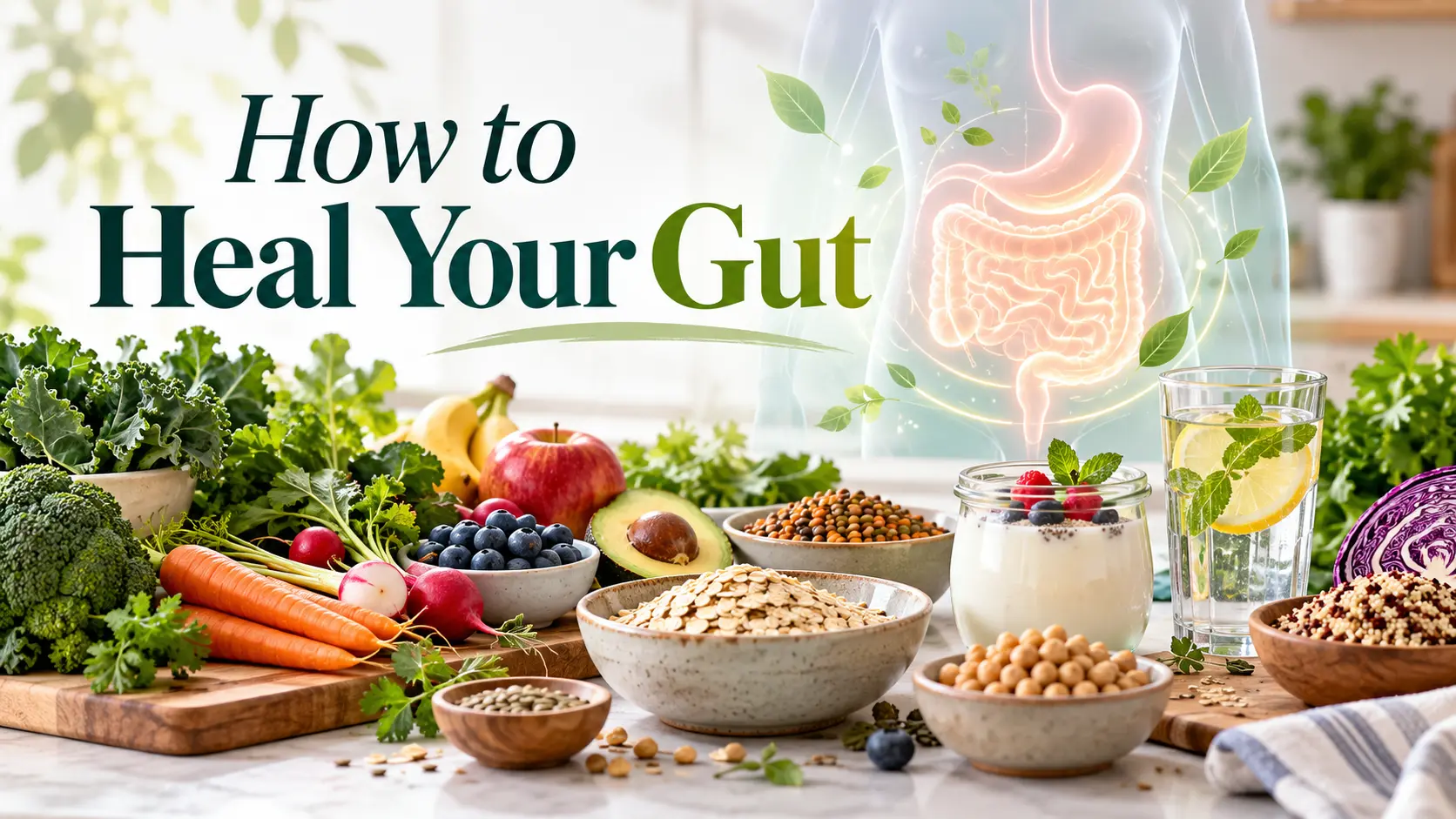
First published: Jun 5, 2023
Last updated: September 30, 2026
Written and source -checked by: Adel Galal, Founder and Lead Writer at NextFitLife
Medical review status: This article has not been medically reviewed by a gastroenterologist, doctor, registered dietitian, pharmacist, or other licensed digestive health professional.
If you are searching for How to Heal Your Gut, start with one important correction: there is no single medical condition called an “unhealthy gut,” and there is no universal detox, supplement, cleanse, or 30 day protocol that repairs every digestive problem.
Your digestive symptoms have a cause. Sometimes that cause is simple, such as low fibre intake, constipation, stress, or eating habits. In other cases, symptoms can come from IBS, reflux, lactose intolerance, coeliac disease, inflammatory bowel disease, infection, medicines, or another condition that needs proper assessment.
So the goal is not to chase a perfect microbiome.
The useful goal is to support normal digestion while finding the real cause of symptoms that keep returning.
Quick Answer
The best evidence based way to support gut health is to eat a varied diet with enough fibre, increase fibre gradually, drink enough fluid, move regularly, manage stress, sleep well, and choose foods that suit your digestion. Fermented foods and probiotics may help some people, but they are not universal treatments. Persistent symptoms need a medical diagnosis rather than another gut cleanse.
Get Medical Advice for These Gut Symptoms
Speak with a healthcare professional if digestive symptoms continue for several weeks, keep returning, or are affecting daily life.
Seek more urgent assessment for unexplained weight loss, blood in your stool, bloody diarrhoea, black stool, a hard abdominal lump, persistent vomiting, severe or constant abdominal pain, significant dehydration, difficulty swallowing, or symptoms that make you seriously unwell.
Do not use a gut healing diet to delay assessment of persistent or concerning symptoms.
Medical notice: This content is for general educational purposes and does not replace professional medical advice, diagnosis, or treatment. Consult an appropriately qualified healthcare professional for personal medical concerns. This article explains published guidance and does not provide a personal clinical assessment. Always consult qualified medical professionals for diagnosis and treatment of any health condition.
Table of Contents
- What Healing Your Gut Really Means
- 12 Proven Ways to Support Gut Health
- Fibre and the Gut Microbiome
- Prebiotics and Probiotics
- Fermented Foods
- Bloating and IBS
- Low FODMAP Diets
- Gluten and Coeliac Testing
- Gut Health Supplements
- Gut Cleanses and Detoxes
- Digestive Warning Signs
- A Seven Day Starter Plan
- References and Sources
- Related NextFitLife Guides
- About the Author
- Frequently Asked Questions
What Does “Healing Your Gut” Actually Mean?
“Heal your gut” is a popular phrase, not one precise medical treatment.
Your digestive system includes the stomach, small intestine, large intestine, pancreas, liver, gallbladder, nerves, immune tissue, and a vast community of microorganisms.
Those microorganisms form the gut microbiome.
Your microbiome changes with diet, medicines, illness, age, environment, and many other factors. Scientists are still learning what a healthy microbiome looks like, and there is no one perfect mix of bacteria that everyone needs.
For everyday health, supporting your gut usually means helping normal bowel function, eating enough useful nutrients and fibre, avoiding unnecessary restrictions, and treating real digestive conditions when they exist.
12 Proven Ways to Support Your Gut
1. Increase Fibre Gradually
Dietary fibre is one of the most useful places to start.
The NHS recommends that adults aim for about 30 grams of fibre each day as part of a balanced diet.
Useful sources include:
- Vegetables
- Fruit
- Beans
- Lentils
- Chickpeas
- Oats
- Wholegrain bread
- Wholewheat pasta
- Brown rice
- Potatoes with their skin
- Nuts and seeds
Fibre supports normal bowel movements and provides material that some gut microbes can use.
Do not move from a very low fibre diet to huge bowls of bran overnight.
A rapid increase can cause more gas and bloating.
Build it gradually and notice what your body tolerates.
2. Eat Different Plant Foods
Variety matters.
Different plants provide different types of fibre, starch, polyphenols, vitamins, and minerals.
Instead of searching for one perfect gut superfood, rotate foods across the week.
For example:
- Oats at breakfast
- Beans in a lunch
- Lentils in soup
- Berries with yogurt
- Leafy greens with dinner
- Carrots or peppers as snacks
- Whole grains instead of the same refined grain every day
Your gut does not need an exotic powder to receive food variety.
3. Drink Enough Fluid
Fibre works better when there is enough fluid.
Water helps soften stool and supports normal movement through the digestive system.
If you increase fibre but drink very little, constipation can become worse.
A simple habit is to drink regularly through the day and include water with meals.
People with heart failure, kidney disease, or a prescribed fluid restriction should follow their clinical fluid plan rather than generic hydration advice.
4. Eat Regular Meals and Slow Down
Digestion is not helped by rushing every meal.
NHS and NICE digestive guidance recommends regular meals and taking time to eat.
Try to:
- Avoid regularly skipping meals
- Sit down when practical
- Chew normally instead of racing through food
- Notice when you feel full
- Avoid very large meals if they trigger reflux or bloating
This does not require counting every chew.
It means giving your meal enough time.
5. Add Prebiotic Foods Through Normal Meals
Prebiotics are food components that microbes in the gut can use.
Many are forms of fibre.
Food sources can include:
- Onions
- Garlic
- Leeks
- Oats
- Beans
- Lentils
- Bananas
- Whole grains
- Some vegetables
You do not need a prebiotic powder to start.
Food is often the simpler option.
There is one catch: some prebiotic foods can increase gas and bloating in people with IBS.
If onions, garlic, beans, or certain grains repeatedly cause symptoms, do not force them because an article labels them “gut healthy.”
6. Use Fermented Foods If You Tolerate Them
Fermented foods can fit into a healthy diet.
Examples include:
- Yogurt with live cultures
- Kefir
- Kimchi
- Sauerkraut
- Miso
- Tempeh
But “fermented” does not mean every product contains a useful amount of live organisms when you eat it.
Heating, processing, storage, and manufacturing all matter.
You also do not need fermented food at every meal.
If yogurt, kefir, or fermented vegetables suit you, they can be part of your diet. If they worsen symptoms, there is no reason to force them.
7. Treat Probiotics as a Trial, Not a Cure
Probiotics are live microorganisms sold in foods and supplements.
Some may help some digestive conditions, but one probiotic does not treat everything.
The NHS notes that evidence for many commercial health claims remains limited.
NICE gives a practical approach for people with IBS who want to try one.
Use the product at the manufacturer's recommended dose for at least four weeks and monitor whether symptoms actually improve.
If nothing changes, endlessly buying the same product makes little sense.
Talk with a doctor before using probiotic supplements if you have a weakened immune system or a serious health condition.
8. Move Your Body Regularly
Physical activity supports general health and can help normal bowel movement.
You do not need a special “gut workout.”
Useful options include:
- Walking
- Cycling
- Swimming
- Strength training
- Dancing
- Gardening
If constipation is your main concern, gentle movement can be especially practical.
See our Constipation Exercises Guide for simple movement ideas.
9. Take Stress Seriously
The digestive system and brain communicate in both directions.
This relationship is often called the gut brain axis.
Stress can change gut movement and make symptoms such as pain, diarrhoea, constipation, and bloating feel worse.
NHS guidance notes that stress can slow digestion in some people and speed it up in others.
Useful stress care can include:
- Walking
- Breathing exercises
- Regular breaks
- Talking with someone you trust
- Relaxation practices
- Professional mental health support when needed
This does not mean digestive symptoms are “all in your head.”
Stress can worsen real digestive symptoms without being their only cause.
10. Protect Your Sleep Routine
Sleep supports overall health, energy, appetite regulation, stress management, and daily routines.
Poor sleep can also make it harder to eat regularly, move, manage stress, and cope with digestive discomfort.
A practical sleep routine includes:
- A fairly regular wake time
- Enough time in bed
- Less late caffeine when it affects you
- A dark, comfortable sleeping space
- A calmer wind down before bed
Do not buy a gut supplement when the bigger problem is that you are sleeping four hours a night.
11. Reduce the Foods That Clearly Trigger Your Symptoms
One food does not bother everyone.
The useful question is what repeatedly triggers your symptoms.
NHS digestive advice notes that some people react to:
- Very fatty foods
- Fizzy drinks
- Excess caffeine
- Alcohol
- Spicy foods
- Specific carbohydrates
- Lactose when lactose intolerance is present
A short food and symptom diary can help.
Record what you ate, approximate portion size, symptoms, and timing.
Do not remove six food groups at once.
If everything is removed at the same time, you learn very little and may make your diet nutritionally poor.
12. Get Persistent Symptoms Diagnosed
This is the step most “gut healing” plans skip.
Bloating is a symptom.
Diarrhoea is a symptom.
Constipation is a symptom.
Abdominal pain is a symptom.
The cause could be simple, but it could also be:
- IBS
- Coeliac disease
- Lactose intolerance
- Inflammatory bowel disease
- Reflux disease
- Infection
- Medicine side effects
- Another digestive disorder
If you have had IBS style symptoms for more than four weeks, NHS advice is to see a GP.
Treat the cause rather than buying increasingly complicated gut supplements.
What Does Fibre Do for the Gut Microbiome?
Humans do not fully digest many forms of fibre.
Some fibre reaches the large intestine, where microbes can ferment it.
This produces compounds including short chain fatty acids.
That is one reason fibre rich plant foods are important to the intestinal microbiome.
The NHS recommends about 30 grams of fibre each day for most adults.
More is not automatically better.
The amount you tolerate depends on your current diet and digestive condition.
What Foods Are Good for Gut Health?
| Food Group | Examples | Why It Can Help |
|---|---|---|
| Whole grains | Oats, wholemeal bread, brown rice, wholewheat pasta | Provides useful fibre |
| Pulses | Beans, lentils, chickpeas, peas | Provides fibre, plant protein, and fermentable carbohydrate |
| Vegetables | Carrots, peppers, greens, broccoli, courgette | Adds fibre and a range of nutrients |
| Fruit | Berries, oranges, apples, kiwi, bananas | Provides fibre, fluid, vitamins, and plant compounds |
| Fermented foods | Live yogurt, kefir, kimchi, sauerkraut | Some products provide live microorganisms when tolerated |
| Nuts and seeds | Almonds, walnuts, chia, flax | Provides fibre and unsaturated fats |
For a deeper food guide, visit the NextFitLife Gut Health Foods Hub.
Do You Need 30 Different Plants Every Week?
Plant variety is a useful goal.
But a strict target of exactly 30 plants is not a medical rule you have to pass each week.
If counting motivates you, it can be a fun way to add variety.
If it creates anxiety, ignore the number and simply rotate vegetables, fruit, beans, grains, nuts, seeds, herbs, and spices when they suit your digestion.
Are Probiotics Worth Taking?
Sometimes.
But the word probiotic covers many organisms and strains.
A strain studied for one symptom does not automatically help a different condition.
The NHS also notes that supplements are generally regulated as foods rather than medicines, so products can differ in quality and in whether organisms survive long enough to reach the gut.
If you have IBS and decide to test a probiotic, use one product consistently for four weeks and track the result.
If your symptoms clearly worsen, stop and seek advice when needed.
Do Fermented Foods Heal the Gut?
No single fermented food “heals” the gut.
Yogurt, kefir, kimchi, and sauerkraut can be useful foods when you enjoy and tolerate them.
They should be viewed as part of the diet, not medicine for every digestive complaint.
A person with severe reflux, histamine related symptoms, IBS, or another digestive condition may not tolerate every fermented product.
What About Bone Broth?
Bone broth is food.
It can provide fluid, protein, salt, and some minerals depending on how it is made.
There is not good evidence that bone broth alone repairs the intestinal lining or cures digestive disease.
Drink it if you enjoy it.
Do not treat it as a required gut medicine.
Does Collagen Heal the Gut?
Collagen supplements provide amino acids and peptides.
That does not mean taking collagen selectively rebuilds a damaged intestine.
Evidence is not strong enough to recommend routine collagen supplements as a universal gut healing treatment.
A varied diet with adequate protein can provide the amino acids your body needs.
Does Aloe Vera Heal the Gut?
This is one recommendation I would remove from generic gut healing lists.
NICE specifically advises people with IBS against using aloe vera as treatment because it is unlikely to help and can cause side effects.
“Natural” does not always mean useful.
Does Your Gut Need a Detox?
No.
Your body already has organs that process and remove waste products.
You do not need juice cleanses, colon cleanses, detox teas, or laxative routines to “flush toxins” from a normal digestive system.
Some detox products cause diarrhoea, dehydration, or electrolyte problems.
If constipation is the problem, treat constipation rather than trying to purge the gut.
Should You Cut Out Gluten to Heal Your Gut?
Not automatically.
Gluten must be avoided if you have coeliac disease.
Some other people may have wheat or gluten related symptoms.
But going gluten free before coeliac testing can make the tests less reliable.
The NHS advises continuing to eat gluten while you are being tested for coeliac disease.
This is very important if you have persistent:
- Diarrhoea
- Abdominal pain
- Bloating
- Unexplained weight loss
- Iron deficiency anaemia
- Persistent mouth ulcers
- A close relative with coeliac disease
Get tested first when coeliac disease is possible.
What About Dairy?
Dairy is another food group people often remove without knowing why.
Some people have lactose intolerance and develop wind, bloating, cramps, or diarrhoea after lactose containing foods.
Other people digest dairy without trouble.
If dairy does not cause symptoms, there is no general gut health rule saying you must remove it.
Is a Low FODMAP Diet Good for Gut Health?
A low FODMAP diet can reduce symptoms for some people with IBS.
It is not a general gut cleanse.
It is also not designed to be a permanently restrictive eating pattern.
NICE says that exclusion diets such as low FODMAP should be advised by a healthcare professional with expertise in dietary management.
A structured approach normally includes:
- A limited restriction phase
- Planned reintroduction
- A personalised long term diet
Removing large numbers of foods forever can make a diet unnecessarily restrictive.
What Kind of Fibre Is Best for IBS?
This is where generic “eat more fibre” advice can fail.
NICE recommends reviewing fibre intake in IBS.
People with IBS are often advised to avoid large amounts of insoluble bran if it worsens symptoms.
When extra fibre is needed, soluble fibre such as oats or ispaghula can be better tolerated.
If bloating is your main problem, see our Foods That Can Reduce Bloating Guide.
Should You Take Digestive Enzymes?
Digestive enzyme treatment is useful for specific medical problems.
For example, people with pancreatic insufficiency may need prescribed pancreatic enzymes.
A person with lactose intolerance might use lactase in some situations.
That does not mean everyone with bloating needs a broad digestive enzyme supplement.
Find out what is wrong before trying to replace enzymes you may already produce normally.
Do Gut Microbiome Tests Tell You What to Eat?
Commercial stool microbiome testing is interesting, but routine consumer tests cannot currently give everyone a clinically validated personalised diet.
Your microbiome can change over time and different laboratories use different methods.
If you have persistent digestive symptoms, standard medical assessment is usually more useful than starting with an expensive wellness stool panel.
What About Antibiotics?
Antibiotics can change the gut microbiome, but that does not make them bad medicines.
They can be lifesaving when a bacterial infection needs treatment.
Take antibiotics when appropriately prescribed and follow the instructions you receive.
Do not replace necessary antibiotics with oregano oil, herbal antimicrobials, or other unproven “natural antibiotics” because you are worried about gut bacteria.
Can Stress Really Affect Digestion?
Yes.
Stress can change gut movement and symptom perception.
Some people become constipated when stressed.
Others get urgent diarrhoea.
IBS symptoms can also flare during periods of anxiety or high stress.
The connection is real, but stress does not explain every digestive symptom.
How Long Does It Take to Heal Your Gut?
There is no medically established number of days for “gut healing.”
A constipation problem can improve quickly after the right change.
A food intolerance may improve when the trigger is identified.
IBS often needs longer term symptom management.
Coeliac disease requires lifelong gluten avoidance after diagnosis.
Inflammatory bowel disease needs medical treatment.
A serious infection may need urgent care.
The cause determines the timeline.
Be cautious with anyone promising that every person's gut can be repaired in exactly 7, 21, or 30 days.
How Do You Know Whether Your Gut Is Improving?
Look at real symptoms rather than a vague “detox feeling.”
Useful signs can include:
- More comfortable bowel movements
- Less constipation
- Less diarrhoea
- Less troublesome bloating
- Less reflux
- Better tolerance of a varied diet
- Less abdominal pain
- Fewer urgent bowel movements
Do not judge gut health only by how flat your stomach looks.
Normal digestion produces gas.
Your abdomen also changes through the day.
When Should You See a Doctor About Gut Symptoms?
Book an assessment if you have digestive symptoms for more than several weeks or they keep returning.
Get more urgent help for:
- Unexplained weight loss
- Blood from the rectum
- Bloody diarrhoea
- Black stool
- A hard abdominal lump or swelling
- Persistent vomiting
- Severe or constant abdominal pain
- Difficulty swallowing
- Signs of significant dehydration
- Pale skin, breathlessness, or noticeable palpitations that might suggest anaemia
Persistent digestive symptoms deserve a diagnosis, not an endless elimination diet.
A Simple Seven Day Gut Health Starter Plan
| Day | Action | Keep It Simple |
|---|---|---|
| Day 1 | Check your fibre | Add one fibre rich food rather than changing everything |
| Day 2 | Drink regularly | Have water with meals and through the day |
| Day 3 | Add another plant | Try a vegetable, pulse, whole grain, fruit, nut, or seed you tolerate |
| Day 4 | Move | Take a walk or do another activity you enjoy |
| Day 5 | Slow one meal | Sit down and avoid rushing |
| Day 6 | Review symptoms | Record foods, timing, bowel habits, and symptoms |
| Day 7 | Choose what stays | Keep the habits that feel useful and sustainable |
This is not a seven day cure.
It is a simple way to begin improving the basics without buying a cleanse, removing half your diet, or starting five supplements at once.
Conclusion
How to Heal Your Gut is a useful search phrase, but the best answer is not a detox protocol.
Support your digestion with a varied diet, enough fibre and fluid, regular meals, movement, sleep, and stress care. Use fermented foods and probiotics when they suit you rather than treating them as universal cures.
Most of all, do not keep shrinking your diet when symptoms remain unexplained.
If bloating, diarrhoea, constipation, reflux, or abdominal pain keeps returning, your next useful step is to find the cause with a qualified healthcare professional.
References and Sources
- NHS.
Good Foods to Help Your Digestion.
Covers fibre, fluids, digestive symptom triggers, caffeine, fizzy drinks, probiotics, and practical digestive health advice.
https://www.nhs.uk/live-well/eat-well/digestive-health/good-foods-to-help-your-digestion/
- NHS.
How to Get More Fibre Into Your Diet.
Explains the UK adult target of about 30g of fibre per day and gives practical sources including whole grains, vegetables, fruit, pulses, nuts, and seeds.
https://www.nhs.uk/live-well/eat-well/digestive-health/how-to-get-more-fibre-into-your-diet/
- NHS.
Probiotics.
Explains what probiotics are, where evidence is limited, supplement regulation concerns, and why people with weakened immune systems or existing health conditions should seek medical advice before using probiotic supplements.
https://www.nhs.uk/tests-and-treatments/probiotics/
- National Institute for Health and Care Excellence, NICE.
Irritable Bowel Syndrome in Adults: Diagnosis and Management.
Covers regular meals, fluid intake, physical activity, soluble versus insoluble fibre, four week probiotic trials, low FODMAP diets, and why aloe vera is discouraged for IBS.
https://www.nice.org.uk/guidance/cg61/chapter/recommendations
- NHS.
Coeliac Disease: Diagnosis.
Explains who should be tested for coeliac disease and why people need to keep eating gluten while testing is underway so results remain accurate.
https://www.nhs.uk/conditions/coeliac-disease/diagnosis/
- Mayo Clinic.
Probiotics and Prebiotics: What You Should Know.
Updated April 25, 2025. Explains probiotics, prebiotics, fermented foods, high fibre foods, supplement limitations, and developing research on the gut microbiome.
https://www.mayoclinic.org/healthy-lifestyle/nutrition-and-healthy-eating/expert-answers/probiotics/faq-20058065
- Mayo Clinic News Network.
Why Is Fiber Good for Your Overall Health?
Published March 13, 2026. Explains how dietary fibre reaches the colon, interacts with gut microbes, supports digestion, and contributes to wider health.
https://newsnetwork.mayoclinic.org/discussion/mayo-clinic-qa-why-is-fiber-good-for-your-overall-health/
Related NextFitLife Gut Health Guides
- Gut Health Foods: Digestion, Fibre, Bloating, and Safety
- Best Morning Drink for Gut Health: 8 Smart Choices
- Foods That Can Reduce Bloating: 13 Gentle Choices
- Constipation Exercises: 10 Simple Moves That May Help
- Gut Health and Weight Loss
- 24 Proven Nutrition Tips for Better Health
- Nutrition and Vitamins Hub
About the Author
Adel Galal is the founder and lead writer of NextFitLife. He has more than 30 years of independent interest in nutrition, fitness, digestive health, weight management, sleep, and healthy aging, along with more than 15 years of health and wellness writing experience.
His professional background also includes 29 years in information technology management. That work shaped the structured way he compares sources, checks claims, and turns complex information into practical guides.
For digestive health content, Adel compares recognised medical, gastroenterology, nutrition, and public health guidance. He does not diagnose digestive disease, prescribe medication, interpret individual test results as a clinician, or replace care from a gastroenterologist or registered dietitian.
This content is for general educational purposes and does not replace professional medical advice, diagnosis, or treatment. Consult an appropriately qualified healthcare professional for personal medical concerns. This article explains published guidance and does not provide a personal clinical assessment. Always consult qualified medical professionals for diagnosis and treatment of any health condition.
Learn more about Adel Galal and NextFitLife on the About Us page.
Frequently Asked Questions
How do you heal your gut naturally?
There is no single gut healing treatment for everyone. Helpful basics include a varied diet, enough fibre, adequate fluid, regular physical activity, good sleep, stress management, and treatment of any diagnosed digestive problem.
What is the fastest way to heal your gut?
There is no proven universal fast gut healing method. The quickest useful step is to identify what is actually causing your symptoms and correct that rather than following a generic cleanse.
How long does it take to heal your gut?
There is no standard timeline. Constipation, IBS, coeliac disease, infection, reflux, and inflammatory bowel disease all have different causes and recovery patterns.
What foods are best for gut health?
Useful choices include vegetables, fruit, beans, lentils, whole grains, nuts, seeds, and fermented foods when tolerated. Variety is more useful than relying on one gut superfood.
How much fibre should adults eat?
NHS guidance recommends around 30 grams of dietary fibre each day for adults. Increase fibre gradually if your current intake is low.
Can too much fibre cause bloating?
Yes. Increasing fibre very quickly can cause gas and bloating, especially in people with IBS. Build fibre gradually and adjust the type according to your symptoms.
Do probiotics heal the gut?
Probiotics may help some people and some digestive conditions, but they are not universal gut treatments. Different organisms and strains can have different effects.
How long should I try a probiotic for IBS?
NICE says people with IBS who choose to try a probiotic should use it at the manufacturer's recommended dose for at least four weeks while monitoring symptoms.
Are fermented foods necessary for good gut health?
No. Fermented foods can fit into a healthy diet, but they are not required for everyone and may not suit every digestive condition.
Does bone broth heal the gut lining?
There is not strong evidence that bone broth alone repairs the intestinal lining or treats digestive disease. It can simply be used as a food if you enjoy it.
Does aloe vera help IBS?
NICE advises against aloe vera as an IBS treatment because it is unlikely to help and can cause side effects.
Should I cut out gluten to heal my gut?
Not unless there is a reason. People being tested for coeliac disease should continue eating gluten during testing because removing it beforehand can affect the results.
Is a low FODMAP diet good for everyone?
No. A low FODMAP diet is mainly used for selected people with IBS and should ideally be guided by a professional with expertise in dietary management. It includes a reintroduction stage rather than permanent blanket restriction.
Do I need a gut microbiome test?
Most people do not need a commercial microbiome test to start healthy digestive habits. Persistent symptoms are better discussed with a qualified healthcare professional who can assess medical causes.
Does stress affect gut health?
Yes. Stress can change digestive movement and worsen symptoms such as bloating, diarrhoea, constipation, and IBS pain in some people.
When should I see a doctor for digestive symptoms?
See a healthcare professional when symptoms persist for several weeks, keep returning, or interfere with daily life. Seek faster assessment for bleeding, unexplained weight loss, severe pain, persistent vomiting, a hard abdominal lump, or other concerning symptoms.

Health & wellness writer with 30+ years of experience in nutrition, fitness, and healthy aging. Founder of NextFitLife.com — evidence-based health guidance.