
Published: October 22, 2023
Last updated: October 7, 2026
Written and edited by: Adel Galal, Founder and Editor of NextFitLife
Medical review status: This article has not been medically reviewed by an ophthalmologist, optometrist, doctor, pharmacist, or other licensed healthcare professional.
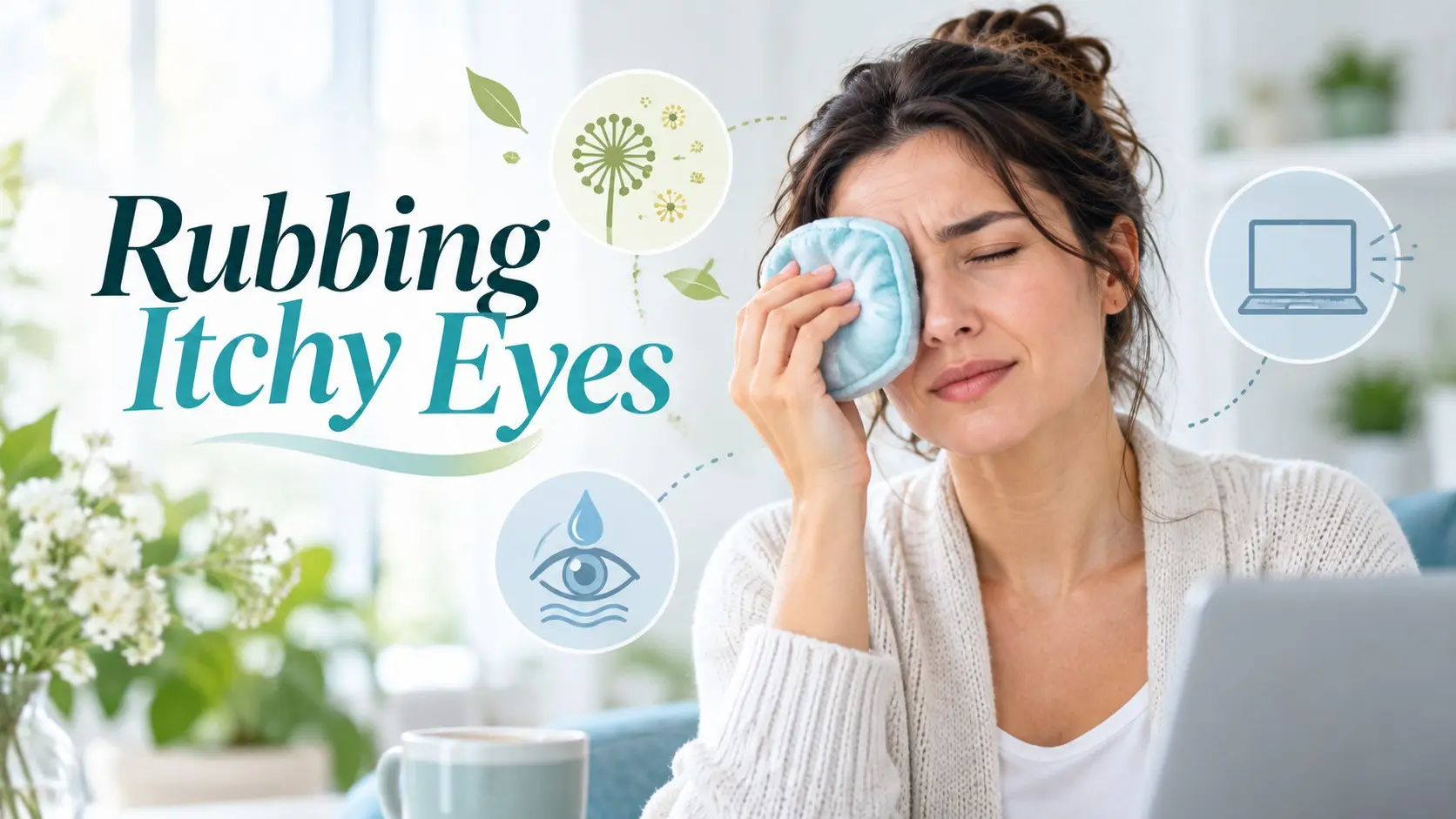
Rubbing itchy eyes may feel soothing for a few seconds, but repeated rubbing can make irritation worse and may damage the delicate surface of the eye.
If your eyes keep itching, the better approach is to identify the cause. Common triggers include eye allergies, dry eye, blepharitis, contact lens irritation, conjunctivitis, smoke, cosmetics, pollen, and other environmental irritants.
A clean cool compress, careful hand hygiene, suitable artificial tears, and avoiding known triggers can often help mild irritation. Persistent symptoms need more attention because the correct treatment for allergy is different from treatment for dry eye, blepharitis, or infection.
This article is for general information and education. It does not replace medical advice, diagnosis, or treatment.
Get urgent eye care if itching or redness comes with eye pain, light sensitivity, sudden blurred vision, loss of vision, severe swelling, or an eye injury.
If you wear contact lenses and develop a red, painful, irritated eye, remove the lenses and seek prompt professional advice. Contact lens related keratitis can threaten vision if it is not treated quickly.
Seek emergency care for sudden major vision loss, a severe eye injury, or new neurological symptoms such as facial weakness or trouble speaking.
Table of Contents
- Quick Answer
- Why rubbing feels good
- Why rubbing can backfire
- Common Causes
- Eye allergies
- Dry eye
- Blepharitis
- Conjunctivitis
- Contact lenses
- Cosmetics
- Smoke and pollution
- Screen use
- 11 Safe Relief Steps
- Contact Lens Warnings
- What to Avoid
- When to Seek Care
- Frequently Asked Questions
Rubbing Itchy Eyes: Quick Answer
Rubbing itchy eyes is usually a reaction to irritation rather than a solution to it.
Try these steps instead:
- Stop rubbing the eyes.
- Wash your hands.
- Apply a clean cool compress to closed eyelids.
- Use lubricating artificial tears if dryness or irritation is likely.
- Avoid pollen, dust, smoke, fragrance, and other known triggers.
- Remove contact lenses if the eyes become red, painful, or unusually irritated.
- Clean the eyelid margins if blepharitis is present.
- Ask a pharmacist, optometrist, or doctor about appropriate allergy eye drops if allergy is likely.
The best treatment depends on why your eyes itch.
Why Do Itchy Eyes Make You Want to Rub Them?
Itching activates nerve signals around the eye.
Rubbing creates pressure and touch signals that can temporarily compete with the itch sensation, so it may feel satisfying for a moment.
The relief is often short lived.
With allergies, rubbing may add more mechanical irritation to tissue that is already inflamed.
This can leave the eye feeling even itchier afterward.
Why Is Rubbing Your Eyes a Problem?
Your eyes are protected by delicate tissues.
The clear front surface is the cornea, and the conjunctiva covers much of the exposed white area of the eye.
Repeated forceful rubbing may:
- Increase redness
- Increase swelling
- Worsen allergy symptoms
- Transfer dirt or microorganisms from your hands
- Irritate the cornea
- Worsen existing eye surface disease
Chronic vigorous rubbing is also associated with keratoconus, a condition in which the cornea becomes thinner and changes shape.
Can Eye Rubbing Cause Keratoconus?
Eye rubbing is considered an important risk factor for keratoconus, especially in people who already have allergies or a vulnerable cornea.
Keratoconus can cause:
- Increasing short sightedness
- Irregular astigmatism
- Blurred vision
- Ghost images
- Glare
- Frequent prescription changes
Not everyone who rubs their eyes develops keratoconus.
Still, frequent hard rubbing is worth stopping, particularly in children and people with chronic allergies.
8 Common Causes of Itchy Eyes
1. Allergic Conjunctivitis
Allergic conjunctivitis is one of the classic causes of intense eye itching.
Triggers may include:
- Pollen
- Dust mites
- Pet dander
- Mould
- Other allergens
The eyes often become:
- Very itchy
- Watery
- Red
- Puffy
Both eyes are commonly affected.
If you also have sneezing, a runny nose, or nasal congestion, allergy becomes even more likely.
2. Dry Eye
Dry eye does not always feel dry.
It may cause:
- Itching
- Burning
- Stinging
- Redness
- A gritty feeling
- Blurred or fluctuating vision
- Excess watering
The watering can seem strange, but an irritated dry eye may produce reflex tears.
Dry eye can become worse with wind, smoke, air conditioning, long periods of reading, and screen use.
3. Blepharitis
Blepharitis is inflammation around the eyelid margins.
Common symptoms include:
- Itchy eyelids
- Sore eyelids
- Grittiness
- Crusts around the eyelashes
- Eyelids sticking together in the morning
Symptoms often come and go.
Regular eyelid hygiene is an important part of treatment.
4. Conjunctivitis
Conjunctivitis can come from allergy, viruses, bacteria, or irritation.
Symptoms may include:
- Red eyes
- Watering
- Itching
- Burning
- Eyelid swelling
- Discharge
Itching is especially prominent in allergic conjunctivitis.
Thick discharge and eyelids sticking together can occur with some bacterial infections.
5. Contact Lens Irritation
Contact lenses sit directly on the cornea.
They can contribute to:
- Dryness
- Allergy
- Mechanical irritation
- Inflammation
- Corneal infection
Never ignore increasing pain, light sensitivity, sudden blurred vision, or significant redness while wearing contact lenses.
6. Cosmetics and Skin Products
Products used around the eyes can trigger irritation or allergy.
Possible triggers include:
- Mascara
- Eyeliner
- Eye shadow
- Makeup remover
- Face cream
- Sunscreen
- Hair products
- Fragrance
If symptoms started after a new product, stop using it and see whether the irritation settles.
7. Smoke, Dust, and Pollution
Smoke and airborne particles can irritate the tear film and eye surface.
Common triggers include:
- Cigarette smoke
- Dust
- Construction debris
- Air pollution
- Strong fumes
Move away from the irritant and use clean artificial tears if appropriate.
8. Long Screen Sessions
Screens do not usually cause an allergy.
However, people often blink less while concentrating on a screen.
Less blinking can increase tear evaporation and make dry eye symptoms worse.
You may notice:
- Burning
- Grittiness
- Eye fatigue
- Blurred vision
- A desire to rub your eyes
Itchy Eye Pattern Guide
| Pattern | Possible Cause | Helpful Clue |
|---|---|---|
| Intense itch in both eyes | Allergy | Often watery with sneezing or pollen exposure |
| Gritty burning eyes | Dry eye | Worse with screens, wind, or air conditioning |
| Crusty itchy eyelids | Blepharitis | Often worse in the morning |
| Red eye with discharge | Conjunctivitis | Cause can be viral, bacterial, or allergic |
| Painful red eye with contact lenses | Possible keratitis | Needs prompt professional assessment |
| Itching after new makeup | Contact irritation or allergy | Improves after stopping the trigger |
11 Safe Ways to Stop Rubbing Itchy Eyes
1. Take Your Hands Away From Your Eyes
This sounds simple, but it is the most important step.
When the itch begins, consciously move your hands away from your face.
Try pressing a cool cloth gently over closed eyelids instead.
2. Wash Your Hands
Your hands touch phones, keyboards, door handles, pets, and many other surfaces.
Clean hands lower the chance of transferring irritants and microorganisms to the eye.
3. Use a Clean Cool Compress
A cool compress is one of the simplest ways to soothe allergic or irritated eyes.
Use a clean soft cloth with cool water.
Close your eyes and rest the cloth gently over the eyelids.
Do not push against the eyeball.
4. Try Artificial Tears
Artificial tears can lubricate the eye surface and may help wash away small amounts of allergen.
They are particularly useful when dryness or mild surface irritation is contributing.
People who need drops many times each day may prefer preservative free products.
5. Reduce Allergen Exposure
If pollen triggers your symptoms:
- Check pollen levels
- Keep windows closed when counts are high
- Wear sunglasses outside
- Wash your face after outdoor exposure
- Change clothes after heavy pollen exposure
A shower before bed may also reduce pollen carried on the hair and skin.
6. Ask About Allergy Eye Drops
Antihistamine and mast cell stabilising eye drops can help allergic conjunctivitis.
Available products vary by country.
Ask a pharmacist, optometrist, or doctor which option is suitable for you, particularly if you have glaucoma, use contact lenses, are pregnant, or use several other medicines.
7. Treat Blepharitis Properly
If flakes and crusts collect around the eyelashes, eyelid hygiene may help.
NHS guidance recommends cleaning the eyelids regularly.
A typical routine may include:
- Wash your hands.
- Apply gentle warmth to closed eyelids.
- Massage the eyelids gently when advised.
- Clean the lid margins carefully.
Do not scrub the eye itself.
8. Give Contact Lenses a Break
If contact lenses cause discomfort, remove them.
Do not keep wearing a lens through increasing redness, pain, or irritation.
Use your glasses until your eye professional says it is safe to restart lenses if infection or inflammation is suspected.
9. Review Your Cosmetics
If symptoms appeared after new makeup or skincare, stop the new product.
Do not share eye makeup.
Replace products that may have become contaminated after an eye infection.
10. Reduce Dry Eye Triggers
Helpful steps include:
- Take regular screen breaks
- Blink fully and often
- Avoid direct air from fans
- Move away from cigarette smoke
- Consider a humidifier in very dry rooms
- Use lubricating drops when suitable
11. Treat the Cause Rather Than the Itch
This is the step that gives lasting relief.
If you keep treating every itchy eye as an allergy, you can miss dry eye, blepharitis, infection, or contact lens disease.
Persistent symptoms deserve an eye examination.
Allergy Versus Dry Eye
These conditions can feel similar, and some people have both.
Allergy Is More Likely When
- Itching is the main symptom
- Both eyes are affected
- The eyes water
- Eyelids look puffy
- You also sneeze
- Pollen or pets trigger symptoms
Dry Eye Is More Likely When
- Burning is prominent
- Eyes feel gritty
- Vision fluctuates
- Screens make symptoms worse
- Wind or air conditioning makes symptoms worse
- Contact lenses become uncomfortable
You can have allergy and dry eye at the same time.
Why Can Dry Eyes Water?
It seems contradictory, but a dry irritated eye can trigger a burst of reflex tears.
These tears may run down your cheeks without fixing the underlying tear film problem.
This is why watery eyes do not automatically rule out dry eye.
Can Screens Make Eyes Itchy?
Indirectly, yes.
Long screen sessions can reduce blinking.
This increases tear evaporation and can worsen dry eye symptoms.
The result may be burning, irritation, grittiness, or an urge to rub.
Does the 20 20 20 Rule Help?
Regular breaks can reduce prolonged near focus and remind you to blink.
A common approach is to look away from your screen regularly at something farther away.
The exact timing matters less than taking consistent breaks and blinking fully.
Can Hay Fever Cause Itchy Eyes?
Yes.
Hay fever commonly causes:
- Itchy eyes
- Watery eyes
- Redness
- Sneezing
- Runny nose
- Nasal congestion
Pollen avoidance and suitable allergy treatment may help.
Can Dust Mites Cause Itchy Eyes?
Yes.
Dust mite allergy can trigger perennial allergic conjunctivitis.
Symptoms may happen throughout the year rather than only during pollen season.
Can Pets Cause Itchy Eyes?
Yes.
Proteins in animal dander and saliva can trigger allergy.
The eyes may itch, water, and swell after exposure.
Can Mould Cause Itchy Eyes?
Yes.
Mould spores can trigger allergy in susceptible people.
Symptoms may include itchy watery eyes along with sneezing, congestion, or cough.
Can Makeup Cause Itchy Eyes?
Yes.
Makeup may irritate the eyes directly or cause allergic contact dermatitis around the eyelids.
Stop new products when symptoms appear soon after use.
Can Contact Lenses Cause Itchy Eyes?
Yes.
Contact lens wear can contribute to:
- Dryness
- Allergy
- Mechanical irritation
- Giant papillary conjunctivitis
- Corneal inflammation
- Microbial keratitis
A lens should never be worn through significant pain or unexplained redness.
Contact Lens Warning Signs
Remove contact lenses and contact an eye professional promptly if you develop:
- Increasing eye pain
- Marked redness
- Light sensitivity
- Sudden blurred vision
- Unusual watering
- Eye discharge
Microbial keratitis can damage the cornea and threaten sight.
Can You Rinse Contacts With Water?
No.
Do not clean or store contact lenses in tap, bottled, distilled, lake, pool, or shower water.
Water can expose contact lenses to organisms such as Acanthamoeba.
Use the lens solution recommended for your lens type.
Should You Wear Contacts in the Shower?
It is safer to remove contact lenses before showering or swimming.
Water exposure raises the risk of serious contact lens related infection.
Can Rubbing Scratch the Cornea?
Forceful rubbing can irritate or injure the surface of the eye, especially if a grain of sand, dust particle, eyelash, or another foreign body is trapped under the eyelid.
A corneal abrasion can cause:
- Pain
- Watering
- Redness
- Light sensitivity
- A feeling that something is stuck in the eye
Do not rub an eye when you think something may be trapped in it.
What If Something Is in My Eye?
Do not rub.
You can try gently rinsing a small loose particle with clean water or sterile saline if appropriate.
Seek urgent help if:
- The object is embedded
- It is metal or glass
- The eye was hit at high speed
- Pain continues
- Vision changes
Are Redness Relief Eye Drops a Good Idea?
Some drops make the eye look whiter by narrowing surface blood vessels.
They do not necessarily treat the cause of itching.
Frequent use of some redness relief drops can lead to rebound redness or mask an underlying condition.
If redness keeps returning, find the cause rather than repeatedly hiding it.
Are Steroid Eye Drops Safe for Itchy Eyes?
Do not start steroid eye drops without professional eye care advice.
Steroids can be very useful for selected inflammatory eye diseases, but they can also:
- Raise eye pressure
- Contribute to cataracts
- Worsen some infections
- Delay healing
They require correct diagnosis and monitoring.
Should You Put Tea Bags on Itchy Eyes?
A clean cool compress is a safer and simpler choice.
Tea bags are not sterile and can contain plant material or other substances that may irritate sensitive eyes.
Should You Put Cucumber on Your Eyes?
A chilled cucumber may feel cool on the eyelid skin, but it has no special proven advantage over a clean cool compress.
Anything placed near the eye should be clean.
Should You Put Aloe Vera Near the Eyes?
Avoid putting cosmetic aloe gels into the eye.
Products may contain preservatives, fragrance, alcohol, or other ingredients not intended for the eye surface.
Use products specifically formulated for ophthalmic use.
Does Saline Help Itchy Eyes?
Sterile ophthalmic saline can rinse loose irritants from the eye.
It does not treat all causes of itching and does not replace artificial tears for chronic dry eye or allergy treatment when needed.
Can Oral Antihistamines Make Dry Eye Worse?
They can in some people.
Oral antihistamines may reduce allergy symptoms but can also contribute to dryness.
If your nose improves while your eyes become drier, ask a pharmacist or clinician whether another approach is suitable.
What About Itchy Eyelid Skin?
Sometimes the itch comes from the eyelid skin rather than the eyeball.
Possible causes include:
- Eczema
- Contact dermatitis
- Blepharitis
- Cosmetic allergy
- Skin care products
See our Red Dry Skin Around Eyes Guide if the surrounding eyelid skin is the main problem.
Can Rubbing Cause Dark Circles?
Repeated friction can irritate the thin skin around the eyes and may make darkening more noticeable in some people, especially when eczema or allergy is present.
Treating the underlying itch is more useful than trying to cover the colour change.
Can Rubbing Cause Broken Blood Vessels?
Forceful rubbing can occasionally contribute to small surface blood vessel breaks.
A bright red patch on the white of the eye may be a subconjunctival haemorrhage.
These are often harmless, but recurrent bleeding, trauma, pain, or vision changes deserve assessment.
How to Prevent Itchy Eyes During Pollen Season
- Check local pollen forecasts.
- Keep windows closed when pollen is high.
- Wear glasses or sunglasses outside.
- Wash your face after being outdoors.
- Keep hands away from your eyes.
- Change clothes after prolonged outdoor exposure.
- Ask about preventive allergy drops when symptoms recur every season.
A Simple Itchy Eye Relief Plan
Step 1: Stop Rubbing
Move your hands away from the eyes.
Step 2: Wash Your Hands
This reduces transfer of irritants and germs.
Step 3: Remove Contact Lenses
Do this if lenses are contributing to irritation.
Step 4: Use a Cool Compress
Place it gently over closed lids.
Step 5: Consider Artificial Tears
Use an appropriate ophthalmic product for dryness or surface irritation.
Step 6: Look for the Pattern
Is it pollen, screens, makeup, contact lenses, crusty eyelids, or dry air?
Step 7: Get Help When Symptoms Persist
Recurring itch deserves diagnosis rather than endless rubbing.
When Should You See an Optometrist or Doctor?
Arrange an assessment if:
- Itching continues for several days despite simple care
- Symptoms keep returning
- You have persistent redness
- There is significant discharge
- Contact lenses repeatedly cause symptoms
- Your eyelids remain inflamed
- Your vision keeps becoming blurry
When Is an Itchy Eye Urgent?
Seek urgent eye care for:
- Eye pain
- Strong light sensitivity
- Sudden blurred vision
- Loss of vision
- Severe redness
- An eye injury
- An object stuck in the eye
- A painful red eye in a contact lens wearer
For a broader warning sign guide, read our Eye Problems NHS Guide.
Common Myths About Rubbing Itchy Eyes
Myth 1: Rubbing Removes the Allergy
False.
Rubbing does not remove the allergic reaction and can add more irritation.
Myth 2: Watery Eyes Cannot Be Dry
False.
Dry eye can trigger reflex tearing.
Myth 3: Every Itchy Eye Needs Antibiotic Drops
False.
Antibiotics do not treat allergy or viral conjunctivitis.
Myth 4: Redness Relief Drops Cure the Problem
False.
They may reduce visible redness without treating the cause.
Myth 5: Natural Products Are Always Safer Near the Eye
False.
Tea, plant extracts, aloe gels, and essential oils are not automatically sterile or safe for the eye surface.
Myth 6: Contact Lens Irritation Can Always Wait
False.
Pain, redness, light sensitivity, discharge, or blurred vision in a contact lens wearer can signal keratitis and needs prompt assessment.
Myth 7: Eye Rubbing Cannot Change the Cornea
False.
Chronic vigorous eye rubbing is associated with keratoconus and its progression.
Conclusion
Rubbing itchy eyes may offer a few seconds of relief, but it can keep the irritation cycle going and may cause more problems when rubbing becomes frequent or forceful.
Allergy is a common cause of intense itching, while dry eye can cause burning, grittiness, watering, and an urge to rub. Blepharitis, conjunctivitis, contact lenses, cosmetics, smoke, and environmental irritants can also play a role.
The safest first steps are simple: stop rubbing, wash your hands, use a clean cool compress, remove irritating contact lenses, and use suitable ophthalmic products for the actual cause.
Your next step is to watch the pattern. If symptoms persist, keep returning, or include pain, light sensitivity, discharge, or vision changes, arrange an eye examination rather than continuing to rub.
References and Sources
- American Academy of Ophthalmology. Allergic Conjunctivitis.
https://eyewiki.aao.org/Allergic_Conjunctivitis - American Academy of Ophthalmology. What Is Dry Eye? Symptoms, Causes and Treatment.
https://www.aao.org/eye-health/diseases/what-is-dry-eye - NHS. Blepharitis.
https://www.nhs.uk/conditions/blepharitis/ - NHS. Dry Eyes.
https://www.nhs.uk/symptoms/dry-eyes/ - Centers for Disease Control and Prevention. What Causes Contact Lens Related Eye Infections.
https://www.cdc.gov/contact-lenses/causes/index.html - National Eye Institute. Corneal Conditions.
https://www.nei.nih.gov/eye-health-information/eye-conditions-and-diseases/corneal-conditions - American Academy of Ophthalmology. Keratoconus.
https://eyewiki.aao.org/Keratoconus
Internal Links + Hub
- Complete Eye Health Guide
- Itchy Eyes: Causes and Relief
- Eye Problems NHS
- Red Dry Skin Around Eyes
- Eye Vitamins
- Early Signs of Alzheimer's Are in the Eye
About the Author
Adel Galal is the founder and editor of NextFitLife. He writes practical consumer health, eye health, nutrition, fitness, and healthy ageing content using information from recognized medical, public health, and academic sources.
I am not a dermatologist, doctor, ophthalmologist, optometrist, pharmacist, or other licensed healthcare professional. This content does not replace professional medical advice. What I share comes from real life experience, extensive research, and consultation with healthcare providers. Always consult qualified medical professionals for diagnosis and treatment of any health condition.
Learn more about NextFitLife, the author, and the site's editorial approach on the About Us page.
Frequently Asked Questions
Why is rubbing itchy eyes bad?
Rubbing can increase irritation, transfer dirt and microorganisms from the hands, and place mechanical stress on the cornea. Chronic vigorous rubbing is also associated with keratoconus.
What is the most common cause of very itchy eyes?
Allergic conjunctivitis is a common cause of intense itching, especially when both eyes are watery, red, or puffy and symptoms occur with pollen, pets, dust, or other allergens.
How can I stop rubbing itchy eyes?
Move your hands away from your eyes, wash them, use a clean cool compress, try suitable artificial tears, reduce allergen exposure, and treat the underlying allergy, dry eye, or eyelid problem.
Can dry eye cause itching?
Yes. Dry eye can cause itching, burning, stinging, grittiness, redness, fluctuating vision, and even excessive watering.
Why do my eyes itch more during pollen season?
Pollen can trigger allergic conjunctivitis, causing histamine related inflammation with itching, watering, redness, and eyelid swelling.
Can contact lenses make my eyes itchy?
Yes. Contact lenses can contribute to dryness, allergy, mechanical irritation, inflammation, and infection. Remove lenses when the eyes become significantly irritated.
When should a contact lens wearer worry about a red eye?
A contact lens wearer with eye pain, significant redness, light sensitivity, discharge, excessive watering, or sudden blurred vision should remove the lenses and seek prompt professional eye care.
Can rubbing my eyes cause keratoconus?
Chronic vigorous eye rubbing is an important risk factor associated with keratoconus, especially in people with allergy or an already vulnerable cornea.
Is a cold compress good for itchy eyes?
Yes. A clean cool compress placed gently over closed eyelids can soothe allergy related itching and swelling without the mechanical irritation caused by rubbing.
Should I put tea bags on itchy eyes?
A clean cool compress is safer. Tea bags are not sterile and do not have a proven advantage over a clean cloth with cool water.
Can antihistamine eye drops help?
Yes. Antihistamine or mast cell stabilising eye drops can help allergic conjunctivitis. Ask a pharmacist, optometrist, or doctor which product is suitable for you.
When should itchy eyes be checked by a professional?
Arrange an assessment if symptoms persist, keep returning, or come with significant redness, discharge, eyelid inflammation, contact lens problems, or recurrent blurred vision.
When are itchy eyes an emergency?
Seek urgent care for eye pain, strong light sensitivity, sudden vision change, severe redness, major injury, an object stuck in the eye, or a painful red eye while wearing contact lenses.

Health & wellness writer with 30+ years of experience in nutrition, fitness, and healthy aging. Founder of NextFitLife.com — evidence-based health guidance.