
Last updated: October 8, 2026
Written and edited by: Adel Galal, Founder and Editor of NextFitLife
Medical review status: This article has not been medically reviewed by a doctor, ENT specialist, allergist, pharmacist, or other licensed healthcare professional.
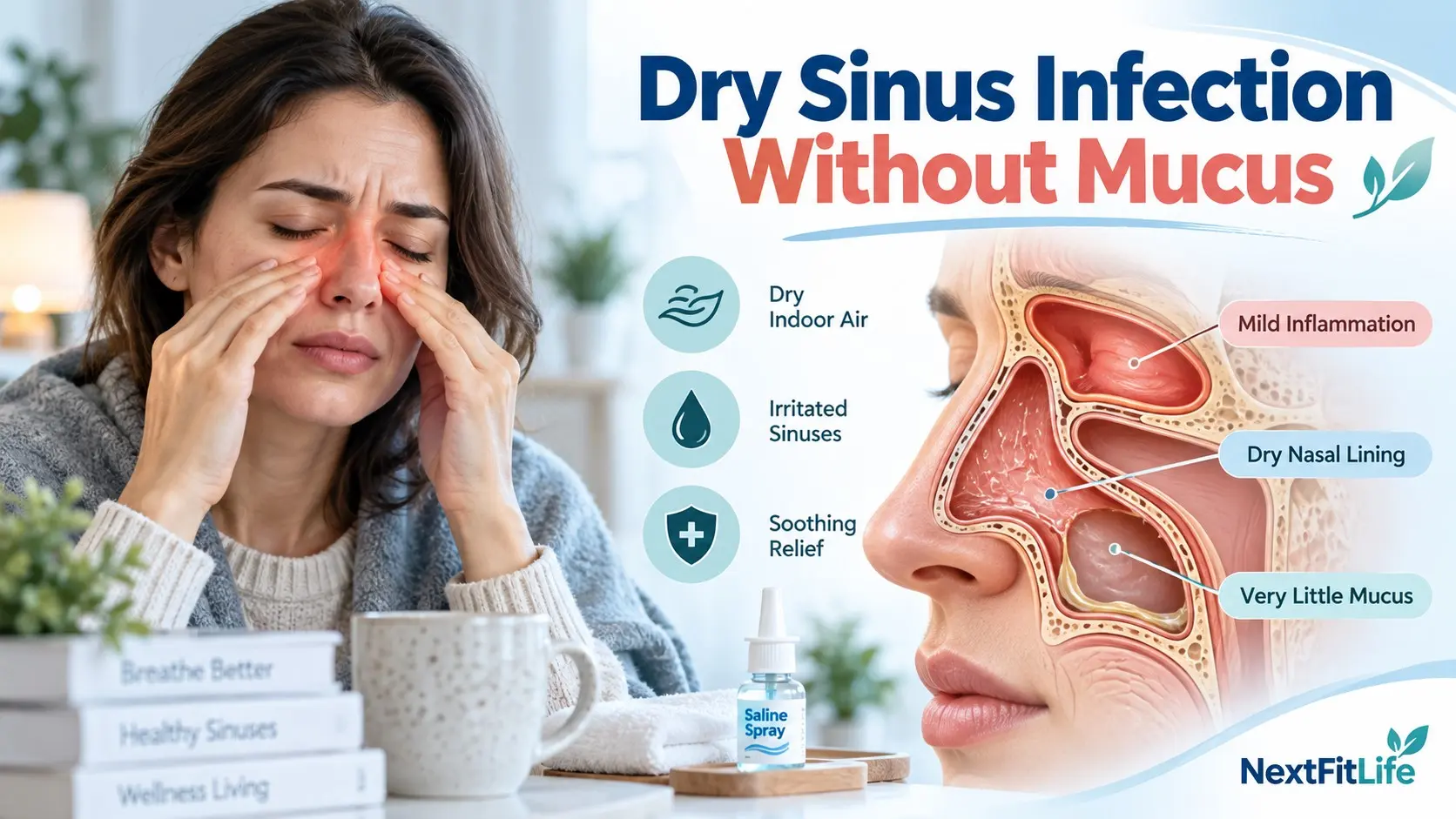
Dry sinus infection without mucus is a phrase people often use when they feel sinus pressure, facial discomfort, or nasal blockage but do not see much mucus.
The important point is that this is not a formal medical diagnosis. A true sinus infection often causes blocked nasal passages and usually some nasal discharge or drainage down the throat.
When the nose feels dry and pressure is present without obvious mucus, other causes may fit better. These include nasal dryness, allergies, viral inflammation, migraine, medication effects, nasal polyps, or structural narrowing.
This article is for general information and education. It does not replace medical advice, diagnosis, or treatment.
Seek urgent medical care if sinus symptoms occur with swelling around the eye, double vision, reduced vision, a displaced eye, severe frontal headache, neck stiffness, confusion, new weakness, or other neurological changes.
These features can signal a rare but serious complication and should not be managed as ordinary sinus dryness.
Table of Contents
- Quick Answer
- 11 Critical Facts
- Dry sinus infection is not a formal diagnosis
- True sinusitis often causes drainage
- Dry air can mimic sinus disease
- Allergies can create pressure
- Migraine can feel like sinus pain
- Nasal sprays may worsen dryness
- Structural blockage can matter
- Most acute sinusitis is viral
- Antibiotics are often unnecessary
- Safe saline care can help
- Persistent symptoms need reassessment
- Symptoms
- Causes
- Diagnosis
- Safe Relief
- Red Flags
- Frequently Asked Questions
Dry Sinus Infection Without Mucus: Quick Answer
A dry sinus infection without mucus may not be an infection at all.
Classic sinusitis usually causes swelling inside the sinuses and trouble draining mucus. Common symptoms include:
- Blocked nose
- Runny nose
- Facial pain or pressure
- Reduced sense of smell
- Yellow or green mucus
- Headache
- Postnasal drip
If you mainly have dryness, facial pressure, or a blocked feeling without discharge, think more broadly.
Possible explanations include:
- Dry air
- Allergic rhinitis
- Medication effects
- Migraine
- Nasal polyps
- A deviated septum
- Chronic inflammation
11 Critical Facts About Dry Sinus Infection Without Mucus
1. “Dry Sinus Infection” Is Not a Formal Diagnosis
Doctors generally use terms such as:
- Acute sinusitis
- Chronic sinusitis
- Rhinosinusitis
- Allergic rhinitis
- Nasal dryness
The phrase “dry sinus infection” is useful for describing how you feel, but it does not tell you what is causing the symptoms.
2. True Sinusitis Usually Involves Drainage Problems
Sinusitis happens when the lining of one or more sinuses becomes swollen.
This swelling can block normal drainage.
That is why typical symptoms often include:
- Nasal congestion
- Runny nose
- Thick mucus
- Postnasal drip
- Reduced smell
You can have pressure without seeing mucus at the front of your nose because drainage may move backward into the throat.
3. Dry Air Can Mimic Sinus Disease
Low humidity can dry the nasal lining.
The nose may then feel:
- Blocked
- Burning
- Crusty
- Sore
- Pressured
This is nasal dryness, not automatically an infection.
Indoor heating and air conditioning can make it worse.
4. Allergies Can Cause Pressure Without Thick Mucus
Allergic rhinitis can make the nasal lining swell.
Common symptoms include:
- Sneezing
- Itching
- Nasal blockage
- Watery discharge
- Eye symptoms
Some people mainly notice congestion or pressure.
The mucus may remain clear or may not be obvious.
5. Migraine Can Feel Like “Sinus Pressure”
Headaches around the forehead, cheeks, or eyes are often labelled sinus headaches.
However, migraine can cause:
- Facial pressure
- Forehead pain
- Pain around an eye
- Nasal congestion
- Watery eyes
Head pain without clear signs of sinus inflammation deserves a broader assessment.
6. Some Nasal Sprays Can Make the Nose Feel Dry
Medicated nasal sprays can be useful, but some people develop:
- Dryness
- Irritation
- Soreness
- Nosebleeds
Decongestant sprays also should not be used continuously beyond their recommended period because they can cause rebound congestion.
7. Structural Problems Can Block the Nose Without Mucus
A deviated septum, nasal polyps, or other narrowing can make breathing through one or both nostrils difficult.
These problems can feel like congestion even when little mucus is present.
Persistent one sided blockage deserves medical assessment.
8. Most Acute Sinus Infections Are Viral
Most acute sinusitis starts after a cold or other viral respiratory infection.
CDC notes that viruses cause most sinus infections.
This matters because antibiotics do not work against viruses.
9. Antibiotics Are Often Unnecessary
NICE advises against routine antibiotics during the first 10 days of uncomplicated acute sinusitis.
A bacterial cause becomes more likely when several features occur together, including:
- Symptoms lasting more than 10 days without improvement
- Purulent nasal discharge
- Severe localised one sided facial or dental pain
- Fever
- Clear worsening after an initially milder period
Even then, antibiotics are not always required.
10. Safe Saline Care Can Help
Saline nasal spray can add moisture to a dry nose.
A full nasal irrigation may also help selected people with congestion or sinus symptoms.
However, irrigation water must be safe.
Use only:
- Distilled water
- Sterile water
- Previously boiled and cooled water
Do not pour ordinary untreated tap water into the nose.
11. Persistent Symptoms Need Reassessment
Symptoms that continue, recur, or affect only one side may need further investigation.
NHS advises ENT assessment in some people who:
- Still have sinusitis after months of treatment
- Keep getting sinusitis
- Have symptoms mainly on one side
What Does a Dry Sinus Feel Like?
Dry sinuses or a dry nasal cavity may cause:
- Dry or burning nose
- Crusting
- Blocked feeling
- Small nosebleeds
- Pressure around the nose
- Throat dryness
- Difficulty breathing comfortably through the nose
These symptoms overlap with sinusitis, but dryness alone does not prove infection.
Can You Have Sinusitis Without a Runny Nose?
Yes, but it is less straightforward.
A person may feel very blocked while mucus drains backward rather than forward.
They may notice:
- Postnasal drip
- Throat clearing
- Cough
- Facial pressure
- Reduced smell
This is different from having no mucus production at all.
Dry Sinuses Versus Sinusitis
| Feature | Dry Nasal Tissue | Sinusitis |
|---|---|---|
| Main feeling | Dry, sore, crusty or burning | Pressure, blockage and inflammation |
| Mucus | Often little or thin mucus | Often nasal discharge or postnasal drainage |
| Nosebleeds | Can occur from cracked tissue | Possible but not a defining symptom |
| Fever | Not expected from dryness alone | Can occur |
| Common trigger | Dry air, sprays, irritation | Often follows a cold or viral infection |
Can Sinus Pressure Happen Without Mucus?
Yes.
Sinus pressure without mucus can occur for several reasons.
Possible causes include:
- Nasal dryness
- Allergies
- Migraine
- Structural blockage
- Chronic inflammation
- Medication effects
That is why pressure alone is not enough to diagnose an infection.
Could It Be a Migraine Instead?
Possibly.
Migraine can cause pain around the forehead, nose, cheeks, or eyes.
It may also cause:
- Light sensitivity
- Sound sensitivity
- Nausea
- Throbbing pain
- Worsening with activity
If “sinus headaches” keep returning without congestion or discharge, discuss migraine with a healthcare professional.
Could It Be Allergies?
Yes.
Allergies can inflame the nasal lining without producing thick coloured mucus.
Clues include:
- Repeated sneezing
- Nasal itching
- Watery eyes
- Symptoms around pollen, pets, dust, or mould
- Clear discharge
Can Dehydration Cause Dry Sinuses?
Dehydration can contribute to general dryness and may make secretions thicker.
However, drinking large amounts of water is not a specific cure for sinusitis.
Drink enough fluid to stay normally hydrated.
Can Air Conditioning Dry Your Sinuses?
Yes.
Air conditioning can reduce indoor humidity.
That can dry the nasal lining in sensitive people.
A clean humidifier may help if your indoor air is very dry.
Can Heating Cause the Same Problem?
Yes.
Indoor heating can also lower humidity and make dryness worse.
If symptoms mainly occur during winter or in heated rooms, the environment may be contributing.
Can Smoking Cause Sinus Irritation?
Yes.
Smoke irritates the nose and airways.
CDC lists smoking and secondhand smoke exposure as risk factors for sinus infection.
Avoiding smoke supports both sinus and lung health.
Can Nasal Polyps Cause Pressure Without Much Mucus?
Yes.
Nasal polyps are soft growths in the nasal or sinus lining.
They can contribute to:
- Blocked nose
- Reduced smell
- Pressure
- Chronic sinus symptoms
An ENT specialist may use nasal examination or imaging when polyps are suspected.
Can a Deviated Septum Feel Like Sinusitis?
Yes.
A deviated nasal septum can narrow one side of the nose.
This can cause:
- Persistent blockage
- Dryness
- Crusting
- Difficulty breathing through one side
It does not automatically mean you have a sinus infection.
What Is Chronic Sinusitis?
Chronic sinusitis means inflammation lasts at least 12 weeks.
Mayo Clinic lists typical symptoms including:
- Blocked or stuffy nose
- Thick nasal discharge
- Postnasal drainage
- Facial pain or swelling
- Reduced smell and taste
Chronic sinusitis can involve infection, nasal polyps, structural problems, or persistent inflammation.
How Is Chronic Sinusitis Diagnosed?
A clinician may use:
- Medical history
- Nasal examination
- Nasal endoscopy
- CT imaging in selected cases
- Allergy testing when relevant
Imaging is not needed for every short episode of facial pressure.
How Long Does Acute Sinusitis Last?
NICE says the usual course is around two to three weeks.
NHS says sinusitis commonly clears within four weeks.
This is why symptoms lasting only a few days do not usually justify antibiotics.
When Is Bacterial Sinusitis More Likely?
No single symptom proves bacteria are responsible.
NICE says bacterial infection becomes more likely when several of these occur together:
- Symptoms last more than 10 days without improvement
- Discharge is purulent
- There is severe one sided localised pain
- There is fever
- Symptoms clearly worsen after an initially milder phase
Does Green Mucus Mean You Need Antibiotics?
No.
Green or yellow mucus can occur during viral infections.
CDC states that antibiotics do not treat viral respiratory infections even when mucus becomes thick, yellow, or green.
Treatment decisions should use the whole symptom pattern.
Do Antibiotics Help a Dry Sinus Infection Without Mucus?
Usually not unless a clinician identifies a likely bacterial infection.
If the main problem is nasal dryness, allergy, migraine, or structural blockage, antibiotics will not correct the cause.
Unnecessary antibiotics can cause:
- Diarrhoea
- Nausea
- Allergic reactions
- Antibiotic resistance
Safe Relief for Dry Sinus Symptoms
1. Use Saline Spray
Simple saline nasal spray can moisturise dry nasal passages.
It can be especially useful when dryness is related to indoor air.
2. Improve Indoor Humidity
A clean humidifier can add moisture to dry indoor air.
Follow the cleaning instructions carefully.
A dirty humidifier can spread microorganisms.
3. Drink Normally
Drink enough fluid to remain hydrated.
You do not need extreme amounts of water.
4. Avoid Smoke
Smoking and secondhand smoke can worsen nasal irritation.
5. Treat Allergies When Present
Allergy treatment may reduce nasal swelling and pressure when allergens are the true cause.
6. Use Warm Compresses
CDC suggests placing a warm compress over the nose and forehead to help relieve sinus pressure.
What About Steam?
A warm shower may feel soothing.
However, avoid putting your face directly over very hot water because steam burns can occur.
You do not need dangerously hot steam to moisturise the airways.
What About Essential Oils?
Essential oils are not a proven treatment for sinus infection.
Concentrated oils can irritate the nose, eyes, and airways.
Do not place undiluted essential oils inside your nostrils.
What About Spicy Foods?
Spicy foods may temporarily make the nose run in some people.
That does not mean they cure sinusitis or nasal dryness.
If spicy food triggers reflux or irritation, it may make you feel worse.
How to Use a Nasal Rinse Safely
Nasal irrigation can be useful for some people, but safe water matters.
Never use untreated tap water directly in a neti pot or nasal rinse bottle.
Use only:
- Distilled water
- Sterile water
- Previously boiled and cooled water
Wash and dry the device after use according to its instructions.
Can Nasal Steroid Sprays Help?
NICE says a high dose nasal corticosteroid may be considered for some people aged 12 years and over whose acute sinusitis symptoms have lasted around 10 days or more without improvement.
These sprays may improve symptoms but are not expected to shorten the illness much.
They can also cause local irritation or nosebleeds.
Ask a pharmacist or clinician whether one is appropriate for you.
Can Decongestant Sprays Help?
They can temporarily reduce nasal swelling.
However, they should only be used for the period stated on the product label.
Longer use can cause rebound congestion.
Should You Use an Antihistamine?
An antihistamine may help when allergies are driving symptoms.
It is less useful when allergy is not the cause.
Some antihistamines can also contribute to dryness.
Dry Sinuses and Nosebleeds
Dry nasal tissue can crack and bleed.
You may notice:
- Small red streaks
- Pink mucus
- Dried blood or crusts
- A small nosebleed
Read our Blood in Mucus from Nose Guide for safe nosebleed care and warning signs.
Can Dry Sinus Symptoms Cause Ear Pressure?
Nasal swelling can affect the tubes connecting the middle ears to the back of the nose.
This may produce:
- Ear fullness
- Popping
- Pressure
Severe ear pain, discharge, or hearing loss needs assessment.
Can Dry Sinuses Cause Tooth Pain?
Sinus inflammation can sometimes cause discomfort in the upper teeth because the maxillary sinuses sit close to their roots.
However, dental infection can also mimic sinus pain.
NICE specifically reminds clinicians to consider dental infection as an alternative diagnosis when symptoms worsen or do not fit.
Can Dry Sinuses Cause Bad Breath?
Dry mouth and reduced nasal airflow can contribute to unpleasant breath, but bad breath has many causes.
Most chronic halitosis begins in the mouth rather than the sinuses or stomach.
Read our What Causes Bad Breath from the Stomach Guide for a fuller explanation.
When Should You See a Pharmacist?
A pharmacist can help when you think you have uncomplicated sinusitis or need advice about:
- Saline products
- Pain relief
- Nasal sprays
- Allergy treatment
When Should You See a Doctor?
Arrange medical assessment when:
- Symptoms last more than about 10 days without improvement
- Symptoms get worse after initially improving
- You have severe facial pain
- Fever lasts several days
- You keep getting sinus problems
- Symptoms continue for weeks
- You have persistent one sided symptoms
- Your sense of smell remains reduced
When Might an ENT Specialist Be Needed?
ENT review may be useful when:
- Symptoms continue despite appropriate treatment
- Sinusitis keeps returning
- Symptoms are mainly on one side
- Nasal polyps are suspected
- A structural problem is suspected
When Is It Urgent?
Seek urgent medical care for:
- Swelling around an eye
- Redness around an eye
- Double vision
- Reduced vision
- An eye pushed forward
- A severe frontal headache
- Neck stiffness
- Confusion
- New weakness or another neurological change
- Severe systemic illness
Common Myths About Dry Sinus Infection Without Mucus
Myth 1: Facial Pressure Always Means Sinus Infection
False.
Dryness, migraine, allergies, dental problems, and structural blockage can all mimic sinus pressure.
Myth 2: No Mucus Means You Cannot Have Sinusitis
False.
Mucus may drain backward or remain trapped, although typical sinusitis usually involves congestion and drainage changes.
Myth 3: Green Mucus Always Means Bacteria
False.
Viruses can also cause coloured mucus.
Myth 4: Every Sinus Infection Needs Antibiotics
False.
Most acute sinus infections are viral and often improve without antibiotics.
Myth 5: Essential Oils Cure Sinus Infection
False.
There is not strong evidence that essential oils cure sinusitis, and concentrated oils can irritate nasal tissue.
Myth 6: Tap Water Is Fine in a Neti Pot
False.
Use only distilled, sterile, or previously boiled and cooled water.
Myth 7: Sinus Pressure Without Drainage Is Always Harmless
False.
Persistent, severe, one sided, eye related, or neurological symptoms need professional assessment.
A Simple 7 Step Relief Plan
- Use simple saline spray for dryness.
- Keep indoor air comfortably humid.
- Drink enough fluid.
- Avoid smoke and irritating fumes.
- Use a warm compress for pressure.
- Treat known allergies appropriately.
- Seek assessment if symptoms persist, worsen, or become one sided.
Conclusion
Dry sinus infection without mucus is best treated as a symptom pattern rather than a diagnosis.
A true sinus infection usually causes nasal swelling, blockage, and drainage changes, while dryness and pressure without obvious mucus may come from dry air, allergies, migraine, medication effects, polyps, or a structural nasal problem.
Most acute sinus infections are viral, so antibiotics are often unnecessary. Saline moisture, a clean humidifier, smoke avoidance, safe nasal irrigation, and proper allergy treatment may help depending on the cause.
Your next step is to watch the pattern. If symptoms last beyond 10 days without improving, worsen after getting better, become strongly one sided, or occur with eye or neurological warning signs, seek medical care instead of assuming you have a simple dry sinus infection.
References and Sources
- NHS. Sinusitis.
https://www.nhs.uk/conditions/sinusitis-sinus-infection/ - NICE. Sinusitis Acute: Antimicrobial Prescribing.
https://www.nice.org.uk/guidance/ng79/chapter/Recommendations - Centers for Disease Control and Prevention. Sinus Infection Basics.
https://www.cdc.gov/sinus-infection/about/ - Mayo Clinic. Chronic Sinusitis: Symptoms and Causes.
https://www.mayoclinic.org/diseases-conditions/chronic-sinusitis/symptoms-causes/syc-20351661 - Mayo Clinic. Chronic Sinusitis: Diagnosis and Treatment.
https://www.mayoclinic.org/diseases-conditions/chronic-sinusitis/diagnosis-treatment/drc-20351667 - U.S. Food and Drug Administration. Is Rinsing Your Sinuses With Neti Pots Safe?
https://www.fda.gov/consumers/consumer-updates/rinsing-your-sinuses-neti-pots-safe - Centers for Disease Control and Prevention. Healthy Habits: Antibiotic Do's and Don'ts.
https://www.cdc.gov/antibiotic-use/about/index.html
Internal Links + Hub
- Lung and Respiratory Health Hub
- Blood in Mucus from Nose
- Blood in Mucus from Throat COVID
- Chest Congestion Without Cough
- What Causes Bad Breath from the Stomach?
About the Author
Adel Galal is the founder and editor of NextFitLife. He writes practical consumer health, respiratory health, nutrition, fitness, and healthy ageing content using information from recognised medical, public health, and academic sources.
I am not a dermatologist, doctor, ENT specialist, allergist, pharmacist, or other licensed healthcare professional. This content does not replace professional medical advice. What I share comes from real life experience, extensive research, and consultation with healthcare providers. Always consult qualified medical professionals for diagnosis and treatment of any health condition.
Learn more about NextFitLife, the author, and the site's editorial approach on the About Us page.
Frequently Asked Questions
Can you have a dry sinus infection without mucus?
You can have sinus pressure or blockage without seeing mucus, but “dry sinus infection” is not a formal diagnosis. Dry nasal tissue, allergies, migraine, structural blockage, or mucus draining backward may explain the symptoms.
What causes sinus pressure with no mucus?
Possible causes include nasal dryness, allergies, migraine, nasal polyps, a deviated septum, medication effects, or chronic inflammation.
Can sinusitis happen without a runny nose?
Yes. Some people mainly feel blocked, and mucus may drain down the throat instead of out of the nostrils. However, classic sinusitis usually causes some change in nasal drainage.
How do you treat dry sinuses?
Simple saline spray, adequate hydration, a clean humidifier, smoke avoidance, and correcting allergy or medication triggers may help. Treatment depends on the actual cause.
Do dry sinuses need antibiotics?
No. Antibiotics only help selected bacterial infections. Dryness itself does not respond to antibiotics, and most acute sinus infections are viral.
How do you know if sinusitis is bacterial?
Bacterial sinusitis becomes more likely when symptoms last more than 10 days without improvement, when severe one sided pain or fever occurs, or when symptoms clearly worsen after initially improving.
Does green mucus always mean bacterial sinusitis?
No. Viral infections can also cause yellow or green mucus, so colour alone should not determine whether antibiotics are needed.
Can allergies cause dry sinus pressure?
Yes. Allergies can swell the nasal lining and create congestion or pressure, even when thick mucus is absent.
Can migraine feel like sinus pressure?
Yes. Migraine can cause forehead, cheek, or eye pain and may also produce nasal congestion or watery eyes.
Is saline nasal spray safe for dry sinuses?
Simple saline spray is commonly used to moisturise dry nasal tissue. If using a full nasal rinse, use only distilled, sterile, or previously boiled and cooled water.
When should sinus pressure be checked by a doctor?
Seek assessment when symptoms last more than about 10 days without improvement, worsen after getting better, keep returning, become strongly one sided, or continue for several weeks.
When are sinus symptoms an emergency?
Seek urgent care for swelling around an eye, double vision, reduced vision, a displaced eye, severe frontal headache, neck stiffness, confusion, focal weakness, or signs of severe systemic illness.

Health & wellness writer with 30+ years of experience in nutrition, fitness, and healthy aging. Founder of NextFitLife.com — evidence-based health guidance.